Her Haughtynesses Decree

Friday, June 25, 2021

ディヴァイン | Divine | 1980 | Essay #4 |

Seeing as it is Pride this month! I shall be focusing on the fantabulous Divine! Government name Harris Glenn Milstead (1945-1988) was the infamous North American Queen & Drag artist. Specifically, Divine was known for being a character actor, part of her act is well known for its eccentricity. My personal exposure to Drag lite was Pantomine Grand Dames as a kid, and later when my friends made me watch RuPaul in art classes, so to me this is nothing new, the over the top, the glitter, the upstaging is all part and parcel.

In 1970, Divine worked as a hairdresser, later opening his "Divine Trash" in Massachusetts Opening, a vintage store which sold things Divine found in other secondhand or vintage shops, open air markets and car boot sales. Divine performed first in the counterculture era of Baltimore, Maryland and friend of the black comedy director John Waters, in the well known Pink Flamingoes (1972).

Pink Flamingoes (1972) John Water and Divine

By 1974 Divine, the filthiest being alive my love, was working onstage in ye olde San Fran. The one with the fault. By 1981 Divine regraced Waters films in Polyester (1981) and Hairspray (1988) which is today immortalised as the theater show which singlehandedly caused the 1980s ozone crisis seemingly. Divine also produced disco because they are the flithiest being walking the earth at this point. Divine eventually died as he lived, from eating filthily and living filthily. Literally his arteries went on strike by 1988. 

Drag to me at least is excess having a ménage de trois with glamour and silicone. Drags Divine was known for its trashy nature and this plays into his character actor background and drag performances which fuel that notion in the camp aesthetic. One of the aspects where LGBTQIA+ culture crosses over with KTC is that of the Drag performer who interacts with Gay and Queer cultural markers and processes this through a camp lense. In 1980, Divine wore something described as a Kimono. This is interesting as whilst it does not fall under the category of a Kimonope, it certainly is not the shop standard pattern cut for a Japanese kimono either. I shall be ripping the 'Traditional dress' argument a new one here in other words. 

Drag culture subverts and transgresses using camp as a tool to overcome rigid and stringent gender boundaries, beauty standards and ideas about fashion, culture and identity each to a differing extent dependent on a case by case basis. As evident by Mae West's Drag 1927, the Maltese Falcon 1931, Lindsay Kemp in the 1960s, Divine in 1980 and Rupauls Kimonogate in Season 8 Episode 5, KTC is clearly a continuing reference point or touchstone for Drag performance and aesthetics. Drag queens are experts (and some of them think they are) at referencing popular culture, so music videos, movies etc. They also operate within and around gender which is often strictly policed. I.E. they are more than aware than the average person of the gender and cultural meanings and semantics behind aesthetical choice.

American Kimono Textile Culture
The Red Kimono Poster (1925) | Seattle Restaurant (1963)

In Divines 1980 case, I would therefore take away that Divines Kimono is a reflection and subversion of the Kimonope, rather than a form of cultural appropriation. If anything, in reality it is mocking the people who think the Kimono is a 'national costume', 'native dress' or 'traditional garment'. To explain, Kimono after the 1950s fell away from its mores from 1900-1940 of being an exotic, expensive textile, to being a garment worn by a defeated nation when Japan became occupied by the USA from 1946-1952. During this time, elements of society which pushed Longingism, which gained traction from 1885-1920s America with the rise of Asian labour movements and immigration into the USA, created the Kimonope, which associated the Kimono as an 'Oriental' garment.[4]

US President signing the Immigration Act of 1924 (1924)

When the 1950's arrived and Kimono exchange become more frequent due to the onion lifestyle, the KTC in the USA heavily featured the Kimonope and the Kimono. As Americans were more familiar with the Kimonope, this form of USKTC was proliferated through popular media and eventually popular culture, leading to the emergence of the Kimorobe as I henceforth shall name it. If the Kimonope is the construct ('geisha outfits' at the dollar tree) Kimorobe are the Bathroom and loungewear robes offshoots of the Kimonope. Kimorobes are not always as explicitly harmful to Asian-Americans and I will explore their relation to tea gowns next time, but labelling a garment as having a 'Kimono sleeve' none the less is a form of cultural appropriation, rather than cultural appreciation. 

The Kimonope and Kimorobe, are all American garments inspired by Kimono and some are incredibly harmful stereotypes, typecasting and dangerous constructs of Asian-Americans. Drag on the whole suffers from these same pressures and is a rejection of having to conform to gender norms, aesthetics and standards. When Divine was wearing a 'Kimono', as with most other Drag artists, it is a reference to popular culture. In 1980, the Kimono was a relatively unknown garment which had become seen as part of 'old Japan' (a revival in 1980 due to the Japanese economy reversed this) and in this context, Divine is referencing the camp aspect of the vulgarity of the 1980 Kimonope. 

Divine wears and references American KTC here, not JKTC, and is subverting the 'trashy' regard Kimono by this point held in American KTC which at this time regarded 'Kimono' as long sleeved bath robes or loungewear. Items which are easily discarded, not to be seen in public and tasteless or gaudy, rather like old stained sweat pants. In this sense, Divines Kimono is camp, filthy and Divine, a reflection of everything Statesians claimed they did not want but secretly lusted after anyway.

A supposed symbol of almightiness (1945)

As for the traditional garment argument (with its legacy of white supremacy) I have explored this earlier in Essay #3. The Kimono is a transnational garment construct, just like a top or trousers. To claim it belongs to one nation is an ethnocentric proponent of Orientalisation of Japanese textile culture and history pushed usually by western journalists looking to jump on the misguided 'woke' wagon. The argument that Drag Queens may not wear Kimono in drag performance for example is dimissive of Asian Drag Queens, and also destroys the credibility of the claim of cultural appropriation. For example, Ms.Hodgeon writes in 2018 how the Kimono holds 'religious' values.[2] This dismisses entirely the fact that most of the 'Kimono' mentioned are made from patterns made for everyday wear (yes shorter length hemlines and rips are acceptable as part of Japanese street style fashion, oddly enough) and that religious Wafuku uses entirely ceremonial Junihitoe dress, which is a whole other pattern of Kimono than the ones worn by drag artists, which Ms.Hodgeon describes as 'ethnic dress'. Are jeans with holes western 'ethnic dress' or simply the acceptable beauty standard imposed by a top down heavy fashion industry from a country which literally and still does refuse to treat Asian-Americans as human beings worthy of its attention, instead infantilising them and uplifiting its own acceptable beauty standards. Hmmm I do wonder.... .

This level of ignorance of the actual working relation of KTC and ethnocentric thought is part of white supremacy. It is quite literally a majority white beauty standard which has been pushed to Japanese audiences in the US and Japan and which has beaten 'traditional' dress into a corner as a 'dying industry' in need of a white saviour to rescue it from the clutches of obscurity and filth. A 'filth' which as part of American KTC, Divine clearly found aesthetical relation to and drew upon to perform a version of camp which continues into the present day.

In context therefore, we see that in the rejection of AKTC colonial beauty standards, Kimono can be used to exemplify new ideals of beauty or aesthetical standards. The Kimono Divine wears reflects a bougie, Camp take on the Kimono as loungewear in AKTC denoting by now old timey or 1910's 'high taste'. Indeed this is a continuation of relating to the subaltern native when oppressed and minority groups take to each other for solidarity, seen since the time of Oscar Wilde and his Hellenic 'Japan' to escape the standards and ideals of Victorian Britain in rejection and transgression.

Essay #5 will be on the novel overlap KTC loungewear or the tea-gown and the Kimorobe.

[1] https://en.wikipedia.org/wiki/Divine_(performer)

[2] http://thebroadonline.com/cultural-appropriation-in-the-drag-community/

[3] https://divineofficial.com/post/111906099475/divine-1980-photo-robyn-beeche-illusionary

[4] https://en.wikipedia.org/wiki/History_of_Japanese_Americans

Social Links

One stop Link shop: https://linktr.ee/Kaguyaschest

https://www.etsy.com/uk/shop/KaguyasChest?ref=seller-platform-mcnav or https://www.instagram.com/kaguyaschest/ or https://www.youtube.com/channel/UC5APstTPbC9IExwar3ViTZw https://www.pinterest.co.uk/LuckyMangaka/hrh-kit-of-the-suke/ 

Sunday, June 20, 2021

秩父銘仙 | Chichibu Meisen | Chichibu Woven Silk | Fabrics #4

Chichibu Meisen is a double sided woven silk made in Chichibu, Saitama, Honshu. CM is made from raw, dupioni raw, floss, or spun silk made from waste cocoons and waste raw silk, and is a popular everyday silk for its durability and easy capacity to wish and reuse it.[1] 

Historically CM began around the time sericulture and silk weaving was introduced from Korea or China between 300-800AD.[2] Local traditions hold that this was the local Shinto deity Chichibu Hiko-no-mikoto who did this.  The local topography was heavily built up with mountains, which made rice grops difficult to grow, so sericulture eventually become the main local commodity in Chichibu. CM was at first due to its nature as a stubborn material or Futo-Ori (| Thick weave) made from waste product, worn by Chichibu farmers. In time, CM spread outside of Chichibu, and was known as Oni-chichibu, and eventually became an acceptable fabric for the Samurai class to wear due to its durability and sheen. This production was well established by the 18th century.[4]


Chichibu Saitama
A Moga (1927)

By the 1890s, the Japanese goverment sensing the encroachment of Westernisation and seeing the effect of Western colonisation in Asia, began to promote traditional Japanese arts and art or cottage industries. These led to the promulgation of traditional trades like CM production becoming joint with technology, producing new techniques like Hogushi-Ori (Virgin Thread sorting).[4] In 1908, the first Hogushi Nassen (ほぐし捺染 | Loose silk threads first dyed and then woven) technology was patented in Japan allowing for more elaborate patterns to be created.[1] Meisen then by the 1920's with an increased production capacity due to the increase of heavy textile industry began to become worn as a staple in womens fashion, most commonly worn by the Moga (モダンガール | Modern Girl).[5] The colours of Chichibu Meisen were particularly bright, and the patterns made allowed for a greater variation in Ji-monnyu than had previously being available to Kimono designers.[4] Moga often bought these kimono in Department stores, which popularised art deco Meisen and showed the modernisation of the 'New Japan' (itself arguably an adapted Western ideology deriving from contact with Western through 1853-1876), with skyscrapers, high-speed trains, and plane motifs from 1910-1930. From 1930-1940 with the changing political landscape of Japan, these patterns frequently became more charged and tied to national patriotism, such as Meisen depicting military themes, often made in rayon, mainly in regions north of Tokyo.[6] When Longingism took hold in the court of the MacArthur shogunate, Kimono become 'the old thing to wear' so to speak and 'modern Japan' once again took off from where Old 'New Japan' had taken and production of new Meisen declined rapidly, reverting back to workwear rather than being a trendy garment from the 1960s onwards, and may have seen an uptick of resurgence as a fashion item from 1990-2009 in Japanese and foreign womens Kimono from the bright designs of Taisho Meisen kimono, a large number of which survive because they are Chichibu Meisen as part of the historical revival moment in Kimono-Hime, popularized in the west at least in the fanzine Kimono Hime.

A Meisen Haori with Battleship motif (1926-1945) CC

Chichibu Meisen is made with leftover silk threads and is created by Temporal weaving, Printing, Steaming, Drying, Rollback & Weaving. Weaving is first done by sorting the white warp threads into the desired length and number and set in the loom and the weft threads wound around tubes. Temporal weaving refers to creating the desired pattern with the weft threads in the loom which prevents shrinkage during the Katazome process. The warp threads are then spread from the tubes over a printing stand and Katazome is applied to them using one stencil at a time. A frame with the pattern inside is placed atop the warp thread stand and the pattern is gradually applied by moving the frame and applying dye through the stencil with a brush. More than one colour requires the warp threads to be redyed as many times as there are colours. By dying the weft and warp threads this creates the double-sided effect or Hogushi Nassen technique of CM. The threads are then refined by immersing them in Shinsen which bonds the dye agent to the threads, then placed in a Mushibako (steam box or tube) which fixes the dye to the threads. The threads are removed and left to dry by tumble drying. The warp threads are then rolled back and check over and adjusted as needed, a process known as rollback.  

Weaving is then done by setting the warp threads in the loom and sorting and loosening (Hogushi-Ori) the weft threads to fit the end pattern using hand-thrown/flying shuttles with a treadle. The shuttles slide the weft threads in the loom, auto-weaving machines and shuttle looms which replace weft threads are also used to prevent breakage. Hogushi-ori/-nassen (Loose sorting/dying) creates the double sided sheen when the warp and weft threads join in CM silks, which was valued by Samurai for its durable and shiny qualities.[1] CM is still made today in Chichibu, being regarded a Traditional Crafts of Japan in 2013; to learn more you can visit the Meisen Kan Musuem in Chichibu.[3]

Fabrics #5 will be on the wider history of Meisen fabrics, next post will be on the Dori-Kimono style.

Bibliography

[1] https://kogeijapan.com/locale/en_US/chichibumeisen/

[2] See Fabrics #3

[3] http://www.meisenkan.com/english/

[4] https://www.ana.co.jp/en/gb/japan-travel-planner/saitama/0000013.html

[5] https://www.researchgate.net/publication/235733818_Why_was_Meisen_Japan's_traditional_working_clothe_accepted_well_in_the_market_as_everyday_clothes_and_stylish_garments_between1900_to1930

[6] https://www.thecityreview.com/kimono.html

Social Links:

Linktree (One click to all and extended Links): https://linktr.ee/Kaguyaschest

https://www.etsy.com/uk/shop/KaguyasChest?ref=seller-platform-mcnav or https://www.instagram.com/kaguyaschest/ or https://www.youtube.com/channel/UC5APstTPbC9IExwar3ViTZw https://www.pinterest.co.uk/LuckyMangaka/hrh-kit-of-the-suke/

Saturday, June 12, 2021

吉田 半兵衛 | Yoshida Hanbei | 1664-1692 | Bijin #4

Yoshida was the leading Ukiyo-e illustrator in Kyoto and Osaka (in 1664-1689). Yoshida worked primarily unlike his contemporaries in E-maki woodblock prints rather than both artistic and print woodblock designs. Yoshida was the first in the Kamigata area to sign his works, the first being the 1685 Yamato Nijuushi-kou (日本廾四孝| 24 Filial Piety paragons of the Yamato) prints.[4] As such, Yoshida was a prolific illustrator and he was published around 1000 illustrations throughout the Kanbun and Genroku eras in a variety of genres for adult and children audiences. He is particularly well regarded for is drawings for Ihara Saikaku's Ukiyo-zoshi (浮世草子|Notes of the floating world; or Merchant Pleasure Pursuit Genre) Amorous Life of X Series.[1][4]

Yoshida's style is said to be based on today unknown illustrators based around Kyoto and his teacher Shougorou whose work is no longer extant, the Tosa School (1300-1499) and Muromachi E-hon (室町絵本| Muromachi; 1336-1573; Buddhist Picture Books) and the influence of Moronobu.[4] Sumizuri-e in this time were still rather small and had limited space allocation, so instead his Shunga-e was were he produced his most individualistic work. Although his main medium held him back, his Sumizuri are still highly decorative pulling from Japanese and Buddhist decorative, calligraphic and spacial compositional traditions which provide their images main distinctive traits, features and ambience in the otherwise limited medium typical of early Sumizuri-e mannerisms and line qualities which whilst present in Yoshida's art, work around these limitations which come off as Yoshida's more loose distinct charm.[4] Yoshida's output dropped off after 1690 and his work was taken over by 2 of his now anonymous students until 1703.[2][3] 

Coiffure for a Wakashu (c.1680) Yoshida Hanbei

Dress Manuals

During the Genroku period (1683-1703),  becuase of  ❶Stabilisation policy after Japan's civil war (1590-1615),  ❷Sumptuary legislation in reaction to the wealth of the merchant classes (1604-1685) and  ❸Regulation of export and imports of foreign trade in silk and cotton (1615-1685), wealth began to accumulate to the Chonin classes.[1] These 3 factors lead to Genroku society becoming increasingly settled in new urban cities like Edo, interconnected and wealthier as a result. 

This new quasi-middle class of labourers, merchants and artisans eventually created GKTC and one of their greatest customers were the women whose furisode now began to lengthen, whose coiffure began to more structured and whose wealth was beginning to accumulate. GKTC had stringent instructions and expectations for female and male beauty standards, but must by no means must we view this with a 21st century Western lense of gender divides (or pink for girls, blue for boys) as androgynously beauties (whilst often favouring male beauties albeit) were the standard of the day to strive for. 

Suijin Dress Manuals

The well dressed man, often the head of the household and breadwinner at this time would have been an avid consumer of these manuals for himself and any Shaku ( |legitimate wife), Yuujo, Kagema or plaything a Suijin (粋人| Worldly Male) may fancy. It is estimated around 50% of men could read at this time.[4] Another genre of Sumizuri-e which showcased male actors in fashionable garments and can be compared to a modern magazine featuring popular actors doing modelling for example.[4] The majority of books were designed with men in mind, so I shall gloss over them a bit and refer more to womens fashions as as I mentioned before, gender, art, clothing and design over overlapped.[8]

Five Amorous Women (1686) Yoshida Hanbei

Asobi Dress Manuals

With these expectations, GKTC and beauty standards began to become more visual and visible in the proliferation of picture books. In the case of women, it is estimated only around 20% of women at this could read. This did not stop young unmarried women (or Asobi, play girls) who worked as maids, chefs, childcarers, silk, ramie and hemp weavers, dancers, actors, Night soil compost merchants, and other jobs) from looking at and buying these picture books and dress guides.[5][6][7] This was informed also by the new GKTC expectations for women in their longer swinging sleeves (today furisode), more elaborate and ornate yet rigid hairstyles and wider Obi (belts).[1] 

Yoshida's depictions of GKTC also included the etiquette and fashionable styles for hair, kimono fashion and what to wear at home for women at the time. In 1687 he contributed to Genroku KTC by publishing his book of kimono designs, Asobi dress manuals illustrations for Okada Shôhakuken's 1687 Touryuu Onna you Kagami (當流女用鑑| Modern mirror of the world of women/女用訓蒙図彙| Ladies Pictorial Encyclopedia) Volume 4 clearly illustrates the new fashion which Saikaku deemed 'extreme' which had come about by this time as a result of the new wealth which was purposefully flaunted in GKTC.[1][2][4]

Womens Kosode Designs (1687) Yoshida Hanbei

A great number of these Kimono designs show literary allusion in the combination of morning glory and carriage motifs to the Yuugao (Morning Glory) chapter in the Genji (which refers to Princess Asagao who Genji didnt get to bone this time and something about Cougars and Snow ITS LATE IM TIRED).[4] 

Korean Chrysanthemum Pattern | Carp Waterfall Pattern 
(Joyo kinmo zui; 1687) Yoshida Hanbei

As we see here, Yoshida clearly works within the boundaries of acceptable art limitations for Sumizuri-e with the small and retreating facial features and gestures into the preordained popular S-shape, which came to prominence in the Kambun era. His design book clearly illustrates the Genroku composition style of busy composition. Breaking pre-established norms though go about as far as this and instead follow a shy breakaway from tradition, seen in the number of limited motifs (2 and 3) which were deemed acceptable under sumptuary laws regarding design at the time for Chonin.

Small sections of design instead speak for the wealth by using what appears to be shibori to showcase that whoever was having the kimono made for them had the money to have someone produce Kosode with shibori decoration and intricate large threadwork which even some samurai with their loss of rice revenue could no longer afford to have made. With the ever increasing sumptuary laws which Chonin had to follow, adapting to the sumptuary laws became a key component of GKTC, so whenever a ban on certain designs were introduced, Chonin would rebel and spend more money in other ways, and production (sewing, embroidery, dying etc) was where the money would instead end up.

Yoshida was already established when he began producing Asobi and Suijin Dress Manuals and Saikaku's 'Extreme' GKTC Sumizuri-e between 1682-1692. Whilst his work did not depict Bijin, he did depict what the Bijin would wear which is what makes his illustrations depicting Kimono so useful to us today for defining some of the fashionable kimono and appropriate deportment in GKTC. Modest Peacocking if you will. Yoshidas napes and wrists for instance, unlike saucy Moronobu, are not visible but hidden, which screamed 'I-am-a-middle-class-suburban-1687-housewife'. This whilst not seemingly revolutionary, was a shift in attitude of shunning the human form in the early 17th century to an acceptance of its depiction and acceptability in print for a general audience, which came from the world of Abuna-e and Shunga over to the domestic sphere in a tempered, moderate version.

The Toned-Down Bijin

In conclusion, whilst not classified as Bijinga, Yoshida clearly had a idea about the acceptability and transmission of beauty standards to the average reader. Combine this with his successful collaborations and proliferation in multiple genres, and Yoshida singlehandedly managed to redefine the visual ethos of acceptable dress by the Genroku period. It is clear that Suijin, Asobi, Yujo, Kagema and Samurai families also had begun to mix and adapt and adopt each others dress habits and how this pushed cottage industry production of expensive Kosode whether in the amount of dye used, costly gold threads and leaf application etc onto already vivid, ostentatious and elaborately layered Kosode. These expensive garish GKTC garments caused backlash and reversion by tastemakers to more traditional Buddhists notions of propriety in dress and modest dress etiquette (or being Iki) under the sumptuary laws to the new wealthy urban masses by designers like Yoshida who encouraged modest Ji-monnyou, motif and dress styles in their Sumizuri-e Kosode in reaction against the Chonin Bijin who was characteristically flashy, flamboyant and fabulously overdressed to pop to see the latest Kabuki.

Bibliography

[1] For more on Saikakus contribution to GKTC, see Bijin #3

[2] https://en.wikipedia.org/wiki/Yoshida_Hanbei

[3] https://www.britishmuseum.org/collection/term/BIOG1412

[4] https://www.viewingjapaneseprints.net/texts/ukiyoe/yoshida_hanbei.html

[5] Fertility And Pleasure: Ritual And Sexual Values in Tokugawa Japan, William Lindsey, 2007, p.10

[6] https://en.wikipedia.org/wiki/Night_soil#Japan

[7] See Goodwin 2000 and Dalby 1983/1993 in Resource Page for more on the definition of Asobi

[8] Cartographies of Desire: Male-Male Sexuality in Japanese Discourse, 1600–1950, Gregory Pflugfelder, 2007, pp.55-73

Social Links

https://www.etsy.com/uk/shop/KaguyasChest?ref=seller-platform-mcnav or https://www.instagram.com/kaguyaschest/ or https://www.youtube.com/channel/UC5APstTPbC9IExwar3ViTZw, or https://www.pinterest.co.uk/LuckyMangaka/hrh-kit-of-the-suke/

https://www.pinterest.co.uk/LuckyMangaka/timono/1680-1689/

Saturday, June 5, 2021

清海波 | Seigeiha | (Blue) Sea & Waves | Patterns #4

The Seigeiha pattern is a repeating half moon circular motif of stylised waves. It is worn frequently on Yukata, but can also be found less frequently on some Kimono and Obi more sparingly to my knowledge, and is often used a relief to break up a large empty space in a design as a Ji-monnyou (Ground-pattern).[1] It is said Seigeiha is meant to represent the calming quiet presence and peace found in a still sea scene and the resilience of water, also representing the bringing of wealth and power.[2][3] Yabureseigeiha (Broken waves) incorporates the design by omitting some waves and is popular for Obi designs. Modern designs are now used frequently used on a great varying of surfaces in applied and decorative arts such as the 2019 World Rugby uniform for Japan.[1]

Seigeiha (CC2.0 Filter Forge 2015)

The pattern has been around since the 3rd-6th century on Haniwa (埴輪|Terracotta burial figures) in Gunma prefecture.[2][6] The design itself was originally found on Chinese maps.[6] The motif is popularly associated with the costume of performers who played a part of the Seigeiha programme of Gagaku (雅楽|Traditional East Asian Court Music).[1] The ritualised performance or Bugaku (舞楽|Dancing Gagaku) calls for 2 performers, who wave around their sleeves and swords and is associated with the Momiji-no-Ga (紅葉賀|Autumn Excursion) in the 7th chapter of Murasaki's Genji. Performers wear Hanpi (半臂|Sleeveless Tops) embroiled in peony, Ho (outer robes) emblazened with plovers and the Shitagasane (下襲|Inner Robe) embroidered with the Seigeiha and mists, which here the Hanpi is the bright green, the Ho the orange and the Shitagasane the dark green.[4] I think. 

Seigeiha Bugaku

The Autumn Excursion occurs between Genji's 18th trip around and the year and 19th trip around the sun beginning and ending in autumn. Genji has knocked up the Emperors favourite, Lady Fujitsubo and keeps pestering her until eventually she ignores him. Genji instead spends his time preparing to perform the Bugaku to celebrate his lovechild's arrival and preoccupies his time dancing and admiring Fujitsubo's neice instead. During rehearsals she catches a glimpse behind her reed screen and when their eyes met for but a second, her resolution of ignoring Genji stalled and she sent him a single letter. Fujitsubo gave birth the following February but along with Genji, feels a great guilt when the Emperor remarks how wonderful it is that her son, resembles Genji. Even after this fact though, the waves of love (I know I ruined it but explaning jokes is so funny right \-w-/) continued to wash over Genji and he continued with his Fujitsubo love affair.[5]  From the Heian period onwards it decorated Mo (裳|Junihitoe shirt). This transferred into ceramics, sand gardens, temple layouts and architecture by the Kamakura period and has remained a highly popular Wagara (Japanese traditional pattern) ever since.[6] 

Bibliography

[1] http://project-japan.jp/seigaiha/

[2] https://polinacouture.com/en/the-meaning-of-patterns-on-japanese-fabrics/

[3] https://pen-online.com/design/seigaiha-the-wave-motif-inspiring-contemporary-french-fashion/#:~:text=The%20Seigaiha%20wave%20is%20an,seas%20and%20oceans%20on%20maps.

[4] https://www.japanese-wiki-corpus.org/culture/Seigaiha%20(a%20program%20of%20gagaku%20[ancient%20Japanese%20court%20dance%20and%20music]).html

[5] https://www.japanese-wiki-corpus.org/literature/Momiji%20no%20Ga.html

[6] http://www.aisf.or.jp/~jaanus/deta/s/seigaiha.htm

Further Links

Linfamy on Gagaku: https://www.youtube.com/watch?v=tzPtzcTEdoI 

Social links:

https://www.etsy.com/uk/shop/KaguyasChest?ref=seller-platform-mcnav or https://www.instagram.com/kaguyaschest/ or https://www.youtube.com/channel/UC5APstTPbC9IExwar3ViTZw, or https://www.pinterest.co.uk/LuckyMangaka/hrh-kit-of-the-suke/

Monday, May 31, 2021

The Legacy of the MacArthur Dynasty on KTC & The Problem with the 'Traditional Garment' Argument | 1899-1952 | Essay #3 |

Kimono as transnational Culture Essay Series : The Legacy of the MacArthur Dynasty on KTC & The Problem with the 'Traditional Garment' Argument

The problem with arguing that the Kimono is a 'Traditional ethnic Garment' is that that assertion is in itself, arguably  Ethnocentrism, which to clarify is the imposition of in this case, American values onto Japanese cultural values, belaying the 3 pronged pitchfork of idiocy. 

I should clarify that the Traditional Garment Argument is that the Kimono is only an ethnic Japanese dress and not a transnational garment which has many historical caveats, astrix's and design alternatives.  The argument essentially says that the Kimono should only be worn as traditional attire in appropriate ceremonial or historically appropriate settings rather than treating the Kimono as a social construct, like money, which is liable to change vastly depending on who and what it is being used for.

The pitchfork of 3 pronged idiocy:

 - American Ethnocentrism

 - Japanese Ethnocentrism

 - The good ol' 'Dying Industry' known otherwise as racialist ignorance

American Ethnocentrism

This is the idea that becuase America likes to hold 'developing nations' GDP potential hostage whilst going on Military-Industrial-Complex spending sprees, it tends to hold QUITE the sway over over nations national interests. By extension, American values, under Pax Americana, began to proliferate over nations less well militarily endowed than itself, this included apparently grafting American vlaue systems such as the Kimonope or those 1$ Made in China 'Geisha Outfits', a white Invention (Frederik Blekman, Loti or Long take your pick) as being 'Japanese'. 

 'Geisha Halloween Costume' (2004)
Im sure Long and Loti would be proud | THE KIMONOPE

The Kimonope being a

"kimono [... which is] a garment worn by infantilised, submissive, child-heavy, no-backtalk [sprinkled] with the odd 'exotic' cultural marker such as Samurai, Bushido, Mt.Fuji and Ikebana [...] and we have established the Kimono[pe] as a cultural marker in line with the subservient 'Asian woman' trope. [...] The Kimono suddenly became an American garment, [...] acceptable to put onto the stage, into the hands of GI's in the 1950's and [for] feeding the problematic 'dying industry' narrative we have around Kimono wearing today we find in films like Memoirs of a Geisha."[1] 

Indeed reading that is rather triggering for anyone familiar with the Anti-Asian rhetoric since the Atlanta Shootings of Asian-Americans. However it is the ugly truth. Kimonope allows Chinese-Americans to operate in the film industry under White Male Gaze fantasies, whilst ignoring Chinese concerns about stories portraying 1930's Occupational Japanese forces. It proliferates and bolsters racist ideas of what Kimono is and was, now packaged for American theatre goers, movie watchers and what occupied Japan is and was, which I shall explain in greater detail in the Dying Industry section, because oh boy, American racism is a hell of a construct.


Racist crap (1920) | More of that (1925)

ItS AlMoSt LiKE tHEy ArEnT The SAMe THinG ~!

Kimono Coat Fashion (1956) | Vietnam festival in Tokyo (2016)

Under this notion of the Kimono, which is what Japanese-Americans were protesting, the abuse of a cultural marker and therefore defamation of their cultural heritage, a principle more than justified in the US context, becomes the Kimonope, not the same as the Kimono. It is the conflation of the two which has rubbed people who operate and dip around Kimono Textile Culture the wrong way (that is small business owners, up-cyclers, tourists etc etc).

"Kimono are also inherently, as with all objects, dynamic and use multiple sources of influence and inspiration. Particularly within the broad scope, fashion and history of Kimono as a garment, and narrowing who, why, how and when Kimono is considered appropriate to be worn by, when the answer from [the] Japanese audience is generally ["]anyone [can wear one]" can be taken as cultural appropriation rather than appreciation in itself."[1]

By this I mean that it shows the level of consideration that was taken into account when Kimono Wednesday protestors began denouncing that 'Westerners' were allowed to wear Kimono. To clarify, the 'Kimono' (Kosode) has been born by 'Westerners' since before 1613.[9] Not to mention that the narrowing of the definition of who can and should wear Kimono is an ugly relic of 1930's Japan which modern day Japanese domestic audiences completely disagree with Japanese-Americans about, but by the by.

Oh History You Rapscallion You (1707)

The Kimono, like themselves, is a transnational being. The notion of being Japanese-American and trying to find your place in a society which frequently from an outsider looking in perspective denies your humanity and culture and rejects your 'biracialness' and identity, must be an unruly beast to tackle with. However, seeing the Kimono in as simple a term as 'Japanese', is doing the Imperial or White Mans (in the Kipling sense) work for him. The Kimonope is the ugly, racialist flip side of the coin of how American KTC operates, that is as simultaneously attractive and somehow inferior, when in reality, the Kimono is a social construct which people have projected their own experiences, values and ideals onto, like money, another social construct. Instead, understanding some of the wider assumptions in American KTC (such as presumptions about 'real Japanese culture', which is a murky enough thing in itself) would greatly put people in touch with more realistic notions of global KTC and how American KTC and indeed foreign global policy operates and influences other countries and social constructs like the Kimono.

A Dying Industry

The greatest problem with the Traditional Garment Argument is that in arguing it is 'cultural appropriation', also fit neatly into the 'Dying Industry' Narrative.[3] 

Let me be dead clear, KTC is not dead. To give a brief overview, Kimono became established as even a thing becuase of contact with the west, otherwise it was just known to the Japanese in Japan as 'thing-to-wear'. Due to heavy industrialisation brought under Japan Inc., silk production shot through the roof and during the Taisho period Kimono had a sort of mini-design-Renaissance, and this continued, albeit with in my opinion less appealing designs (nationalism leaves a bad aftertaste) until 1945. From 1945-1952, heavy Japanese industry was dismantled under SCAP and diminished because Japan was in recovery from the 'Pacific' War. With this came American influence and Kimono became, 'traditional garments' between 1955-1980. With the subsequent Japanese miracle however, Kimono became popular once again among the newly rich Japanese and traditional crafts were taken up again, and a handful of these still survive today which is perhaps were most of the honesty in these ridiculous DI stories comes from, as the traditional crafts are beginning to fade away due to lack of investment. With the 1990s bubble crash, new kimono production dipped, but this lead an unforeseen consequence that like the 1950s, old Kimono became exceptionally cheap and began the new trend of upcycling in Japanese street fashion, and with the introduction of the WWW in 1993 (it really is that old) better known as the internet, Kimono began to be bought and sold overseas, causing a boom in KTC globally as with Lolita.


                                                        Silkworm Production in Toyama (1909)

What I find insidiously worrying about that process though, is how the historical record and 'Dying Industry' arguments line up to prove that White Supremacy is alive and well however. And this is where it all gets a bit complicated so stick with me.

If White Supremacy is commonly defined as: 

 the belief that white people are superior to those of other "races" and thus should dominate them. The belief favors the maintenance and defense of white power and privilege.[4]


The Burden must have run in the family
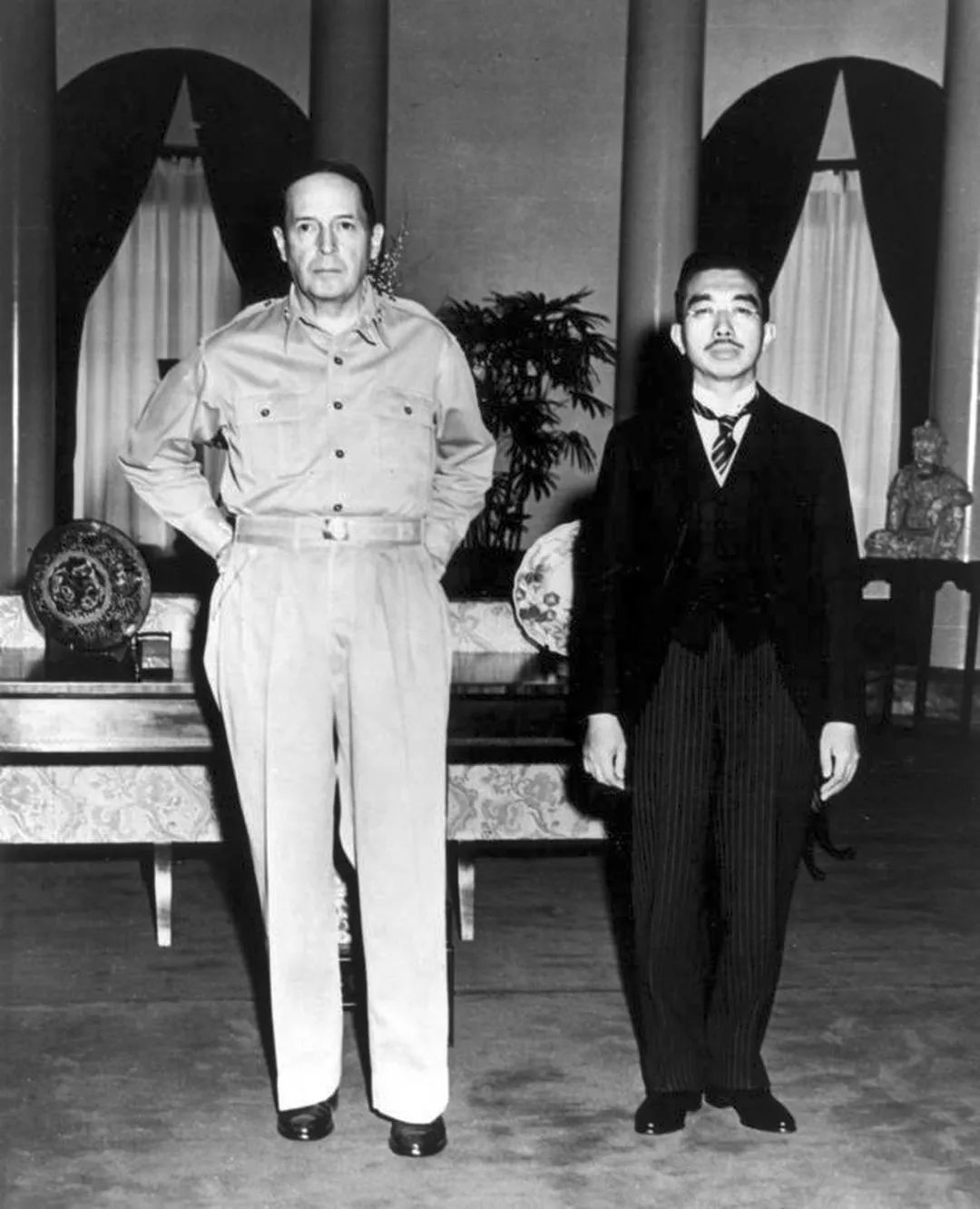
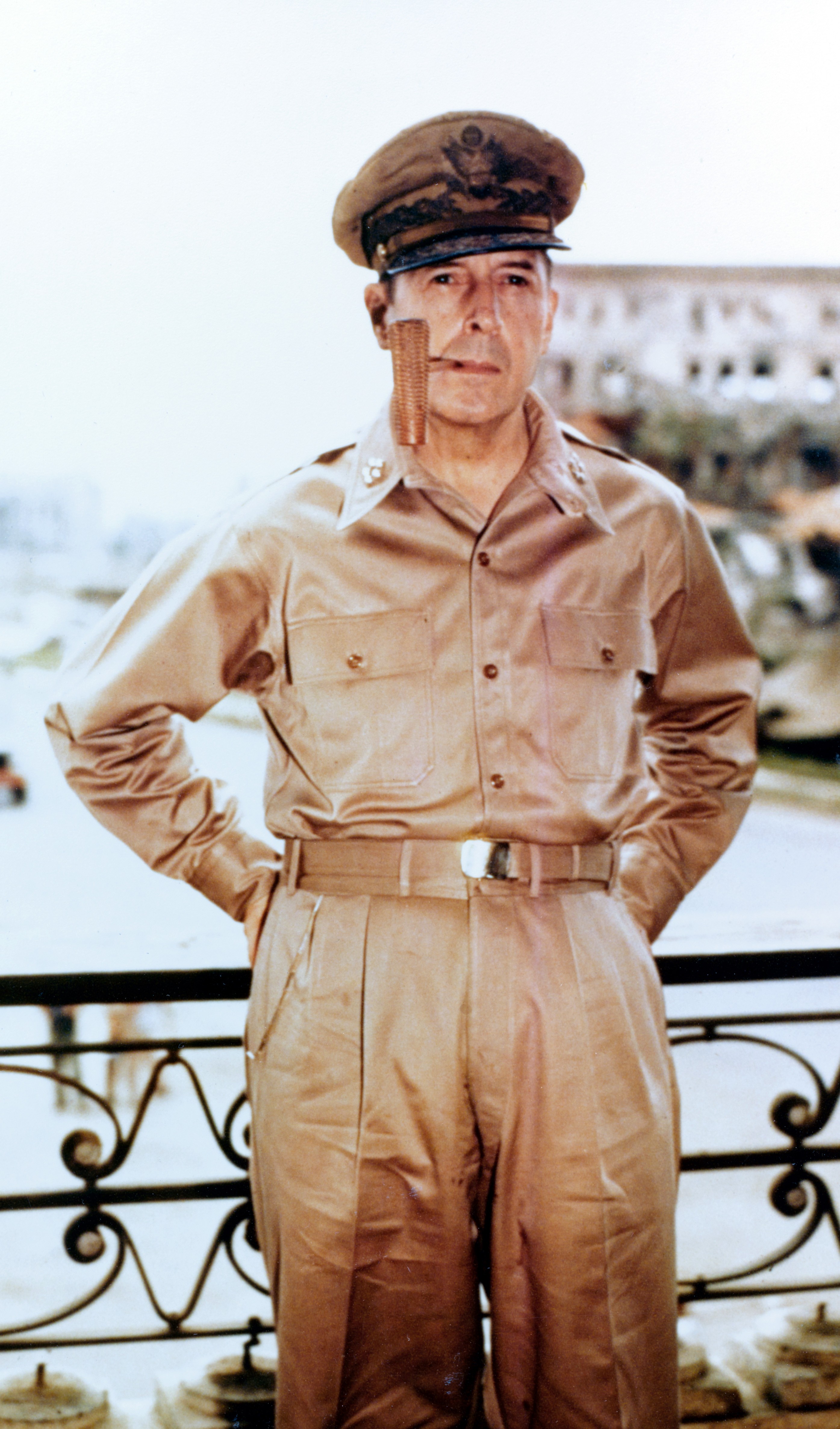
Arthur MacArthur Jr (c1899) | Douglas MacArthur (1945)

OH WHATS THAT? AMERICAN IMPERIALISM! NEVER! (1900)

I say this becuase the American shogun of Japan, Generalissimo Arthur McDouglas, was himself the grandson of a bonafide white supremacist, Arthur MacArthur Jr (yes thats a real name), no less the 3rd Governor-General who oversaw the American colonisation of the Phillipines from 1900-1901 in which Filipinos today are only escaping the 'colonial mentality' of Americanization.[5] During the American colonisation of the Phillipines from 1898-1903/1948, under the American Imperial 'guiding hand of Beneficial Assimilation' a policy of American expansionism, otherwise known as imperialism, the USA 'succeeded soveriegnty' in the total 'domination' of the Phillipines, killing 500,000 Filipinos and preventing people from speaking Tagalog, Kipling wrote the White Man's Burden for this very conflict. Arthur MacArthur Jr himself contributed to the genocidals slaughter of Native Americans and Filipinos, and an added bonus fought on the Confederate Side during the American Civil War.[6][7] It was this arsehole who Douglas MacArthur greatly admired when it came to his turn to take the guiding hand of white America.

Douglas MacArthur himself was at first admired by the Japanese and Filipinos themselves for having helped to get Japan 'back on track', if you ignore that under his abysmal tutelage Japanese civilians starved to death form 1945-1947 due to food shortages he was in charge of. Initially disinterested in the whole ordeal, MacArthur eventually was given the go ahead to 'reinvigorate' the Japanese economy, only because America was scared the Cold War would break out and so turned to making Japan a new American home away from home, which given the Okinawa camp bases has proven to pass, and is questionable given that any 'protection' the US is meant to offer did not prevent North Korea from landing a Nuke off the Japanese coast in 2017.

Japanese Cinema, or the Uneasy Mess that was postwar Japan (1947)
Do you think they'll notice the Nankai Earthquake, assassinated Prime Minister or the Train Derailment and Communist Takeovers Mr.Dog? No me neither! 

With this reinvigoration, MacArthur, himself a great of Caucasity went about turning Japan into an offbrand American, even though Japanese politicians and civilians were the ones doing most of the actual work like pushing for the JSDF instead of being armed, and then in 1950 took credit for his supposed success story. The reality was much more complex, and stories abound of the humilation and starvation of Japanese civilians who described the lifestyle as the 'onion life', the act of peeling away one layer after another of precious wartime goods for sale to an American GI for chocolate or clothes, many of these items being Kimono, many heirlooms. Under further inspection, we also see how MacArthurs hatred of all things 'native' reared his ugly head when he was fired in 1951 for misconduct. One of his famous quips from the time was 

"Measured by the standards of modern civilization, [Japan] would be like a boy of twelve as compared with [the Anglo-Saxon] development of 45 years."

It was said MacArthur congratulated himself when people began stealing Money as it was finally worth something (1948-1953 Banknote)

Nobody quite missed him when he left and any Japanese support he had garnered was left for his tail to hit the door on the way out of his being fired. Under this influence Americanization in Japan took place, and all things Americana became popular. Kimono became under the (keyword) Eurocentric worldview that the 'Far Eastern' Japan being an 'Oriental country' had its 'Oriental native dress'. This caused KTC and wearing Kimono to decline in Japan from 1950-1990. 

That, Kimono Wednesday protestors, truly is the Orientalism of the Kimono as an institution under a White Supremacist Regime which caused the deaths of ordinary people who went hungry whilst the wartime leaders of Japan Inc, another proponent of racial superiority got away scot free. 

So MacArthur, surprise surprise it runs in the family, Caucaustic Douglas was kicked out. Onion lifestyle gave way later on to the thrift lifestyle, it was said Tokyo changed more from 1950-1960, than America. This gave birth to the 'Dying Industry' Narrative, which if I must explain, is White Supremacy becuase it is saying that Japanese people cannot wear define what Kimono is or does becuase only White Americans can decide that. Only White and American journalists, who write these stupid articles condemning the loss of 1 or 2 Bingata textile specialists (purely an example) frame the whole Kimono Industry and playing with Fashion in KTC, as a lost art of the Old Japan where the Geisha room and you may see where I'm going with this.

The humiliation of defeat coupled with the notion that once Japan must 'get with the times' and take the 'American way', known by any other name as a colonial mentality, relegated the Kimono over to the LDP, another proponent of Arthurs 'successes' which brings us to the final point, Japanese Ethnocentrism and how this ties in with Kimono. 

The National Diet (1945) The Menu here wasn't Onion Soup


Japanese Ethnocentrism

That the Kimono is a 'Traditional Ethnic Garment' also falls under the trap of promoting Imperial Japanese and extreme right-wing Japanese values, like Good Wife, Wise Mother. Sounds rather nasty right? Indeed it is, but an easy enough to fall into trap. Notions of the purity of the Japanese 'race' or the Yamato were abundant in 'Dai Nippon' and to some extent the right wing political though today. Couple this with the fact that Japan had a habit of Othering other groups in the 'Greater Co-Prosperity Circle' and promoting 'pure' culture, and we find a worrying copy and paste of the Huns German 'pure Aryan' ideology. This because of course it does extend by the 1930's to the Kimono as being a 'purely Japanese' garment which is just complete hogwash.[2] 


Boxer Codex (1590) | Offbrand Tang (Old)

Hogwash as if you read my silk post, you will see how fluid and transnational the concept of Kimono, a social construct really was, such as that the only really Japanese thing about Kimono is how the width of Obi were worn during Sakoku (1643-1868). I say this because the boxer codex (1590) testifies to the idea the Kimono itself was a local interpretation of Tang dynasty era clothing with a dropped waist for ease of movement, hairstyles were still fashionably influenced by Chinese chignon styles known as Kosode and the materials to create all of these? Imported from Korea and China between 300-800AD! Clearly not a purely Japanese driven Garment when the historical record is examined.

Returning to the 1930's, this came about by the outside pressure to define Japaneseness and combination of GW,WM with Yamato Nadeshiko from 1880-1920 became part of the national myth in the oncoming decade as Japanese nationalism began like Bushido to eat itself away and its attempt to become 'equal with the west', which meant that social factors like dress and nationality intersected and became weaponised for the 'good of the nation'. WWI conservative and patriarchal ideals such as the purity of the 'Japanese Yamato Woman' required her to wear Wafuku, Kimono by that time being a popular choice as other styles of clothing were available. This nationalist reaction therefore fostered a new relation with JKTC, which said that wearing Kimono was a act of patriotism, an act which by from 1938-1945 became understandably part of the hierarchical value structure in Japanese colonies derived from Japanese Ethnocentrism, that is the proliferation of the Kimono onto 'imperial subjects'.

Unfortunately this incredibly insipid right wing ideal that a Yamato Nadeshiko (not a bad thing by itself) must wear Wafuku is still kicking, and is heavily intertwined to conservative visual ethnocentric value systems. The wives of the LDP politicians, mostly conservative for example, still have to wear Kimono to the Diet as a mark of respect to Japaneseness. Arguing therefore under the, 'this is a Japanese only costume' logic is like saying to the Pedi Tribe of South Africa that they cannot wear a kilt because the Kilt has nothing to do with them, ignoring the shared histories, cultures and symbolism of how the Kilt ended up there as purely a symbol of 'Colonialism' or because the Pedi are not 'Scottish' or that it was cultural appropriation, which are by the by, the same kind of arguments made by white supremacists in the Transvaal (like James Hertzog) for the retention of their 'local indigenous culture' and why the whole business of labels and categorisation of culture can be incredibly tricky and far more complex than we at first expect things to be. Also fascism is a bloody tricky thing to combat.

BLEH

Concluding

In conclusion, things are not always what they seem. Kimono KTC, is certainly a victim of White Supremacy, it came into being under the damn thing in the Meiji period, and it suffers the taint of nationalist favouritism in the modern day. However considering the history of Asian and American Ethnocentrism, and how this intersects with KTC, it surprises me that more Asian-Americans did not fully grasp what they were defending in the fateful days of yore in 2015. Rather, it is I would argue, a White Supremacist thing to say that culture is static, pure and relegated to the past (see the Boer argument for 'white rights'), rather than a living tradition of diversity, change and complexity (Afrikaans as a cultural marker for example is similar, a colonial mess but spoken by Black and Ex-Slave populations like Cape Malays). Complex because Kimono are also a symbol of oppression for some East Asians.[2] 

So anytime someone tells you that wearing a Kimono is racist, even though you support local artists and secondhand sellers in Japan, are a supporter of small local/global businesses and help spread informative cultural etiquette, which I argue is a form of cultural appreciation, I would direct their attention to the leaving remarks and comments of the man America sent to 'civilise' Japan, or even Henry Long, or Pierre Loti, because oh boy, a foreigner in a Yukata at a Matsuri is probably not as influential or damaging, as the very thing that yes, does kill people, like going hungry because they cant afford to keep their businesses open because traditional crafts are dying out in Japan becuase American journalists framing the Industry as dead does not help put money in the cash register, nor does silencing or driving away Institutions trying to share international culture by screaming at strangers that they are oppressing you by wearing cloth for 5 minutes. Im still mad this happened 6 years on, can you maybe tell XD 

In conclusion kids, do your homework before you say its something or other first. Please for the love of God.

Bibliography

[1] See Essay #2

[2] Kimono and Colony, Rie Mori, 2011, pp.85-91, Voices from Japan

[3] https://soranews24.com/2015/07/17/kimono-artisans-hope-to-revive-dying-industry-by-taking-kimono-to-new-york-fashion-week/

[4] https://en.wikipedia.org/wiki/White_supremacy

[5] https://www.youtube.com/watch?v=YupIdd5DMn0

[6] http://www.crcworks.org/sumangil.pdf

[7] https://fpif.org/the-racist-underpinnings-of-the-american-way-of-war/

[8] https://en.wikipedia.org/wiki/William_Adams_(pilot)#Establishment_of_an_English_trading_factory

Socialies

https://www.etsy.com/uk/shop/KaguyasChest?ref=seller-platform-mcnav or https://www.instagram.com/kaguyaschest/ or https://www.youtube.com/channel/UC5APstTPbC9IExwar3ViTZw, or https://www.pinterest.co.uk/LuckyMangaka/hrh-kit-of-the-suke/

Sunday, May 2, 2021

Emperor Ai | Artyfarty

Emperor Ai of Han (personal name Liu Xin | 劉欣 | 25 BCE-1 CE), was an emperor of China's Han dynasty.  Deffo not BL (1651, PD) Chen Hongs...