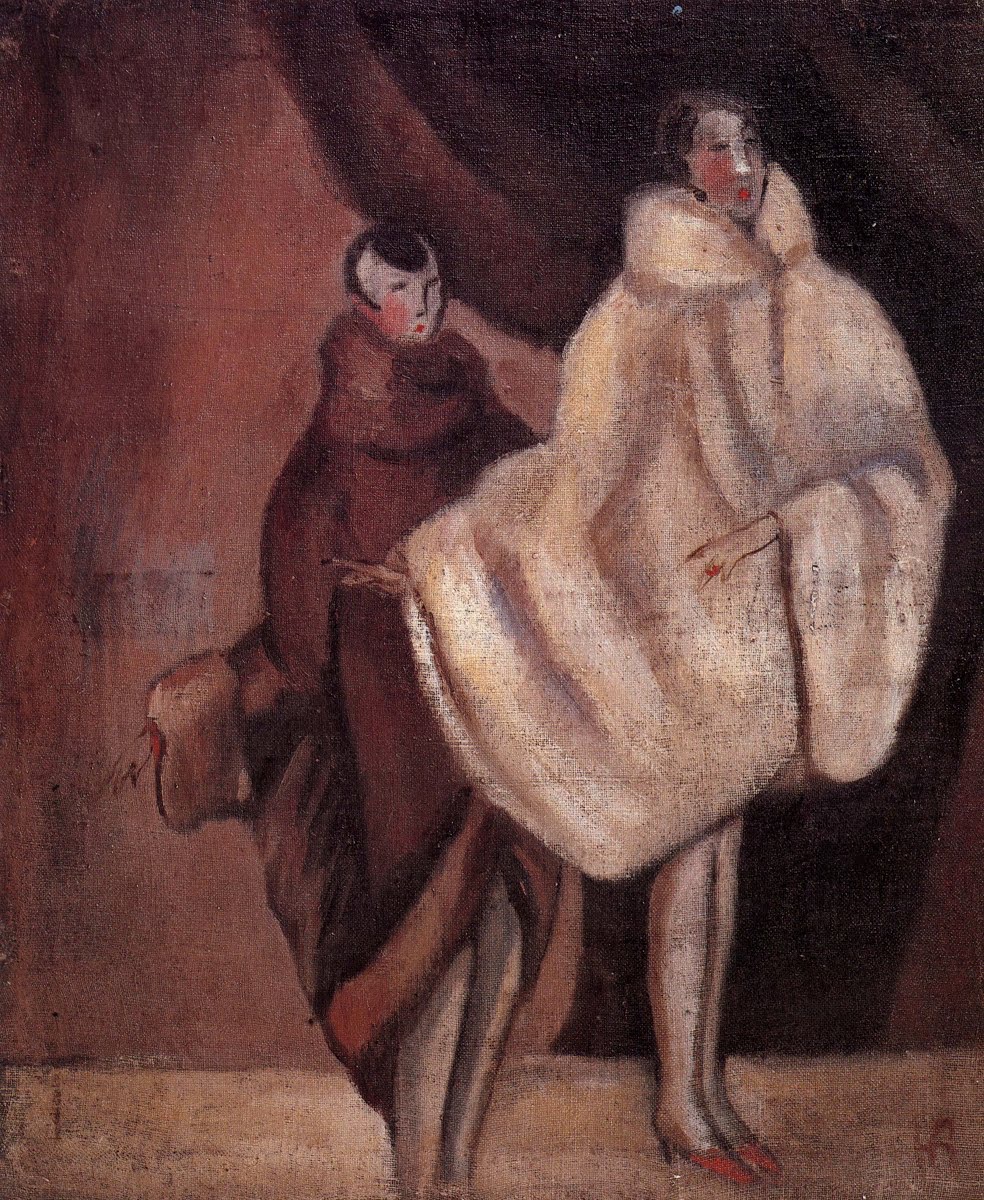
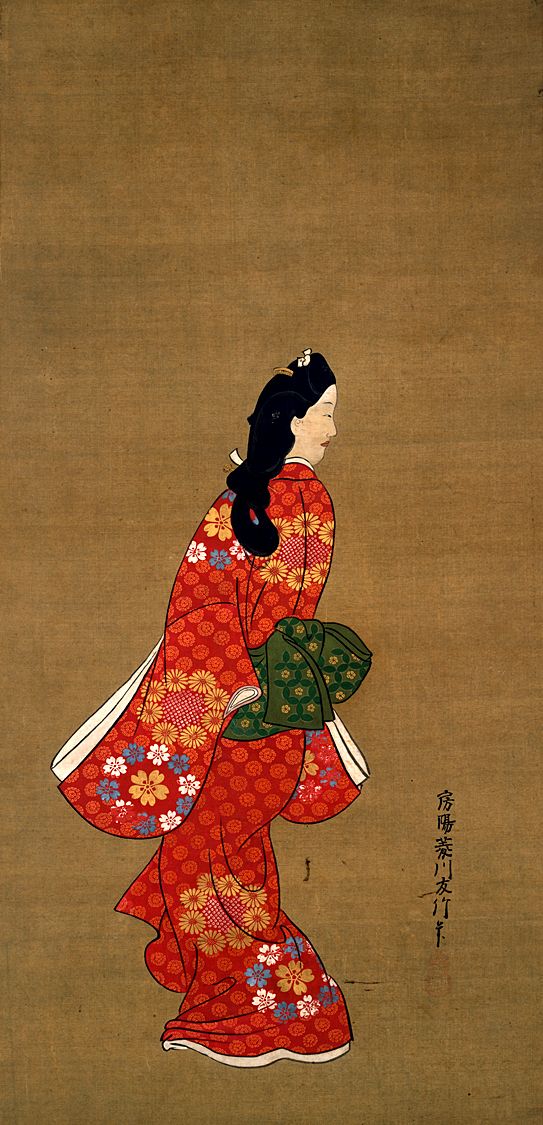
Her Haughtynesses Decree

Showing posts with label Genroku Style. Show all posts

Sunday, November 12, 2023

宇野 千代 | Uno Chiyo | 1936 - 1960 | Essay #22

This essay explores the work of Uno Chiyo (1897-1996) as a Kimono Designer. Uno was a prolific 20th century Japanese writer and designer. As such, Uno was familiar and fluently versed in KTC throughout her life. Uno founded the influential Style which was in circulation in Japan from 1936-1959.[1] Uno was heavily influenced by Western and Genroku fashion, and focused her aesthetic on these two whilst encouraging masculine and secondhand consumer habits in her approach to Kimono as a fashionable and modern pursuit. Uno provides a fascinating glimpse into a time before Kimono were stigmatized and were instead merged with Yofuku to inform Japanese identity and femininity in new and stylish publications and normoactivities.
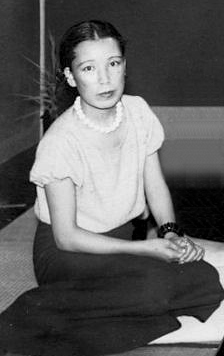
Uno Chiyo (1935, PD) 白拍子花子

Uno led a fabulous devious life in her early years, losing her first job due to the stodgy old men of the time who fired her upon discovering her affair with a male colleague in 1915. She became a writer by 1920 and it was hereafter she began to attain literary success in Japan. In 1921, she won a prize for her 1921 short story しふんのかお ( Shifun no Kao | Painted Face)、where afterwards she moved to Tokyo. This drove her into the 1920's urban cultural scenes of Art, Fashion and publishing. It was during this time that she developed her specific outlook and relationships to the major influences and artistic avenues which she pursued in her life as Japanese woman living in the 20th century.

Atarashii Onna

Uno was influenced by the times she lived in, and was repletely surrounded by the influence of Western design and fashion. In 1927 for example, she joined the fashion for Moga, and bobbed her hair and entered into the cultural era of the 'New Woman' which had become emblematic of what some called the 'Jazz Age' and the 'Liberated Woman'. The New Woman, which itself was a trope which came from the writing of British writer Sarah Grand (1854–1943) in 1894 which called for the liberation and emancipation of contemporary Victorian women in their bid for independence from patriarchal systems and oppression.[4]

This was taken up in English society and expanded upon by Maria L R Ouida (1839-1908) used the term in a response article entitled 'The New Woman'. The English writer and editor Ella Hepworth Dixon (1857–1932) also reproduced this in her is novel 'The Story of a Modern Woman'.[3] All of these writings expanded on the idea of women encouraging a human sisterhood common to all in the face of the strife faced in the Victorian and Edwardian age, be it financial, emotional, physical etcetera. They encouraged those women with enough money to uplift those without it, to live their lives independently and to foster a modern sensibility of female agency and embodiment of those ideals. This became a wave of popular modern conscious though in Britain by 1913 with issues like the Cat and Mouse Act, which called for universal suffrage to women over 25 with property soon earning the right to vote in Britain.

Women of course have always done these things, but have had to work within the limits of their day and age and thus are not always given the respect they deserved as human beings and so are not as well represented, recorded or even remembered as they could be, and thus this was their pushing against these systems and structures which denied them their creativity, their work, their social lives and their autonomy. This modern image of womanhood was taken forwards across the Empire, infamously across the Atlantic Ocean into North America. British writers such as Indian-born Annie Sophie Cory (1868–1952) The Woman Who Didn't (1895) deeply held and spread these ideals and celebrated women such as Bengali writer Toru Dutt (তরু দত্ত | 1856-1877), English Amy Judith Levy (1861-1889) South African Olive Schreiner (1855-1920), Australian Mary Chavelita Dunne Bright (1859-1945), Indian Kodagina Gowramma (1912-1939) who already lived these experiences around the British Empire. As one British child of Empire wrote:

'We must kill the force in us that says we cannot become all we desire, for that force is our evil star that turns all opportunity into grotesque failure....So let us each recognise the truth that our first business is to change ourselves, and then we shall know how to change our circumstances.' 

- Florence Beatrice Emery (1860-1917; Our Evil Stars, New Age October 1907)[2]

In Japan, the modern woman was spread both directly as a result of British Women, and via women who lived in and outside of Britains Empirical Domains. The Japanese Magazine Seito (Bluestocking) drew on this British legacy, gaining its namesake from the British society of the same name which operated in the 18th century, which first published in Japan in 1911.

Bad Wife, Dumb Mother, Usurping Student

By the 1900s, this well versed and influential feminine archetype had spread internationally. However this spread more slowly in conservative and patriarchal societies and cultures. Across East Asia, this generally meant that the New Woman genre only became popular by later decades, for example in the case of the writings of Ling Ding (丁玲 | 1904-1986) who was persecuted in China for her writings, and was imprisoned in 1933.[5] Korean chauvinists eagerly followed on with, dismissing the learned feminine as simply a caricature of Western capitalism. They urged women instead to be their Gibson girl ideal, a male caricature ideal of a woman who not career driven, but instead was busy chasing after her children in the domestic sphere and perhaps staring at an aesthetic copy of the Confucian and Chinese classics, all of which our male writers kindly informed us all placed women in the proverbial kitchen, making not sandwiches who supposedly were responsible for all of Japan Inc's all seeing grip on the Korean economy.[3] 


Ding Ling (c.1930, PD) Zanhe | 'Dancers' (1927, CC4.0) Na Hye-seok

The Korean Modern Woman writer and artist Na Hye-seok (나혜석 | 1896-1948) published Sinyoja (New Woman) was Chiyo's Korean counterpart, who wrote on Korean clothing and was writing in similar circumstances. Educated women in both countries combated male ideals of women such as Hyeonmo Yangcheo (현모양처 | wise mother and good wife) or Wise Wife, Good Mother (良妻賢母) were coined from 1875 by East Asian men towards women who operated in East Asia in the 19th and 20th centuries, in their writings and published work from the 1910s on, often risking their marriages, finances and social standing in doing so, much as Uno did on losing her job as a result of her 'lifestyle choices'. These Asian writers often promoted ideals of pursuing ones own desires as a woman, independent of what patriarchal systems told women to do so. However it was not until the 1930s that universal suffrage became a topic in Japanese politics meaning the Modern Women became the Modern Girl as a result of a lack of change in Japanese society towards the feminine, leading to the world Uno began her career in as Moga.[1][4]

Tipsy (1930, PD) Kobayakawa Kiyoshi

Sutairu

In 1936 Uno founded one of Japan's first fashion magazines, these were a rather niche market at the time of women's magazines published in Japan. As one of the first women in Tokyo to live the life of a Naomi (see Chijin no Ai, 1925), Uno lived a heady lifestyle in the circles of Tokyo poets, artists, designers, publishers and their patrons who all moved in each others social circles. The modern women who Uno wrote about, for and with all tread a grey area where dress was an important marker of the time. Stepping too far into Western clothing was considered too much, albeit that their male counterparts had been doing this for decades and were considered masculine. A whole ensemble was too much, but a glove was acceptable.[6] Only wearing purely 'Wa'fuku was considered very conservative and uptight, a strange double standard which denoted ones place in society as a second class subject and the political spectrum. 

Uno's founding her magazine then, can be seen as a rebellion against the traditional and morally acceptable standards of the frugal Shufu archetype popular in the mainstream magazine offerings of the likes of Shufu no Tomo (Housewives Friend). It focused on the needs women had, raising them to the mantle of the independent woman with purchasing power, a scary notion for those upholding systems which said women could not have their own money. Sutairu (スタイル | Style) covered a range of topics, but included both Yofuku and Wafuku and was the first to include fashion trends started or used outside Japan. This was a departure from the expected intentions of marketing to women, as previously you could deprive, degrade and dismiss women as agents with autonomy, but they could be trusted to make their way down to the department store, to be paid less for modelling in Kuchi-E than male counterparts and to be used to make revenue from and marketed towards by male owned companies and magazines but not to be thought of as smart, innovative or worthy of attention.[6]

Sutairu instead aimed itself at young female demographics, teaching them to be thrifty, modern and elegant year round. Sutairu threw off the rules of old and utilized plain and 'exotic' fabrics to bring interesting new combinations and styles to Japanese Kimono, a style Uno referred to as the 'New Kimono'.[12] Uno also encouraged her readers to utilize fabrics from Asia, like Black Velvet and natural fabrics which originated in Japan and India, particularly in fashions like Black Satin Eri which revitilised older Meiji era Kimono in 1937.[12]

Sutairu also promoted from the second issue street photography, which praised the thrift and innovation of Japanese women during rationing as modern cosmopolitan consumers.[12] Whilst at the time to promote local Japan Inc. economies, Meisen for winter was all the rage, Uno instead taught women to use fashionable attire in Summer, and to be thrifty with new materials for their Obi, such as upcycling old fabrics for the winter.[12] Sutairu's style choices harkened back to the Genroku Period (1688-1704), a time in which JKTC was at some of its most garish and vulgar.[13] Silver lame Kimono, Velveteen accessories, Leather Sandals and bold patterns all featured amongst recommended articles Uno published from 1936-1938. Other style pointers included using the lining of the Tombi style overcoat to arken back to the Sumptuary Laws of the Genroku period to include a flashy fabric such as Tartan sparingly.[12][14]

Seeing as these garments were made from Wool, it replaced the need to layer multiple garments over other Kimono as had previously been done and changed the winter silhouette for a time. Japan Wool Textile Co., Ltd was an early introducer of Wool as part of KTC when it began production in 1896.[1] It was in this time when the importation of Wool was particularly high, with most imports coming from England and Germany in 1898.[5] The suppliers of Wool of at this time came mostly from Western Mills, such as the A W Hainsworth Mill (est.1793), which in 1899 recieved an order for 'Black serge' wool to be delivered to Yokohama. This saw the introduction of new types of overcoats and capes such as the Tombi, Nijuumawashi, and Azumakouto.[14]

From 1937 on, Uno discussed how her own Kimono making processes involved the use of fabrics like wool serge to replace other winter fabrics and to recreate the feeling of deep blue Kimono for women, a transgressive act for a woman at the time given that patriarchal values were beginning to set in again with the advent of the Pacfic War with China beginning. Whilst this may be a reflection of the move towards patriotism with plain and militaristic colours like navy blue and green, floral motifs were also popular in Sutairu that year. She also encouraged her readers to begin wearing secondhand Kimono once again.[12] By 1938, Uno encouraged more women to adopt these masculine fabrics and then also to have a Meisen Kimono, but with large and bold patterns with Uno's favourite Black accent accessory with a pinstripe or Kasuri Kimono and hand painted Geta.[12]

After this time Sutairu seems to have encouraged the adoption of Western accessories, foreign origin fabrics, vintage Kimono and Genroku period fashions which may be regarded as a precursor to many of the Dori-Style Kimono worn in the 2010s, and Revival Style fashions of the 1990s which paired together bright colours and styles with the traditional and paired down Kimono often found in the markets their owners purchased their Kimono from.[12] During the 1940s, Uno successfully became a designer and writer, focusing her time on both of these and some film ventures. During this time, her Kimono become very Genroku influenced, with singular bold patterns trailing around Kimono, reflecting the Ma of Genroku Kimono. Her designs were also influenced by more Western paintings and ideas it seems, incorporating more of these fantastical exotic fabrics and masculine ideals of dressing until the end of the war, when afterwards her designs returned to a more Genroku influenced tone with some pared back yukata designs in the mix. 

Sutairu at this time was likely to have undergone censorship from SCAP regulations, and therefore may have focused more so on Japanese domestic affairs or incorporated more Yofuku than it may previously have done so willingly.

Occidentals beginnings in Fashion

Uno brought fashion for the first time to the Occidentals in the 1950s, bringing Wafuku together with Western art theory and graphical design principals in line with Japanese sensibilities towards designing Kimono. In this way, Uno introduced a great many Westerners, Europeans and Americans to how Kimono could be thought of, worn and style rather than simply being a 'traditional costume' from Japan. Rather it grounded the Kimono in a history of art theory and applied workmanship from Japan, with Western design and motifs familiar to them which allowed Kimono to become fashionable aesthetic pieces of art outside of Japan, in a far more respectful manner than the second plundering of Japanese wardrobes which occurred under American occupation in the aftermath of the Pacific and Second World War.

By 1954, Uno seems to have become a successfully regarded Kimono designer, incorporating classical motifs into modern designs which whilst not entirely stale are not totally ground breaking either, but she often used her clout in publishing to guest edit it seems so that her designs and tastes influenced trends well into the 1950s for Kimono, which was really on of the last few decades were Kimono were still produced en masse and bought by a wide audience.[10] In 1957, she flew to North America where she hosted one of the first Kimono Fashion Shows there, one of which seems to have included Piet Mondrian's Landscape paintings series.[1][9] 

Even after Sutairu folded in 1959, Uno still was regarded as a tastemaker in Wafuku related matters and continued to be sought after for her opinion on the matter well into the 1980s and 1990s until her death in 1996.[11] Modern Japanese KTC has been influenced by Uno's Hanami and Sakura designs which became popular during the early 1950s and were used in both Yukata and Furoshiki.[7][8] 

Conclusion

In context therefore, we can see how the international political and modern interpretation of Japanese and British culture lead to an emancipated and forward thinking adoption of Yofuku as a symbol of Japanese Women's struggle to become full persons. Uno introduced and used Kimono to bring herself financial and social independence and gave this to her readers and characters by embodying the trope of the New Woman in the course of her time as a Kimono designer and publisher. Uno used Sutairu to finally meld the Modern Girl with the Modern Woman trope, and she did this by using Modern design principles and Art n her designs and in carefully curating what she presented to her audiences from the 1930's into the 1950s whilst working within the constraints and limitations of her time.

Bibliography

[1] https://en.wikipedia.org/wiki/Chiyo_Uno

[2] https://en.wikipedia.org/wiki/Florence_Farr#Later_life

[3] https://en.wikipedia.org/wiki/New_Woman

[4] https://collections.reading.ac.uk/special-collections/2022/12/16/the-new-woman-five-women-writers-of-the-1890s/

[5] https://en.wikipedia.org/wiki/Ding_Ling

[6] https://www.myjapanesehanga.com/home/articles/bijin-kuchi-e-and-taisho-era-popular-magazines.html

[7] https://kyoto-asahiya.com/products/polyester-furoshiki-chiyo-uno-hanasakizakura

[8] https://www.akariya2.com/kimono2015-5-27.html

[9] https://twitter.com/tsubaki_an/status/772440228942319616

[10] https://www.kosho.or.jp/products/detail.php?product_id=330716252

[11] https://ameblo.jp/yoshiko-artlife/entry-12256427146.html

[12] A Study on “New Kimono” in the Magazine SUTAIRU edited by UNO Chiyo, Matsuo Ryoko, 2023, pp.165-175, Volume 16 Yamaguchi Prefectural University | https://ypir.lib.yamaguchi-u.ac.jp/yp/journals/yp000005/v/16/i/%E5%9B%BD%E9%9A%9B%E6%96%87%E5%8C%96%E5%AD%A6%E9%83%A8%E7%B4%80%E8%A6%81/item/1754

[13] See Essay #8

[14] See Fabric #12

Essay Abstracts 

#1 Renee Vivien (1877 - 1909) --- Born Pauline Tarn, was an English lesbian poet. She wrote in French and perhaps English. She took up the style of the Symbolists and Parnassinism and was well known during the era of the Belle Epoque (the Beautiful Age) for producing Sapphic verse and living as an open quasi butch lesbian poet; her verse derived from the ancient poet Sapphos, also famed for her love of women.

# 2 Birth of the Kimonope --- Here I shall introduce the notion of the Kimonope, that is as a garment attached to the social construct of the 'Geisha' in North America. Kimonopes being Orientalized clothing, or 'negatively affiliated or exoticized ethnic dress' which lead to the perceived notion of the Kimono and Geiko as simultaneously both high and low culture to American culture makers, such as film, television, media, writers and some academics. An example of Kimonope are the tacky Halloween costumes you may find at the Dollar store.

#3 The Legacy of the MacArthur Dynasty on KTC & The Problem with the 'Traditional Garment' Argument --- The problem with arguing that the Kimono is a 'Traditional ethnic Garment' is that that assertion is in itself, arguably  Ethnocentrism, which to clarify is the imposition of, in this case, American values onto Japanese cultural values, belaying the 3 pronged pitchfork of idiocy. 

#4 Divine --- Government name Harris Glenn Milstead (1945-1988) was the infamous North American Queen & Drag artist. Specifically, Divine was known for being a character actor, part of her act is well-known for its eccentricity. My personal exposure to Drag lite was Pantomine Grand Dames as a kid, and later when my friends made me watch RuPaul in art classes, so to me this is nothing new, the over the top, the glitter, the upstaging is all part and parcel.

#5 Dori-Style or 21st century Kimono Fashion --- The Dori-Kimono style. Something which I just made up because in going over notes for the first 20 years of 21st century section of Kimono history, I noticed a lack of a clear catchall term for what was happening in Japan at the time, at least in English descriptions of the time. I use the term Dori as I do not want to coin an unrelated term to the topic, but I also am reticent to claim all of Street style as 'Tori' either, whilst a large number of streets upon which the subculture originates in all use the suffix 'dori' (the bottom of Takeshita-dori for example), thence Dori-style.

#6  The Tea Gown --- This essay will cover the aspects of how 19th century Japanese import textiles to Western countries were used and repurposed, as well what their desirability tells us about how Japanese design was regarded and the image which these people held of Japan through the Western lense and consciousness. This follows the progression of how Kimono can be used in the West from the undress of the 1860s, adapting silk bolts in the 1870s to high fashion western daywear, to the 1880s aesthetic movement and 1890 wholesale adoption in the Victorian age to being used prominently by society hostesses as tea gowns by the Edwardian period, and the subsequent change in Japanese export culture which we see in extant textile collections of Japanese textile in Western dresses of the periods.

#7 Kimono and the Pre-Raphaelite Painters --- This essay will cover the aspects of Kimono in the Portraiture of the Pre-Raphaelites. The Pre-Raphaelites were a group of British artists and writers active during the late Victorian period. Unlike the Royal Academy artists, this circle of painters operated outside of the established comfortable boundaries of the expected white, cisgender middle class audience of the Victorian age. The movement is notable for its inclusion and encouragement of women, and in portraying and engaging non-conventional beauty and beauties as figures from the Classical World alongside Religious, Mythological and Folklore Heroines into Victorian 'Femme Fatales'.

#8 Jokyo/Genroku Kimono Textile Culture and the new role of the Komin ---  This essay will return back to GKTC (Genroku Kimono Textile Culture ; 1688-1704) and JoKTC (Jokyo K.T.C. 1684-1688) and the new role of the Komin (Artist caste) in GKTC. JoKTC is notable for being the lead up to GKTC, JoKTC being characterised by its transitory nature in comparison to GKTC, which was far more bold in its relations to what Kosode could and should be. Komin entered the picture at this juncture, and I shall elaborate a little more here than in other posts about why that was. GKTC is notable for its elaborate, perhaps gaudy and innovative Kosode design features, whilst JoKTC more so for the enabling factors of the time, as a sort of incubatory GKTC.

#9 Tagasode Byobu - This essay will explore the art motif known in Japanese art as Tagasode Byobu ( Whose sleeves Screen) This motif is a recurring art form which was particularly popular during the Azuchi-Momoyama era ( 1568-1600 ) as a representation of the ways in which Buddhist sensibilities met with the fast changing events of the end of the Sengoku Jidai (1467-1615) and as an extension of the habit of wealthy women from military families came to own and store a large number of Kimono. Prior to this, Kin Byobu ( Golden Screens) for the most part depicted nature like Sesshuu Touyou (1420-1506) after Chinese Cha'an painter Muxi ( c.1210-1269 ) or 'flower-and-bird' scenes like those of Kano Eitoku (1543-1590), rather than humans or human paraphernalia as an extension of the Zen painting school of thought about materialism.

#10 Cultural Acculturation --- The topic of our essay is on the nature of Cultural Exchange in KTC which will be an ongoing mini-series throughout 2022. This covers the 1000CE - 1500 period in Japanese History.

#11 Cultural Appropriation --- The topic of our essay is on the nature of Cultural Appropriation which will be an ongoing mini-series throughout 2022. 

#12 Cultural Acculturation --- The topic of our essay is on the nature of Cultural Acculturation which will be an ongoing mini-series throughout 2022. This covers the Asuka (Hakuho), Nara (Tempyo), and Heian periods (500CE-1000CE) in Japanese History.

#13 Asai Ryoi --- This essay will explore the legacy of Asai Ryoi on KTC. Who was Asai Ryoi you may ask? Only one of the most important writers for the Ukiyo genre. Asai Ryoi ( act. 1661-1691 ) was a prolific Ukiyo-zoshi ( Books of the floating world )  or Kana-zoshi  ( Heimin Japanese Books ) writer. His leading 1661 publication, lambasted and satirized Buddhism and Samurai culture of restraint in favour of the Chonin lifestyle of worldy excess.

#14 Edith Craig --- This is a post regarding the early adoption and promulgation of the Kimono and Japanese aesthetics in the life of the wonderful Edith Craig (1869-1947), daughter of the famous actress Ellen Terry (1847-1928) and Edward William Godwin (1833-1886). Edith was also known as 'Edy'.

#15 European Banyans --- This essay will explore the European garment known as a Banyan, which originated as a European reaction to Kimono in the 17th century, popular until the end of the 18th century. The word Banyan originates from Arabic ( Banyaan), Portuguese (Banian), Tamil ( Vaaniyan ) and Gujarati ( Vaaniyo ) loanwords meaning 'Merchant'. Alternative versions saw the item fitted with buttons and ribbons to attach the two front sides together. The Banyan was worn by all genders and was particularly regarded in its first iterations as a gentlemanly or intellectual garment worn with a cap to cover the lack of a periwig, and later adopted by women and greatly influenced how British womens garments were designed with preference for comfort in removal of panniers whilst maintaining luxurious, modest 18th century fashions (see Robe a la Anglaise).

#16 Miss Universe and Kimonope --- This essay will explore how Beauty Pageants, principally Miss Universe, has engaged with KTC. While there may be real Kimono worn by Japanese and Japanese adjacent contestants in the 'National Costume' category, I will be focusing on the Kimonope worn by contestants. The idea of Kimono as a 'national costume' sparks interesting conversations on what 'national costumes' are, their target audiences, and how we form ideas about these things to begin with.

#17 Onna-E --- Womens pictures refers to the Nara, Heian and early Kamakura ( 710-1333CE ) practice of drawing women in elongated Hand scrolls, which today are regarded as feminine gender coded Art. Some of these narratives depict the lives of women, their extra diaries, or the literature they wrote. The Onna-E style derives from how mostly Heian women represented themselves and others as a performed self in these scrolls, drawing from their lives indoors at their and the imperial abodes. Whilst a limited number of women could read Kanji, they also used their knowledge of Chinese culture to create and inspire their own culture; the first truly Wamono aesthetics; and it was with these preconditions that Onna-E became established in the Japanese art scene alongside Yamato-E and Oshi-E.

#18 A Jamaican, a Monster and Portuguese bar in the Orient --- This essay looks at the Kimonope attire adopted by North American Dancehall artists Shenseea (Chinsea Linda Lee | 1996 - present ) for the video to 'ShenYeng Anthem'. Whilst the aesthetic derives mostly from East Asian, principally Chinese aesthetics, the language used is specifically Japanese, referring to Chinsea Linda Lee as 'ShenYeng Boss', a perpetuation of the Dragon Lady stereotype. The essay mostly charts how this ridiculous Kimonope derides from the North American Anti-Chinese movement and how this intersects with contemporary Orientalism.

#19 The Red Kimonope --- The Red Kimono is a terribly named racist US silent film from 1925. The Longingist film includes a key scene which the production gets its name from where the protagonist drops her Kimonope, meant to symbolize that she had turned away from sin and prostitution, or in other words equating a wearer of the Kimono as a sex worker which stemmed from another American 'tradition'. This dreadful melodrama features the previously yellowface-accepter Priscilla Bonner as the lead protagonist. Throughout her trials and tribulations, she faces many ups and downs, like becoming a white version of the Lotus Blossom stereotype, because WASPs. I will explore the origins of the Lotus concept and the 'Jade' in more detail here as to provide the contextual background of the productions symbolism.

#20 Housewife, Business Girl, Office Lady --- I explore the concept of the arrival of the Business Girl, and the Shufu ( Censored | Housewife ) of the 1930-1970's period of the 20th century.[1] This intersects with how we see Wafuku represented, in a shifting dynamic that had not shifted so many barriers since the 1870s, and even until the 1990s with the intrusion of Euro/Americentric beauty standards being foisted upon the world during these centuries, in the wardrobes of the upwardly mobile single business women of from 1955-1965. These groups came into being in the 1950s with the advent of the eclipse of settler colonialism and patriarchal standards over women's lives internationally. KTC thus developed in response to these changing, testing and trying times (between 1930-1970).

#21 Herman's 'Kimono' --- In this essay I look at another Kimonope, specifically another Miss Universe 'national costume' entry. This particular Kimonope represents the legacy of Macarthism's neo-colonial/systemic racism, and subjugation of Japanese soft-power, a follow on of Orientalist late 19th/early 20th century assumptions and stereotypes of Asian culture and peoples which saw their subjugation in American foreign and domestic policy between 1885-1952. In this entry, we see a clear leaning into the 'Cool Japan' aesthetic by the Kimonope's designer, who is not shockingly not Japanese, but Israeli and therefore represents ideas about what Kimono are to this designer than the genuine article would to other participants of KTC, foreigner or otherwise towards 'Kimono'.

#22 Uno Chiyo --- This essay explores the work of Uno Chiyo (1897-1996) as a Kimono Designer. Uno was a prolific 20th century Japanese writer and designer. As such, Uno was familiar and fluently versed in KTC throughout her life. Uno founded the influential Style which was in circulation in Japan from 1936-1959.[1] Uno was heavily influenced by Western and Genroku fashion, and focused her aesthetic on these two whilst encouraging masculine and secondhand consumer habits in her approach to Kimono as a fashionable and modern pursuit. Uno provides a fascinating glimpse into a time before Kimono were stigmatized and were instead merged with Yofuku to inform Japanese identity and femininity in new and stylish publications and normoactivities.

Social Links

One stop Link shop: https://linktr.ee/Kaguyaschest

https://www.etsy.com/uk/shop/KaguyasChest?ref=seller-platform-mcnav 

https://www.instagram.com/kaguyaschest/ 

https://www.youtube.com/channel/UC5APstTPbC9IExwar3ViTZw 

https://www.pinterest.co.uk/LuckyMangaka/hrh-kit-of-the-suke/ 

Friday, August 18, 2023

ひらがな | Hiragana | Text | Pattern series #20

Hiragana whilst a seemingly unlikely contender has been a motif used on kimono for centuries. Text on Kimono is used often to add poetical effect to an image, in imitation of the Heian period motif of Ashida-E. Most motifs which include this in 17th century Kimono are very large often draped across the shoulder expressively on what at the time was the new silhouette of furisode, whilst modern Kimono only use this motif in smaller fonts and styles a stylistic motif to marry images and texts.[1] For example, having a waka or haiku across the front of a masters craftsmen work are some I have seen used myself, but this is an exceedingly rare and unique motif in Kimono generally speaking. Different stylsitic writing styles are used to get across different aesthetics and meanings within the space they use, as will all graphic design processes.

Hinagata-Bon showing Hiragana on Kimono design (c.1667, PD) Japan  

Historically, Ashida-E (reed writing) were a sort of insider message to those who knew the reference which the text and image correlated with during the Peace Epoch. Distinctive and 'gaudy' Kimono became the rage by the 1670s among the middle classes of Edo and Osaka due to the side effects of Tokugawa Sumptuary Legislation which saw a rise in coinage, leading to urbanisation and local industry, whose more profitable industry leaders desired exciting new ways to show their wealth due to the sumptuary legislation of their day increasingly curtailing their spending and extravagances. They got around this by buying their Distinctive gaudy Kosode made by local Machi-Eshi (Town artists) like Yuezen Hiinakatta who imitated Kakemono scrolls by writing on Kimono, a now vital trend of Genroku KTC.[2][3] This trend continued until the 18th century, but fell out of favour with new money as it was regarded as tacky, becoming instead a smaller variation by 1800 and falling out of use by 1900. Some modern kimono may use it as an advertising motif or for poetical connotation, but this is rare.

Bibliography

[1] See Bijin series #15

[2] See Essay series #8

[3] See The Bijin has Arrived in Bijin #15

Apologies that this is up a day before it should be, but honestly, I am frazzled with stress at the moment between juggling my current schedule and switching over to a new one which has been frustrating to say the least as most of the stuff that is affecting my life is out of my hands. On the plus side, it means I have more control over my schedule in the future and that I will be reopening the shop at some point in the near future, somewhere between applying for my first real career role, volunteering, part time work. full time studying, learning Japanese and slowly going absolutely insane over the absolute hair pulling out exercise that is trying to get people in cushy offices to actually answer their GODDAMN EMAILS. Either way, I am getting rather burned out and need a day off before I have to start making more phone calls, emails and frustrated page scrolling to do these peoples jobs for them and apparently also everything else that involves which is *testing* my soul. Either way, heres to the future! Sorry about the rant, I just like to be organized and this has been the month from hell for me. Toodaloo~!

Socials:

One stop Link shop: https://linktr.ee/Kaguyaschest
https://www.etsy.com/uk/shop/KaguyasChest?ref=seller-platform-mcnav 
https://www.instagram.com/kaguyaschest/ 
https://www.youtube.com/channel/UC5APstTPbC9IExwar3ViTZw 
https://www.pinterest.co.uk/LuckyMangaka/hrh-kit-of-the-suke/ 

Sunday, September 25, 2022

英国王室と着物 | The British Royals and Kimono | c.1615 - 2022

In lieu of the usual post, to respect the passing over of HRH Queen Elizabeth and early departure of Diana, this post will be updated as and when in the future. It covers the known history of the British Monarchies brushes with Kimono and KTC which spans many types of materials and forms.

EIC

Whilst it is not certain, it is believed a series of Japanese Kosode could have been sent to King James I as part of the bid to begin trade with a European country such as Britain by as early as 1615.[1] These were originally exported into the country by the EIC between 1613-1620 when England operated a factory in Japan.

Indian Gownes

Banyan were imported into England by around 1665 and are likely to have been used in the courts of Charles II, brought from Amsterdam by the EIC ( East India Company ). During this time, the fashionable wore their Banyans with the sleeves and collars folded back to expose the luxurious silks used underneath.[2]

 Merry Vests

The Banyan often was companion to the 3 piece suit which was invented at the court of Charles II in 1666. To promote English trade over French fashions worn by the aristocratic classes of England, Charles began a new fashion of wearing vests at his English court.

[Charles II] hath yesterday in Council declared his resolution of setting a fashion for clothes, which he will never alter. It will be a vest, I know not well how, but it is to teach the nobility thrift, and will do good. - Samuel Pepys 8/10/1666

The Banyan as a T-shaped garment made from silk for gentlemens loungewear was made in Britain certainly by the 1670s. It was with the advent of the newly fashionable three piece suit that aristocratic men began styling their wardrobes with lavish accents such as gold trim, silk buttons, satire worthy hats and overcoats to match. One of these fashions by 1675 was the Banyan style House coat or even Kimono in rarer instances in which the fashionable late 17th century man of means lounged around in.[2] 

The Glorious Porcelain Revolution

Arita Porcelain Ware Bijin (c1690-1700) Royal Collection Trust

During the Stuart House (1603-1704) Queen Mary (1662-1694) and her consort William were invited to 'invade' England and become the reigning *protestant* monarchs. The incoming Continental born Queen brought the fashion for Porzellan zimmer (Porcelain rooms) which displayed hundreds to thousands of decorative porcelain pieces in their collectors home. Queen Mary was known for collecting Japanese Arita-ware and Dutch Delftware (imitation Guangzhou export porcelain) at the Water Gallery in Hampton Court, and it is thought that this China-collecting habit carried on as a fashionable court hobby for ladies in particular. So much so that collecting porcelain was considered a 'feminine trait' after 1690.

The Bijin porcelain collected in the period where first the Kakiemon-ware by the 1680s, then Arita-ware in the 1690s and most prominently Imari-ware at its height from 1700-1850. Whilst it can be said that the earlier incarnations of collectors of Kakiemon and Arita bought for the 'Indian effect', later British collectors prized Imari-ware for its own beauty. You can distinguish Kakiemon figures by their subdued Ma Ji-Monnyu and sparse use of motif and colour. Arita Bijin use distinctly black Obi in their designs and a limited blue-red-emerald green colourway and Imari-ware are immediately noticable for their use of intricate red-deep blue-gold colourways and red obi. Some of these features by this time will also have catered to European tastes as export-ware.


Kakiemon Bijin (c.1675) | Arita Bijin (c.1690) | Imari Bijin (c.1700)
RTC, Dresden Palace (PD/CC3.0,4.0)

This (middle) Bijin figure wears a Genroku period (1688-1704) Ji-Monnyu style, and thus may be either from the collection of Queen Mary or Queen Anne (1665-1714). Due to the lack of interest in women collectors though, we can only go off the appearance clues alone in dating the figure, and whilst the Bijin figure is contemporary to Mary, the fashion for Imari, the colours associated in England with this aesthetic were far more popular in the reign of Queen Anne and thus could be from the collections of either of their majesties, reflecting the fascination with 'Indian Nightgownes' of the 1690s. This late Stuart tradition carried on until the Georgian period, when the fashions changed once more to suit contemporary tailoring.

Georgian Forays 

Japanese export Banyan worn by George VI (c.1800) Musuem of Applied Art and Sciences

This recent archival liberation was worn by King George IV by the 19th century and was most likely acquired through the VOC.

Victorian Escapades

Japanese Tableau Scene Postcard (1891, PD) Royal Collection Trust

A tableau vivant scene performed every year at the Royal Residence around Christmas in 1891 was dedicated to performing a Japanese scene with the many Japanese objects collected in the Royal Collection for the enjoyment of Queen Victoria.

Anglo-Japanese Alliance 1902-1923

The Abdicated One or Edward VIII (c1921, PD) Anonymous
Why we call him the Abdicated One. (1937, Fair Use) BBC

Edward was very friendly with his Japanese counterpart, the Crown Prince of Japan during the Anglo-Japanese Alliance. He visited during the 1920s and dressed in Japanese Wafuku during his time there.

The Elizabethan Epoch

The Queen in Japan (1975) Someone

Princess Diana

Princess Diana on official tour duties (1986) Japan School

When Princess Diana visited Japan in 1986, she was gifted this intricate Furisode.

For more related British-Japanese royal interactions, see the Japan; Courts and Culture Exhibition on until February 2023. Has a great selection of how the royal family has kept certain items related to Japan as well as some of the original reciprocal gifts during the Anglo-Japanese Alliance.

Bibliography

[1] Japanese Export Lacquer: 1580-1850, Oliver R. Impey, ‎C. J. A. Jörg, ‎Christiaan Jorg, 2005, p.600?

[2] ヨーロッパのバンヤン | European Banyans | 1639 - 1750 | Essay #14 

External Links

https://www.rct.uk/collection/themes/exhibitions/japan-courts-and-culture/the-queens-gallery-buckingham-palace

Social Links

One stop Link shop: https://linktr.ee/Kaguyaschest

https://www.etsy.com/uk/shop/KaguyasChest?ref=seller-platform-mcnav or https://www.instagram.com/kaguyaschest/ or https://www.youtube.com/channel/UC5APstTPbC9IExwar3ViTZw https://www.pinterest.co.uk/LuckyMangaka/hrh-kit-of-the-suke/ 

Sunday, August 7, 2022

紅葉 | Momiji | Maple Leaves | Patterns #14

Momiji refers to the motif of leaves from the maple tree, often most affiliated with the autumn season when they turn to a beautiful red and are shed onto the floor. The most commonly used in Wafuku is the Kaede leaf (Acer Japonicum).[1] Other popular motifs include the arabesque swirling waves of the Karakusa pattern, water ( Ryusui-ni-Momiji ) and with deer motifs.[1] 

The origins of the motif can be traced to the Nara period when they were admired for covering mountains in their yellow hues.[1] During the Heian period this changed to red when they were used as allegorical devices in Heian poetry and wafuku as a way to rejuvenate the body after a long sticky summer in preparing for the autumn, around towns like Tatsugawa.[1] This poetic change may be a moral story surrounding having the child of child Genji as opposed to the Emperors child in Momiji no Ga, the 7th chapter of the Tale of Genji's Messy Lovelife after which Fujitsubo, the Emperors lover decided to raise the child as a single mother at court. Instead Genji has to content himself with doing some Bugaku, seeing Fujitsubos child cousin playing with dolls, and watching his mates squabble in the end pining for Fujitsubo.[6]

Genroku Maple and Water Kosode fragment with Autumn Kanji (c1690, PD) LACMA
Note the Genroku propensity for writing all over everything!

By around the 16th century, plays like the Noh play Momijigari ( Maple Viewing ) foretold of the dangers of getting too drunk during Momijigari as you apparently could get attacked by demon-ladies trying to break your heart.[5] By the Genroku period this was mixed with the designs of popular designers such as Ogata Korin in a call back to the idea of Wamono in the assertion of Japaneseness by using the 'Korin-momiji-mon' motif.[2][3] In vernacular history, it is said that for an Asobi to send a Momiji to a man is to have left him, becuase she has changed colours and grown bored of him in doing so.[4] During the 1920s, a great number of popular Meisen kimono seem to have used seasonal motifs like Momiji in asserting their Wamono-ness. Other examples also show this happened again in the 1950s in polyester, with Momiji retaining its popularity. Today people go to Arashimaya or Noboribetsu to see the changing Momiji.

Bibliography

[1] https://int.kateigaho.com/articles/tradition/patterns-29/

[2] See Essay #8 under Ogata Korin

[3] For an example of Wamono beauty standards, see Bijin #10 under Komin Codifying the Genroku-Wamono Bijin and Bijin #9 under Early Ukiyo-e in Print and Technology for context.

[4] https://www.academia.edu/18981047/Momiji_the_Maple_Leaf_on_Monet_s_Kimono

[5] https://en.wikipedia.org/wiki/Momijigari_(play)

[6] https://www.japanese-wiki-corpus.org/literature/Momiji%20no%20Ga.html#:~:text=Momiji%20no%20Ga%20(%E7%B4%85%E8%91%89%E8%B3%80,next%20autumn%20at%20age%2019.

Social Links:

Linktree (One click to all and extended Links): https://linktr.ee/Kaguyaschest

https://www.etsy.com/uk/shop/KaguyasChest?ref=seller-platform-mcnav or https://www.instagram.com/kaguyaschest/ or https://www.youtube.com/channel/UC5APstTPbC9IExwar3ViTZw

Sunday, March 27, 2022

茶屋辻 | Chayatsuji | Waterside Indigo | Patterns #12T

Chayatsuji is a pattern which traditionally depicted waterside scenes in summer kimono which are dyed in indigo and complemented by orange-yellows. The term Chaya, refers to Chaya-zome (Chaya dyed) after its origins from the Chaya family (active circa 1575) member Chaya Munekiyo (1593-1627).[4][5] It is guesstimated that this process of going from a dye to design process, helped to inspire Miyazaki Yuzen (1654-1736) in the creation of his fan paintings on Kosode.[1]

Chaya-zome dye with Indigo designs (c1986, CC4.0) Wikimedia Commons 

The Chaya family were an influential Daimyo family in the late Sengoku Jidai (1568-1600).[5] During the early Sengoku Jidai, they adopted a wandering Ronin (  浪人 | clan-less warrior ) from the Nakajima family whom they designated as Chaya Shirojiro ( しろじろきよのぶ | 1545-1596 ) I. Shirojiro I became a Komin, setting up a shop in Kyoto selling fabric to his wealthy friends who introduced him to more Komin pursuits like lacquerware and making tea ceremony paraphenalia.[4] During this time, he befriended people like Honnami Koetsu ( 本阿弥 光悦 | 1558-1637)[4] and Matsudaira Hirotada ( 松平 広忠 |1526-1549).[6] This proved useful later when Matsudaira's son, Tokugawa Ieyasu ( (徳川家康 | 1543-1616) needed a squire for which Shirojiro I, sent Shirjiro II to fill the job vacancy.[6]

In this way, Shirojiro I became very wealthy very quickly, becoming what is known as a Fudai ( 譜代 | Insider of the Tokugawa circle ) samurai by 1573 making all of Ieyasu's clothes and being a spy for the Tokugawa family. They even went to war together! Shirojiro I first acquired a Shuinjo ( 朱印船 | Foreign Traders Licence ) during Hideyoshi's rule by the 1580s, trading silks with South Vietnam. This carried on until his death, when his son Kiyotada (1584-1603) took over the family workshop and fought at the battle of Sekigahara (1600). In 1603, the business was taken over by Kiyotsugu (1584-1622) who began a silk trade monopoly and overseeing the Nagasaki trade port to prevent Christianisation in Japan. In 1612 the Chaya workshop was issued a Shuinjo for Vietnam again resuming their monopoly officially in the new Tokugawa administration.[6]

During this golden period for the Chaya business, Kiyotsugu's successors Kagayoshi and Munekiyo (active 1630-1639) opened two new branches under the silk monopoly income. However, it was during this time that the Bakufu established Sakoku trade policies to enforce the ban on foreign elements gaining ground with the Heimin, plummeting Chaya's profit margins.[6] During this decade (1630-1640), the Komin Chaya Munekiyo (1593-1627) invented the Chaya-zome technique of using indigo dyes to decorate Katabira by the second half of the 1630s.[4] 

It is likely these designs made use of easily accessed indigo in light of the rising cost of importing other fabrics and dyestuffs by 1635. It is perhaps likely influenced by the avant garde aesthetic world of the Kyoto elites and Komin who resided there at the time, who sought out 'Wamono' in their work to get around the new Sumptuary Laws and used new techniques like direct painting which Machi-Eshi in their untraditional splendour were apt to take up to make sales. It was this 'Shari' ( Witty design ) environment forged by Sengoku Jidai Daimyo excess from the 1590s - 1610s and patriotic Machi-Shu Wamono Yamato-E Shari culture from 1620-1660 which came before the Ukiyo world of the Kambun era.[4][7] This shift from Daimyou to Chonin patronage may be the catalyst for the switch to indigo designs, eventually being the source of fame for the Chaya wholesaler, who became popular with the masses for their Chaya-zome Katabira by 1640.

The origins of the Chaya-tsuji motif comes from the Kambun era (1661-1673) when the design was first printed on Hemp Katabira (帷子) Kimono. Katabira being the predeccessor of Hitoe Kimono and Yukata. The first text appearance of the motif is in the On-Hiinakata (first Kosode pattern book; 1667) which uses the dye Chaya-zome as a ground colour for the Kosode. It is thought the Chaya wholesale store made popular Kosode with waterside motifs using indigo dye, which is how the Chayatsuji motif came to be born at least by the beginning of the Enpo period (1673-1681), during which time this referred to a graduated dye pattern of indigo and light oranges or yellow-greens worn by women.[1][4] By the Genroku period (1688-1704) a technique called Noribosen (two sided resist paste stencil) was created. After this time the stencil depicted delicate patterns, often related to water or fans, and Chayatsuji was born.[1] 

With the introduction and popularity of Yuzen-zome, the fad of Chaya-zome and Chayatsuji waned as Yuzen designs took over by 1705.[1] These were changes driven by the wealthier Chonin classes though as: 

when the Sankin Kotai was enacted [...] from 1635 [this lead to] the rise of the new Chonin class. This changed [...] by 1685 in reaction from the Bakufu by their growing rich people disgust of the merchant classes spending said money. This came in the form of the sumptuary laws, and saw the rise of more covert expenditure, and eventually this meant the start of hierarchical fashion laws (and their cultural reaction of 'Iki') [...] in a bid to curb the outragerous spending habits of Osaka merchants and Edo Chonin in the creation of GKTC (1688-1704).[2]
During this bout of sumptuary laws, one of these such initiatives to keep the Bakufu afloat and I quote 'Yoshimune found it necessary to shelve certain Confucian principles that were hampering his reform process.'[3] In other words, he threw out centuries old principles because he was cash strapped, but is still ordering his subjects to go without and lecturing them on their spending habits. Some things never do change do they? Either way, Yoshimune enacted the Kyoho reforms ( 享保の改革 |1736 sumptuary and rice-as-money restructuring reforms), and Chaya-zome Kosode, which was an expensive Kosode to own and have made, were dropped by the Chonin inline with more Iki styles. Samurai ladies though had other ideas and began wearing them, and down the years the patterns became smaller and smaller until it was accepted by the cultural elites as a motif rather than a whole design by 1711.[1] 

By 1850, the design was considered so bourgeois that it was part of the domestic court dress of Edo castle for the ladies in waiting to wear. It was at this point, that the motif became fixed as it is known today. Today the pattern is worn mostly on Houmongi (formalwear Kimono) and Tomesode (black formalwear Kimono).[1]

Bibliography

[1] https://www.japanese-wiki-corpus.org/culture/Chayatsuji.html 

[2] See A man of Yoshiwara in Bijin #12

[3] https://en.wikipedia.org/wiki/Ky%C5%8Dh%C5%8D_Reforms#Purpose_of_the_reforms

[4] Japanese Art, Aesthetics, and a European Discourse: Unraveling Sharawadgi, Wybe Kuitert, 2014, No.27, p.86, Japan Review

[5] Japan Encyclopedia, Louis Frederic, 2002, p.109

[6] https://en.wikipedia.org/wiki/Chaya_Shir%C5%8Djir%C5%8D

[7] See The Town Painter in Bijin #15

Social Links:

Linktree (One click to all and extended Links): https://linktr.ee/Kaguyaschest

https://www.etsy.com/uk/shop/KaguyasChest?ref=seller-platform-mcnav or https://www.instagram.com/kaguyaschest/ or https://www.youtube.com/channel/UC5APstTPbC9IExwar3ViTZw https://www.pinterest.co.uk/LuckyMangaka/hrh-kit-of-the-suke/

Sunday, December 12, 2021

宮崎友禅 | Miyazaki Yuzen as Genroku Komin and Wamono Bijin | 1688-1736 | Bijin #10

This post will be slightly different, more of an essay than Bijin post only due to the nature of the difference in thought between Western and European Art. The post endeavours to explore the fluid relationship between Japanese mediums, across different formats and styles of Japanese Fans. Also how the Human Figure came into this crossroads in Japanese Art and Miyazaki's lasting influence on KTC.

Miyazaki (1654-1736) was a prolific fan painter and creator of the Yuzen dying technique. His painting style was immensely popular and featured on a number of Kosode from the Genroku, Hoei, Shotoku and Kyohu periods (1688-1736). Miyazaki's fan designs or Yuzen-zome designs directly onto the surface of Kosode were popular with Kyoto Chonin by 1690.[1][2] This design process is now a staple design motif found on Kimono today. 

Miyazaki's popularised Fan motifs (1717) Nakamura Senya

Fans

The concept of the fan originates in Ancient Egypt 4000 years ago. Eventually these became widespread in China which in turn influenced Japanese fans. The first known use of Japanese fans ( Sensu | Fan | 扇子) comes from 600 CE, being greatly influenced by Chinese flat hand fans at the time made of feathers or paper in a flat oval shape, inspiring Uchiwa fans. In 800 CE, Japan invented the first folding fan, the Akomeogi ( 衵扇 ), named after the courtly attire of Akome ( Cover-over Layer | 袙 ).[3] The oldest existing Hi-ogi dating from 877 CE, which at the time was used by Shinto priests and male courtiers.[7] According to Chinese lore, the Japanese monk Chōnen ( ちょう然/奝然 | 938-1016) offered Hi-ogi ( 20 Hinoki strip folding fans | 桧扇) and 2 Kawahori-ogi ( Paper fans | 蝙蝠扇) to the Song emperor Zhao Jiong (939-997) in 988. In the 10th century, Folding fans were once again taken by Korean envoys to the Chinese to use to pay tribute to the Middle Kingdom. 

By this time, Sokutai and Junihitoe had become the fashionable Wamono dress style in the Japanese court, and Heian women popularised the painted folded fan as Akomeogi by taking the name from their skirts 4th dress layer.[7] Eventually by the late Heian and Kamakura period in Japan, folding fans were regulated by sumptuary legislation much like later Tokugawa sumptuary legislation on fabric imports, until by the 15th century when they became used by the Japanese public.[4][7] During the 1400's, Japan began to export Folding fans due to their popularity on the asian mainland, and presumably further afield with the arrival of Portuguese traders during the Nanbanjin trading period from the 1560's onwards.[6] Edo period (1600-1868) fans were made by one Komin, and decorated on one-side, mass market fans included both sides.[7] By the Meiji period, folding fans were a staple global fashion accessory and the height of European fashion between the Tudor and Victorian periods in the English courts to own one, with a particular resurgence amongst the Victorian middle classes after Japan opened up from Sakoku in the 1860's. In the modern day, it can take up to 87 craftspeople to make a single fan.[7]

The earliest folding fans or Hiogi, were made by combining together 5-20 multiple thin strips of Hinoki wood at 30 cm long called Mokkan ( [orig.] Wood Recording Tablets | 木簡 ) with tightly bound silk string, afixed to a paper background.[4][7] Highly decorative fans included many layers of decoration such as fans made by Komin and adorned with tassels. The flat design was often made by artist for a specific purpose or to reference a literary text for example onto paper and layered onto the wooden sticks. Some fans in the Heian era though were made to convey Waka poetry, as seen in the Tale of Genji, and was regarded as something of a feminine artform. According to legend, the shape was inspired by a Heimin who saw a bat unfurl its wings.[5]

Fans held many uses, including to show taste, send messages to other courtiers, signal warfare in battle, as weapons, toys, decorative art and to engage in court ritual. Shinto priests still use folding fans today in their ceremonies, and many performing arts such as Geisha and Kabuki still use folding fans as part of traditional ritual dances, using ivory, bone, mica, mother of pearl, sandalwood, or tortoise shell.[4] Folding fans are today considered a traditional Japanese handicraft by the goverment, such as the Hyakudate ( 100 Bamboo stick Fan ) made by Aiba of Kyoto, who have made their Uchiwa fans for 300 years.[6]

Figures in Fans

Human figures appeared on Fans in Japan in the same way as they appeared on Screens, Lacquerware and other decorative items, due to the backdrop gargantuan shifting financial geo-social politics of the Edo period, and the Japanese understanding of Art in contrast to its Western Counterpart.

"[A]rt and crafts are one in the same process, unlike in the West when during the Renaissance [Art & Craft] split under secularisation during the Enlightenment period through the rationalism (in the art world, nature) vs empiricism (mechanised) debates into Art (divine works of nature) and the lesser crafts (mechanical and hand labour work) in the Occident."[8]

In the century before Miyazaki, the human figure underwent vast changes in Japanese Art, including being included in public Japanese art full stop. This was mostly down to the fact that Japan went from being a Rice-Economy, to a Currency Economy from 1590-1660. As such, most art in the late Sengoku period was made for wealthy Kyoto Kuge who had different tastes, desires and needs than the Heimin who consumed Bijin-ga in the 1670s would have, the Kuge wanted devout Tosa depictions of good Buddhist figures, the Heimin of the 1590s to feed their children, so very little Azuchi-Momoyami art even carried human figures in them. This came from Classical Buddhist notions of beauty imported from the Asian mainland, which held that portraiture was a vain venture, such as idolatry in some Christian and Muslim traditions.[12] However Bijin-ga can be held to a be a classical Chinese genre begun in the 6th century by Chinese painters depicting women who wrote love poetry.[13]

Back to Japan, between 1598-1615, Tokugawa Ieyasu craftily devises his Stabilisation Policies to bring an end to the Sengoku Jidai, using stability to consolidate control over the patchwork fiefs and warlords of Japan and ensuring its continuation by creating a stable Japanese society and economy. This changed the nature of power structures in Japan. Suddenly, Kyoto was no longer the aspiring culture everybody looked up, but instead, Edo culture was the new rising popular culture. One such policy being Sankin Kotai (1635) which saw warlords uproot to Edo, Ieyasu's new defacto capital for 6 months annually, bringing all their money and retinue with them, which turned Edo from a fishing port into a wealthy city.[11]

Setting the stage for Bijin-ga (1624-1673)

Tagasode Byobu (c.1573-1615) Anonymous

Southern Barbarians Screen (c1600) Kano Naisen
By the 1620's, the warlords had become bored without any Hanazuka ( Nose Mounds | 鼻塚 ) to pile up. So instead, the bored Ronin took to handicrafts, becoming Machi-Eshi, who patronised the new artform Kabuki, and fraternised with the new religion, Christianity. With this, came a shift in the use of the human figure in Japanese art by the Kanei era (1624-1644) from dukkha-vessel to sentient two dimensional being.[14] This came at first in Byobu, with first the Tagasode and then Hikone Byobu, inspired in part by the Kano school's depictions drawn from the wealthy Nanbanjin trades.[9][10] Figures of the 1630s reflected the changing times with the growing middle Chonin classes buying art in which they appeared. Figures then shifted after Sakoku in 1639; as Japan reverted to its pre-contact identity and 'unique' national psyche when it closed its borders; with the Bakufu more keen to promote Wamono than Nanbanjin affairs both to prevent further Kirishitan conversions and to reenergize the domestic Japanese economy. 'Japanese' Beauty in the arts became more valuable than Korean or Portuguese forms, and instead the rise of the conservative Buddhist Tosa figure which used the figure as was found in Yamato-E Fuzokuga became more socially acceptable, in lieu of the flashy Kano school depictions which drew on the Nanbanjin trade for their inspiration.[14]
[14]
Image taken from the Hikone Byobu (c1624-1639) Anonymous
 ta

The Four Earthly Pleasures (c1624-1644) Iwasa Matabei

During the Shoho era (1644-1648), the human figure underwent an appraisal under the guiding hand of Iwasa Matabei, who drawing on the Beauties Genre of Tang Chinese figure painting and the Kano school, but using the Tosa Yamato-E figure as a vehicle, created early Japanese high art using human figures.[14] Matabei's portraiture marked a shift in this appreciation of worldly forms from Buddhist Genre Painting into the figure as High or courtly art, and was depicted on Byobu as such.[13] By the late 1650s, Kakemono depicted early Bijin, prominently in Shikomi-e or images of young half-dressed androgynous figures.[14] It was the push for Japanese Bijin which saw the growth of the pleasure quarters and patronage of these by Chonin and Heimin. In 1666 with the publishing of Asai Ryoi's Ukiyo Monogatari, the Ukiyo genre or worldly pleasures genre mostly enacted by the new Chonin middle classes came into vogue. Ukiyo-e being the brainchild of the Komin-Chonin relationship, producing newly publicly available hedonistic and androgynous Shikomi-e Bijin-ga and later Yakusha-E prints. 

Matsuura Byobu (c.1630-1650) Unknown
Kambun Bijin (1661-1673) Anonymous
BeautyLooking Back (c1672-1686) Hishikawa Moronobu


By the Kambun period, early Bijin-ga as it is known had become an acceptable format to paint the human figure in, as Shikomi-E were deemed Ga ( Refined ) icons of Dancing Artisans (Geisha). Most production done for and by Chonin who increasingly merged High Brow Art (The Iwasa family, Tang China, Tosa, Kano) with Low Brow Content (Vanity Pictures), under the permissive nature of the times ; Shunga had begun to become explicit and was widely read for example.[14] These were simple Kosode which carried usually 2-3 colours max, and were displayed in the S-Shape Silhouette, often holding Mai-Ogi ( Dancers Fans ). The 1670's saw the widespread acceptance of Bijin-ga, extolled by Komin like Hishikawa Moronobu and Sugimura Jihei and their wealthy Chonin patrons who bought and commissioned these prints, paintings and Ogi designs commerating these beauties.

Fans on figures

View of Kyoto (c.1580-1585) Kano Motohide

TLiezi on a Cloud (1590-1599) Kano school

Fans operated themselves in these religious, aesthetical and then within Bijin-ga boundaries as well, as part of GKTC. This mostly reflects the main schools of though derived from Chinese aesthetical traditions, which in Japan were for the most part reflected in the Kano school by painters like Kano Motohide, and Kiyohara Yukinobu who painted human figures on fans in the early 17th century. Related to the huma figure which developed thus:

The religious figure had existed therefore for a longer time than pop culture iconography depicting human figures. This figure accompanied Buddhist texts as a pastime for the monks and writers who created Buddhist scriptures and texts and to allow the reader deeper connection with the subject material by placing human figures in the narrative. Over time, it became acceptable to have human figure Kakemono displayed in wealthy peoples homes as a sign of their devout faith by the early 17th century. [... T]he depiction of Heimin came in with the Tosa School and their Yamato-E Fuzokuga [... and in] Kyoto scenes depicting harmonious scenes of nature, Chinese philosophers and a whole lot of gold were more the Kano aesthetic in this pre-Sankin Kotai world. Pop culture as print media, simply did not have the demand required to profligate the idea of an established common beauty until the 1650s, as all demand was in the hands of the elite who required and expected different outcomes in their commissioned art pieces [of which the majority were E-maki]".[11]

"[After popular culture moved to Edo under] the enforcement of Sankin Kotai a brand new Japanese society with new expectations had formed as younger generations had more leisure time and greater stability than their elders."[11]

This popular culture is similar to Fans becuase fans were originally held by the Kano school to be venerable art objects. They went alongside the development of Bijin-ga as they were considered refined art objects, so from the Kanei-era they added credence to the Refined nature of the Wa Bijin ideal. For Heimin, Yamato-E allowed an 'in' for their presence and worlds to be depicted on fans as socially acceptable, as many Heimin although certainly aware of Confucius if they did well in Terakoya ( Heimin School | 寺子屋), were not themselves Chinese philosophers. The development of fans from the Kano school, who used Classical Chinese lore, may be considered due to the fact that a common motif of the Pining Chinese Beauties was to be found holding a hand fan, such as in Du Fu's (712-770) Ballad of the Beauty.[12][14]

Edo period Terakoya (1844-1848) Issunshi Hanasato

"This meant that classical, conservative and traditional appraoches to how beauty, vanity and inevitable human behaviour were codified to meet social and class structures of their day saw to it that the human figure in early 17th century western Kano depictions, whether on fans, screens or lacquer, were rare."[11]

As such, this was the world of fans which depicted Beauty and Beauties, before 1650. After 1650, fans had begun to made by the lower class Komin, again due to the shift in popular culture from Kyoto to Edo and with it the power of the Samurai-Komin relationship to the Chonin-Komin relationship to dictate popular culture on art.[11] This shift by 1661 was towards the Chonin world of worldly pleasures and we can pair this with the overall development of the Bijin from there directly to the Shikomi-E, which used fans as a way to bring the High Brow, to the Low Brow.[14]

Komin Codifying the Genroku Wamono Bijin

When in the Jokyo and Genroku era (1684-1704) Miyazaki contributed his Yuzen-zome technique, he often did this by painting on a number of fan designs as well, just the paper component though. This was done under the widespread acceptance and proliferation of wholly Komin Wamono that spread due to necessity under Sakoku which celebrated Japanese domestic art manufactures and handicrafts by the 18th century.[15] When Miyazaki began to add fan designs to his Kosode designs, including in his 1688 Yuzen Hinagata book on Kosode design, he popularised the Ogi in both ode to past aesthetical ideals and towards the tolerant and exciting new climate around him which Kosode design was undergoing. Whilst fans in particular had been used before Miyazaki, he popularized the trend for fan designs on Kosode after 1690, which after 1639 had taken on on the overtones of Sakoku necessity to redefine 'Japaneseness' or by undergoing a Wamono reappraisal.[15]

Miyazaki therefore whilst not depicting the Bijin, contributed to Bijin-ga and KTC by creating the clothes which Beauties were seen in. His High-Brow-Low-Brow Harkening was a major component of Komin practice, which realistically was more Yamato-E than the Kuge could ever hope to be in their ivory and gold castles, for they repersented trends felt and worn by the Heimin and Chonin, or commonfolk and townspeople themselves as products of the new Tokugawa Japan.[2][11][14][15] Thus Miyazaki codifies JKTC fashion in a more succinct way, as the Machi-Eshi did in the early 17th century before him, codifying what it meant to be a Wamono Bijin instead of the Chinese derived equivalent pushed by the Kano school, or the Classcial Heian depictions of the Tosa.[14][15] In context therefore, we see how as cultural markers, Komin like Miyazaki Yuzen contributed more to the 'Japaneseness' of the Wamono Bijin, than most courtiers of his time ever did among the masses.

Bibliography

[1] https://en.wikipedia.org/wiki/Miyazaki_Y%C5%ABzen

[2] See Essay #8

[3] For the Akome Layer see https://www.iz2.or.jp/english/fukusyoku/wayou/index.htm

[4] https://en.wikipedia.org/wiki/Hand_fan#Japanese_hand_fan

[5] https://japan-avenue.com/blogs/japan/japanese-folding-fans-history

[6] https://japanobjects.com/features/japanese-fans

[7] https://becos.tsunagujapan.com/en/kyo-sensu-fans/

[8] See The Artisans in Essay #8

[9] See Essay #9

[10] See 17th century in Appreciation Timeline

[11] See Bijin #8

[12] See The Changing Japanese Figure in Bijin #6

[13] See Bijin #7

[14] See Bijin #1

[15] See Phases of popularity in Essay #9 and Essay #8

Bijin Series Timeline

8th century

- Introduction of Chinese Tang Dynasty clothing (710)

- Sumizuri-e (710)

- Classical Chinese Art ; Zhou Fang (active 766-805) ; Qiyun Bijin

15th century 

- Fuzokuga Painting schools; Kano (1450-1868) and Tosa (1330-1690)

16 century 

- Nanbanjin Art (1550-1630)

- Byobu Screens (1580-1670)

 - End of Sengoku Jidai brings Stabilisation policy (1590-1615)  

17th century  

- Land to Currency based Economy Shift (1601-1655)

- Early Kabuki Culture (1603-1673) ; Yakusha-e or Actor Prints

- Sumptuary legislation in reaction to the wealth of the merchant classes (1604-1685) 

- Regulation of export and imports of foreign trade in silk and cotton (1615-1685)  

Iwasa Matabei (active 1617-1650) ; Yamato-e Bijin  

- Sankin-Kotai (1635-1642) creates mass Urbanisation  

- Popular culture and print media production moves from Kyoto to Edo (1635-1650); Kiyohara Yukinobu (1650-1682) ; Manji Classical Beauty

- Shikomi-e (1650-1670) and Kakemono-e which promote Androgynous Beauties;

 Iwasa Katsushige (active 1650-1673) ; Kojin Bijin

- Mass Urbanisation instigates the rise of Chonin Cottage Industry Printing (1660-1690) ; rise of the Kabunakama Guilds and decline of the Samurai

- Kanazoshi Books (1660-1700); Koshokubon Genre (1659?-1661)

- Shunga (1660-1722); Abuna-e

Kanbun Master/School (active during 1661-1673) ; Maiko Bijin 

- Hinagata Bon (1666 - 1850)

Yoshida Hanbei (active 1664-1689) ; Toned-Down Bijin

- Asobi/Suijin Dress Manuals (1660-1700)

- Ukiyo-e Art (1670-1900)

Hishikawa Moronobu (active 1672-1694) ; Wakashu Bijin

- The transit point from Kosode to modern Kimono (1680); Furisode, Wider Obi 

- The Genroku Osaka Bijin (1680 - 1700) ; Yuezen Hiinakata

Sugimura Jihei (active 1681-1703) ; Technicolour Bijin 

Miyazaki Yuzen (active 1688-1736) ; Genroku Komin and Wamono Bijin 

Torii Kiyonobu (active 1688 - 1729) [Coming Soon]

Nishikawa Sukenobu (active 1700-1750) [Coming Soon]

Kaigetsudo Ando (active 1700-1736) [Coming Soon]

Kaigetsudo Doshin (active 1704-1716) [Coming Soon]

Baioken Eishun (active 1710-1755) [Coming Soon]

Kaigetsudo Anchi (active 1714-1716) [Coming Soon]

Miyagawa Choshun (active 1718-1753) [Coming Soon]

Miyagawa Issho (active 1718-1780) [Coming Soon]

Nishimura Shigenaga (active 1719-1756) [Coming Soon]

Matsuno Chikanobu (active 1720-1729) [Coming Soon]

Torii Kiyonobu II (active 1725-1760) [Coming Soon]

Kawamata Tsuneyuki (active 1736-1744) [Coming Soon]

Miyagawa Shunsui (active from 1740-1769) [Coming Soon]

Ishikawa Toyonobu (active 1745-1785) [Coming Soon]

Tsukioka Settei (active 1753-1787) [Coming Soon]

Torii Kiyonaga (active 1756-1787) [Coming Soon]

Shunsho Katsukawa (active 1760-1793) [Coming Soon]

Utagawa Toyoharu (active 1763-1814) [Coming Soon]

Suzuki Harunobu (active 1764-1770) [Coming Soon]

Torii Kiyonaga (active 1765-1815) [Coming Soon]

Kitao Shigemasa (active 1765-1820) [Coming Soon]

Kitagawa Utamaro (active 1770-1806) [Coming Soon]

Kubo Shunman (active 1774-1820) [Coming Soon]

Tsutaya Juzaburo (active 1774-1797) [Coming Soon]

Utagawa Kunimasa (active from 1780-1810) [Coming Soon]

Tanehiko Takitei (active 1783-1842) [Coming Soon]

Katsukawa Shuncho (active 1783-1795) [Coming Soon]

Choubunsai Eishi (active 1784-1829) [Coming Soon]

Eishosai Choki (active 1786-1808) [Coming Soon]

Chokosai Eisho (active 1792-1799) [Coming Soon]

Kunimaru Utagawa (active 1794-1829) [Coming Soon]

Utagawa Toyokuni II (active 1794 - 1835) [Coming Soon]

Teisai Hokuba (active 1800-1844) [Coming Soon]

Totoya Hokkei (active 1800-1850) [Coming Soon]

Utagawa Kunisada Toyokuni III (active 1800-1865) [Coming Soon]

Urakusai Nagahide (active from 1804) [Coming Soon]

Kitagawa Tsukimaro (active 1804 - 1836)

Kikukawa Eizan (active 1806-1867) [Coming Soon]

Keisai Eisen (active 1808-1848) [Coming Soon]

Utagawa Kuniyoshi (active 1810-1861) [Coming Soon]

Utagawa Hiroshige (active 1811-1858) [Coming Soon]

Yanagawa Shigenobu (active 1818-1832) [Coming Soon]

Utagawa Kunisada II (active 1844-1880) [Coming Soon]

Toyohara Kunichika (active 1847-1900) [Coming Soon]

Tsukioka Yoshitoshi (active 1850-1892) [Coming Soon]

Toyohara Chikanobu (active 1875-1912) [Coming Soon]

Goyo Hashiguchi (active 1899-1921) [Coming Soon]

Yumeji Takehisa (active 1905-1934) [Coming Soon]

Torii Kotondo (active 1915-1976) [Coming Soon]

Social Links

One stop Link shop: https://linktr.ee/Kaguyaschest

https://www.etsy.com/uk/shop/KaguyasChest?ref=seller-platform-mcnav or https://www.instagram.com/kaguyaschest/ or https://www.youtube.com/channel/UC5APstTPbC9IExwar3ViTZw https://www.pinterest.co.uk/LuckyMangaka/hrh-kit-of-the-suke/ 


I had exciting topics

 and then I got sick. and then I got heatstroke. and then my home became 35 degrees. and then i was sick again. and then i got mild food poi...