Her Haughtynesses Decree

Showing posts with label Patternseries. Show all posts

Sunday, April 14, 2024

凰 | ホウオウ | Phoenix | Patterns #24

The phoenix is a bird which is said to be auspicious. According to legend the phoenix is a fantastic flying bird which dies in a ring of fire, burning to a crisp into ashes. This legendary bird is then said to rise from the ashes and is reborn in a cyclic nature, having a long life in the Western tradition, in China the Phoenix simply descends from the heavens.[2] The legend in Japanese folklore see this as a great sign that a ruler will be reborn in a time of great prosperity. This will bring an era of peace, where the Ho-O will do good deeds and return to the stars when it is done.

Lady, Phoenix and Dragon (700 BCE, PD) Hunan Museum
Also a reminder that my highschool drawing style was high art based on the traditional classics, not just my inability to draw hands, feet and proportions correctly

Historically the image originates around China in 6000 BCE, and were used as a form of totemism. Most depictions were made in Jade as burial objects for their owners to use in the after life. During the Han dynasty, they became symbols of the Imperial crown.[1] It was believed the phoenix was female, and the dragon male for some reason.[2] Entering the reportoire of Japanese design in the Nara period. Later editions included Ho-Oh from the Pokemon franchise.[1] Most modern kimono feature designs which are detailed and expensive for Kakemono. These patterns are often good luck for marriage and feature extensive tails to represent this.

Bibliography

[1] https://en.wikipedia.org/wiki/Fenghuang

[2] https://www.onmarkproductions.com/html/ho-oo-phoenix.shtml

Socials:

One stop Link shop: https://linktr.ee/Kaguyaschest
https://www.etsy.com/uk/shop/KaguyasChest?ref=seller-platform-mcnav 
https://www.instagram.com/kaguyaschest/ 
https://www.youtube.com/channel/UC5APstTPbC9IExwar3ViTZw 
https://www.pinterest.co.uk/LuckyMangaka/hrh-kit-of-the-suke/ 


Sunday, March 3, 2024

くぼたと辻が花 | Kubota to Tsujigahana | Kubota and Tsujigahana | Patterns #23

This patternseries I would like to try something a little different, and discuss the process behind the revival of the pattern tsujigahana, by its revivalist, Itchiku Kubota (1917-2003) in 1937. Itchiku Kubota was the artisan or Komin who was behind the work of recreating the arguably lost art of creating Tsujigahana ( 辻が花 | Flowers at the Crossroad ), which became his lifes work.[1] Kubota was a great crasftman outside of this feat, but his work and what inspired I thought might be of interest to people into what motivates people to preserve, relish and continue creating these 'traditional' crafts.

Kubota was born in 1917. He was the son of an antique dealer that resided in the traditional part of his neighbourhood. This would have been during the Taisho era (1912-1926) when a burgeoning domestic and foreign set of markets had opened up to the Japanese industries and on the tail-end of adopting Western customs, manners and attires. which destroyed much of traditional Japanese Arts and Crafts.[1] It may not have escaped his inquisitive eyes that much of this was particularly disappearing around him as he grew into his teenage years into a family of artisanally inclined people. Many of his neighbours were dye workshops, and we can presumably assume that this was were he first began to mix his family social capital inheritance of old artforms with his neighbourhood ties.[1]

In 1931 Kubota began an apprenticeship to Kobayashi Kiyoshi, whose workshop was known for its handmade Yuzen dye work. There Kubota began learning how to paint, dye and the traditional and perhaps contemporary Japanese design aesthetics such as landscape painting, portraiture and other traditional Kimono painting techniques. By 1936 he was considered good enough to establish and build his own dye studio.[1]

Presumably by this time as an established Kimono Komin and Designer, and with his family background in antiques began to search out inspiration and influences from centuries gone by. This took him to the Tokyo National Musuem where he first witnessed the then considered lost technique of design, Tsujigahana which was extant from the Azuchi-Momoyama period (1568-1600).[1] At that time of 1937, Kubota was 20. This moment of witnessing such a beautiful moment frozen in time and interaction with the world external to the Museum inspired him to relaim the design into the modern day and age to be enjoyed once again, rather than to be locked away in a case as a lost relic of another time.

The design element of Tsujigahana was created in the time of the Muromachi period (1336-1573). The design of that time were heavily dependent on a kind of conservative tendency towards an almost Iki reading of Ashida-E, Onna-E types of artistic lineages of Art which were heavily image and symbol heavy. These resist dyes thus were able to evoke a heavy sense of narrative and storyworlds in their decoration and in a time which was heavily restrictive in literacy towards women and the lower classes, these textiles were lavishly and painstakingly created most likely by the affiliated workshops and Machi-Eshi Komin capable of working on these unique Tanmono wealthy families could afford, this being the wealthiest Sengoku Daimyo and the urban Chonin. By 1690 with the almost complete decline of Za guilds and the rise of Miyazaki Yuzen's moyo Tsujigahana fell into decline.

This is to my knowledge the most likely explanation as to why Tsujigahana fell out of favour by the later part of the Edo period and completely 'forgotten' by the Meiji (1868-1912). That being that the production of such a textile would have been a trade or workshop secret and therefore died out with its lineage creators, as otherwise a legacy form would still exist in the realm somewhere, in one form or another. This is pretty guaranteed due to the amount of decorative elements, a time-consuming and expensive dyes, metals and embroidery used in the creation of these garments which makes it unlikely that farmers would have been making and wearing these textiles to go rice farming in.[1] Almost as likely as wearing ballgowns to pick maize.

Returning to our protaganist, Kubota was fascinated the mystery of where and how this original technique had been lost. He was under its spell from that point on, making it his life's work to figure out the mystery of that lost technique.[1] Another layer to the fun, was that the silk to create the work was Nerinuki, an archaic textile no longer woven at the time. It would be this step to technique revival which would take decades of work for Kubota, presumably somewhat interrupted by the second world war. Evil Japanese officials ruined the progression of his work by drafting him, where he spent 3 years as POW from 1945-1948. Given the dates, it is most likely he was rather weak and unfit for military service, but at the time Japanese army officials were not particularly picky, sending children and the elderly to fight what was for them another rich mans war. Indeed, it was during this time that Japan's new Constitution declared Japan to be unable to go to war unless in self-defence resulting in the modern article 9 which 'renounced war forever'. 

However not one to let a stupid war stop him, he returned to Tokyo and set up shop once more, mostly in Yuzen kimono. By 1955 aged 38, he had decided to fully devote his down (presumably, the  early 1950s was a difficult time in Japan, especially Tokyo) time to Tsujigahana revival. In a bid to get it done within his lifetime, Nerinuki was released back to the misty, shrouded hills of Folklore Studies once more and modern silk was deemed good enough. Instead, the technique was the focus, a mix of resist-dyeing and hand painted ink painting.[1] Using chirimen as a base, Kubota dyed each bolt independently and stitched. This formed the basis of Kubota's technique. Whilst this may seem revolutionary for some and a copout for others, this work is symbolic of what an appreciation for the worlds before our own is. An understanding that what we see is but a fleeting (in this case) material remnant, which we build upon in transforming the work to modern needs. This is a more honest understanding of KTC and whilst not a literal remaking, it is indeed a revival of the vision of what a Daimyo or Chonin may have felt upon recieving the same material. A reboot if you will that saw in 1977, Kubota first exhibit his take on Tsujigahana.[1]

This is evident in the series Kubota created for 1979, which presented panoramic views of sunsets and landscapes for example. This was displayed that year, and included 80 painstakingly handmade Kimono. True to his artisanal and nitpicky roots, this series was developed and continued until Kubotas passing onto the next life. It is this spell however which is almost a translation of the glamour of times gone by, a fae tale which has been spun into the gold leaf covered T-shaped works of Art which wealthy patrons swanned around in, a world which archivists, librarians, curators, re-constructionists and art historians have in their everyday. It is the job of the modern designer to translate this to bring these facets of history to a wider audience and it is this message and elements which make us consider Kubota as an archival liberator, that is one who works with firsthand artefacts in the archives left to us to create magic.

Bibliography

[1] https://en.wikipedia.org/wiki/Itchiku_Kubota

Socials:

One stop Link shop: https://linktr.ee/Kaguyaschest
https://www.etsy.com/uk/shop/KaguyasChest?ref=seller-platform-mcnav 
https://www.instagram.com/kaguyaschest/ 
https://www.youtube.com/channel/UC5APstTPbC9IExwar3ViTZw 
https://www.pinterest.co.uk/LuckyMangaka/hrh-kit-of-the-suke/ 

Sunday, December 10, 2023

??? | ??? | ??? | Patterns #22

Apologies for the amount of effort here, I have had a dreadful weekend with dealing with having to deal with family drama.

Heron and Iris Embroidered Kimono (c.1868, PD/CCBY) Anonymous
From the Auckland War Memorial Museum, Tāmaki Paenga Hira

Please Enjoy the Pattern on this Kimono in the New Zealand Auckland War Memorial's collection instead.

Socials:

One stop Link shop: https://linktr.ee/Kaguyaschest
https://www.etsy.com/uk/shop/KaguyasChest?ref=seller-platform-mcnav 
https://www.instagram.com/kaguyaschest/ 
https://www.youtube.com/channel/UC5APstTPbC9IExwar3ViTZw 
https://www.pinterest.co.uk/LuckyMangaka/hrh-kit-of-the-suke/ 

Sunday, October 15, 2023

蝶 | チョウ | Butterfly | Patterns #21

Butterflies represent the motif of transformation and renewal. They are most often also representative of spirits passing from one world to the next, sometimes who have taken their lives together to elope into the other world.[1][2][5] They also symbolise the maturity of young girls becoming young women.[3] Other meanings can also include intrigue, and it is said if the butterfly is captured this will dispel this.[5] Tsukure obi ( つくれ帯 | Pre-tied Belt ) are commonly tied in a Butterfly knot (Cho Musubi | 蝶結び ).[4] Even updoes take their cues from Butterflies, in the style of the Yoko-Hyogo (Butterfly Hairstyle).[5]

Presents for a loved one (c.1810, PD/CC1.0) Ryuuryuukyo Shinsai

Historically Butterflies have long carried connotations of the otherworld, and thus appear in a number of family crests. Some of the earliest artistic depictions come from the Heian period, in turn influenced by Chinese philosophy about the fleeting, transitory nature of butterflies in the lives of human as in the story of Zhuang Zhi who dreamt of being a butterfly and then got confused about being a human or a butterfly, because he could.[3][5] Butterflies commonly appeared in many artistic mediums of the early Edo period, including Kimono, woodcuts and Origami designs.[3] This is mostly from the 1660 onwards obsession of Komin to depict Yuujo and stage performers. Even Hokusai involved himself in the depiction of this famous motif.[3] Unfortunately, the Long character/stereotype 'Cho-Cho' (1904) also means butterfly and in this way is also adopted in Occidental Literature to denote fragility, submissiveness and other surface aesthetic notions of Japanese culture. The 1900s-1950s saw a rise in the use of the motif as more families derived on the national surplus from Japan Inc. were able to buy their children fancier wafuku such as Furisode, a popular trend in the 1930's was to have these lined with gold which in the modern day has become just a white outline. 

Bibliography

[1] https://nalatanalata.com/journal/motifs-in-japanese-design/#:~:text=In%20Japanese%20culture%2C%20butterflies%20carry,number%20of%20traditional%20family%20crests.

[2] The first chapter of Bleach. Recommended for the art alone. Story is muy dissapoint.

[3] https://news.artnet.com/art-world/a-history-of-butterflies-in-art-2085638#:~:text=In%20Japan%2C%20the%20butterfly%20has,of%20female%20ritual%20and%20experience.

[4] http://www.japonic.com/obi/obi24.htm

[5] https://arteingiappone.altervista.org/en/butterflies-in-japanese-and-western-art/

Socials:

One stop Link shop: https://linktr.ee/Kaguyaschest
https://www.etsy.com/uk/shop/KaguyasChest?ref=seller-platform-mcnav 
https://www.instagram.com/kaguyaschest/ 
https://www.youtube.com/channel/UC5APstTPbC9IExwar3ViTZw 
https://www.pinterest.co.uk/LuckyMangaka/hrh-kit-of-the-suke/ 

Friday, August 18, 2023

ひらがな | Hiragana | Text | Pattern series #20

Hiragana whilst a seemingly unlikely contender has been a motif used on kimono for centuries. Text on Kimono is used often to add poetical effect to an image, in imitation of the Heian period motif of Ashida-E. Most motifs which include this in 17th century Kimono are very large often draped across the shoulder expressively on what at the time was the new silhouette of furisode, whilst modern Kimono only use this motif in smaller fonts and styles a stylistic motif to marry images and texts.[1] For example, having a waka or haiku across the front of a masters craftsmen work are some I have seen used myself, but this is an exceedingly rare and unique motif in Kimono generally speaking. Different stylsitic writing styles are used to get across different aesthetics and meanings within the space they use, as will all graphic design processes.

Hinagata-Bon showing Hiragana on Kimono design (c.1667, PD) Japan  

Historically, Ashida-E (reed writing) were a sort of insider message to those who knew the reference which the text and image correlated with during the Peace Epoch. Distinctive and 'gaudy' Kimono became the rage by the 1670s among the middle classes of Edo and Osaka due to the side effects of Tokugawa Sumptuary Legislation which saw a rise in coinage, leading to urbanisation and local industry, whose more profitable industry leaders desired exciting new ways to show their wealth due to the sumptuary legislation of their day increasingly curtailing their spending and extravagances. They got around this by buying their Distinctive gaudy Kosode made by local Machi-Eshi (Town artists) like Yuezen Hiinakatta who imitated Kakemono scrolls by writing on Kimono, a now vital trend of Genroku KTC.[2][3] This trend continued until the 18th century, but fell out of favour with new money as it was regarded as tacky, becoming instead a smaller variation by 1800 and falling out of use by 1900. Some modern kimono may use it as an advertising motif or for poetical connotation, but this is rare.

Bibliography

[1] See Bijin series #15

[2] See Essay series #8

[3] See The Bijin has Arrived in Bijin #15

Apologies that this is up a day before it should be, but honestly, I am frazzled with stress at the moment between juggling my current schedule and switching over to a new one which has been frustrating to say the least as most of the stuff that is affecting my life is out of my hands. On the plus side, it means I have more control over my schedule in the future and that I will be reopening the shop at some point in the near future, somewhere between applying for my first real career role, volunteering, part time work. full time studying, learning Japanese and slowly going absolutely insane over the absolute hair pulling out exercise that is trying to get people in cushy offices to actually answer their GODDAMN EMAILS. Either way, I am getting rather burned out and need a day off before I have to start making more phone calls, emails and frustrated page scrolling to do these peoples jobs for them and apparently also everything else that involves which is *testing* my soul. Either way, heres to the future! Sorry about the rant, I just like to be organized and this has been the month from hell for me. Toodaloo~!

Socials:

One stop Link shop: https://linktr.ee/Kaguyaschest
https://www.etsy.com/uk/shop/KaguyasChest?ref=seller-platform-mcnav 
https://www.instagram.com/kaguyaschest/ 
https://www.youtube.com/channel/UC5APstTPbC9IExwar3ViTZw 
https://www.pinterest.co.uk/LuckyMangaka/hrh-kit-of-the-suke/ 

Sunday, June 11, 2023

御所車図 | Goshoguruma | Imperial Cart | Pattern #19

Goshoguruma are the heain period carts which today symbolise Japanese imperial aristocratic presence in Wafuku motifs. They often symbolize class and aristocratic practices, denoting elegance and the upper classes. Occassionally the Goshoguruma is covered or surrounded by floral arrangements, when this is the motif, it means the person inside is incredibly happy or prosperous. The inside is rather like a small house, with tatami mats, bamboo curtains and a little window. This derived another motif of lowered blinds, which often represented a glimpse into imperial life used in Genji, which later developed into the Genji motif, Genji picture cart and other Genji merchandise is available racket.

Goshoguruma in use (1868, PD) Anonymous

Goshoguruma were historically only seen by regular folk who would witness them passing by drawn by oxen. Used mostly in the Heian period, they declined following the next centuries which saw sustained war by the  Kamakura period and epochs of war in the Sengoku Jidai. Murasaki reported they were rather uncomfortable on long journeys in her diaries, but it seems that is the seem for quite a lot of older style carriages in general.[1][2] After a lot of use, the Goshoguruma motif developed into a Rusu moyou ( Absence motif | 留守模様 ), which meant no humans at first, then by the 17th century were decorated with particular Genji moyou and chapters from Genji in Genji-E (Genji pictures) to relay particular sentiments and ideologies. Eventually they were superseded by the Norimono ( Palanquin | 乗物 ) by the Edo period, Goshoguruma being reserved then for the imperial court solely.

[1] Murasaki Nikki, 973-1020, Murasaki Shikibu, p.N/A

[2] https://www.goodhousekeeping.com/uk/lifestyle/a43641745/gold-state-coach/

Social Links:

Linktree (One click to all and extended Links): https://linktr.ee/Kaguyaschest

https://www.etsy.com/uk/shop/KaguyasChest?ref=seller-platform-mcnav or https://www.instagram.com/kaguyaschest/ or https://www.youtube.com/channel/UC5APstTPbC9IExwar3ViTZw

Saturday, April 1, 2023

刺し子 | Sashiko | Little Stab Stitch | Pattern #18

Sashiko ( 刺し子 | Little Stab ) is a simple continuous running stitch design atop a surface. The stitch is slightly longer atop than on the underneath.[1] Often many Sashiko designs are done in an interlocking, repetitive or overlapping manner, often using indigo cloth and white thread.[3] The nature of Boro and Sashiko traps heat, making it more likely to be found in the North of Japan where it is colder, also helping enable the cloth to last longer. Many of the motifs common to traditional Sashiko designs are from plants, animals or nature like clouds and steam.[3] Many Sashiko techniques and styles derive from local folklore and rural communities and were made for practical everyday wear.[4][5]

Fireman's Sashiko Jacket (c.1865, PD) LACMA

Sashiko began as a practical design element for the Heimin wives of farms/fisheries to show off their Embroidery skills in making kimono, like repairing Boro Kosode.[3] Due to the influence of the sumptuary laws, most Boro and Hemp Kimono were made creative by dying them in indigo, a readily available local dye for Heimin and some Chonin who travelled around for Sankin Kotai.[4][7] Japanese firemen until the 19th century used to have their uniform made from Sashiko stitch with padding, which was drenched in water to act a shield from fire during rescue attempts.[2] By the late 17th century however, these designs began to become part and parcel of a wider revolutionary aesthetic reform of Kosode surfaces which made the Chonin look more powerful than the Samurai, which was a no-no for the Fudai and Kuge Daimyo. In a bid to curb these powerful aesthetic markers of status, the Heimin were given designated fabrics and dyes which saw a rise in the popularity of Indigo Sashiko.[4]

Hokusai's New Patterns (1824, PD/CC4.0) British Musuem, Katsushika Hokusai

By the 18th century, fashionable Sashiko Kosode used local folklore to distinguish local meanings specific to their maker and communities, like the Hoshi-ami (干し網|Fish Net) design used by fishermen's wives when making Donzu/Noragi Coats, or for some Chonin the common characteristics of their daily lives from the city.[3][5] Particularly in the merchant town of Osaka, Sashiko would have a popular infusion of mother's frugal stitchwork, and being part of the new fashionable elite emerging there. By the 19th century, these designs were incredibly intricate and were no longer done in the Boro spirit, but to show off how skilled their creator artisan/embroiderer was.[5] For example the designs of  Hokusai-Moyo ( 北斎模様 | Hokusai-patterns/designs) which were particularly popular after Hokusai published his 'New Patterns' ( 新形小紋帳 | 1824).[8]

Decorative Harakata Sashiko (2019, CC4.0) 漱石の猫

Ms Endo teaches Harakata Sashiko (2018, FU; Education) Copyright Yamagata Newspaper Broadcasting 

 With the introduction of new chemical dyes and machine made textiles, Kimono were increasingly less labour intensive by the early 20th century seeing a decline in the popularity of Sashiko designs from 1950-1980.[6] As part of the 1990s Web Kimono boom however, teachers like Kiyoko Endo (dates unknown) began teaching laymen artisans and craftspeople how Sashiko is used as a folk art (Endo teaches Harakata Sashiko, a Yonezawa style) and has become popular today in the West amongst embroiderers.

Bibliography

[1] https://www.athreadedneedle.com/blogs/with-a-threaded-needle/sashiko-kogin-hitomezashi-boro-what-are-we-stitching 

[2] https://collections.vam.ac.uk/item/O18904/firemans-hood-unknown/

[3] https://indigoniche.com/2018/06/26/sashiko-origins-and-designs/#:~:text=Sashiko%20is%20a%20Japanese%20folk,in%20repeating%20or%20interlocking%20patterns.

[4] See Sumptuary Laws (1604-1685) in Bijin #3

[5] See The Genroku Osaka Bijin (1680 - 1700) in Bijin #3

[6] https://www.inspirationsstudios.com/the-history-of-sashiko/

[7] See Patterns #17

[8] https://mag.japaaan.com/archives/113368

Social Links:

Linktree (One click to all and extended Links): https://linktr.ee/Kaguyaschest

https://www.etsy.com/uk/shop/KaguyasChest?ref=seller-platform-mcnav or https://www.instagram.com/kaguyaschest/ or https://www.youtube.com/channel/UC5APstTPbC9IExwar3ViTZw

Sunday, January 22, 2023

鹿の子絞り | Kanako Shibori | Shape-resistance Dye | Pattern #17

Kanoko Shibori is the most common type of Shibori. It is made up of thousands of tiny Doughnuts which decorate the surface of the Tanmono, which leave a kind of island and ocean between them of white and the dye. Shibori often refers to the dye design process of wring, squeeze and pressing fabric into a tight wound band design to make the Doughnut imprints and is created when the dye is completed.[5] Designs dictates what type of Shibori a Shibori is with Kanoko being the most easy to finish. It is said in Japan that the finish resembles 'the back of a fawn', and was born during the Heian period as a popular finish for women's textile designs.[1][4] 

Kyo-Kanoko Shibori (2022) Copyright of NHK Broadcasting

Historically, tie-dye or resist textiles are first found in Peru in 500AD, eventually making their way to the Middle East, China in Yunnan Province as Zha-ran and India as Bandhani, Nepal as Nambu Tiget, Indonesia as Plangti/Tritik and West Africa as Adire in conjunction with the beginning of indigo agriculture.[2][3] Shibori or 'shape resist textiles' began in the Asuka period (538-710 CE) when the rise of Indigo farming and continental dyed textiles were imported for the elites.[1][4] An example is found at the Shosoin repository dyed in Blue and now yellowed silk for Emperor Shoumu (701-756).[2] Local Japanese examples often used more early techniques like Kokechi which is box fold like design and Rokechi.[6]

During the Heian period, local artisans most likely working at Za were commissioned to make aristocratic women's clothes.[4] It was during this time that Kanoko Shibori was born.[4] At some point, Indigo began to be used by the Heimin to make Shibori designs for themselves, most likely during interactions between medieval Za and the common folk in the Heian (peaceful) period (794-1185). They may also have drawn inspiration from the Sashiko stitch, but both are my own hypothesis. Murasaki describes Genji surrounded by women dressed in Shibori dyed clothing for example.[6][8]
Certainly though after the Kamakura period (1185-1333), Shibori became incredibly popular as an acknowledgment of taste and wealth, but Heimin Shibori was done on Hemp Kosode and techniques passed down by family only.[2][5] This was most likely done becuase the period saw a lot of wars and infighting as local warlords began to take over greater swathes of land in Japan. This coupled with large populations made starvation and disease quite common at the time, exacerbating existing issues. Therefore whilst art kept calm and carried on, people had less money and patience for being flashy when their neighbours kept killing each other and so Shibori became a coveted skillset to make money to feed hungry mouths with, rathern than purely an aesthetic pursuit of trades guilds in the Muromachi/Warring States lull period (1336-1573).

Tsujigahana sample (c1573, PD) Xem Bolton

In the Momoyama period (1568-1600), Shibori began to be adopted as a fluid way for Machi-Shu Daimyo to involve local artisans again as a way to curry favour with wealthier art families.[7] Countryside Men or Kokujin began to gain power due to their socioeconomic position as the new lords who patronised local artisans networks after 1467 to build their local support bases. Momoyama specifically saw the increase in this Old v New Money (MachiShu v Kokujin) which ultimately resulted in the countryside So artisan networks which competed with Kyoto.[8] Shibori was taken up by Machi-Shu who paid Countryside artists to make Tsujigahana, a posh Shibori design, to create lavish textiles for banners, art and kosode.[9] 

Kyo Kanoko Shibori was most likely an invention of a Kyoto Za workshop around this time. Other individual artists or Machi-Eshi became celebrities of the new Urban centres by 1600 like Edo, today Tokyo in this postwar cultural melting pot of the So Jinja art market and Za commissions made for regional and by the 1580's, upper class Daimyo. A So example is the Kano school, a workshop type of hereditary group, and a Za is the imperial trade guilds of Kyoto or Chaya Shirojiro (1545-1596) model, a workshop for elites, by elites which was dying out in favour of the So model by the Kanei Era (1624-1644) due to Tokugawa Stabilisation policies.[8][10]

During the Edo period, the sumptuary laws prohibited having fun so the Chonin and Heimin could no longer wear some fabrics and designs like Silk.[2] In lieu of listening to the idiots like Iemitsu (1604-1651), people would redesign their old garments by redying them in Shibori, popularising Shibori as a design mechanism for aesthetics once more.[2][4] This replaced Tsujigahana with Kanoko Shibori as a fine arts pattern by the middle of the 17th century in hand made labour intensive Kosode.[9][11] Local Arimatsu shops were patronised during Sankin Kotai (1630-1862), then Narumi expanding it again further.[9] Thus Kanoko Shibori was emulated by the Iki in the 19th century who may seen Shibori as a Wamono 'folk craft' by then which is why you still see thousands of horrible 1980's plastic Shibori design on Furisode to this day. Major hubs today are Arimatsu and Narumi villages in Nagoya Prefecture.[2][4]

Bibliography

[1] https://ja.wikipedia.org/wiki/%E9%B9%BF%E3%81%AE%E5%AD%90%E7%B5%9E%E3%82%8A
[2] https://www.wanderingsilk.org/shibori-history-meaning#:~:text=Supposedly%20having%20been%20introduced%20from,Nara%20in%20the%208th%20century.
[3] https://hali.com/news/around-the-world-in-tie-dye/
[4] https://shiboriorg.wordpress.com/2021/06/08/conversations-with-cloth-shibori-connecting-the-world/
[5] https://kirikomade.com/blogs/our-fabrics/15315047-shibori
[6] https://artquill.blogspot.com/2019/01/shibori-tie-dying-1-art-essay-marie.html
[7] See Sengoku Jidai Art Markets in Bijin#15
[8] See Bijin #15
[9] https://www.metmuseum.org/art/collection/search/64896
[10] See Patterns #12
[11] See Timeline

Socials:

https://linktr.ee/Kaguyaschest

https://www.etsy.com/uk/shop/KaguyasChest?ref=seller-platform-mcnav or https://www.instagram.com/kaguyaschest/ or https://www.youtube.com/channel/UC5APstTPbC9IExwar3ViTZw, or https://www.pinterest.co.uk/LuckyMangaka/hrh-kit-of-the-suke/

Sunday, December 11, 2022

ひとめ刺し | Hitomezashi | Single Stab Stitch | Pattern #16

Hitome-sashi/zashi (One Stab Stitch) is a type of Sashiko stitching.[1] Sashiko stitching being the famous white on blue technique of almost embroidery. The stitch makes up a geometric pattern from these white running stitches, sometimes wide sometimes miniscule to decorate or repair fabrics in a grid pattern.[2] As a task, Sashiko is said to be both therapeutic and time-consuming requiring a great deal of patience and concentration. Hitomezashi derives mostly from the practical applications of Sashiko and therefore was historically used for work uniforms, today it is mostly for repairing old clothstuffs. Many older examples come from Noragi (  野良着 | Workcoats) and Sashiko no Donzu (Fishermens coats) that have survived.[4]

Hitomezashi was originally used by Heimin as a way to mend old farming and fishermens textiles like Hemp or Ramie from the North of Japan, from around the Yamagata to Hokkaido areas.[1][4] Items started out life as Kosode, then became bags, aprons and cleaning rags.[4] Between 1600 - 1850, a majority of the working classes produced their own textiles due to the expense of buying new fabrics. It is thought that decorative stitches such as Hitomezashi originated as an ergonomic way to mend, fill in and layer fabrics for winter, becoming decorative through processes such as Tsukuroi-Sashi ( 繕いー刺しDarning Sashiko) by using undyed thread and repeatedly Darning older textiles into new ones every year. These skills were taught in school and at home to the children of farmers and fishermen.[4] Hitomezashi also spread around Japan byway of major trade routes like the Tokaido.[2][3]

Hitomezashi (c1850[2017], PD) Mr Bolton

During the Meiji period with the increase of Japan Inc, Japanese culture spread globally. Thus when agricultural workers moved to Hawaii, they took Hitomezashi with them, using it to repair their work clothes there, spreading the textile.[5] It may have also spread to Continental North America and other countries in the British Empire as it was popular during the 70's and 80's to adopt Japanese adjacent techniques among the middle class as an domestic Aestheticism (1868-1899) embroidery technique. In Japan with the promulgation of the industrialization efforts of Meiji Japan, Japan Inc. began to introduce new fabrics by 1870, making cotton available for those in Northern Japan.[3] In 1884, 'Sanitary Dress' was sent by the Japanese Government to display Health in the Workplace at the Health Exhibition. In the Exhibition  (likely Hitomezashi), Sashiko was displayed to showcase how Mens uniforms (Hakama) were made in Japan.[6] 

By the beginning of the 20th century however, Hitomezashi began to fall out of usage in favour of modern textiles flashy textiles. Meisen became more popular and workwear often became Tsumugi and  other wools as Japan Inc expanded in the 1910s and 20s.[7] Whilst Hitomezashi fell out of widespread use by the 1950s due to the import of quilting, older generations still held onto and used the technique. Northern Japanese communities still practice and teach Sashiko classes, a practice around since at least the 1990s. In the modern day, Kogin (another type of Sashiko) developed from Hitomezashi stitch.[4]

Bibliography

[1] Sashiko 365: Stitch a new sashiko embroidery pattern every day of the year, Susan Briscoe, 2022, p.5 | https://books.google.co.uk/books?id=fyqdEAAAQBAJ&pg=PT6&dq=sashiko+farmers&hl=en&newbks=1&newbks_redir=0&sa=X&ved=2ahUKEwjp59Wyhe37AhWPSMAKHdO4BtQQuwV6BAgKEAc#v=onepage&q=sashiko%20farmers&f=false

[2] https://www.athreadedneedle.com/blogs/with-a-threaded-needle/sashiko-kogin-hitomezashi-boro-what-are-we-stitching 

[3] Sashiko Pattern Book for Beginners: A Japanese Embroidery Art of Stitching, Angela Kemp, 2010, pp.10-11

[4] The Ultimate Sashiko Sourcebook: Patterns, Projects and Inspirations, Susan Briscoe, 2016, pp.8-15

[5] Japanese Immigrant Clothing in Hawaii 1885-1941, Barbara F. Kawakami, 1995

[6] Health Exhibition Literature, Executive Council of the International Health Exhibition, Council for the Society of the Arts, 1884, p.605 | https://books.google.co.uk/books?id=2fYTAAAAIAAJ&pg=PA605&dq=sashiko&hl=en&newbks=1&newbks_redir=0&sa=X&ved=2ahUKEwiTptDkm-37AhUxTEEAHbStBKcQuwV6BAgEEAY#v=onepage&q=sashiko&f=false

[7] See Fabrics #5

Socials:

https://linktr.ee/Kaguyaschest

https://www.etsy.com/uk/shop/KaguyasChest?ref=seller-platform-mcnav or https://www.instagram.com/kaguyaschest/ or https://www.youtube.com/channel/UC5APstTPbC9IExwar3ViTZw, or https://www.pinterest.co.uk/LuckyMangaka/hrh-kit-of-the-suke/

Sunday, October 30, 2022

菊 | Kiku | Chrysanthemum | Pattern #15

We all know its that time of the year, Happy Samhainn! Chrysanthemum appear as a motif in many formats, stretched, repeat and realistic in Kimono, with the plant derived from strains created in Japan known as the Wagiku.[4] Claimed to represent longevity from drinking dewdrops that fell from the plant according to legend, the plant was first cultivated in Chinese gardens around 1500 BCE (3500 years ago).[2] Today they come in pink, purple, red, yellow, bronze, orange or white and represent the colour of autumn in Japan.[3] These patterns are the Kiku-bishi (square Kiku), Kiku-no-maru (floral circles), Kiku-zukushi (spider Kiku floral arrangements) and Kiku Sui (Kiku in water) motif first used circa 1330.[3] All Chrysanthemum originate from the Daisy genus.

Kiku Houmongi (c1998, PD) Andrew Bolton, Mr Koda

The history begins with the Nara period when the plant was imported from China around 600 CE. Around the time of the Heian period, it began to appear as a heavily important symbol among the aristocrats. The Heian court would hold Sechie parties where it was customary to drink Kiku-Sake (Chrysanthemum infused wine) for example.[3] The first emperor of the Minamoto Shogunates' rule, Emperor Gotoba adopted the flower to bolster his claim to the throne which otherwise belonged to the previous child emperor, Antoku, in 1183. This happened again in 1333 when in an attempt to differentiate the North and South imperial courts, Go-Daigo adopted a 17 petal version in opposition to that of Kougun.[1] During the Edo period, Kimono began to incorporate Kiku onto textiles.[3] 

In the Edo period, it began became popular along with cherry blossom, to cultivate Kiku to admire them in groups. The fruits of this labour are known as the Kotengiku (Classic type) crop of which are the Atsumono (Broad blooms), Kudamono (Spider Kiku), and Ichimonji varieties (Overlapping flat Blooms) which the contemporary Imperial crest is based on. The Bloom reaches a peak of 9-18cm diameters when in full blossom.[4] This is the time when Kiku were first depicted heavily on Samurai and likely Chonin textiles in reflecting the Kotengiku category. At the end of the Edo period and beginning of the Meiji, these categories were standardised. 

Kiku and Shibori Fragment (c1700, PD) LACMA

There is a long history of Chrysanthemum representing sex workers, just as there is in the West with the Rose. Another historical aspect of the Chrysanthemum is its adoption by the Males-on-Males. It was an inside joke by the Genroku period (1688-1704) that the flower was said to resemble the quivering intersection of the rear which bloomed a deep pink, and thus was a symbol for Homosexuality. By the early 18th century this was reflected in the Shunga of Miyagawa Choshun.[6]

'Yesterdays Abyss is Today's Rapids' (c1683, PD) Hishikawa Moronobu
Courtesan in Full Kiku Kimono (1704, PD) British Museum

Courtesan in Kiku Florals (1716, PD) British Museum
Courtesan in Kudamono Obi (c.1844, PD) Toshidama, British Museum

After 1870, these types of Kiku became part of public works such as parks which popularised the Edo Giku (Firework Kiku), Higo Giku (Limited Bloom) and Choji-Giku (Round Top Flat Base Kiku) with the public.[5] Thus they became popular once again in late Meiji, representing the might of the Co Prosperity Centre until the 1930s. 


Ms Ruth Nomura (c1930, CC1.0) Flickr, osu Archive

For the community activist and Japanese-American above, the Chrysanthemum certainly represented a spirit of homeliness and cultural touchpoint for her relationship with other Japanese diaspora people in the US when she assisted in their evacuation to avoid Roosevelts 'internment' camps. After this point, I am uncertain when they make a return, perhaps the 1965 area, but would most likely only be viably popular after the 1980s in the age of excess and revival of the 90s.

Bibliography 

[1] https://en.wikipedia.org/wiki/Imperial_Seal_of_Japan

[2] https://www.mitchellparkdomes.com/articles/mums-basics#:~:text=%22The%20chrysanthemum%20was%20first%20cultivated,have%20the%20power%20of%20life.

[3] https://int.kateigaho.com/articles/tradition/patterns-30/

[4] https://www.nippon.com/en/guide-to-japan/b08104/

[5] https://www.rekihaku.ac.jp/english/exhibitions/plant/project/old/181030/index.html

[6] https://www.historyisgaypodcast.com/notes/2019/10/14/episode-25-chrysanthemums-and-goldenbums

Socials:

https://linktr.ee/Kaguyaschest

https://www.etsy.com/uk/shop/KaguyasChest?ref=seller-platform-mcnav or https://www.instagram.com/kaguyaschest/ or https://www.youtube.com/channel/UC5APstTPbC9IExwar3ViTZw, or https://www.pinterest.co.uk/LuckyMangaka/hrh-kit-of-the-suke/

Sunday, August 7, 2022

紅葉 | Momiji | Maple Leaves | Patterns #14

Momiji refers to the motif of leaves from the maple tree, often most affiliated with the autumn season when they turn to a beautiful red and are shed onto the floor. The most commonly used in Wafuku is the Kaede leaf (Acer Japonicum).[1] Other popular motifs include the arabesque swirling waves of the Karakusa pattern, water ( Ryusui-ni-Momiji ) and with deer motifs.[1] 

The origins of the motif can be traced to the Nara period when they were admired for covering mountains in their yellow hues.[1] During the Heian period this changed to red when they were used as allegorical devices in Heian poetry and wafuku as a way to rejuvenate the body after a long sticky summer in preparing for the autumn, around towns like Tatsugawa.[1] This poetic change may be a moral story surrounding having the child of child Genji as opposed to the Emperors child in Momiji no Ga, the 7th chapter of the Tale of Genji's Messy Lovelife after which Fujitsubo, the Emperors lover decided to raise the child as a single mother at court. Instead Genji has to content himself with doing some Bugaku, seeing Fujitsubos child cousin playing with dolls, and watching his mates squabble in the end pining for Fujitsubo.[6]

Genroku Maple and Water Kosode fragment with Autumn Kanji (c1690, PD) LACMA
Note the Genroku propensity for writing all over everything!

By around the 16th century, plays like the Noh play Momijigari ( Maple Viewing ) foretold of the dangers of getting too drunk during Momijigari as you apparently could get attacked by demon-ladies trying to break your heart.[5] By the Genroku period this was mixed with the designs of popular designers such as Ogata Korin in a call back to the idea of Wamono in the assertion of Japaneseness by using the 'Korin-momiji-mon' motif.[2][3] In vernacular history, it is said that for an Asobi to send a Momiji to a man is to have left him, becuase she has changed colours and grown bored of him in doing so.[4] During the 1920s, a great number of popular Meisen kimono seem to have used seasonal motifs like Momiji in asserting their Wamono-ness. Other examples also show this happened again in the 1950s in polyester, with Momiji retaining its popularity. Today people go to Arashimaya or Noboribetsu to see the changing Momiji.

Bibliography

[1] https://int.kateigaho.com/articles/tradition/patterns-29/

[2] See Essay #8 under Ogata Korin

[3] For an example of Wamono beauty standards, see Bijin #10 under Komin Codifying the Genroku-Wamono Bijin and Bijin #9 under Early Ukiyo-e in Print and Technology for context.

[4] https://www.academia.edu/18981047/Momiji_the_Maple_Leaf_on_Monet_s_Kimono

[5] https://en.wikipedia.org/wiki/Momijigari_(play)

[6] https://www.japanese-wiki-corpus.org/literature/Momiji%20no%20Ga.html#:~:text=Momiji%20no%20Ga%20(%E7%B4%85%E8%91%89%E8%B3%80,next%20autumn%20at%20age%2019.

Social Links:

Linktree (One click to all and extended Links): https://linktr.ee/Kaguyaschest

https://www.etsy.com/uk/shop/KaguyasChest?ref=seller-platform-mcnav or https://www.instagram.com/kaguyaschest/ or https://www.youtube.com/channel/UC5APstTPbC9IExwar3ViTZw

Saturday, June 4, 2022

唐織り | Kara-ori | Chinese Embroidery Weave | Patterns #13

Kara Ori (Chinese motifs) refers to heavy silk brocades often designed with motifs derived from the Japanese-archipelago idea of Chinese motifs. The woven effect is here meant to look embroidered, to denote wealth. Often a Twill-weave silk Brocade, the Glossed Silk weft threads usually denote the design element of the motif. Flatter threads are covered in foil, and bound close to the warp threads. Due to its stiffness, it is said to evoke the drapery of noblewomen in Noh theatre.[1] Many designs heavily feature interlocking floral designs ( Shippo-Tsunagi ) which reference the Buddhist concept of the Seven Treasures, said to bring good luck. 

Floating Twill Brocade Embroidery Robe (c1799) Smithsonian Design Museum

Historically the weave known as Kara-Ori was brought to Japan from Guangdong China by Yazaemon Mizuta ( dates unknown ) in 1235 CE.[4] During this time due to a collapse of power structures in neighbouring China due to civil war, Chinese silks became astronomically expensive with Japanese silk thereby replacing them with copies of Ming designs.[3]  This very stiff type of brocade is still commonly associated in Japan as a feature of Chinese Silks. Kara-Ori began as a codified pattern in the Momoyama period (1573-1615) under the tutelage of Hikosaburo Mitsuta (c1485-1573?) to Iemon Takewaka (active 1573-1592), most often a garment worn by the elites or particularly wealthy textile patrons such as Nagamasa Kuroda (1568-1623) which developed into Hakata-Ori.[2][4] The bulk of Western collections go from the early 1700s, often saved due to the elaborate and decorative nature of the textiles for Noh plays which drew Western collector sensibilities to them during their height of collection in the Victorian era. Today, Kara-Ori is mostly regarded as a historical textile and collected and presented as such, and is rarely used in modern design, like other Chinese derived counterparts such as Bashu Brocade.

Bibliography

[1] https://www.trc-leiden.nl/trc/index.php/en/blog/496-japanese-noh-theatre-garments

[2] https://rcwg.scrippscollege.edu/blog/acquisition-essays/the-highlights-of-the-collection-noh-theater-robe/

[3] http://char.txa.cornell.edu/japantex.htm

[4] https://www.minnanokimono.com/tejido-obi-hakata/

[5] https://collection.artbma.org/objects/41873/buddhist-priests-robe-kesa-in-karaori-with-floral-designs

This is going up early due to my work schedule at the moment if you were wondering.

Social Links

One stop Link shop: https://linktr.ee/Kaguyaschest

https://www.etsy.com/uk/shop/KaguyasChest?ref=seller-platform-mcnav or https://www.instagram.com/kaguyaschest/ or https://www.youtube.com/channel/UC5APstTPbC9IExwar3ViTZw https://www.pinterest.co.uk/LuckyMangaka/hrh-kit-of-the-suke/ 


Sunday, March 27, 2022

茶屋辻 | Chayatsuji | Waterside Indigo | Patterns #12T

Chayatsuji is a pattern which traditionally depicted waterside scenes in summer kimono which are dyed in indigo and complemented by orange-yellows. The term Chaya, refers to Chaya-zome (Chaya dyed) after its origins from the Chaya family (active circa 1575) member Chaya Munekiyo (1593-1627).[4][5] It is guesstimated that this process of going from a dye to design process, helped to inspire Miyazaki Yuzen (1654-1736) in the creation of his fan paintings on Kosode.[1]

Chaya-zome dye with Indigo designs (c1986, CC4.0) Wikimedia Commons 

The Chaya family were an influential Daimyo family in the late Sengoku Jidai (1568-1600).[5] During the early Sengoku Jidai, they adopted a wandering Ronin (  浪人 | clan-less warrior ) from the Nakajima family whom they designated as Chaya Shirojiro ( しろじろきよのぶ | 1545-1596 ) I. Shirojiro I became a Komin, setting up a shop in Kyoto selling fabric to his wealthy friends who introduced him to more Komin pursuits like lacquerware and making tea ceremony paraphenalia.[4] During this time, he befriended people like Honnami Koetsu ( 本阿弥 光悦 | 1558-1637)[4] and Matsudaira Hirotada ( 松平 広忠 |1526-1549).[6] This proved useful later when Matsudaira's son, Tokugawa Ieyasu ( (徳川家康 | 1543-1616) needed a squire for which Shirojiro I, sent Shirjiro II to fill the job vacancy.[6]

In this way, Shirojiro I became very wealthy very quickly, becoming what is known as a Fudai ( 譜代 | Insider of the Tokugawa circle ) samurai by 1573 making all of Ieyasu's clothes and being a spy for the Tokugawa family. They even went to war together! Shirojiro I first acquired a Shuinjo ( 朱印船 | Foreign Traders Licence ) during Hideyoshi's rule by the 1580s, trading silks with South Vietnam. This carried on until his death, when his son Kiyotada (1584-1603) took over the family workshop and fought at the battle of Sekigahara (1600). In 1603, the business was taken over by Kiyotsugu (1584-1622) who began a silk trade monopoly and overseeing the Nagasaki trade port to prevent Christianisation in Japan. In 1612 the Chaya workshop was issued a Shuinjo for Vietnam again resuming their monopoly officially in the new Tokugawa administration.[6]

During this golden period for the Chaya business, Kiyotsugu's successors Kagayoshi and Munekiyo (active 1630-1639) opened two new branches under the silk monopoly income. However, it was during this time that the Bakufu established Sakoku trade policies to enforce the ban on foreign elements gaining ground with the Heimin, plummeting Chaya's profit margins.[6] During this decade (1630-1640), the Komin Chaya Munekiyo (1593-1627) invented the Chaya-zome technique of using indigo dyes to decorate Katabira by the second half of the 1630s.[4] 

It is likely these designs made use of easily accessed indigo in light of the rising cost of importing other fabrics and dyestuffs by 1635. It is perhaps likely influenced by the avant garde aesthetic world of the Kyoto elites and Komin who resided there at the time, who sought out 'Wamono' in their work to get around the new Sumptuary Laws and used new techniques like direct painting which Machi-Eshi in their untraditional splendour were apt to take up to make sales. It was this 'Shari' ( Witty design ) environment forged by Sengoku Jidai Daimyo excess from the 1590s - 1610s and patriotic Machi-Shu Wamono Yamato-E Shari culture from 1620-1660 which came before the Ukiyo world of the Kambun era.[4][7] This shift from Daimyou to Chonin patronage may be the catalyst for the switch to indigo designs, eventually being the source of fame for the Chaya wholesaler, who became popular with the masses for their Chaya-zome Katabira by 1640.

The origins of the Chaya-tsuji motif comes from the Kambun era (1661-1673) when the design was first printed on Hemp Katabira (帷子) Kimono. Katabira being the predeccessor of Hitoe Kimono and Yukata. The first text appearance of the motif is in the On-Hiinakata (first Kosode pattern book; 1667) which uses the dye Chaya-zome as a ground colour for the Kosode. It is thought the Chaya wholesale store made popular Kosode with waterside motifs using indigo dye, which is how the Chayatsuji motif came to be born at least by the beginning of the Enpo period (1673-1681), during which time this referred to a graduated dye pattern of indigo and light oranges or yellow-greens worn by women.[1][4] By the Genroku period (1688-1704) a technique called Noribosen (two sided resist paste stencil) was created. After this time the stencil depicted delicate patterns, often related to water or fans, and Chayatsuji was born.[1] 

With the introduction and popularity of Yuzen-zome, the fad of Chaya-zome and Chayatsuji waned as Yuzen designs took over by 1705.[1] These were changes driven by the wealthier Chonin classes though as: 

when the Sankin Kotai was enacted [...] from 1635 [this lead to] the rise of the new Chonin class. This changed [...] by 1685 in reaction from the Bakufu by their growing rich people disgust of the merchant classes spending said money. This came in the form of the sumptuary laws, and saw the rise of more covert expenditure, and eventually this meant the start of hierarchical fashion laws (and their cultural reaction of 'Iki') [...] in a bid to curb the outragerous spending habits of Osaka merchants and Edo Chonin in the creation of GKTC (1688-1704).[2]
During this bout of sumptuary laws, one of these such initiatives to keep the Bakufu afloat and I quote 'Yoshimune found it necessary to shelve certain Confucian principles that were hampering his reform process.'[3] In other words, he threw out centuries old principles because he was cash strapped, but is still ordering his subjects to go without and lecturing them on their spending habits. Some things never do change do they? Either way, Yoshimune enacted the Kyoho reforms ( 享保の改革 |1736 sumptuary and rice-as-money restructuring reforms), and Chaya-zome Kosode, which was an expensive Kosode to own and have made, were dropped by the Chonin inline with more Iki styles. Samurai ladies though had other ideas and began wearing them, and down the years the patterns became smaller and smaller until it was accepted by the cultural elites as a motif rather than a whole design by 1711.[1] 

By 1850, the design was considered so bourgeois that it was part of the domestic court dress of Edo castle for the ladies in waiting to wear. It was at this point, that the motif became fixed as it is known today. Today the pattern is worn mostly on Houmongi (formalwear Kimono) and Tomesode (black formalwear Kimono).[1]

Bibliography

[1] https://www.japanese-wiki-corpus.org/culture/Chayatsuji.html 

[2] See A man of Yoshiwara in Bijin #12

[3] https://en.wikipedia.org/wiki/Ky%C5%8Dh%C5%8D_Reforms#Purpose_of_the_reforms

[4] Japanese Art, Aesthetics, and a European Discourse: Unraveling Sharawadgi, Wybe Kuitert, 2014, No.27, p.86, Japan Review

[5] Japan Encyclopedia, Louis Frederic, 2002, p.109

[6] https://en.wikipedia.org/wiki/Chaya_Shir%C5%8Djir%C5%8D

[7] See The Town Painter in Bijin #15

Social Links:

Linktree (One click to all and extended Links): https://linktr.ee/Kaguyaschest

https://www.etsy.com/uk/shop/KaguyasChest?ref=seller-platform-mcnav or https://www.instagram.com/kaguyaschest/ or https://www.youtube.com/channel/UC5APstTPbC9IExwar3ViTZw https://www.pinterest.co.uk/LuckyMangaka/hrh-kit-of-the-suke/

Saturday, January 15, 2022

潜水燕主題 | Sensui tsubame shiken | Diving Swallow Motif | Patterns #11

This time we will focus on a personal guilty pleasure of mine,  Meiji era textiles in the west,  specifically in Britain. I know I said Kara-Ori, but I wanted to work on this one now. So I did. The linked kimono in question (see [1]) being the Indigo Kimono acquired by the V&A in 1891 from Liberty's department store. This particular Kimono has a pattern of 'birds' which may have likely been the Diving Swallow motif popular with the Aesthetics Movement (1868-1900).

The pattern of embroidered water, bamboo and swallows are all said to bring auspicious luck to its wearer.  There are also what seems to be some kind of bird, maybe the diving swallow (it certainly does not resemble a plover, which are normally more rounded) which looks like another perhaps western hand helped out. The diving swallow was a popular 'Far Eastern' motif during the 1890s at the time under the Japan Cult which was popular between from 1862 on in the design world,  and from 1870-1910 on with the general public in and on domestic arts.

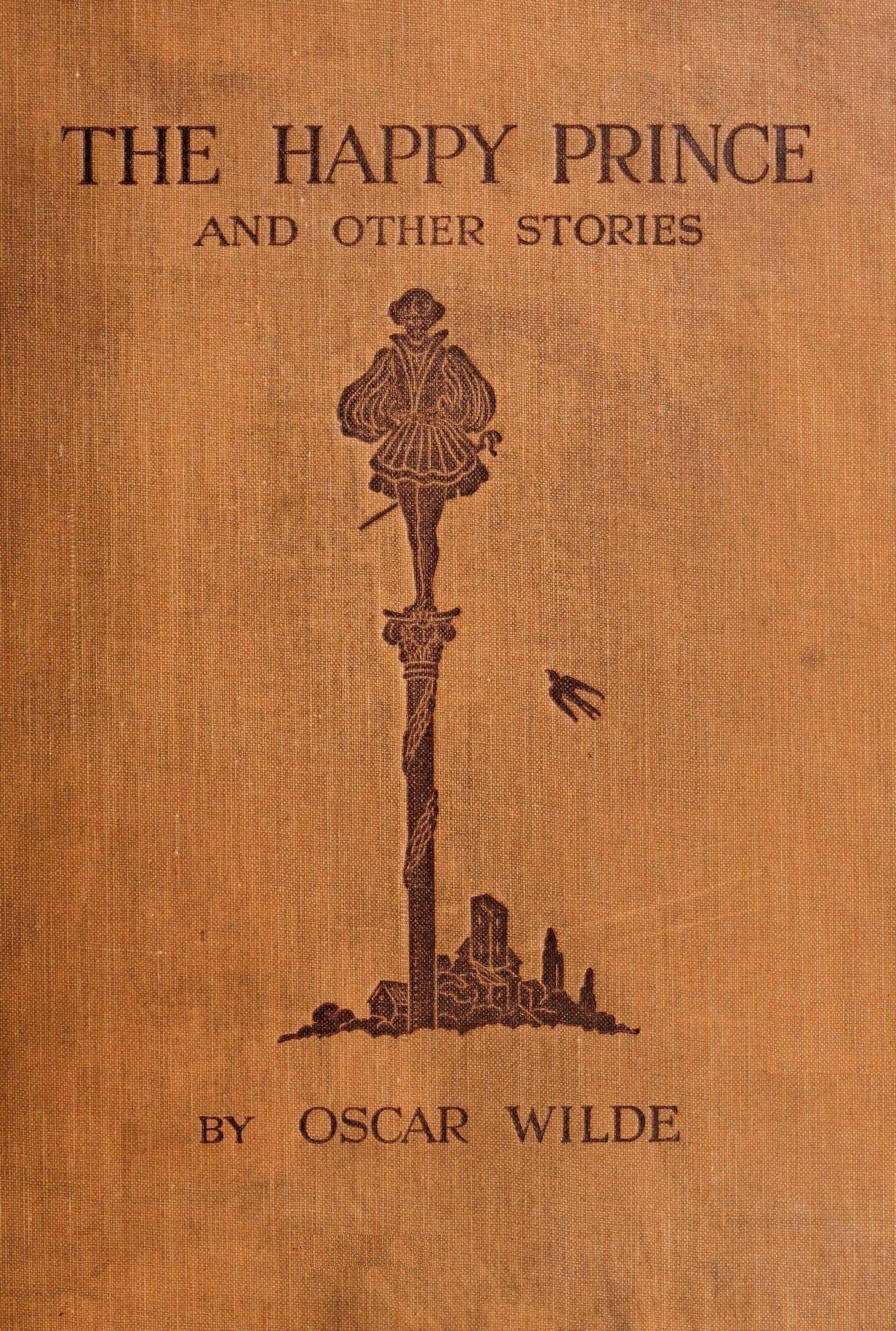
The Happy Prince Cover (1888, PD) Oscar Wilde, Charles Robinson

The diving swallow originates as a motif found in Chinese Art, recognisable for its distinctive tail feathers. It seems to have originated in the Ming dynasty in Beijing as a motif of good luck because swallows appearing meant that they had left their nest in the crevices of Beijings many ornate roof architecture and that spring was coming. Think Pagodas. Then also think how Snowdrop flowers relate to the coming of spring sort of thing.[2]

Swallow on Flowering Peach Branch (1368-1644) Cleveland Museum of Arts

The diving swallow motif gradually comes into Japanese art around this time as fashionable as well, under the influence of the Wamono vs Chinese classical appreciation groups operating in the world of the art literati and artists in the Edo fine art worlds.

Swallows Kakemono (c1668-1732) Sekkei Yamaguchi
The Happy prince, Page 22 Illustration (1888, PD) Charles Robinson


Bamboo is a symbol of good luck, and perpetual growth. Water is a symbol of purification and the living, as well as being a popular aesthetic popularised by Ogata Korin. This gives us a clue as to the intention of the Kimonos producer, perhaps for a young person. If you zoom in to the Kimono (cant display  here due to copyright issues),  you can see the base which is in graduated shades of the handmade base dye,  indigo on rinzu silk. Across these varied striped panels,  you can see also a series of arabesque nature motifs. Indigo as a base dye was thought to help ward of sickness, and the auspicious nature of all these motifs in wishing tthem a long life.

Historically this kimono was made in the second half of the 19th century,  most likrly assembled in Japan and perhaps either made for the Western market,  or was embroidered by a Western sewer later on.  Either way,  this Kimono was on sale in Liberties by 1891, eventually landing in the Japan collection of the Victoria and Albert Museum. The acquisition was no doubt influenced by the tea gown craze which saw kimono repurposed as overmantles for teagowns from 1890 to 1910.[3] The dress reform movement, coinciding with the late aesthetic movement, also saw the Kimono as part of a wider reform of women's dress into more open and less form fitting garments, and would have also influenced how dress reform with its baggy oversized styles became part of the fashionable 1890s and Edwardian silhouette.[1][3]

Returning to the diving swallow motif though as we see was used first in China during the Ming dynasty, moving onto Japan by the Kambun period into Art, and then eventually into the Aesthetics movement by around the 1880s in Britain. For a wider discussion of how Japan influenced British art, see Essay #7, and the Anglo-Japanese style (1855-1930).

Happy Prince, Page 21 (1888, PD) Charles Robinson

This particular kimono is not to my taste I must admit, it is more like one of those ugly buildings we conserve becuase it was distinctively important for its progression to the history of dress as a pivotal feature piece. I do love it though, becuase it distinctly allows us to see that Kimono were sold in Britain during the Meiji period and how and why Kimono were recieved as they were. It lets us know they were regarded as fashionable items, worn by wealthy ladies who shopped in department stores, also places which unwittingly promoted womens suffrage when women went there 'to shop'; organise protests and talk about suffrage over tea; and how they were a part of Victorian society in whatever capacity. The Kimono's most recent venture out was for the mostly virtual Kyoto to Catwalk Exhibition in 2020.[1] 

Bibliography

[1] https://collections.vam.ac.uk/item/O87849/kimono/

[2] https://www.chinasage.info/symbols/birds.htm#XLXLSymSwallow

[3] See Essay #6

Social Links

One stop Link shop: https://linktr.ee/Kaguyaschest

https://www.etsy.com/uk/shop/KaguyasChest?ref=seller-platform-mcnav or https://www.instagram.com/kaguyaschest/ or https://www.youtube.com/channel/UC5APstTPbC9IExwar3ViTZw https://www.pinterest.co.uk/LuckyMangaka/hrh-kit-of-the-suke/


I had exciting topics

 and then I got sick. and then I got heatstroke. and then my home became 35 degrees. and then i was sick again. and then i got mild food poi...