Elizabeth I created a standard for portraiture in the Early Modern English age of the artform of portraiture. Remember that the time when the paintings were created was often after death or around specific large events as the creation of anything bigger than a palimpsest book or illustrated biblical pocketbook was a marvel given the distance that the ingredients and materials required to create these works travelled and in the circumstances under which they were created. Portrait miniatures were often instead the primary visual medium at the time, not the grand canvas and tapestry scales many royal portraits took in this time. These were created specifically to conjure an idea of grandeur, majesty and awe. Portrait minatures were successfully launched to England by Levina Teerlinc (c.1510-1576) from illuminated manuscript production under the workshop of her continental Dutch father and prior artists who had dabbled after 1450 in some miniatures. She and Esther Inglis, as well as Thomas Hilliard are widely known as some of the more popular portrait miniaturists of the Elizabethan and Tudor court periods.
Sunday, February 9, 2025
Elizabeth I Portraiture | Musings

Sunday, January 22, 2023
鹿の子絞り | Kanako Shibori | Shape-resistance Dye | Pattern #17

Socials:
https://linktr.ee/Kaguyaschest
https://www.etsy.com/uk/shop/KaguyasChest?ref=seller-platform-mcnav or https://www.instagram.com/kaguyaschest/ or https://www.youtube.com/channel/UC5APstTPbC9IExwar3ViTZw, or https://www.pinterest.co.uk/LuckyMangaka/hrh-kit-of-the-suke/
Sunday, August 21, 2022
町絵師 | Machi-Eshi | 1200 - 1850 | Bijin #15
The Machi Eshi (town painter) are a social group of Artisans who appear on the historical record after the societal changes that arose with the rise of the Shogunate system in the 1190s.[1] Later they reformed themselves as court affiliated specialist artisans in fields like metalwork forming medieval guilds, whilst Komin independents joined E-ya (picture shops).[4] During the Muromachi period, the Komin turned to the traditional Yamato-E style, drawing folktales and Classical novels in illustrated handscrolls sold and bought in local and regional art markets. During the Sengoku period, they evolved into highly flexible workers who commonly operated in workshops or trade bodies known as So, and if successful enough becoming by the 16th century celebrity Komin who made art for the elites. By the 17th century however, they reached their zenith and replaced the established art establishment by around 1640, defining the new Japanese beauty standards by 1675. Their influence waned after 1685 when they began to be clamped down by the Shogunate, a shadow of their former glory by 1750 and a trickle by 1850.
A sexy Nun (c1650, PD) Museum of Art
Nara Reforms
During the early Japanese history, heavy land reforms took place modelled on the Chinese system of governance. During the Nara period, this saw the implementation of a new capital (Kyoto), new tax reforms, and wide-sweeping changes based on the Chinese systems then in use. These new Taika reforms (645 CE) gave rise to decentralized systems which allowed art to become a viable career option and fields to operate within, such as woodwork, textiles and pottery.[2] Most of these being made for the new imperial court lifestyle or for religious purposes, in extant examples and being made by independents, the predecessor of the Machi-Eshi. It is their and state work which made the Nara period a high-period for Japanese art and culture.
The peaceful Time
When the Heian period began only 100 years later, these reforms lead to what has been called the Golden age of Japanese culture.[2] By the late Heian period, networks of independents and collaborators in workshops created Art for the elites, equivalent to the Benin Bronzes (c.1500) of Nigeria or Opus Anglicum (c.1100-1300) of England.
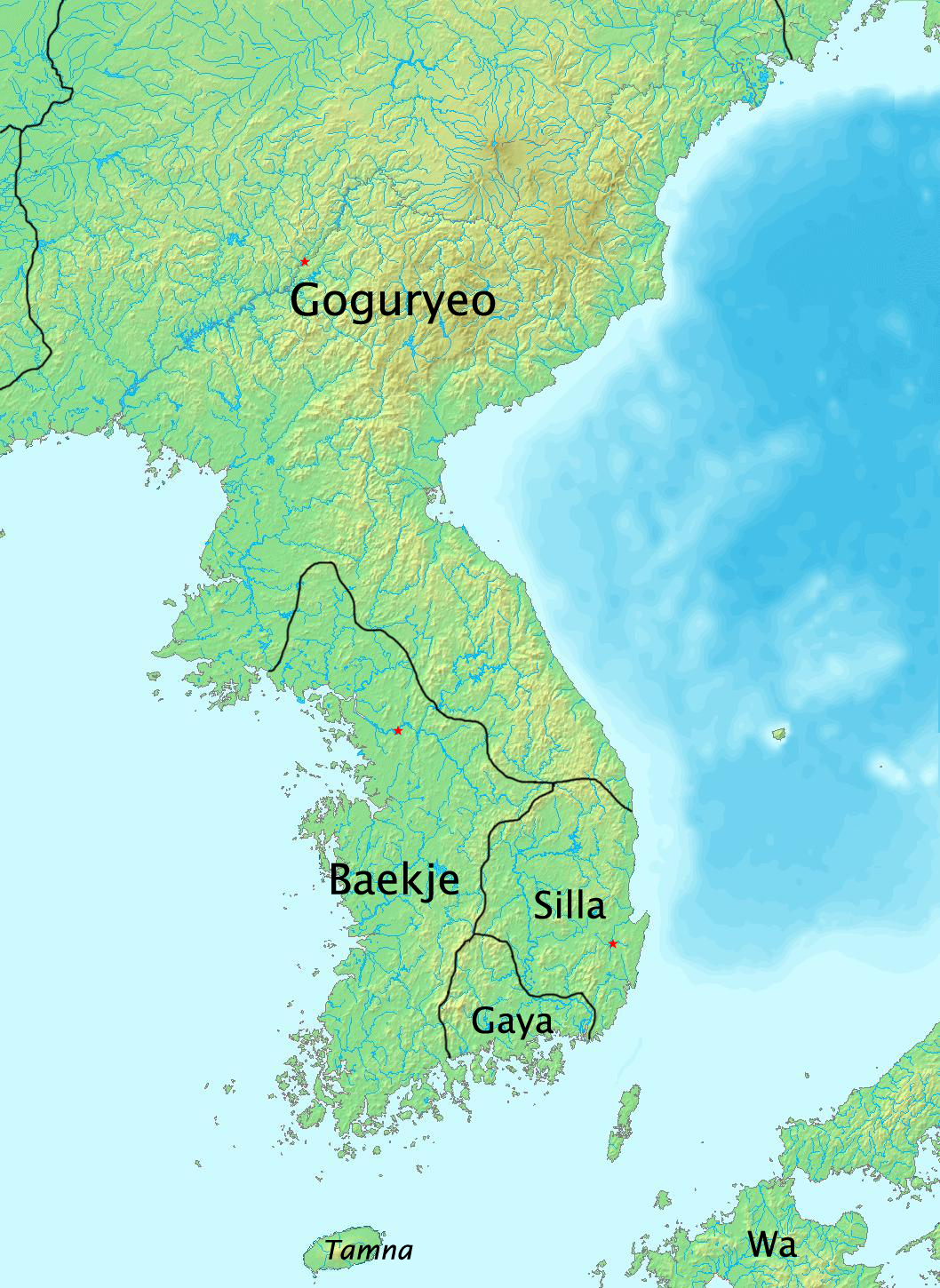
The Heian period saw a turning in towards culturing a unique Japanese identity, distinct from Chinese and Buddhist influences. This started as a result of the collapse of Japan's ally, the Baekje kingdom (18BCE-660CE), resulting in a decline of trade between Japan and the Eurasian continent, with the last delegation returning from the continent in 838. This consolidated inner loyalties and saw the consolidation of power by the Fujiwara family by 858 and a total dismissal of maritime trade by 900 CE. In the arts, this differential reaction saw the creation of Yamato-E and Fuzokuga, mostly in the form of the famous Emakimono.[3][6][7] The scrolls made for other ranks like the Bushi and Samurai however, would have perhaps sought out more purse-friendly Fuzokuga painters for paintings.[7]
These many painters are mostly today unknown, but flourished in the Heian period as Art became a key tool of the Fujiwara clan and others for cementing their legitimacy to rule and display their wealth to others. Particularly in sculpture, this Fujiwara dominance resulted in the Fujiwara style, crafted by artists like the schulptor Jouchou (act. 1020-1057) in his Yosegi-zaiku (a kind of marquetry) who as with many others was taught in Kyoto and often worked on art for temples and the homes of his patrons like Fujiwara no Michinaga (藤原 道長, 966 – January 3, 1028).[7]
When the fire nation Minamoto attacked the imperial court adjacent clans, in the late Heian period, this kicked off around 400 years (1200-1600CE) of intermittent civil wars, mostly affecting the nobility's ability to keep their heads attached to their shoulders. At the late stages of the Heian period however, these disputes saw a reduced capacity and imperial court coffer to make Art commissions and saw a decline in patronage of independents by the court. Other more prolific Kugonin ( Court-appointed Workshop Artisans | 供御人 ) making objects such as cast metal lanterns.[4] These Kugonin eventually became by 1100 CE collectives known as the Za ( Artisan Guilds | 座 ) who often operated in the capital.[4] Many Za workshops were also affiliated with temples creating iconographical, ritual and religious materials such as Buddhist sculptures, textiles, ceramics etc. to display in temples for the benefit of their patrons relationship with that temple.
The rise of the Independent Artisan
With the effective use of the Shouen ( Tax exempt land | 荘園 ) land reforms by Heimin farmers due to increased harvest yeild, many agricultural workers turned to artisanal work.[4] In 1275 a greater number of Za workshops began to be opened. These workshops were known as E-ya ( Picture shops | 絵屋 ), whose anonymous artisans operated mostly in cities like Kyoto and Osaka. An example of one kind being the Ogiya or fan shop.[8] From 1250 to 1350, the elites gave kickbacks such as land rights, tax and toll free status and the capacity to pay tax as goods for kind.[4] During this time, it became more common for the Heimin and Chonin groups to interact with art, that is art where they worked, or art they owned or had made for consumption in their livelihoods and homes, on fans, books, scrolls, screens, and doors.

These Muromachi period (1336-1573) proto-Machi-Eshi artworks were often Fuzokuga, Sumi-E, Classical Chinese scenes ( Kara-E | 虚絵 ), and pictures depicting seasonal beauty (see Kano Motonobu for example) copied from Heian period novels.[6][23] Some of these included folk tales recorded on Otogizoshi Emakimono ( Prose narrative scrolls | 御伽草子絵巻物) included the tales of Independent Heimin Artisans, capturing rare glimpses of local medieval provincial folklore.[6]
Sengoku Politics
By 1350 on, the court influence diminished as outsider Samurai began to gain sociopolitical clout and as the Art industries broadened allowing for wider dispersal of Artisans across the country to choose Art as a career. Soukan ( General Supervisors of the Court | 惣官 ) limped on in their influence of advising the up and coming military class elites on art matters. They were then though superseded by the title hereditary Shugo ( Han Domain/Provinicial/Regional military administrators | 守護) who appointed their own advisors of Daiku ( Head Artisan | 大工 ) using new Shogunate approved tax rebates, a role previously overseen by the court approved Soukan, whom managed that areas Za.[4] This lead to areas developing their own highly specialized niches such as Nishijin weavers who specialized in Nishijin-ori used in Noh plays for example which were supported by the local Daimyou.[4][5] Even restorative work on older Emakimono took place at the time.[6]
By the 1400s, this new system of the increased wealth of the Shogu in their fiefs, lead to even greater opportunity for further class divides to open up as the men below them also became relatively richer than in the previous century. With this wider dispersal of wealth first from the capital, then to provincial leaders and to the Kokujin ( Countryside literally confusing as 'Provincial Men' | 国人 ) who receiving the backing of the Shogunate and Shugo came to power simultaneously as the Shugo. This led to more infighting between the Shugo and Kokujin, as had the succession and alliance disputes of the earlier Minamoto (Shogunate) and Taira (Established Court Family).[4]
Sengoku Jidai Art Markets
After the Onin War (1467), the greater number of Daimyo were former Kokujin victorious in their infighting fief wars.[4] These times become what is known today as the Sengoku Jidai, which fixed the Kokujin as the legitimate rulers of their fiefdoms. This in turn was coagulated by further alliances being made between established Kokujin who created vassal frameworks for neighbouring Kokujin to ally themselves to greater Kokujin Daimyo. Kokujin Daimyo created local trade networks to govern their fiefs more effectively to get ahead of neighbouring Daimyou by controlling local resources and infrastructure, creating new markets under the control and facilitating a greater need for Art to legitimise their power in the process, as the Fujiwara had before them.[4]
"[Daimyo] invested in and competed [...] with various merchant and artisan groups to assure a steady flow of supplies and financial support. [Kokujin in the] Sengoku period [did] this by sponsoring local trade centers and artisans in and around their residential mansions and defensive castle towns, both of which served as bases of production, market exchange, and consumption. [... This enabled] the aristocracy [... who] maintain[ed their former] prestige as a vessel of political and cultural legitimacy. This role enabled them to compete with [shugo] [...] through patronage of [local] artisanal groups."[4]
Despite all the civil wars however, the population increased steadily and networks steadily built up between these bigger groups of So (Co-operative Bodies) to develop new markets and art industries. Indeed, many So and Za groups lead concerted efforts to have their trades patronised by local Daimyou, therefore reaping benefits for their communities by returning these investments back into their communities.[4]
2.jpg)
During this time, the early industries were relatively grassroots, with markets often being small in scale, held weekly to hawk their wares, often held at temple grounds to allow a slice of the tax pie to return to the shrinking temple coffers.[4] From 1450-1550 a complex mix of provincial, regional and courtier infighting lead to a complex map of patrons for Anonymous Artisans. Kokujin and Shugo did this by investing in local and neighbouring Za and merchant guilds (think Silk farmers) to build their own bases and resource networks, creating their own local economies. Some Artists such as Kano Motonobu (1476-1559) reacted by leveraging patronage in these turbulent times to create their own schools.
By the 1530s Motonobu had married the daughter of the head of the Tosa School [...] and lead a small Kanō sect in northern Kyoto. The workshop contains roughly ten people containing Motonobu, his three sons, [his ...] brother Yukinobu (1513–1575), and some assistants that might have not been blood related. Since Motonobu was the head or chief architect of these paintings he took on the contracting, production, and organization of the projects while still being very involved with the marketing of his work and his studio. Known for his charm and intellect, Motonobu became a fierce businessman, and frequently petitioned to the shogun for a vast amount of varied commissions with his fellow merchant, Hasuike Hideaki. Motonobu [...] survived the turbulent world of the Warring States period while receiving the patronage of the influential people of the time, such as the shogunate, the imperial court, Ishiyama Hongan-ji, and the influential [Machi-Shuu. ...] Motonobu trained his workshop which was full of members of his family and other apprentices to execute his many designs. The workshop trained [outside] artists by watching the master painter work and emphasised recreating their master's style.[14]
Courtiers and elites continued to mantain the facade of wealth and prestige by patronising these merchants, although what they ordered was markedly different from what and why the new money was ordering for. During the Sengoku Jidai, a great amount of this commoner oriented folk art (Yamato-E and childrens stories) was lost in the upheaval of civil war, but gradually by 1550 was remade again as the succession disputes became less.[6]
The Town Painter
This warring period carried on until 1573 when Oda Nobunaga (1534-1582) overthrew the ruling Shogunate, and the politicking of Toyotomi Hideyoshi (1537-1598) and the maneuvering of Ieyasu Tokugawa (1543-1616) led to the establishment of the new capital at Edo. The vogue at that time in the elite circles favoured Bunjinga (Literati Chinese painting), a favourite of the Kano school which had established itself as a sort of Za with the elites. These collaborative workshops of many anonymous artists continued to create Yamato-E and Fuzokuga works, usually today wrongly attributed to the Tosa school, when celebrity Machi Eshi began to emerge from the workshops on a tidal wave of prestigious commissions from Kyoto and Osaka, and crucially for recorded history, signed their names on works which set a trend for schools to begin signing their work, as in the Kano school after 1575.[4][6][8][19] These prestige commissions were undoubtedly the beginning of the Machi Eshi golden era of influence.
.jpg)
With a wider demand and broader access, the Azuchi-Momoyama period (1568-1600) saw a rise in the wealth of Chonin, Heimin and Machi-Shu ( Wealthy Townspeople | 町衆 ) around the artistic hubs of Kyoto, Osaka and Sakai. The Machi-Shu populations were created primarily as a result of early Tokugawa Sankin Kotai policies which moved lords and their retinues between Edo and their home fief every 6 months.[9][23] Machi-Shuu often comprised of the Artisans and Chonin who by this time had well established historical trade networks. Early Department stores for examples operated at this time run by families who made the switch to artisanal trades during the 16th century and made their homes their workshops, selling their handmade goods direct to the consumer. Their works often included many different goods, including wood, ceramics, painting, furniture, textiles, goldwork, metalwork, paper and many more skilled art trades.

With the emergence of the Chonin as Machi-Eshi patron by 1610, overriding the Samurai position as tastemaker, Byobu made for these wealthy merchants began to reflect a shift towards the everyday landscape of the city and the pilgrimage trail, instead of Classical settings and imagined paradises.[19] The rather more patriotic; than Samurai that is; Chonin had a propensity for Yamato-E, Fuzokuga and Tosa (particularly the Heian Yamato-E) traditional styles rather than the Chinese Kara-E by the 17th century.[19] This originated from the Heian period when Tosa artists were patronised by the Japanese government bodies in the Byobu medium through to the fifteenth century (1150-1450). These Byobu (and Muromachi Yamato-E) in turn influenced the Kano style in the 16th century of adapting Fuzokuga scenes which most often had Japanese literary or historical figures in them creating the desire to depict Japanese rather the more popular elite images of Chinese derived depictions.[6][8]
Genna and Kanei styles adopted tropes and established narrative styles known from Yamato-E. From Fuzokuga, they adapted detailed, intricate scenes containing thousands of individual faces and scenes.[23] They adapted the Fukinuki Yatai style originally found in Heian Emakimono, and interspersed the scenes of daily urban life with goldworked clouds. These clouds allowed the viewer to draw out small scenes in the life of the Urban dweller. This may have been a holdover of Muromachi Emakimono which depicted folklore and commoner based perspectives. Intermingled with Shinto, which like Animistic Britonnic Celts, this may show how common folk understood the natural world as one and the same, as simultaneously 'sacred and profane'.[20] In this sense Byobu scenes carry on the tradition of pointing out how humans are part of natures ecosystem, rather than above it (forgive the pun).
One the sacred and profane note, commoners may have better understood how they fitted into the world around them due to their interactions with nature to sustain their lifestyle, ie weavers relying on 'natural dyes'. It is an elite idea (Roman in the West) that nature must be conquered and was a singular 'resource' to maintain the position of the wealthy. Common folk may have better understand that to destroy and 'conquer' the environment for wealth was an act of greed and insult to the Kami who lived wherever. Instead I hypothesise that particularly in the warring ages, people understood their relation to nature more clearly as they were more reliant on nature then than urban infrastructure. With a greater exposure they understood that in 'mastering' nature, they were to kill their own way of life and it is this understanding which allowed Ukiyo-E to flourish later on as commoners better understood their relation to Dukkha and the natural world than the majority of perpetually warring elites.

This saw an increase in Byobu which by 1625 had turned Byobu in particular into a selection of Chonin vignette scenes which was the groundwork for the establishment of the Chonin lifestyle as the new socially acceptable norm in Artwork. Gone were the pretentions to religious Buddhist pilgrimages in these new, Animistic (Shinto) influenced screens which depicted scenes of Machi-Shuu swanning their way around the Yuukaku, townhouses and shops. By 1635, this pretention to 'fine art' is clearly not even thought of as it has become the expected norm that secular contemporary beauties are to be celebrated alongside an Urban culture which increasingly became codified on its own merits as spiritual in itself. By 1640, Machi-Shuu were the new elite, and they decided that the Machi-Eshi was to be their chronicler of the Kanei, in a life removed from the High Art of the Momoyama, elevating anonymous painters to fine art status and prestige.[23]
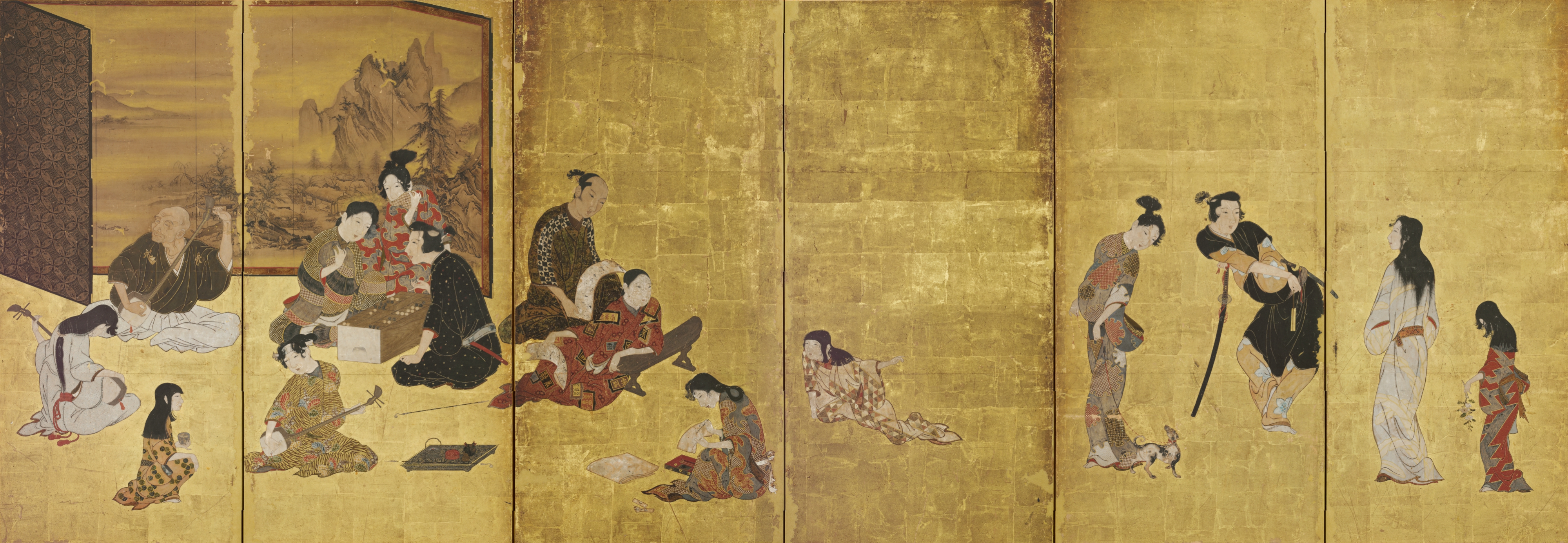
With the expansion of the art Industry with the establishment of the Machi-Shuu demographic, recognisably celebrity Machi-Eshi worked on many mediums such as Tawaraya Sōtatsu (act.1570-1640) a furniture designer and painter mostly remembered for his Rinpa Byobu.[10] Inspired by the Heian period, these artists both dependent and independent of the Taira family worked on gold heavy pieces which used sprinkled gold leaf and heavy reliance on nature motifs such as Uta-E ( Poetry Images* ) derived from the Heian period to establish a new Japanese canon of their own for the newly minted Machi-Shu and aristocrats in the Genna period (1615-1624). Tawaraya was also hired by the Taira family (an Imperial adjacent) to restore the Heike Nokyo ( Heike illuminated sutra manuscript | 平家納経 | c.1164) in 1602. In addition to his forbearer the art collectivist Hon-nami Koetsu (1578-1635), both worked in goldwork on paper, lacquer and painting, and it is in this vein which the Rinpa school was founded, and some of the earlier celebrity 'outsider' artists began their careers.


Kusumi Morikage (1620-1690) was also a Machi-Eshi known for working to his own realpolitik morals. During his early years, he initally painted under the Kano school style, under the incredibly stringent Kano Tan-yu (1602-1674) who by 1640 was artist to the Shogun, establishing the Kano school as the high art of its day. During this time, Morikage ran afoul of Tan-yu who prized politically correct authority over individuality in the spirit of his patrons stabilization policy. By the time Morikage became older however and taught his daughter Kiyohara Yukinobu (1643-1682) he began to work on his own terms outside the established canon of acceptable painting by depicting agriculture and the lives of the Heimin as the official Maeda clan painter. In this way, Machi-Eshi like Morikage questioned, challenged and won over the Academic painters of their day in the early half of the 17th century.[12]

This must also be viewed in the sense of what sources are relayed to us by the male dominated art world, from the Genna to the present period. In this sense, we are missing out what contributions women made or did not to Heian 'Onna-E', Muromachi period Fuzokuga, and Momoyama Byobu in the self creation of female beauty standards. There does seem to prevail among Japanese women though in the desirability of androgynous young men certainly by the time Kabuki rolled around, greatly accelerated by the banning of female Kabuki performers, a style originated by women no less. In this sense, when we look at Machi-Eshi painters like the creator of Viewing Cherry Blossoms at Kiyomizu Temple Byobu (c.1640),[20] what we see is really half of the picture.[20] Yes retrospectively Bijin are present in the screen, but we do not wholly get the history of female influence on the creation of beauty standards. In this sense, we simply see the Bijin-ga as a product of male desirability for beautiful figures. This is not to say the female gaze of the Asobi is not present, it certainly was.
Also to consider is that the modern Machi-Eshi literature (1970-2020) is full of holes, skewed in favour of patriarchal linearity. Early 17th century Byobu also depict a dynamic society of women who carry greater agency than history gives them credit in their varied dress and activities at the very least. In the sense to which contemporary scholarship understand Kanei (1624-1644) Machi-Eshi Byobu, Bijin-ga emerged from the Kano and Machi Byobu which merged secular life with high art.[8] In this way however popular formats inherited from narrative Muromachi Yamato-E (in turn from Heian Emakimono) such as depicting the Four Seasons (Shiki) and seeing famous tourist spots (Meisho) merged with Edo sensibilities, creating with the rise of the new middle class (the Chonin) by anonymous and established artists such as Tawaraya Sotatsu, Kusumi Morikage and Iwasa Matabei depicted a secular view of the beauty of the natural, contemporary world around them.[20][21][22] Most often Byobu, these are the distinct precusor to Ukiyo-zoshi which allowed for the incubation of the Bijin-ga to become socially acceptable as high art, and later on, profitable.[23]

The Bijin has Arrived
What makes the Machi Eshi interesting in the 1650s, is that there enough resources circulating to be able to start a career solely around making art by then, which allowed Independents who previously relied on patrons in the Gennei era like temples to become Machi Eshi who sold work they liked to make, not just becuase it was commissioned for a workshop.

The Uta Bikuni or Singing (Sexy) Nun examples illustrates how Fuzokuga became infilitrated by the lean towards Ukiyo activities. This previously being an image of piety and religious sanctity, now imbues the idea of a sex worker ready with the red underslip, slight quirk of the mouth and loosely fitting kimono. Also note Katsuyama the 'Pilgrim', a story about the pilgramage of a famous Yoshiwara worker.[6][11] These stories showed the Machi-Shuu sensibility that arose by the 1630s prospered as it broke out as socially acceptable to admire Sexy Nuns with your Chonin buddies over a Sake.
Machi-Eshi moved from samurai clientele to Chonin patronage with portrayals of worldly subjects becoming more common place by this time in Japanese Art. Scenes from the everyday were included wholesale by the 1670s, including pictures of Bijin, under the influence of the rising middle classes or Chonin tastes. With the rise of the Ukiyo lifestyle of some artists, this saw classical correctness fall away to the slightly low brow Ukiyo-zoshi genre (1666-1750) and the rise of new beauty standards for women, that of what I refer to as the Asobi (playgirl), which came along with the rise of the Bijin-ga genre. Women more than likely were doing risque things long before, it is just that what we have as established canon certainly reflects a change in the canon at this time of what society deemed societally permissive for the feminine figure. (Heimin) Licentiousness was in vogue.
With the introduction of the Sakoku period artisans began to become more Japan focused. Artists like Kano Eino (1631–1697CE) was also the first to reflects the inwards turn to the Wamono away from China of the early Sakoku policies designed to boost and focus on the Japanese domestic economy, beginning his career in 1651, 10 years into the Sakoku edicts. He finished the first Japanese focused Art History work in 1678, the Honcho Gashi ( Japanese painting history | 本朝畫史 | published 1693 ), which showed how well along the Arts were considered to be recieved by the Art communities in Japan, perhaps we can also consider abroad as the imitation of some Japanese goods exported into SouthEast Asia can attest.[14]

During the late 17th century, early 18th century, the Sumptuary legislations (1604-1685)[9] reflected the change back to conservative ideas of acceptability within pre-existing class structures as the Chonin sought to establish themselves within pre-existing hierarchical and prestige structures as stability and thus stagnation of diversity (changes to established norms) took hold. By the 1690s, this consolidated into the top-down imposed notion of Iki, which was an attempt by the elites to render the creativity of the Genroku period to a more subtle colourway and less bold lifestyle for the plebians and dirty merchants. This did win over some wealthier Chonin ( social climbers ) who in trying to climb the social ladder began to take on the message behind the curbing of Genroku extravagance (for example, Ashida-E on Kosode was in, but giant Kana was tacky).

This saw a return in the end to the scholarly Bunjinga styles, sort of the watercolours of Japan, away from explicit Wamono and towards the acceptable and established Classical Chinese Tang models. Machi-Eshi who unlike their forebearers in also rejecting the established norms and going their own way, fell into the Iki acceptability trap. Herein, successful Machi Eshi would follow the model of what the hoity-toity Samurai-likey genres. Artisans like Hanabusa Itcho ( 1652-1724 ) would learn the ways of the Kano, but rather than go their own way and create the new everyday, they turned to the imaginary Bunjinga genre, away from the Muromachi Yamato-E.[16] This may be to do with the fact that by this time with the implementation of the study of these art histories that Yamato-E, along with Onna-E, were seen as an offshoot of the 'womans' painting genres, that is painting made primarily by feminine painters, which was unfortunately by the bourgeois seen as a bad thing (see the Onna Daigaku for more information on this wonderful aspect of Japanese medieval patriarchy).[8]
_-_Google_Art_Project.jpg)

Ogata Korin was one of the more established Machi Eshi, reviving the Rinpa school in the Genroku period. His later work such as Red and White plum blossoms (c1714) has had countless copies and variations made from its snaking curvilinear stream which inspired a great amount of Kosode pattern designers and those of the West from 1862 onwards. Those inspired after the fact included the Rinpa painter (a style thankfully allowed to continue due to its connotations with China and flower paintings; a very masculine activity of course) Watanabe Shiko ( 1683-1755 ) whose Byobu have something of a whiff of originality to them.[17] In the 19th century, the Ogata copycats went by the name of Sakai Hoitsu ( 1761-1829 ), testamount to the amount of Iki still around in the air by 1830.[18] The 19th century is arguably the slow death period of the Machi-Eshi who increasingly benefitted less and had less influence over the Japanese painting circles they were a part of.
The Town Beauty
In context based art, we see how the high art Byobu of (the Kano and) Anonymous high end Machi-Eshi painters in the Momoyama Byobu became progressively more influenced by Wamono painting styles such as Fuzokuga & Yamato-E. These became by the 1610s a more recognisably urban style developed by the incumbent Machi-Eshi whose art patrons quickly began overtaking the Samurai in number. By the 1620s temple patronage began to reflect this more Chonin orientated shift, encouraging the previously lowbrow art markets of the Heimin of the Sengoku period in order to retain their waning institutional influence.[4] These Art Markets provided key intersections for the meeting of conservative and urban life creating an acceptance by the 1630s of the secularisation and blurring of acceptable beauty standards. That is to say, a Yuukaku was now perfectly acceptable to be found in more Byobu. The 1640s saw the rise of the worldly beauty favoured by the Chonin who wished to see their lives reflected in Art. By the 1650s this became codified in the increasing vanity projects of the wealthy nouveau riche, and by the 1660s, the emergence of the Kambun Bijin-ga figures and by the 1670s the idea that Moronobu could make a living on selling his softcore erotica figures was solidified.
Machi Eshi facilitated the rise of the Bijin genre therefore by leaning into the wishes of their patrons, the new middle classes of Chonin who fueled these new 'base' desires and revamped the wider cultural understanding of how beauty standards could be publicly and privately presented in Art. The basis of the secular beauty, that is to say worldly beauty, was first born from the daring of anonymous Machi-Eshi painters in the Genna period who dared to paint their own more secular and increasingly urban worlds, than the imaginary worlds of the Momoyama elites whose tastes revolved around a Buddhist worldview which emphasised art as a tool to establish control over local economies and resources.[4][8] Art thus became for the masses by facilitating the rise of the relatable Town beauty, a beautiful figure who could be found stalking the streets of Sakai, Osaka, Kyoto or Edo rather than the pavements of a Jinja whose ethereal beauty only served to praise its patrons vast ego or good deeds in preparation for the next life cycle of the Tosa Emakimono.
It is in this context we see how from conservative Momoyama religious painting, we arrive at the secular beauty standards of the Kambun era to form Ukiyo-E and Bijin as genres by 1665; being a product of Machi-Eshi and Machi-Shuu beauty standards of the late Kanei period (1635-1644). The Town or perhaps Urban beauty is the democratisation of beauty standards in Japan, a turning point born from Tokugawa Stabilisation policies which saw out the slow demise of elite art patronage (Samurai, Aristocracy and Temples) which facilitated the rise of the Chonin worldview during the Kanei as Fine Art, enabling the Machi Eshi, Moronobus and Sukenobus to make a living from softcore gravure by revamping the tradition of Yamato-E and Tang beauties.[21][23] During the 1710s, the Bijin-ga became an establlished Academic genre which is were I shall end the influence of town painters as tastemakers.

Bibliography
[1] https://en.wikipedia.org/wiki/Military_history_of_Japan#Kamakura_period_(1185%E2%80%931333)
[2] Heian Period (794–1185), Metropolitan Musuem of Arts, 2002, Online | https://www.metmuseum.org/toah/hd/heia/hd_heia.htm
[3] See section underneath Fujiwara no Tsunetsugu in Fabrics #3
[4] Purveyors of Power: Artisans and Political Relations in Japan‘s Late Medieval Age, Paula Renée Curtis, 2011, pp.33-50 | https://etd.ohiolink.edu/apexprod/rws_etd/send_file/send?accession=osu1306860342&disposition=inline
[5] See Fabrics #9
[6] Genre Painting: Evoking the Charm and Cheer of the Commoners, Morita Tohru, Burritt Saben, Jane Whalley, Yoshikawa Shigehisa, Nomura Shoji, Watanabe Minako, Masaki Yoko, October 1991, Vol.28, No.4, pp.31-37, The East, Singapore National Printers Ltd. | https://archive.org/details/sim_east_november-december-1992_28_4/page/34/mode/1up?q=%22machi-eshi%22&view=theater
[7] https://www.britannica.com/art/Fujiwara-style
[8] Worlds seen and imagined : Japanese screens from the Idemitsu Museum of Arts, Taizo Kuroda, Melinda Takeuchi, Yuzo Yamane 1995, pp.36-53 | https://archive.org/details/worldsseenimagin0000kuro/page/37/mode/1up?q=%22machi-eshi%22&view=theater
[9] See Stabilisation Policy 1590-1615 and Sumptuary Laws 1604-1685 in Bijin #3 & A Gay Old Time in Bijin #1
[10] https://en.wikipedia.org/wiki/Tawaraya_S%C5%8Dtatsu
[11] https://www.moaart.or.jp/en/collections/066/
[12] https://en.wikipedia.org/wiki/Kusumi_Morikage
[14] https://en.wikipedia.org/wiki/Kan%C5%8D_Motonobu
[15] https://en.wikipedia.org/wiki/Kan%C5%8D_Ein%C5%8D
[16] https://en.wikipedia.org/wiki/Hanabusa_Itch%C5%8D
[17] https://en.wikipedia.org/wiki/Watanabe_Shik%C5%8D
[18] https://en.wikipedia.org/wiki/Sakai_H%C5%8Ditsu
[19] Byōbu: The Art of the Japanese Screen, Michael R. Cunningham, September 1984, Vol. 71, No. 7, pp.223-224, The Bulletin of the Cleveland Museum of Art | https://www.jstor.org/stable/25159871?searchText=%22machi-eshi%22&searchUri=%2Faction%2FdoBasicSearch%3FQuery%3D%2522machi-eshi%2522%26so%3Drel&ab_segments=0%2Fbasic_phrase_search%2Fcontrol&refreqid=fastly-default%3A1590105ae019ce969bc9bbc38dc80178&seq=4#metadata_info_tab_contents
[20] Reflections on the Floating World, Rossella Menegazzo, 2020, pp.10-17 | https://rfacdn.nz/artgallery/assets/media/2020-reflections-on-the-floating-world-gallery-publication.pdf
[21] For more on the revolutionary Iwasa Matabei, see Bijin #6
[22] https://manga.fandom.com/wiki/Yamato-e | If you are a snob: https://www.metmuseum.org/toah/hd/yama/hd_yama.htm
[23] Japanese painting, Terukazu Akiyama, 1977, pp.162-165 | https://archive.org/details/japanesepainting00akiy/page/165/mode/2up
*Uta-E refer to Heian period symbols which a reader had to decode, usually from poetry anthologies like the Manyou-Shuu (c.759CE) which told a familiar story from those anthologies. They often depicted the events of only one line or story and were found in the background of texts.
Bijin Series Timeline
11th century BCE
- The Ruqun becomes a formal garment in China (1000 BCE) [Coming Soon]
8th century BCE
- Chinese clothing becomes highly hierarchical (771 BCE) [Coming Soon]
0000 Current Era
7th century
Asuka Bijin (c.699); The Wa Bijin
8th century
- Introduction of Chinese Tang Dynasty clothing (710)
- Sumizuri-e (710)
- Classical Chinese Art ; Zhou Fang (active 766-805) ; Qiyun Bijin
- Emakimono Golden Age (799-1400)
15th century
- Fuzokuga Painting schools; Kano (1450-1868) and Tosa (1330-1690)
- Machi- Eshi painters; 1336-1650? [Coming Soon]
16 century
- Nanbanjin Art (1550-1630)
- Wamono style begins under Chanoyu teachings (c1550-1580)
- Byobu Screens (1580-1670)
- End of Sengoku Jidai brings Stabilisation policy (1590-1615)
17th century
- Land to Currency based Economy Shift (1601-1655)
- Early Kabuki Culture (1603-1673) ; Yakusha-e or Actor Prints
- Machi-Eshi Art ( 1610 - 1710) ; The Town Beauty
- Sumptuary legislation in reaction to the wealth of the merchant classes (1604-1685)
- Regulation of export and imports of foreign trade in silk and cotton (1615-1685)
Iwasa Matabei (active 1617-1650) ; Yamato-e Bijin
The Hikone Screen (c.1624-1644) [Coming Soon]
- Sankin-Kotai (1635-1642) creates mass Urbanisation
- Popular culture and print media production moves from Kyoto to Edo (1635-1650); Kiyohara Yukinobu (1650-1682) ; Manji Classical Beauty
- Shikomi-e (1650-1670) and Kakemono-e which promote Androgynous Beauties;
Iwasa Katsushige (active 1650-1673) ; Kojin Bijin
- Mass Urbanisation instigates the rise of Chonin Cottage Industry Printing (1660-1690) ; rise of the Kabunakama Guilds and decline of the Samurai
- Kanazoshi Books (1660-1700); Koshokubon Genre (1659?-1661)
- Shunga (1660-1722); Abuna-e
Kanbun Master/School (active during 1661-1673) ; Maiko Bijin
- Hinagata Bon (1666 - 1850)
- Ukiyo Monogatari is published by Asai Ryoi (1666)
Yoshida Hanbei (active 1664-1689) ; Toned-Down Bijin
- Asobi/Suijin Dress Manuals (1660-1700)
- Ukiyo-e Art (1670-1900)
Hishikawa Moronobu (active 1672-1694) ; Wakashu Bijin
- Early Bijin-ga begin to appear as Kakemono (c.1672)
- Rise of the Komin-Chonin Relationship (1675-1725)
- The transit point from Kosode to modern Kimono (1680); Furisode, Wider Obi
- The Genroku Osaka Bijin (1680 - 1700) ; Yuezen Hiinakata
Sugimura Jihei (active 1681-1703) ; Technicolour Bijin
- The Amorous Tales are published by Ihara Saikaku (1682-1687)
Hishikawa Morofusa (active 1684-1704) [Coming Soon]
- The Beginning of the Genroku Era (1688-1704)
- The rise of the Komin and Yuujo as mainstream popular culture (1688-1880)
- The consolidation of the Bijinga genre as mainstream pop culture
- The rise of the Torii school (1688-1799)
- Tan-E (1688-1710)
Miyazaki Yuzen (active 1688-1736) ; Genroku Komin and Wamono Bijin
Torii Kiyonobu (active 1688 - 1729) : Commercial Bijin
Furuyama Moromasa (active 1695-1748)
18th century
Nishikawa Sukenobu (active 1700-1750) [Coming Soon]
Kaigetsudo Ando (active 1700-1736) ; Broadstroke Bijin
Okumura Masanobu (active 1701-1764)
Kaigetsudo Doshin (active 1704-1716) [Coming Soon]
Baioken Eishun (active 1710-1755) [Coming Soon]
Kaigetsudo Anchi (active 1714-1716) [Coming Soon]
Yamazaki Joryu (active 1716-1744) [Coming Soon]
1717 Kyoho Reforms
Miyagawa Choshun (active 1718-1753) [Coming Soon]
Miyagawa Issho (active 1718-1780) [Coming Soon]
Nishimura Shigenaga (active 1719-1756) [Coming Soon]
Matsuno Chikanobu (active 1720-1729) [Coming Soon]
- Beni-E (1720-1743)
Torii Kiyonobu II (active 1725-1760) [Coming Soon]
- Uki-E (1735-1760)
Kawamata Tsuneyuki (active 1736-1744) [Coming Soon]
Kitao Shigemasa (1739-1820)
Miyagawa Shunsui (active from 1740-1769) [Coming Soon]
Benizuri-E (1744-1760)
Ishikawa Toyonobu (active 1745-1785) [Coming Soon]
Tsukioka Settei (active 1753-1787) [Coming Soon]
Torii Kiyonaga (active 1756-1787) [Coming Soon]
Shunsho Katsukawa (active 1760-1793) [Coming Soon]
Utagawa Toyoharu (active 1763-1814) [Coming Soon]
Suzuki Harunobu (active 1764-1770) [Coming Soon]
- Nishiki-E (1765-1850)
Torii Kiyonaga (active 1765-1815) [Coming Soon]
Kitao Shigemasa (active 1765-1820) [Coming Soon]
Maruyama Okyo (active 1766-1795) [Coming Soon]
Kitagawa Utamaro (active 1770-1806) [Coming Soon]
Kubo Shunman (active 1774-1820) [Coming Soon]
Tsutaya Juzaburo (active 1774-1797) [Coming Soon]
Utagawa Kunimasa (active from 1780-1810) [Coming Soon]
Tanehiko Takitei (active 1783-1842) [Coming Soon]
Katsukawa Shuncho (active 1783-1795) [Coming Soon]
Choubunsai Eishi (active 1784-1829) [Coming Soon]
Eishosai Choki (active 1786-1808) [Coming Soon]
Rekisentei Eiri (active 1789-1801) [Coming Soon] [https://commons.wikimedia.org/wiki/Category:Ukiyo-e_paintings#/media/File:Rekisentei_Eiri_-_'800),_Beauty_in_a_White_Kimono',_c._1800.jpg]
Chokosai Eisho (active 1792-1799) [Coming Soon]
Kunimaru Utagawa (active 1794-1829) [Coming Soon]
Utagawa Toyokuni II (active 1794 - 1835) [Coming Soon]
Ryūryūkyo Shinsai (active 1799-1823) [Coming Soon]
19th century
Teisai Hokuba (active 1800-1844) [Coming Soon]
Totoya Hokkei (active 1800-1850) [Coming Soon]
Utagawa Kunisada Toyokuni III (active 1800-1865) [Coming Soon]
Urakusai Nagahide (active from 1804) [Coming Soon]
Kitagawa Tsukimaro (active 1804 - 1836)
Kikukawa Eizan (active 1806-1867) [Coming Soon]
Keisai Eisen (active 1808-1848) [Coming Soon]
Utagawa Kuniyoshi (active 1810-1861) [Coming Soon]
Utagawa Hiroshige (active 1811-1858) [Coming Soon]
Yanagawa Shigenobu (active 1818-1832) [Coming Soon]
Utagawa Kunisada II (active 1844-1880) [Coming Soon]
Toyohara Kunichika (active 1847-1900) [Coming Soon]
Kano Hogai (active 1848-1888) [Coming Soon]
Tsukioka Yoshitoshi (active 1850-1892) [Coming Soon]
Toyohara Chikanobu (active 1875-1912) [Coming Soon]
Kiyokata Kaburaki (active 1891-1972) [Coming Soon]
Goyo Hashiguchi (active 1899-1921) [Coming Soon]
20th century
Yumeji Takehisa (active 1905-1934) [Coming Soon]
Torii Kotondo (active 1915-1976) [Coming Soon]
Yamakawa Shūhō (active 1927-1944) [Coming Soon]
Social Links
One stop Link shop: https://linktr.ee/Kaguyaschest
https://www.etsy.com/uk/shop/KaguyasChest?ref=seller-platform-mcnav
https://www.instagram.com/kaguyaschest/
https://www.youtube.com/channel/UC5APstTPbC9IExwar3ViTZw
https://www.pinterest.co.uk/LuckyMangaka/hrh-kit-of-the-suke/
-
 Bashofu is a fabric made locally in Kyushu from wild Bananas which grow there due to the tropical climate of the islands, and is ideal for t...
 -
 The Genji-mon comprise of 54 variations of crests which reference to a specific chapter in the Tale of Genji novel, the first novel written ...
 -
Denim is a modern fabric popularly worn in garments such as jeans, a kind of work trouser which has crossed over into everyday wear and fash...
