Her Haughtynesses Decree

Showing posts with label JohnLutherLong. Show all posts

Sunday, May 7, 2023

赤着物プ | The Red Kimonope | 1925|Essay #19

The Red Kimono is a terribly named racist US silent film from 1925. The Longingist film includes a key scene which the production gets its name from where the protagonist drops her Kimonope, meant to symbolize that she had turned away from sin and prostitution, or in other words equating a wearer of the Kimono as a sex worker which stemmed from another American 'tradition'.[1] This dreadful melodrama features the previously yellowface-accepter Priscilla Bonner as the lead protagonist.[8] Throughout her trials and tribulations, she faces many ups and downs, like becoming a white version of the Lotus Blossom stereotype, because WASPs. I will explore the origins of the Lotus concept and the 'Jade' in more detail here as to provide the contextual background of the productions symbolism.

Red Kimono Poster (1925, PD) Otis Lithograph Company of Cleveland

Yellowface

Yellowface is a recurring theme built on the minstrel show traditions of the 1830's onwards, which depicted mainly 'Ethiopian', 'Oriental' or Chinese and then eventually Japanese stereotypes (for yellowface, this is from 1853 onwards). Blackface was the blueprint for yellowface being a mockery of other cultures deemed 'inferior' to White traditions (American and perceived heritage European traditions), which first began in the US with performers impersonating 'black characters' like 'Jim Crow' in 1828 (Thomas Dartmouth Rice, 1808-1860) and 'Zip Coon' in 1829 (by George Washington Dixon, 1801-1861). These 'characters' built on earlier 'black types' of mockeries of black people commonly lumped together as 'Ethiopians', which in US theatre often placed black people in demeaning positions such as house slaves, butlers, maids, and the 'plantation black'.[1]

Zip Coon (1834, PD) R Toll | Jim Crow (1836, PD) NYPL
Yellowfaces predecessor

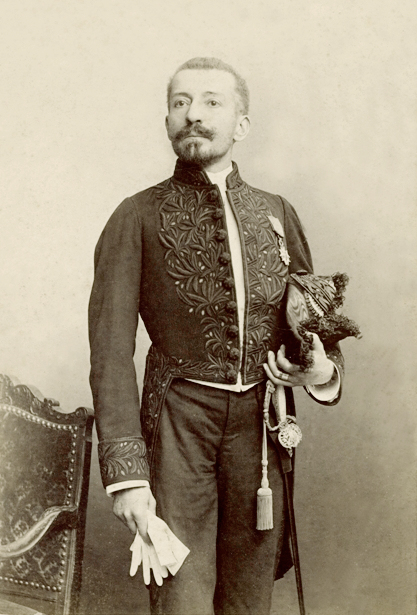
These 'types' were in turn taken from Oriental blackface performances by whites which portrayed Turkish and Muslim ('Moor' performances) of the 18th century which derided all brown people as invaders, which came from European traditions of the crusades and African-European colonisation. Blackface derided African-American culture of having any inherent value of its own throughout the 19th/20th century, and it was from this theatrical 'tradition' of discriminatory stereotypes that yellowface was born. Yellowface was born when its progenitor the french diplomat Evariste Regis Huc (1813-1860) greased himself into it in China (between 1839-1846) to develop his understanding of Mandarin, the language. On his journey around China, he was privy to traditional Chinese culture such as Chinese operas, which he described as the 'chants of savages'. He brought this ... attitude back with him to Paris in 1850, spreading his racist views of Chinese performance art and people, peppering his account with other writers accounts of thievery and non-Christian ways.[2][3]

This account seems to highly flavoured perceptions of Chinese people, as many early stereotypical accounts of Chinese people depict them as thieves, laundry business-owners and exotic. Before the 1850s, these depictions solely relied on commercial goods (porcelain) popular through the Chinoiserie fad, but these kitsch Scottish-Chinese Suona-Bagpipe operas soon gave way to Huc's vision.[2] Heightened Sinophobia against Chinese migrant labourers who sought to work through the California Gold Rush, a  time which saw the California Mining Tax (1850-1852) which targeted Chinese miners by enforcing a head-tax.

The Yellowface Jim Crow

In 1854, the first American 'minstrel pioneer, Charley Backus (1831-1883) performed in yellowface as 'John Chinaman' in his San Francisco Minstrel Troupe.[2] John Chinaman ran a laundry, stole gold from his white neighbors, spoke in Chinese-English pidgin, wore a 'shabee' (Hispanic pun) Shan-Ku uniform full of holes and sported a Queue hairstyle. His dinner consisted of dogmeat, rat, cat and mice and was wholly unassimilable and therefore un-American. He later found a home in the 'folksongs' of minstrel performer John A Stone (active 1854-1864), and between Stone and Backus, the John Chinaman stereotype spread internationally, primarily finding its home in New York theatre.[2][4] Whilst a niche in minstrelsy, Sinophobia was deep-rooted in this 'tradition', as in Josh, John (Get Out, John):

Your tail is severed clean off John; 

Your pig tail is clean cut off; [...]

You have lost your nankin shirt of blue, [...]


You have come, as it were alone;

And you lead an unhappy kind of life,

Coming without a cheerful wife,

A cheerful wife of your own, John;

An almond-eyed wife of your own.


You've left your national god, John, 

You've left your god and your land

You've left the dress of the land of flowers

And in leaving these, haven't taken ours;

And you've friends upon neither hand, John, 

You have friends upon neither hand.[5]

Whilst 'almond-eyed' Chinese women were nowhere remotely as populous as their male counterparts, some Chinese women did find their way to America.[2][5] Before 1850, these few women reflected popular stereotypes found in Euro-American operas which were based on Chinese artefacts, mostly for women the pottery beauties depicted mostly in gardens on the sides of pottery. Afong Moy (c.1815-c.1850) was brought to the US for this very reason, displaying her 'exotic' bound feet to sell pottery for the Carnes brothers from the 1830s-1840's.[2][7] After 1850, yellowface songs referred to Chinese women in passing as 'Jades', or prostitutes because many Chinese-American women were sex trafficked into North America to get there, often into California and the West, with much of their time seemingly spent in laundries in competition with Irish laundry business owners if we believe the minstrels shows. Stereotypical yellowface Jade marriages often broke down, usually with the sudden death of the Chinese husband in these 'plays', or the white husband leaving mysteriously.[2] Other insults included 'monkey', 'dusky, 'drumstick eaters', 'mongol', 'Asiatic', 'Coolie', 'Baboon', 'leper' and opium related stereotypes.[2]

Irish Yellowface

By the 1860s, not one to miss out, the Irish, German and Italian immigrants began cashing in on the John Chinaman act such as the classic 1860s minstrel character 'Ching Chong'. Ching Chong was a warning to Asian men not to attempt to marry whites, who like Ching Chong's debauched lover, would run away, as the Chinese did from California on the Transcontinental Railroad in 1869, much as the Great Migration from the South did. By 1870 though, Sinophobia became overwhelming amongst Statesian WASPs, as Chinese people tried to survive living in a genocidal hellhole. This migratory tension was seen in American vaudeville yellowface 'Chinese' acts, which portrayed 'Heathen Chinese' stereotypes, saw the rise of the Gong to signal 'Asian-ness' and set the proverbial Sinophobia dry grass pile alight, seeing the Chinese Exclusion Act (1882) come to pass, the first American legislation to ban POC from entering North America.[2]
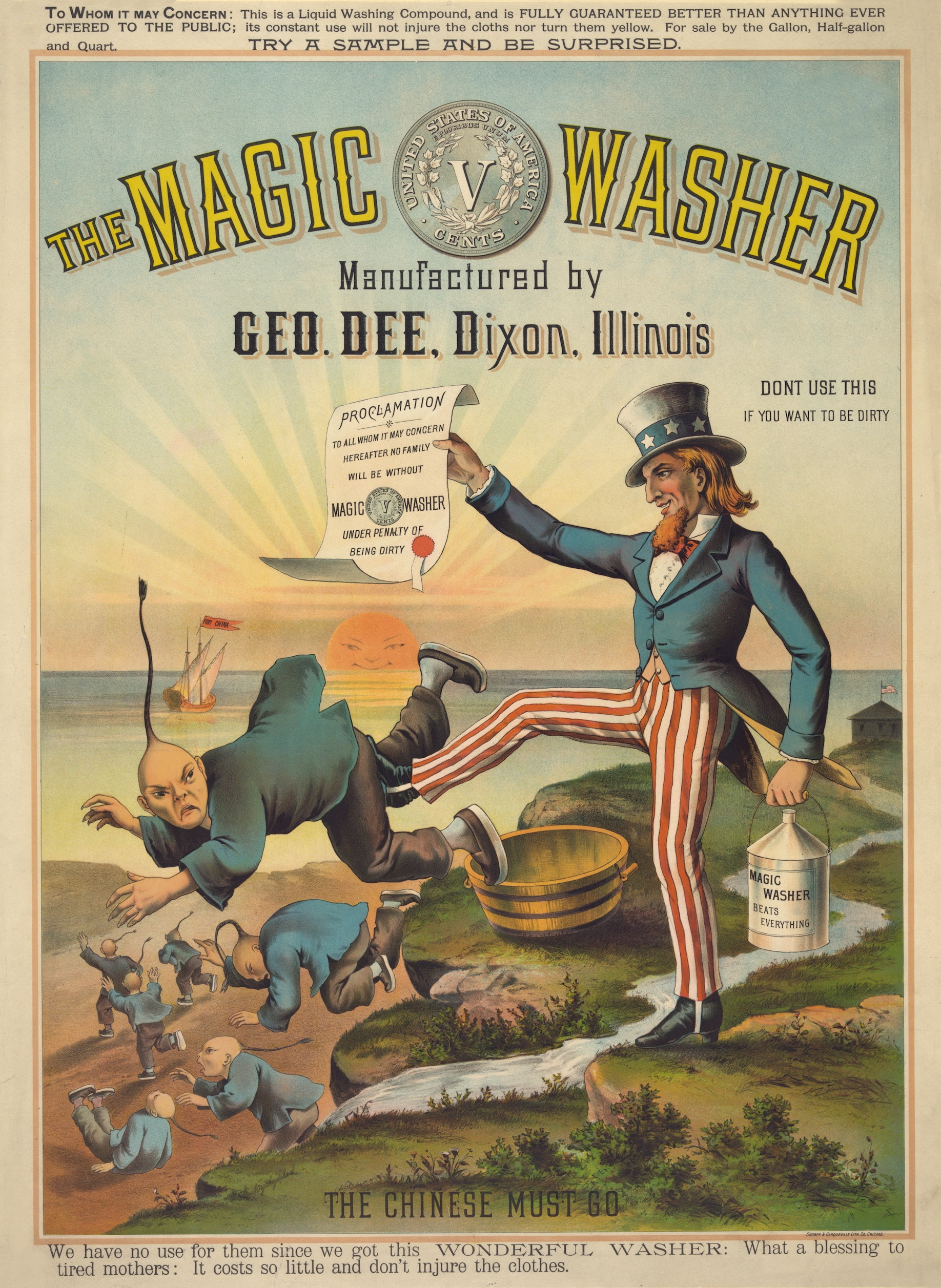
Chinese Must Go Advert (1886, PD) George Dee Magic Washing Machine Company

Yellow Peril

After the Exclusion Act and drawing up of laws like the Racial Covenant Clauses later on, Chinese-Americans began to form China Towns, which had Chinese Theatres. These were established by the 1890s, a time when Statesian imperialism, Jingoism and Sinophobia flourished with the acquistion of the Philippines, Hawaii, Guam and many other territorial acquisitions and protected territiories.[2] This saw a rise in hatred of all Asians, and saw a diversification to the hatred of all Asians, in an equal opportunity discrimination age were Indians, Chinese, Japanese, Filipino etc were now all 'Asiatics' who needed Americans guiding hand towards the light of civilisation, especially Tagalog. The Japanese however were particularly 'barbaric savages' and feared through what became known as the Yellow Peril, because of their victories in 1895 in the Sino-Japanese war. Yellow Peril belied a mysterious Oriental plot to overthrow white supremacy in the US and Europe, with MiSCEgEnAtIoN (or a 'pollution of the caucasian race').[2] These numbers grow and dipped by the 20th century, as more Gentlemans Agreements (1907) and 'Immigration Acts' (1917, 1924) were passed, limiting specifically East Asian emigrants to the US. This lead to the American concentration camps of WWII, redlining, etc and gasp, Sessue Hayakawa (1886-1973) who was an early cinema international heartthrob.[6] 

The realities of the 1890s colonisation of Eastern Asia (c.1899, PD) Stewart
A Chinese political map, the bear is Russia, the dog is Britain, the frog France and the Eagle the US
Japan sits poking Korea I think

Export Kimono

Kimono came into this messy picture by the 1870s globally. Whilst European families were accustomed to 'Nightgownes' since the early 17th century, these only reached Statesian shores as Export Gowns with the growth of Japan Inc. in the late 19th century, and were increasingly bought by those wild enough to travel to Japan who bought many Kimono back with them as bric-a-brac souvenirs. Worn at first by the Rothschilds in the 1870s and 1880's, later the Vanderbilts in following the fashions of the French stage actresses. Kimono after Loti's seminal Madame Chrysantheme (1887) represented a prostitutes attire born from the classic Lotus Blossom trope, and were often longinguistically associated with 'Geisha' from the operatic classic of Puccinis opera after Long's 1898 original, and the news of diva actresses like Sarah Bernhardt who would be found swaraying around backstage and through the Hollywood gossip columns. These Longingly became staples of middle class Boudoir attire by the early 20th century in imitation of the 'European fashions' becoming fashionable lingerie attire for white Americans, and shameful unmodern attire for Japanese-Americans.

Madame Butterfly (1907, PD) University of Washington, Francis MacLennan, Elza Szamosy

Appropriation for America

Yellowface is not specifically seen in the Red Kimono as far as I can tell; I don't deal in this everyday; however it was certainly a widely accepted idea that the Japanese and Chinese were to be considered an 'other' type of people than 'Americans'. Performers like William 'Chung Ling Soo' Robinson (1861-1918) normalised these expectations on the stage to make fun of their East Asian counterparts (see the talented Ching Ling Foo | 1854-1922 ) by stealing their identities, cultural items, jobs and even performances to do so.[7] Picking up another cultural item and associating it with 'sin', the Red Kimono as produced by women (Dorothy Davenport | 1895-1977), as was common in the early days of American cinema clearly sat well with all involved at the time with the production. The protagonist of the film is played by Priscilla Bonner (1899-1996), who symbolized white American women who had 'fallen into prostitution'. Wealthier white women would in turn lift them from their circumstances, a popular trope of late Victorian/Early Edwardian period literature and film in a bid to 'alleviate the suffering of the' poors. 

Bonner had previously been cast and agreed to work in Shadows, a another silent yellowface production, three years before (in 1922) Red Kimono was shot, which was a continuation of white fears born from the subjugation of the 'yellow races' of Eastern Asia by the United States beginning in 1898 when the USA bought the Phillipines from Spain. 'American interests' in the area had allowed the colonisation of Korea, subjugation of China and colonisation of certain Pacific Islands between 1880-1920, which gave whites a false sense of superiority over the 'Mongol' species as American pseudo-race-science and Eugenics then claimed Asian peoples were descended from something other what white people were descended from. 

Lon Chaney in Yellowface on set (1922, PD) Orange County Archives

WASPs were also, as against African-Americans, terrified that Asian peoples would do the same thing to themselves as the WASPS had done to POC groups, leading to cultural appropriation of objects like the Kimono as a self-serving way to show racial superiority of whites over the 'Asiatics'. This culminated in the Kimonope, a clothing version of yellowface, to make white women feel safer in their place at the top of the racial hierarchy they and white men had created for themselves. These roles using yellowface against East Asian women were mostly established by the 1890s, when the Yellow Peril and Chinese Exclusion Act brought the issues into mainstream Statesian society. It was this and the hit classical opera Madame Butterfly (published 1898, in theatres by 1904) which established the Lotus Blossom stereotype, predating the need for the 1934 Dragon Lady stereotype.[7]

The Red Kimona

The Red Kimono in fact refers to the scarlet woman (sex worker/prostitute) trope, and appears in the film after the film's 'protagonist' sees her mirror image shift into a Red 'Kimono', indicating a change in future status. The protagonist indeed becomes a 'histrionic' Jane as netizens put it, who serves her pimp after this.[8] The protagonist upon finding her cheating husband and being brushed off; her taste is that good apparently; shoots him in the shop where he is buying the next 'wife's' ring from protagonists stolen money and promptly gets a straight to jail card with plenty of histrionics.[8]

During the trial of her shooting her pimp, the Kimono is dropped on the floor indicating that she is leaving her 'prostitution' days behind her. In this way, the Kimono in this film is depicted as an Orientalist-adjacent object (see Said 2003), which perpetuates pre-existing stereotypes that people who wear this particular garment are the archetypical 'geisha', 'prostitutes' or 'scarlet women'. The Kimono in the American canon though is most often a Kimonope in disguise as legitimate Wafuku, in this case being a form of boudoir lingerie, transformed as such by the fact that a white woman has worn this garment which the audience or 'Us' is meant to understand as a non-racialist body. Worn on any other POC woman, particularly in Silent Hollywood, this would more likely make her a 'Jade', sex worker or 'Geisha' stereotype. 

Conclusion

In context therefore we see how from the 1830s-1920s, East Asian women were created into the exotic other, in order to push racist white supremacist narratives of 'racial and civil superiority'. Beginning with Afong Moy, East Asian culture was denigrated as worthy of only being an exotic good to be sold by white men. This progressed into the first American theatre tradition, minstrelsy, which on the basis of blakface created by the 1850s internationally known yellowface impressions. This progressed to the 1890s into the Yellow Peril, Lotus Blossom stereotype and the denigration of Chinese/Japanese/Korean-Americans. The Kimono originally an artistic export item worn by the wealthy, eventually with the appearance of the Madame Butterfly opera was adopted into the American theatrical Kimonope and combined with the anti-Asian milieu to create acceptable cultural paradigms in which productions like The Red Kimono were born. Therefore, the Kimonope in American cinema, certainly of the early 20th century is a racist construction of Japanese women as the 'Asiatic' other.

Bibliography

[1] https://en.wikipedia.org/wiki/Blackface

[2] Yellowface: Creating the Chinese in American Popular Music and Performance, Krystyn R. Moon, 2005, pp.6-74

[3] Travels in Tartary, Thibet and China, Evariste Regis Huc, 1854[1928], pp.xxx-xxxi | Available at https://archive.org/details/b3135953x_0001

[4] Empire of Culture: US Entertainers and the Making of the Pacific Circuit; 1850-1890, Matthew Wittman, 2010, pp.62-69

[5] Put's Original California Songster, John A Stone, 1868, p.62 | Available at https://archive.org/details/putsoriginalcali00ston/page/n63/mode/1up

[6] See Essay #4

[7] See Essay #18

[8] https://www.imdb.com/title/tt0016276/reviews?ref_=tt_urv

The production in full: https://www.youtube.com/watch?v=_2dBX2S3_LU

Essay Abstracts 

#1 Renee Vivien (1877 - 1909) --- Born Pauline Tarn, was an English lesbian poet. She wrote in French and perhaps English. She took up the style of the Symbolists and Parnassinism and was well known during the era of the Belle Epoque (the Beautiful Age) for producing Sapphic verse and living as an open quasi butch lesbian poet; her verse derived from the ancient poet Sapphos, also famed for her love of women.

# 2 Birth of the Kimonope --- Here I shall introduce the notion of the Kimonope, that is as a garment attached to the social construct of the 'Geisha' in North America. Kimonopes being Orientalized clothing, or 'negatively affiliated or exoticized ethnic dress' which lead to the perceived notion of the Kimono and Geiko as simultaneously both high and low culture to American culture makers, such as film, television, media, writers and some academics. An example of Kimonope are the tacky Halloween costumes you may find at the Dollar store.

#3 The Legacy of the MacArthur Dynasty on KTC & The Problem with the 'Traditional Garment' Argument --- The problem with arguing that the Kimono is a 'Traditional ethnic Garment' is that that assertion is in itself, arguably  Ethnocentrism, which to clarify is the imposition of, in this case, American values onto Japanese cultural values, belaying the 3 pronged pitchfork of idiocy. 

#4 Divine --- Government name Harris Glenn Milstead (1945-1988) was the infamous North American Queen & Drag artist. Specifically, Divine was known for being a character actor, part of her act is well-known for its eccentricity. My personal exposure to Drag lite was Pantomine Grand Dames as a kid, and later when my friends made me watch RuPaul in art classes, so to me this is nothing new, the over the top, the glitter, the upstaging is all part and parcel.

#5 Dori-Style or 21st century Kimono Fashion --- The Dori-Kimono style. Something which I just made up because in going over notes for the first 20 years of 21st century section of Kimono history, I noticed a lack of a clear catchall term for what was happening in Japan at the time, at least in English descriptions of the time. I use the term Dori as I do not want to coin an unrelated term to the topic, but I also am reticent to claim all of Street style as 'Tori' either, whilst a large number of streets upon which the subculture originates in all use the suffix 'dori' (the bottom of Takeshita-dori for example), thence Dori-style.

#6  The Tea Gown --- This essay will cover the aspects of how 19th century Japanese import textiles to Western countries were used and repurposed, as well what their desirability tells us about how Japanese design was regarded and the image which these people held of Japan through the Western lense and consciousness. This follows the progression of how Kimono can be used in the West from the undress of the 1860s, adapting silk bolts in the 1870s to high fashion western daywear, to the 1880s aesthetic movement and 1890 wholesale adoption in the Victorian age to being used prominently by society hostesses as tea gowns by the Edwardian period, and the subsequent change in Japanese export culture which we see in extant textile collections of Japanese textile in Western dresses of the periods.

#7 Kimono and the Pre-Raphaelite Painters --- This essay will cover the aspects of Kimono in the Portraiture of the Pre-Raphaelites. The Pre-Raphaelites were a group of British artists and writers active during the late Victorian period. Unlike the Royal Academy artists, this circle of painters operated outside of the established comfortable boundaries of the expected white, cisgender middle class audience of the Victorian age. The movement is notable for its inclusion and encouragement of women, and in portraying and engaging non-conventional beauty and beauties as figures from the Classical World alongside Religious, Mythological and Folklore Heroines into Victorian 'Femme Fatales'.

#8 Jokyo/Genroku Kimono Textile Culture and the new role of the Komin ---  This essay will return back to GKTC (Genroku Kimono Textile Culture ; 1688-1704) and JoKTC (Jokyo K.T.C. 1684-1688) and the new role of the Komin (Artist caste) in GKTC. JoKTC is notable for being the lead up to GKTC, JoKTC being characterised by its transitory nature in comparison to GKTC, which was far more bold in its relations to what Kosode could and should be. Komin entered the picture at this juncture, and I shall elaborate a little more here than in other posts about why that was. GKTC is notable for its elaborate, perhaps gaudy and innovative Kosode design features, whilst JoKTC more so for the enabling factors of the time, as a sort of incubatory GKTC.

#9 Tagasode Byobu - This essay will explore the art motif known in Japanese art as Tagasode Byobu ( Whose sleeves Screen) This motif is a recurring art form which was particularly popular during the Azuchi-Momoyama era ( 1568-1600 ) as a representation of the ways in which Buddhist sensibilities met with the fast changing events of the end of the Sengoku Jidai (1467-1615) and as an extension of the habit of wealthy women from military families came to own and store a large number of Kimono. Prior to this, Kin Byobu ( Golden Screens) for the most part depicted nature like Sesshuu Touyou (1420-1506) after Chinese Cha'an painter Muxi ( c.1210-1269 ) or 'flower-and-bird' scenes like those of Kano Eitoku (1543-1590), rather than humans or human paraphernalia as an extension of the Zen painting school of thought about materialism.

#10 Cultural Acculturation --- The topic of our essay is on the nature of Cultural Exchange in KTC which will be an ongoing mini-series throughout 2022. This covers the 1000CE - 1500 period in Japanese History.

#11 Cultural Appropriation --- The topic of our essay is on the nature of Cultural Appropriation which will be an ongoing mini-series throughout 2022. 

#12 Cultural Acculturation --- The topic of our essay is on the nature of Cultural Acculturation which will be an ongoing mini-series throughout 2022. This covers the Asuka (Hakuho), Nara (Tempyo), and Heian periods (500CE-1000CE) in Japanese History.

#13 Asai Ryoi --- This essay will explore the legacy of Asai Ryoi on KTC. Who was Asai Ryoi you may ask? Only one of the most important writers for the Ukiyo genre. Asai Ryoi ( act. 1661-1691 ) was a prolific Ukiyo-zoshi ( Books of the floating world )  or Kana-zoshi  ( Heimin Japanese Books ) writer. His leading 1661 publication, lambasted and satirized Buddhism and Samurai culture of restraint in favour of the Chonin lifestyle of worldy excess.

#14 Edith Craig --- This is a post regarding the early adoption and promulgation of the Kimono and Japanese aesthetics in the life of the wonderful Edith Craig (1869-1947), daughter of the famous actress Ellen Terry (1847-1928) and Edward William Godwin (1833-1886). Edith was also known as 'Edy'.

#15 European Banyans --- This essay will explore the European garment known as a Banyan, which originated as a European reaction to Kimono in the 17th century, popular until the end of the 18th century. The word Banyan originates from Arabic ( Banyaan), Portuguese (Banian), Tamil ( Vaaniyan ) and Gujarati ( Vaaniyo ) loanwords meaning 'Merchant'. Alternative versions saw the item fitted with buttons and ribbons to attach the two front sides together. The Banyan was worn by all genders and was particularly regarded in its first iterations as a gentlemanly or intellectual garment worn with a cap to cover the lack of a periwig, and later adopted by women and greatly influenced how British womens garments were designed with preference for comfort in removal of panniers whilst maintaining luxurious, modest 18th century fashions (see Robe a la Anglaise).

#16 Miss Universe and Kimonope --- This essay will explore how Beauty Pageants, principally Miss Universe, has engaged with KTC. While there may be real Kimono worn by Japanese and Japanese adjacent contestants in the 'National Costume' category, I will be focusing on the Kimonope worn by contestants. The idea of Kimono as a 'national costume' sparks interesting conversations on what 'national costumes' are, their target audiences, and how we form ideas about these things to begin with.

#17 Onna-E --- Womens pictures refers to the Nara, Heian and early Kamakura ( 710-1333CE ) practice of drawing women in elongated Hand scrolls, which today are regarded as feminine gender coded Art. Some of these narratives depict the lives of women, their extra diaries, or the literature they wrote. The Onna-E style derives from how mostly Heian women represented themselves and others as a performed self in these scrolls, drawing from their lives indoors at their and the imperial abodes. Whilst a limited number of women could read Kanji, they also used their knowledge of Chinese culture to create and inspire their own culture; the first truly Wamono aesthetics; and it was with these preconditions that Onna-E became established in the Japanese art scene alongside Yamato-E and Oshi-E.

#18 A Jamaican, a Monster and Portuguese bar in the Orient --- This essay looks at the Kimonope attire adopted by North American Dancehall artists Shenseea (Chinsea Linda Lee | 1996 - present ) for the video to 'ShenYeng Anthem'. Whilst the aesthetic derives mostly from East Asian, principally Chinese aesthetics, the language used is specifically Japanese, referring to Chinsea Linda Lee as 'ShenYeng Boss', a perpetuation of the Dragon Lady stereotype. The essay mostly charts how this ridiculous Kimonope derides from the North American Anti-Chinese movement and how this intersects with contemporary Orientalism.

#19 The Red Kimonope --- The Red Kimono is a terribly named racist US silent film from 1925. The Longingist film includes a key scene which the production gets its name from where the protagonist drops her Kimonope, meant to symbolize that she had turned away from sin and prostitution, or in other words equating a wearer of the Kimono as a sex worker which stemmed from another American 'tradition'. This dreadful melodrama features the previously yellowface-accepter Priscilla Bonner as the lead protagonist. Throughout her trials and tribulations, she faces many ups and downs, like becoming a white version of the Lotus Blossom stereotype, because WASPs. I will explore the origins of the Lotus concept and the 'Jade' in more detail here as to provide the contextual background of the productions symbolism.

Social Links

One stop Link shop: https://linktr.ee/Kaguyaschest

https://www.etsy.com/uk/shop/KaguyasChest?ref=seller-platform-mcnav 

https://www.instagram.com/kaguyaschest/ 

https://www.youtube.com/channel/UC5APstTPbC9IExwar3ViTZw 

https://www.pinterest.co.uk/LuckyMangaka/hrh-kit-of-the-suke/ 

Monday, May 31, 2021

The Legacy of the MacArthur Dynasty on KTC & The Problem with the 'Traditional Garment' Argument | 1899-1952 | Essay #3 |

Kimono as transnational Culture Essay Series : The Legacy of the MacArthur Dynasty on KTC & The Problem with the 'Traditional Garment' Argument

The problem with arguing that the Kimono is a 'Traditional ethnic Garment' is that that assertion is in itself, arguably  Ethnocentrism, which to clarify is the imposition of in this case, American values onto Japanese cultural values, belaying the 3 pronged pitchfork of idiocy. 

I should clarify that the Traditional Garment Argument is that the Kimono is only an ethnic Japanese dress and not a transnational garment which has many historical caveats, astrix's and design alternatives.  The argument essentially says that the Kimono should only be worn as traditional attire in appropriate ceremonial or historically appropriate settings rather than treating the Kimono as a social construct, like money, which is liable to change vastly depending on who and what it is being used for.

The pitchfork of 3 pronged idiocy:

 - American Ethnocentrism

 - Japanese Ethnocentrism

 - The good ol' 'Dying Industry' known otherwise as racialist ignorance

American Ethnocentrism

This is the idea that becuase America likes to hold 'developing nations' GDP potential hostage whilst going on Military-Industrial-Complex spending sprees, it tends to hold QUITE the sway over over nations national interests. By extension, American values, under Pax Americana, began to proliferate over nations less well militarily endowed than itself, this included apparently grafting American vlaue systems such as the Kimonope or those 1$ Made in China 'Geisha Outfits', a white Invention (Frederik Blekman, Loti or Long take your pick) as being 'Japanese'. 

 'Geisha Halloween Costume' (2004)
Im sure Long and Loti would be proud | THE KIMONOPE

The Kimonope being a

"kimono [... which is] a garment worn by infantilised, submissive, child-heavy, no-backtalk [sprinkled] with the odd 'exotic' cultural marker such as Samurai, Bushido, Mt.Fuji and Ikebana [...] and we have established the Kimono[pe] as a cultural marker in line with the subservient 'Asian woman' trope. [...] The Kimono suddenly became an American garment, [...] acceptable to put onto the stage, into the hands of GI's in the 1950's and [for] feeding the problematic 'dying industry' narrative we have around Kimono wearing today we find in films like Memoirs of a Geisha."[1] 

Indeed reading that is rather triggering for anyone familiar with the Anti-Asian rhetoric since the Atlanta Shootings of Asian-Americans. However it is the ugly truth. Kimonope allows Chinese-Americans to operate in the film industry under White Male Gaze fantasies, whilst ignoring Chinese concerns about stories portraying 1930's Occupational Japanese forces. It proliferates and bolsters racist ideas of what Kimono is and was, now packaged for American theatre goers, movie watchers and what occupied Japan is and was, which I shall explain in greater detail in the Dying Industry section, because oh boy, American racism is a hell of a construct.


Racist crap (1920) | More of that (1925)

ItS AlMoSt LiKE tHEy ArEnT The SAMe THinG ~!

Kimono Coat Fashion (1956) | Vietnam festival in Tokyo (2016)

Under this notion of the Kimono, which is what Japanese-Americans were protesting, the abuse of a cultural marker and therefore defamation of their cultural heritage, a principle more than justified in the US context, becomes the Kimonope, not the same as the Kimono. It is the conflation of the two which has rubbed people who operate and dip around Kimono Textile Culture the wrong way (that is small business owners, up-cyclers, tourists etc etc).

"Kimono are also inherently, as with all objects, dynamic and use multiple sources of influence and inspiration. Particularly within the broad scope, fashion and history of Kimono as a garment, and narrowing who, why, how and when Kimono is considered appropriate to be worn by, when the answer from [the] Japanese audience is generally ["]anyone [can wear one]" can be taken as cultural appropriation rather than appreciation in itself."[1]

By this I mean that it shows the level of consideration that was taken into account when Kimono Wednesday protestors began denouncing that 'Westerners' were allowed to wear Kimono. To clarify, the 'Kimono' (Kosode) has been born by 'Westerners' since before 1613.[9] Not to mention that the narrowing of the definition of who can and should wear Kimono is an ugly relic of 1930's Japan which modern day Japanese domestic audiences completely disagree with Japanese-Americans about, but by the by.

Oh History You Rapscallion You (1707)

The Kimono, like themselves, is a transnational being. The notion of being Japanese-American and trying to find your place in a society which frequently from an outsider looking in perspective denies your humanity and culture and rejects your 'biracialness' and identity, must be an unruly beast to tackle with. However, seeing the Kimono in as simple a term as 'Japanese', is doing the Imperial or White Mans (in the Kipling sense) work for him. The Kimonope is the ugly, racialist flip side of the coin of how American KTC operates, that is as simultaneously attractive and somehow inferior, when in reality, the Kimono is a social construct which people have projected their own experiences, values and ideals onto, like money, another social construct. Instead, understanding some of the wider assumptions in American KTC (such as presumptions about 'real Japanese culture', which is a murky enough thing in itself) would greatly put people in touch with more realistic notions of global KTC and how American KTC and indeed foreign global policy operates and influences other countries and social constructs like the Kimono.

A Dying Industry

The greatest problem with the Traditional Garment Argument is that in arguing it is 'cultural appropriation', also fit neatly into the 'Dying Industry' Narrative.[3] 

Let me be dead clear, KTC is not dead. To give a brief overview, Kimono became established as even a thing becuase of contact with the west, otherwise it was just known to the Japanese in Japan as 'thing-to-wear'. Due to heavy industrialisation brought under Japan Inc., silk production shot through the roof and during the Taisho period Kimono had a sort of mini-design-Renaissance, and this continued, albeit with in my opinion less appealing designs (nationalism leaves a bad aftertaste) until 1945. From 1945-1952, heavy Japanese industry was dismantled under SCAP and diminished because Japan was in recovery from the 'Pacific' War. With this came American influence and Kimono became, 'traditional garments' between 1955-1980. With the subsequent Japanese miracle however, Kimono became popular once again among the newly rich Japanese and traditional crafts were taken up again, and a handful of these still survive today which is perhaps were most of the honesty in these ridiculous DI stories comes from, as the traditional crafts are beginning to fade away due to lack of investment. With the 1990s bubble crash, new kimono production dipped, but this lead an unforeseen consequence that like the 1950s, old Kimono became exceptionally cheap and began the new trend of upcycling in Japanese street fashion, and with the introduction of the WWW in 1993 (it really is that old) better known as the internet, Kimono began to be bought and sold overseas, causing a boom in KTC globally as with Lolita.


                                                        Silkworm Production in Toyama (1909)

What I find insidiously worrying about that process though, is how the historical record and 'Dying Industry' arguments line up to prove that White Supremacy is alive and well however. And this is where it all gets a bit complicated so stick with me.

If White Supremacy is commonly defined as: 

 the belief that white people are superior to those of other "races" and thus should dominate them. The belief favors the maintenance and defense of white power and privilege.[4]


The Burden must have run in the family
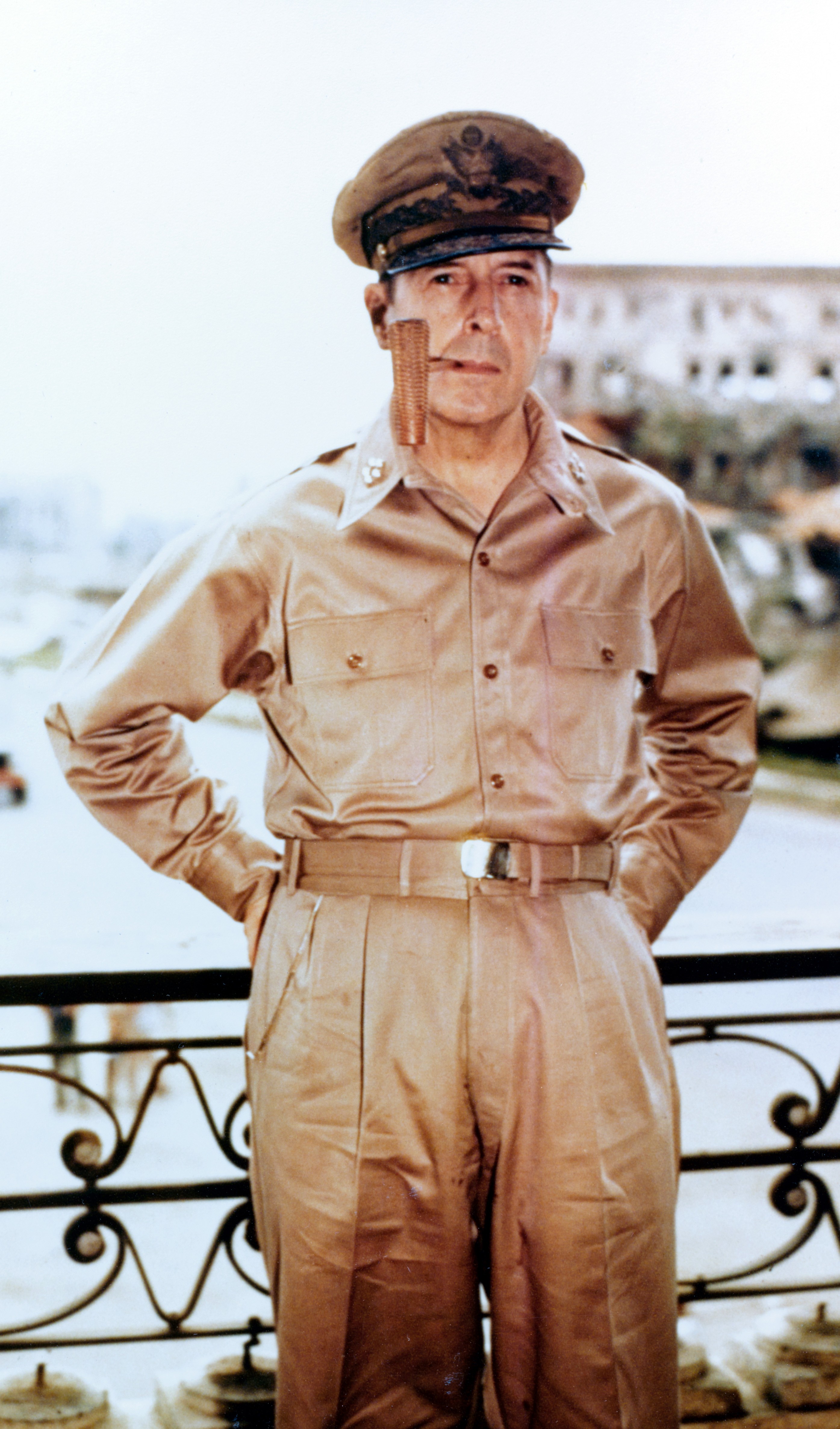
Arthur MacArthur Jr (c1899) | Douglas MacArthur (1945)

OH WHATS THAT? AMERICAN IMPERIALISM! NEVER! (1900)

I say this becuase the American shogun of Japan, Generalissimo Arthur McDouglas, was himself the grandson of a bonafide white supremacist, Arthur MacArthur Jr (yes thats a real name), no less the 3rd Governor-General who oversaw the American colonisation of the Phillipines from 1900-1901 in which Filipinos today are only escaping the 'colonial mentality' of Americanization.[5] During the American colonisation of the Phillipines from 1898-1903/1948, under the American Imperial 'guiding hand of Beneficial Assimilation' a policy of American expansionism, otherwise known as imperialism, the USA 'succeeded soveriegnty' in the total 'domination' of the Phillipines, killing 500,000 Filipinos and preventing people from speaking Tagalog, Kipling wrote the White Man's Burden for this very conflict. Arthur MacArthur Jr himself contributed to the genocidals slaughter of Native Americans and Filipinos, and an added bonus fought on the Confederate Side during the American Civil War.[6][7] It was this arsehole who Douglas MacArthur greatly admired when it came to his turn to take the guiding hand of white America.

Douglas MacArthur himself was at first admired by the Japanese and Filipinos themselves for having helped to get Japan 'back on track', if you ignore that under his abysmal tutelage Japanese civilians starved to death form 1945-1947 due to food shortages he was in charge of. Initially disinterested in the whole ordeal, MacArthur eventually was given the go ahead to 'reinvigorate' the Japanese economy, only because America was scared the Cold War would break out and so turned to making Japan a new American home away from home, which given the Okinawa camp bases has proven to pass, and is questionable given that any 'protection' the US is meant to offer did not prevent North Korea from landing a Nuke off the Japanese coast in 2017.

Japanese Cinema, or the Uneasy Mess that was postwar Japan (1947)
Do you think they'll notice the Nankai Earthquake, assassinated Prime Minister or the Train Derailment and Communist Takeovers Mr.Dog? No me neither! 

With this reinvigoration, MacArthur, himself a great of Caucasity went about turning Japan into an offbrand American, even though Japanese politicians and civilians were the ones doing most of the actual work like pushing for the JSDF instead of being armed, and then in 1950 took credit for his supposed success story. The reality was much more complex, and stories abound of the humilation and starvation of Japanese civilians who described the lifestyle as the 'onion life', the act of peeling away one layer after another of precious wartime goods for sale to an American GI for chocolate or clothes, many of these items being Kimono, many heirlooms. Under further inspection, we also see how MacArthurs hatred of all things 'native' reared his ugly head when he was fired in 1951 for misconduct. One of his famous quips from the time was 

"Measured by the standards of modern civilization, [Japan] would be like a boy of twelve as compared with [the Anglo-Saxon] development of 45 years."

It was said MacArthur congratulated himself when people began stealing Money as it was finally worth something (1948-1953 Banknote)

Nobody quite missed him when he left and any Japanese support he had garnered was left for his tail to hit the door on the way out of his being fired. Under this influence Americanization in Japan took place, and all things Americana became popular. Kimono became under the (keyword) Eurocentric worldview that the 'Far Eastern' Japan being an 'Oriental country' had its 'Oriental native dress'. This caused KTC and wearing Kimono to decline in Japan from 1950-1990. 

That, Kimono Wednesday protestors, truly is the Orientalism of the Kimono as an institution under a White Supremacist Regime which caused the deaths of ordinary people who went hungry whilst the wartime leaders of Japan Inc, another proponent of racial superiority got away scot free. 

So MacArthur, surprise surprise it runs in the family, Caucaustic Douglas was kicked out. Onion lifestyle gave way later on to the thrift lifestyle, it was said Tokyo changed more from 1950-1960, than America. This gave birth to the 'Dying Industry' Narrative, which if I must explain, is White Supremacy becuase it is saying that Japanese people cannot wear define what Kimono is or does becuase only White Americans can decide that. Only White and American journalists, who write these stupid articles condemning the loss of 1 or 2 Bingata textile specialists (purely an example) frame the whole Kimono Industry and playing with Fashion in KTC, as a lost art of the Old Japan where the Geisha room and you may see where I'm going with this.

The humiliation of defeat coupled with the notion that once Japan must 'get with the times' and take the 'American way', known by any other name as a colonial mentality, relegated the Kimono over to the LDP, another proponent of Arthurs 'successes' which brings us to the final point, Japanese Ethnocentrism and how this ties in with Kimono. 

The National Diet (1945) The Menu here wasn't Onion Soup


Japanese Ethnocentrism

That the Kimono is a 'Traditional Ethnic Garment' also falls under the trap of promoting Imperial Japanese and extreme right-wing Japanese values, like Good Wife, Wise Mother. Sounds rather nasty right? Indeed it is, but an easy enough to fall into trap. Notions of the purity of the Japanese 'race' or the Yamato were abundant in 'Dai Nippon' and to some extent the right wing political though today. Couple this with the fact that Japan had a habit of Othering other groups in the 'Greater Co-Prosperity Circle' and promoting 'pure' culture, and we find a worrying copy and paste of the Huns German 'pure Aryan' ideology. This because of course it does extend by the 1930's to the Kimono as being a 'purely Japanese' garment which is just complete hogwash.[2] 


Boxer Codex (1590) | Offbrand Tang (Old)

Hogwash as if you read my silk post, you will see how fluid and transnational the concept of Kimono, a social construct really was, such as that the only really Japanese thing about Kimono is how the width of Obi were worn during Sakoku (1643-1868). I say this because the boxer codex (1590) testifies to the idea the Kimono itself was a local interpretation of Tang dynasty era clothing with a dropped waist for ease of movement, hairstyles were still fashionably influenced by Chinese chignon styles known as Kosode and the materials to create all of these? Imported from Korea and China between 300-800AD! Clearly not a purely Japanese driven Garment when the historical record is examined.

Returning to the 1930's, this came about by the outside pressure to define Japaneseness and combination of GW,WM with Yamato Nadeshiko from 1880-1920 became part of the national myth in the oncoming decade as Japanese nationalism began like Bushido to eat itself away and its attempt to become 'equal with the west', which meant that social factors like dress and nationality intersected and became weaponised for the 'good of the nation'. WWI conservative and patriarchal ideals such as the purity of the 'Japanese Yamato Woman' required her to wear Wafuku, Kimono by that time being a popular choice as other styles of clothing were available. This nationalist reaction therefore fostered a new relation with JKTC, which said that wearing Kimono was a act of patriotism, an act which by from 1938-1945 became understandably part of the hierarchical value structure in Japanese colonies derived from Japanese Ethnocentrism, that is the proliferation of the Kimono onto 'imperial subjects'.

Unfortunately this incredibly insipid right wing ideal that a Yamato Nadeshiko (not a bad thing by itself) must wear Wafuku is still kicking, and is heavily intertwined to conservative visual ethnocentric value systems. The wives of the LDP politicians, mostly conservative for example, still have to wear Kimono to the Diet as a mark of respect to Japaneseness. Arguing therefore under the, 'this is a Japanese only costume' logic is like saying to the Pedi Tribe of South Africa that they cannot wear a kilt because the Kilt has nothing to do with them, ignoring the shared histories, cultures and symbolism of how the Kilt ended up there as purely a symbol of 'Colonialism' or because the Pedi are not 'Scottish' or that it was cultural appropriation, which are by the by, the same kind of arguments made by white supremacists in the Transvaal (like James Hertzog) for the retention of their 'local indigenous culture' and why the whole business of labels and categorisation of culture can be incredibly tricky and far more complex than we at first expect things to be. Also fascism is a bloody tricky thing to combat.

BLEH

Concluding

In conclusion, things are not always what they seem. Kimono KTC, is certainly a victim of White Supremacy, it came into being under the damn thing in the Meiji period, and it suffers the taint of nationalist favouritism in the modern day. However considering the history of Asian and American Ethnocentrism, and how this intersects with KTC, it surprises me that more Asian-Americans did not fully grasp what they were defending in the fateful days of yore in 2015. Rather, it is I would argue, a White Supremacist thing to say that culture is static, pure and relegated to the past (see the Boer argument for 'white rights'), rather than a living tradition of diversity, change and complexity (Afrikaans as a cultural marker for example is similar, a colonial mess but spoken by Black and Ex-Slave populations like Cape Malays). Complex because Kimono are also a symbol of oppression for some East Asians.[2] 

So anytime someone tells you that wearing a Kimono is racist, even though you support local artists and secondhand sellers in Japan, are a supporter of small local/global businesses and help spread informative cultural etiquette, which I argue is a form of cultural appreciation, I would direct their attention to the leaving remarks and comments of the man America sent to 'civilise' Japan, or even Henry Long, or Pierre Loti, because oh boy, a foreigner in a Yukata at a Matsuri is probably not as influential or damaging, as the very thing that yes, does kill people, like going hungry because they cant afford to keep their businesses open because traditional crafts are dying out in Japan becuase American journalists framing the Industry as dead does not help put money in the cash register, nor does silencing or driving away Institutions trying to share international culture by screaming at strangers that they are oppressing you by wearing cloth for 5 minutes. Im still mad this happened 6 years on, can you maybe tell XD 

In conclusion kids, do your homework before you say its something or other first. Please for the love of God.

Bibliography

[1] See Essay #2

[2] Kimono and Colony, Rie Mori, 2011, pp.85-91, Voices from Japan

[3] https://soranews24.com/2015/07/17/kimono-artisans-hope-to-revive-dying-industry-by-taking-kimono-to-new-york-fashion-week/

[4] https://en.wikipedia.org/wiki/White_supremacy

[5] https://www.youtube.com/watch?v=YupIdd5DMn0

[6] http://www.crcworks.org/sumangil.pdf

[7] https://fpif.org/the-racist-underpinnings-of-the-american-way-of-war/

[8] https://en.wikipedia.org/wiki/William_Adams_(pilot)#Establishment_of_an_English_trading_factory

Socialies

https://www.etsy.com/uk/shop/KaguyasChest?ref=seller-platform-mcnav or https://www.instagram.com/kaguyaschest/ or https://www.youtube.com/channel/UC5APstTPbC9IExwar3ViTZw, or https://www.pinterest.co.uk/LuckyMangaka/hrh-kit-of-the-suke/

Saturday, April 3, 2021

ジョン・ルーサー・ロング | John Luther Long | 1898 | Essay #2 | Birth of the Kimonope

Kimono as transnational Culture Essay Series : The birth of the Kimonope.

I have literally no respect whatsoever for this kretyn so I shall just discuss the damage he has and is still doing to Kimono culture outside Japan. Here I shall introduce the notion of the Kimonope, that is as a garment attached to the social construct of the 'Geisha' in North America. Kimonopes being Orientalized clothing, or 'negatively affiliated or exoticized ethnic dress' which lead to the perceived notion of the Kimono and Geiko as simultaneously both high and low culture to American culture makers, such as film, television, media, writers and some academics. An example of Kimonope are the tacky Halloween costumes you may find at the Dollar store.

John Luther Long (January 1, 1861 – October 31, 1927) was an American lawyer and writer best known for his short story "Madame Butterfly", which was based on the recollections of his sister, Jennie Correll, who had been to Japan with her husband—a Methodist missionary.

ジョン・ルーサー・ロング(John Luther Long、1861年1月1日 - 1927年10月31日)は、アメリカ合衆国ペンシルベニア州フィラデルフィア生まれの弁護士小説家

ロングは、姉のサラ・ジェーン・コレルが日本に滞在した際に聞いた話を基に、プッチーニ作のオペラ蝶々夫人』(Madama Butterfly。1904年初演)の原作である短編小説『マダム・バタフライ』(Madame Butterfly)を書いたことで知られる。同小説は1898年ユタ大学の学生雑誌『センチュリー・マガジン』1月号に発表された。 [1]

The infamous Kimono Wednesdays. I began collecting and learning (that is the distinction between appropriation and appreciation afterall is said and done) in 2015. I only became aware of Kimono Wednesdays when it was mentioned by Rachel and Jun online I think in 2017. It was one of those incredibly surreal experiences you really only experience very rarely, like the fact Madam Efunroye Tinubu existed. The argument essentially became in the end 'Woke' students, who rightfully very angry about Anti-Asian-American sentiment and the subsequent weathering [2] they had been subject to their entire lives against the MFA and NHK, who were equally confused because this was a Japanese-American or Asian-American collaboration, about sharing their culture with Americans. 

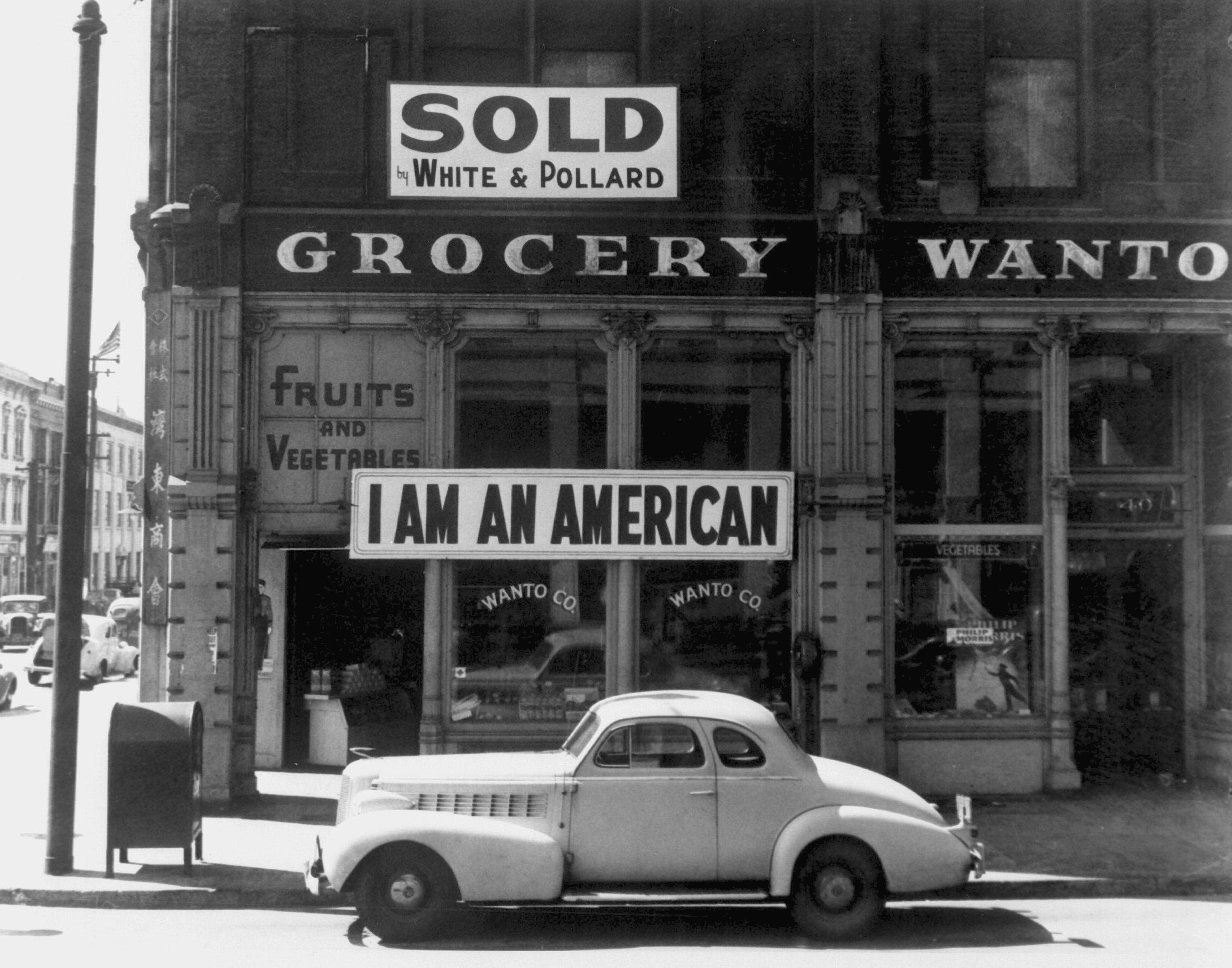
The plight of Japanese Americans who were wrongfully interned during WWII (1942)
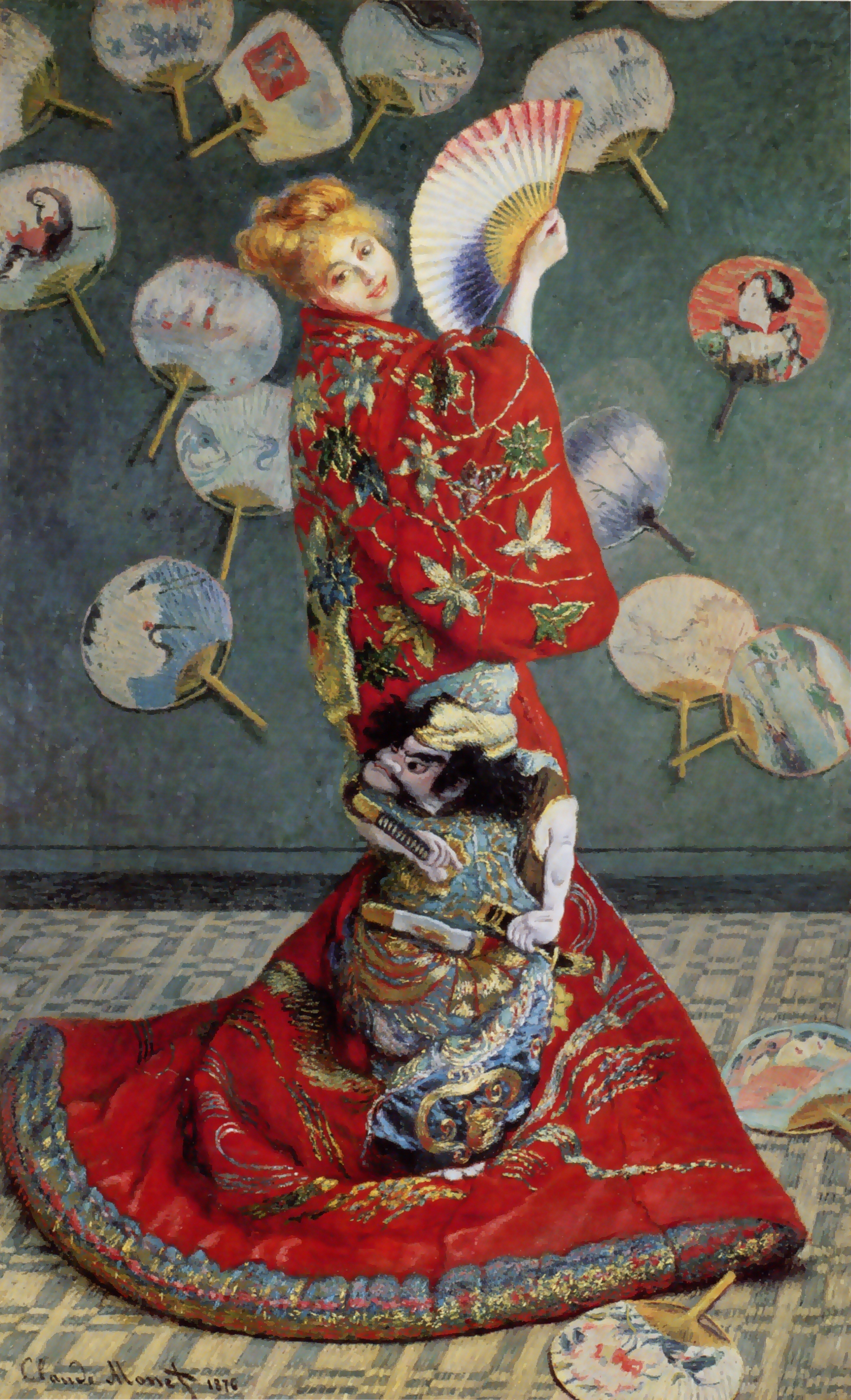
Manets Japonisme Painting mocking Japonisme which sparked the infamous Kimono Wednesdays (1875)

The results were as you would expect, a lot of misinformation being thrown around and people arguing with Brick walls at the end of the day. As whilst for the protestors, this was a battle for their heritage and representation in a historically prejudiced country (I'm thinking Vincent Chin, Fred Korematsu, the 2021 Atlanta shootings, comes to mind) appropriating their culture. But ownership is a tricky debate, and whilst I have no qualms with their sentiments, Japan has equally done questionable at the least in these very same arenas before, which smacks of the lack of care in the American education system like some cyclic Cerberus rearing its head to attack any common ground or sense in the whole maelstrom of surrealism that Kimono Wednesdays stood for.

As for the other side, I an obviously arguing my corner here, but really how do you explain the situation to a Japanese audience? It only comes across as 'the Americans' and all nuance becomes lost in translation when you see how Japanese audiences reacted to Kimono Wednesdays. After-all, a national Japanese broadcaster had proposed this idea, so to a domestic Japanese viewer, American society had rejected an extension of their national culture, the Kimono. Supplement that with American internments and the continued violence against Asian-Americans (who are not a monolith as apparently some people need reminding of that) and we have the great messy Kimono-Wednesdays-split special.

Where Lolita fashion is worn globally (2019)

Common ground could have quite easily been met if the MFA had consulted people in the area, or even visitors on whether this was appropriate to them or not, and Japanese audiences could rightfully have been given a better grounding on the matter than just 'this protest happened? what are your thoughts about this?'. As usual, all of these ideas and things must be taken with a pinch of salt. Humans are rather strange like that, quick to celebrate, not so quick to learn from their mistakes, mostly their own. One of the reasons I write these essays, is to contextualize the Kimono (also not a monolith oddly enough, but a textile social construct and yes ALSO FASHION! Yegads!) internationally. If we are to accept the idea that Lolita for example is a Japanese fashion with Victorian and Rococo influences, we can quite easily see that Japanese fashion is transnational, and whilst there are people who believe culture is static and should not be allowed to be shared [3] between ethnic groups, a great many people find comfort in wearing Kimono and lolita as purely fashion, and in forming communities and identities and businesses (an important part of revitalising a 'dying' industry [4] I should think), and I shall argue in my next essay against the problems in falling into the surprisingly dangerous 'Kimono are only traditional garments' trap.

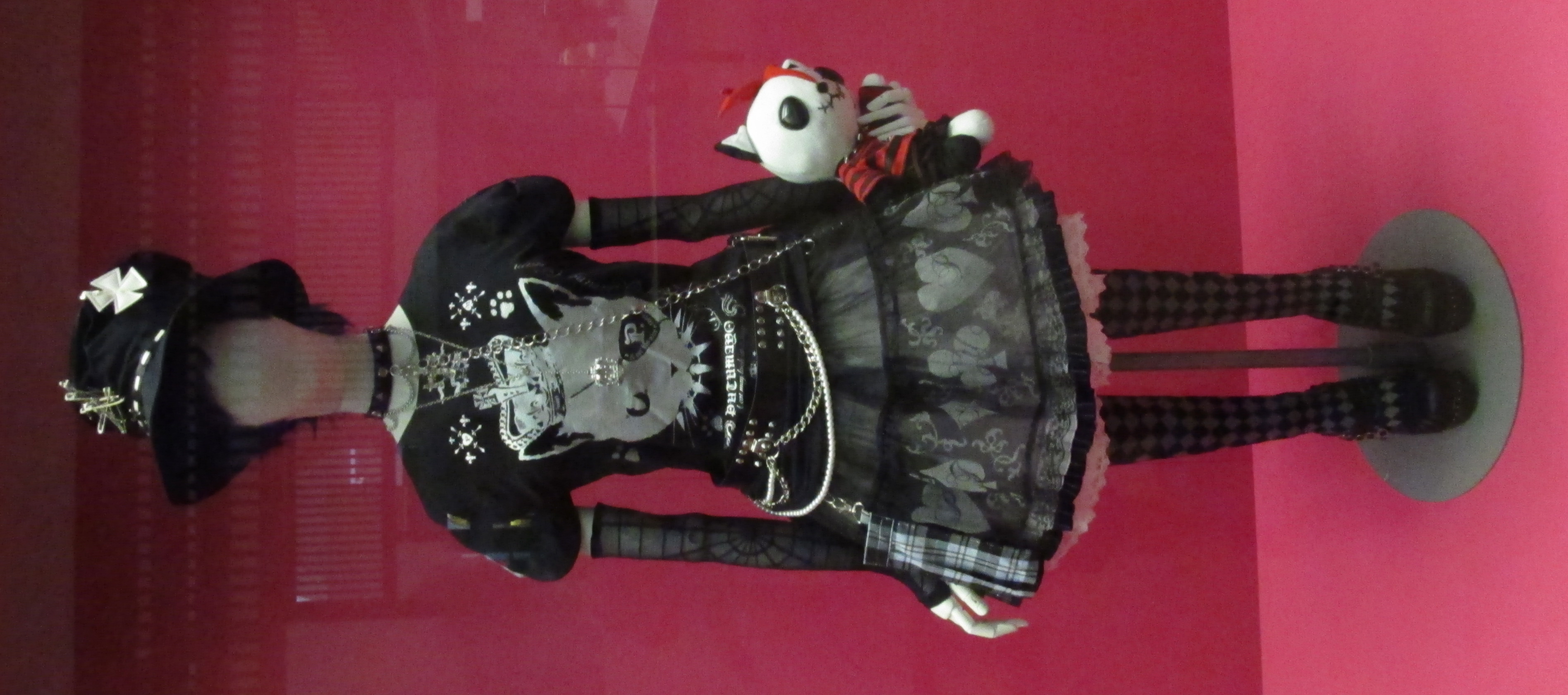
Punk Lolita, an example of both Pizza Effect and Cultural Diffusion

Instead though to refocus this rambling essay, I am taking a brief look into one part of the story of Kimono in North America and arguably popular global culture. The reason I quite despise John Luther Long is that he was the result of all that the protestors were worried about personified. I will gladly go on record and coin the neologism of 'Longingism' in his dirty, dirty honor. John Luther Long, or the defendant (he is guilty and yes I am the fashion police here) is guilty of the crime of clear (for once) mass cultural appropriation crimes on a grand scale. In the culture wars, it is arguably his work which western society has relied on in 'mainstream' culture to contextualize Kimono. Which is sort of like whenever Americans whip out the Downton Abbey dresses for me, and declare this is my whole culture, and the rest is useless. Or reductionism and erasure.


Author of Madam Chrysanthemum (1887) Pierre Loti; Princess from the Land of Porcelain (1865)

I am talking of course, of the inclusion of the Kimono as 'ethnic dress' in the defendants Madame Butterfly, as the original 'timid, subservient, filial piety' Asian woman stereotype found in Pierre Loti's 1887 Madame Chrysanthemum was in French[6], so of course we needed an English version! (Sarcasm, that is sarcasm, see Satire, I'm sure the Crawleys have seen a play or two; no I have not tortured myself by watching Downton Abbey either). Whilst the operas are arguably more influential in trickle-down-culture-proliferation, the operas had to have a source to begin with, and fairyland Japan is a racialists wet dream of course, so we then turn to the illustrated edition of a white cishetereonormative allosexual male North American writer on Eastern topics. Of which I can only imagine the 'Butterfly' to be an adapation of the equally white cishetereonormative allosexual male North American artist on Eastern topics (yes the whitewashed Princess from the land of Porcelain [5] has Orientalist overtones) Mr.Whistler who took on the form from Japanese Ukiyo-e as a signature motif in his own work.

the thing that shall not be named (1903)

Madame Butterfly; Purple eyes; A gentleman of Japan and a lady; Kito; Glory [7] was the original 1898 short story format which inspired Puccini's ever more famous Madam Butterfly opera. Butterfly was the kind of **** you should find in a Museum display case extolling the virtues of equality but alas no. The 'plot' goes along the usual lines, Pinkerton; the dashing American solider; who goes to Japan to marry a 15 year old girl. Finding the distraught 'Geisha' (not the kind I know) Cho-Cho-san (did he write it on the train on the way back home perhaps?), he saves poor Cho-Cho-san by marrying her. Then as any self-respecting normal person does, isolates her from everyone around her, forces his ideals of 'western fashion' down her throat, and becoming bored (did I mention this is the only real reason he marries her in the first place as in Pinkertons mind, Cho-Cho is below him; or the subservient Asian women) leaves her, promising to return albeit with no intention to, with no means to support herself and their new household (Cho-Cho also gives birth to his child) and goes back to the good ol' USA. Instead of the classic Loti ending though, Cho-cho who is the good ol' subserviant stereotype and subserviant Asian woman trope, does in fact wait for him in a stockholm syndrome fashion, denies marrying again and eventually leaves this world for the next one out the horror of finding he is not going to return.

Truly the overt racism and racialist attitudes can be found in the line; 'You thing mebby he keer yaet for me? No! He got come an' fight. An' I lig jus' see him-if he come, of course. Me? I don' keer liddle bit!' found on page 209. To read the full book copy reference 7 into any web browser.

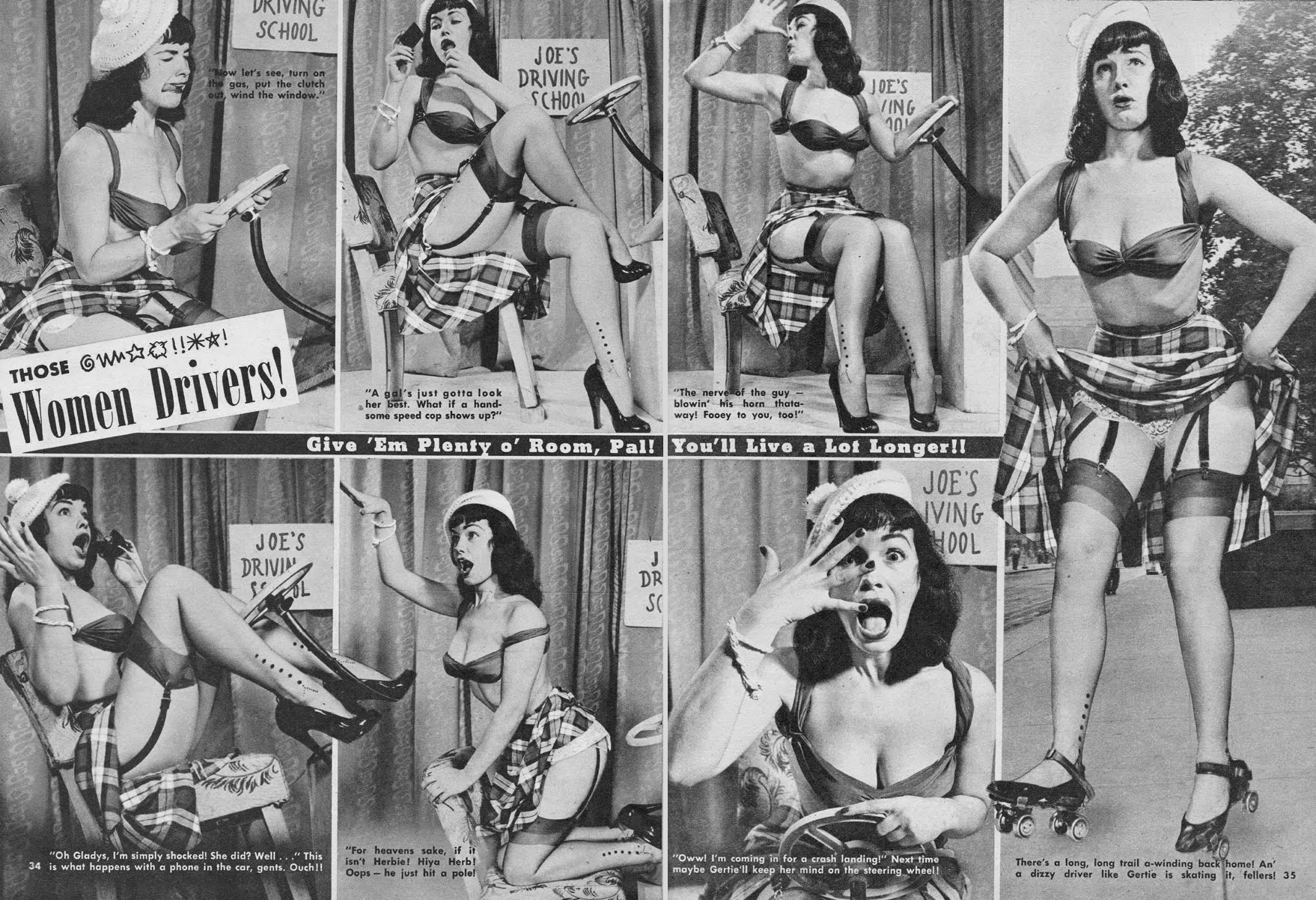
America stereotypical/patriarchal sexualised images of women drivers (1952)

Maiko, trainee Geiko, serving tea, a world away from western assumptions (2011, Nils R. Barth)
Dust storm at Manzanar 'Relocation' Center, home to 120,000 uprooted Japanese-Americans (1942)
Sexualisation, Othering & Objectification are key dehumanising factors to the creation of the western 'Geisha' figure

The book is 224 pages long. The quote mentioned above constitutes around 89% of this book. 200 pages of subservient Asian woman stereotyping. It is from this which we derive the North American (Europe of course has Loti) stereotype of the 'Geisha'. The 'Geisha' being a sort of catchall term for what American men such as Arthur Golden have used to make false or misleading notions into narratives, as Mineko Iwasaki has said herself [8], has amounted to a perception of Geiko as 'highly cultured prostitutes'. Seeing as there is not the social and financial incentive for these men to denounce this, this leaves Japanese-Americans or Japanese nationals in the firing line for this despicable reductionist narrative which is what the 'woke protestors' felt they were up against at the MFA, and understandably so on a surface level.  It is through this narrative, that popular American culture, driven by these same financially successful men, have introduced Kimono into the 'mainstream' media culture, proudly conflating the 'Geisha' as Japanese, rather than American patriarchal power fantasy, and 'Kimono' as glorified bathing robe since 1924.[9][10] And also in challenging the mythological monolith and cultural hegemony; what it means to be 'authetically'; both of Asian-Americanness and Japaneseness.[11] 

It is telling therefore that the original source material for Longism is the illustrations of Madame Butterfly the novel. 2 illustrations of the kimono are found throughout the work and depict the kimono. I shall term them A and B, as A is more prominent, but B more accurate, and the argument I imagine the 'authenticity' or static culture crowd would use as evidence for their case in fashion court. I charge the defendant to be guilty, because in his work, exhibit A is a state of Kimono most prominent, most easy to find, and is not accurate to contemporary or everyday life in the the late 19th century to be period accurate, and which became the most proliferated image after the fact.


Exhibit B (1904) from p.159; A Geisha (c.1870)

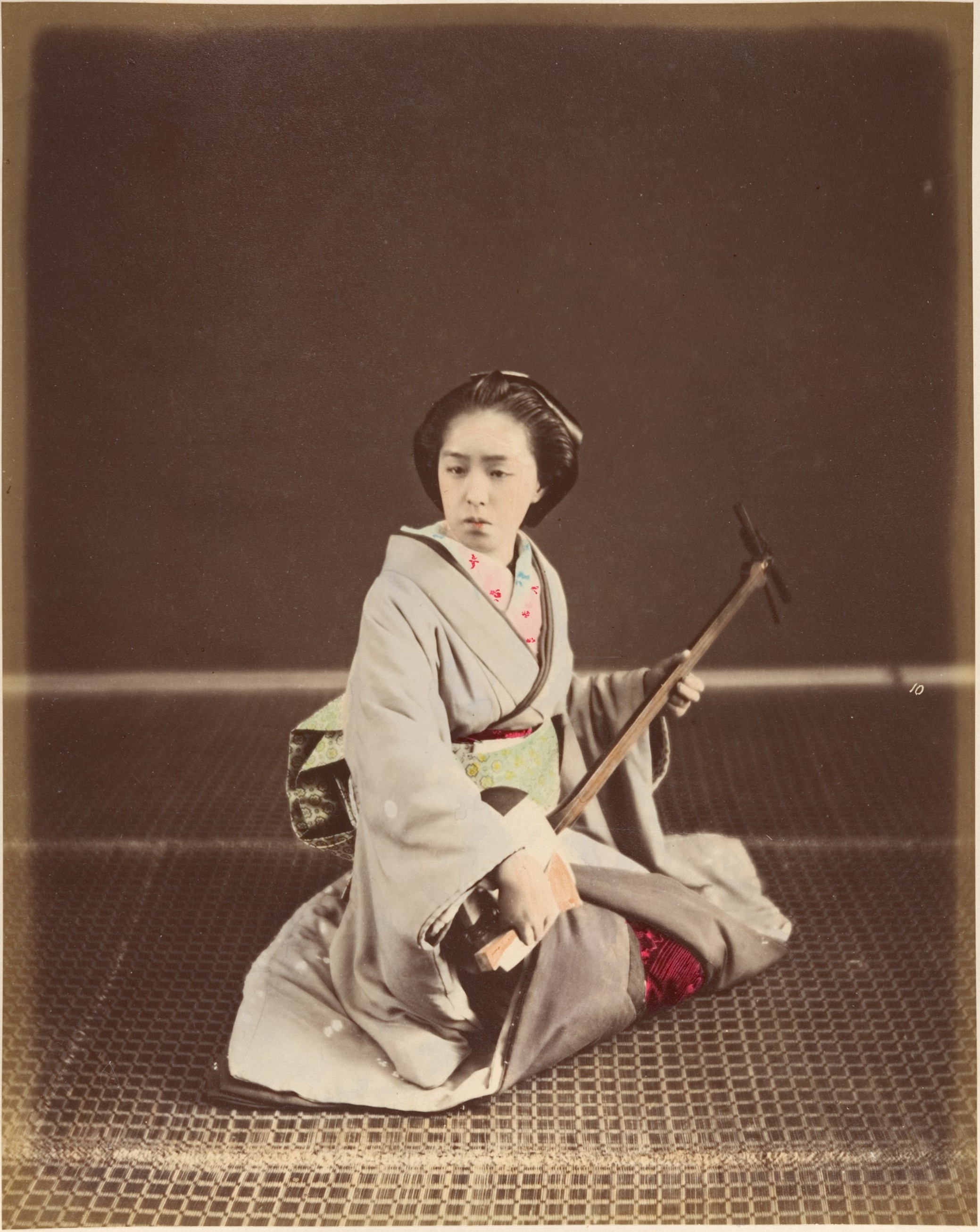
B is found on page 159, and is commendable if we remove it from the books ugliness in depicting a woman wearing a Kimono, playing what looks like a shamisen which are typical Geiko social constructs.

Exhibit A (1904) Prologue Illustration

A on the other hand is the image obviously which in his Longismness, the defendant has chosen to show a construction of what an American thinks a Japanese woman dresses as. And what the defendant choose was a depiction of a human figure in a state of half or undress. Longinguistically (the act of defining Kimono in a sexualised manner adherent to the wests Geisha stereotype) the image includes a key number of motifs for Puccini to have picked up on. Glancing down posture, Mt.Fuji, Dolls or a small child and Ikebana in a vase. 
Nakamura Masanao

How are these things part and parcel of Longingism you may ask? Well cast your best guesses to the Paparazzos, because Japan is on the act too. Long obviously was aware of Japanese culture, but he undertook it as one giant blob he called 'Japan'. This was as Wilde has explained, not Japan but *J*a*p*a*n*, the image created in Longs mind of Japan. And Japan certainly would have helped in the pushing of the 'Good Wife, Wise Mother' doctrine with regards to how a 'true Japanese' woman should act, given it was considered a woman's patriotic duty to be demure and second to her husband.[12]  Long has obviously taken this in from his sister's experiences in Japan in some juncture and thus 'Japanese womanhood' as defined by the patriarchal system created by Nakamura Masanao shapes Japanese women as what the British tabloid press expect of Kate Middleton, of pure, childbearing machines who walk behind rather than beside their husbands. Add a sprinkle of whatever it is that caused likeminded buffoonery such as White Man's Burden (1899) [13] and we have the submissive, devoted shell of a being that is Cho-Cho-san. Depicted in A with her baby or doll (porcelain princesses and dolls are another favorite of Longs original intended audience), the kimono becomes associated as a garment worn by infantilised, submissive, child-heavy, no-backtalk with the odd 'exotic' cultural marker such as Samurai, Bushido, Mt.Fuji and Ikebana to the picture and we have established the Kimono as a cultural marker in line with the subservient 'Asian woman' trope. 

Its not Japan, its *J*a*p*a*n*

I mention Ikebana and Fusiyama (Fuji) as these at the time were well established Japanese cultural markers of Japaneseness to foreigners and Japanese nationals, and still are today. However we must remember the Othering impact which Longingness has in turning Japanese women in the 'Geisha'. Ikebana has a cultural significance to Japanese purity and vigilance to detail, understatement rather than vulgarity or sex as found in *J*a*p*a*n*. As part of the notion of being Iki ()[14] one is refined and demure, typically holding conservative rather than liberal values as Western audiences would define them. An 粋着物 therefore is often those grey, old lady kimonos, or their western equivalent being the 'cool-conservative-grandma'. The notion of Iki and Yamato Nadeshiko are heavily intertwined to conservative purity values of what 'Japaneseness' was and still is a heavy part of the visual makeup of ethnocentric Japan.[15] Other visuals and discriminatory policies are available and will be explored later on in another post.

Cho-cho a *J*a*p*a*n*e*s*e* woman (1902) depicted by Valerie Bergere

It is this Yamato Nadeshiko and Confucian purity and filial piety notion, which is a principle component of how Long presents Cho-Cho and *J*a*p*a*n*.[16][17] This is a reflection of the monolithic-ness of ethnocentric Japan, in the mirror of American ethnocentrism which creates in turn as Wikipedia notes, the buffoonery of a thought process which allows one group of people to think the Holocaust was a good thing and intern millions of people based on a perceived visual or 'racial' slight, casting them as the Other, or Othering them.[15] So in other words, when Japanese people typecast half their population as 'pure' and 'honourable', westerners like Longs sister, took home these notions with them to the USofA and feed them to the same people like Long, who created new images of *J*a*p*a*n*e*s*e* womanhood, and birthed the 'Geisha' trope in the United States. In this climate, culture became weaponised for national purposes, in America this used the Kimono as a cultural marker of the sexually available *J*a*p*a*n*e*s*e woman, or a Geisha.

In other words, the kimono, a thing to wear, was turned into Cho-cho-san, an object used to the ends of its new creators. The Kimono suddenly became an American garment, the *K*i*m*o*n*o*p*e*  (as I shall call it) which was acceptable to put onto the stage, into the hands of GI's in the 1950's and feeding the problematic 'dying industry' narrative we have around Kimono wearing today we find in films like Memoirs of a Geisha.[18] Kimonope certainly an American invention, should not be conflated with Kimono by Asian-Americans, and as a garment Kimono are also inherently, as with all objects, dynamic and use multiple sources of influence and inspiration. Particularly within the broad scope, fashion and history of Kimono as a garment, and narrowing who, why, how and when Kimono is considered appropriate to be worn by, when the answer from Japanese audience is generally anyone can be taken as cultural appropriation rather than appreciation in itself.[19]

Exhibit A though is a fine specimen of Longingism Kimonope your honor, and certainly deserves to be examined as such, whilst giving the due study and diligence Kimono deserves in transnational contexts. We do not I hope therefore need to have the debate as to whether the Top and Bottom are global garment constructs as is the Kimono, and that defendant in their creation of the Kimonope, and popularisation of the Geisha, that you will find the defendant guilt as charged. I the fashion police, rest my damn case. 

Concluding

In context therefore, we see that in the transnational context, Kimono has also become a cultural marker denoting similar and disparate value systems globally. The Kimono Bergere and other actresses (Cho-Cho) worn onstage in the Butterfly plays of 1900-1914 were used to denote that its wearer was a 'Japanese' woman, which many audience members may have filled in as being worn by the 'Geisha' without the correct background knowledge of the national, social and textile cultures which gave these attributed values such as purity in Japan and sexual attraction and submissiveness by Western audiences. John Luther Long contributed to the creation of visual Kimono culture by creating the Kimonope, or the sexy kimono, or tacky Halloween kimonos and it will haunt us forevermore.

The next essay will focus on the problems with the decline of the Kimono-wearing in Japan and how this 'dying industry' narrative damages and Orientalizes the Kimono as an institution.

Reference List

[1] https://en.wikipedia.org/wiki/John_Luther_Long

[2] https://www.medicalnewstoday.com/articles/weathering-what-are-the-health-effects-of-stress-and-discrimination

[3] https://www.youtube.com/watch?v=jZ4bNh0TnMI

[4] https://www.youtube.com/watch?v=TTn7bosRxWE

[5] https://en.wikipedia.org/wiki/The_Princess_from_the_Land_of_Porcelain

[6] https://en.wikipedia.org/wiki/Madame_Chrysanth%C3%A8me_(novel)

[7] https://archive.org/details/madamebutterflyp00longiala/page/n8/mode/1up

[8] https://www.nytimes.com/2001/06/19/books/arts-abroad-a-geisha-a-successful-novel-and-a-lawsuit.html?pagewanted=all

[9] https://eu.cincinnati.com/story/entertainment/arts/2014/07/20/beloved-butterfly-first-opera/12833371/

[10] https://www.metopera.org/discover/synopses/madama-butterfly/

[11] https://medium.com/@OPERAAmerica/the-butterfly-conundrum-46a78f58d8a1

[12] https://en.wikipedia.org/wiki/Good_Wife,_Wise_Mother

[13] https://en.wikipedia.org/wiki/The_White_Man%27s_Burden

[14] https://en.wikipedia.org/wiki/Iki_(aesthetics)

[15] https://en.wikipedia.org/wiki/Ethnocentrism

[16] https://en.wikipedia.org/wiki/Yamato_nadeshiko

[17] https://en.wikipedia.org/wiki/Filial_piety

[18] http://www.costumersguide.com/cr_geisha.shtml

[19] https://www.youtube.com/watch?v=Lv96Rq6A7k8

Social links:

https://www.etsy.com/uk/shop/KaguyasChest?ref=seller-platform-mcnav or https://www.instagram.com/kaguyaschest/ or https://www.youtube.com/channel/UC5APstTPbC9IExwar3ViTZw, or https://www.pinterest.co.uk/LuckyMangaka/hrh-kit-of-the-suke/


I had exciting topics

 and then I got sick. and then I got heatstroke. and then my home became 35 degrees. and then i was sick again. and then i got mild food poi...