Her Haughtynesses Decree

Showing posts with label Pizzaeffect. Show all posts

Sunday, November 12, 2023

宇野 千代 | Uno Chiyo | 1936 - 1960 | Essay #22

This essay explores the work of Uno Chiyo (1897-1996) as a Kimono Designer. Uno was a prolific 20th century Japanese writer and designer. As such, Uno was familiar and fluently versed in KTC throughout her life. Uno founded the influential Style which was in circulation in Japan from 1936-1959.[1] Uno was heavily influenced by Western and Genroku fashion, and focused her aesthetic on these two whilst encouraging masculine and secondhand consumer habits in her approach to Kimono as a fashionable and modern pursuit. Uno provides a fascinating glimpse into a time before Kimono were stigmatized and were instead merged with Yofuku to inform Japanese identity and femininity in new and stylish publications and normoactivities.
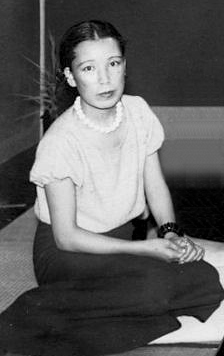
Uno Chiyo (1935, PD) 白拍子花子

Uno led a fabulous devious life in her early years, losing her first job due to the stodgy old men of the time who fired her upon discovering her affair with a male colleague in 1915. She became a writer by 1920 and it was hereafter she began to attain literary success in Japan. In 1921, she won a prize for her 1921 short story しふんのかお ( Shifun no Kao | Painted Face)、where afterwards she moved to Tokyo. This drove her into the 1920's urban cultural scenes of Art, Fashion and publishing. It was during this time that she developed her specific outlook and relationships to the major influences and artistic avenues which she pursued in her life as Japanese woman living in the 20th century.

Atarashii Onna

Uno was influenced by the times she lived in, and was repletely surrounded by the influence of Western design and fashion. In 1927 for example, she joined the fashion for Moga, and bobbed her hair and entered into the cultural era of the 'New Woman' which had become emblematic of what some called the 'Jazz Age' and the 'Liberated Woman'. The New Woman, which itself was a trope which came from the writing of British writer Sarah Grand (1854–1943) in 1894 which called for the liberation and emancipation of contemporary Victorian women in their bid for independence from patriarchal systems and oppression.[4]

This was taken up in English society and expanded upon by Maria L R Ouida (1839-1908) used the term in a response article entitled 'The New Woman'. The English writer and editor Ella Hepworth Dixon (1857–1932) also reproduced this in her is novel 'The Story of a Modern Woman'.[3] All of these writings expanded on the idea of women encouraging a human sisterhood common to all in the face of the strife faced in the Victorian and Edwardian age, be it financial, emotional, physical etcetera. They encouraged those women with enough money to uplift those without it, to live their lives independently and to foster a modern sensibility of female agency and embodiment of those ideals. This became a wave of popular modern conscious though in Britain by 1913 with issues like the Cat and Mouse Act, which called for universal suffrage to women over 25 with property soon earning the right to vote in Britain.

Women of course have always done these things, but have had to work within the limits of their day and age and thus are not always given the respect they deserved as human beings and so are not as well represented, recorded or even remembered as they could be, and thus this was their pushing against these systems and structures which denied them their creativity, their work, their social lives and their autonomy. This modern image of womanhood was taken forwards across the Empire, infamously across the Atlantic Ocean into North America. British writers such as Indian-born Annie Sophie Cory (1868–1952) The Woman Who Didn't (1895) deeply held and spread these ideals and celebrated women such as Bengali writer Toru Dutt (তরু দত্ত | 1856-1877), English Amy Judith Levy (1861-1889) South African Olive Schreiner (1855-1920), Australian Mary Chavelita Dunne Bright (1859-1945), Indian Kodagina Gowramma (1912-1939) who already lived these experiences around the British Empire. As one British child of Empire wrote:

'We must kill the force in us that says we cannot become all we desire, for that force is our evil star that turns all opportunity into grotesque failure....So let us each recognise the truth that our first business is to change ourselves, and then we shall know how to change our circumstances.' 

- Florence Beatrice Emery (1860-1917; Our Evil Stars, New Age October 1907)[2]

In Japan, the modern woman was spread both directly as a result of British Women, and via women who lived in and outside of Britains Empirical Domains. The Japanese Magazine Seito (Bluestocking) drew on this British legacy, gaining its namesake from the British society of the same name which operated in the 18th century, which first published in Japan in 1911.

Bad Wife, Dumb Mother, Usurping Student

By the 1900s, this well versed and influential feminine archetype had spread internationally. However this spread more slowly in conservative and patriarchal societies and cultures. Across East Asia, this generally meant that the New Woman genre only became popular by later decades, for example in the case of the writings of Ling Ding (丁玲 | 1904-1986) who was persecuted in China for her writings, and was imprisoned in 1933.[5] Korean chauvinists eagerly followed on with, dismissing the learned feminine as simply a caricature of Western capitalism. They urged women instead to be their Gibson girl ideal, a male caricature ideal of a woman who not career driven, but instead was busy chasing after her children in the domestic sphere and perhaps staring at an aesthetic copy of the Confucian and Chinese classics, all of which our male writers kindly informed us all placed women in the proverbial kitchen, making not sandwiches who supposedly were responsible for all of Japan Inc's all seeing grip on the Korean economy.[3] 


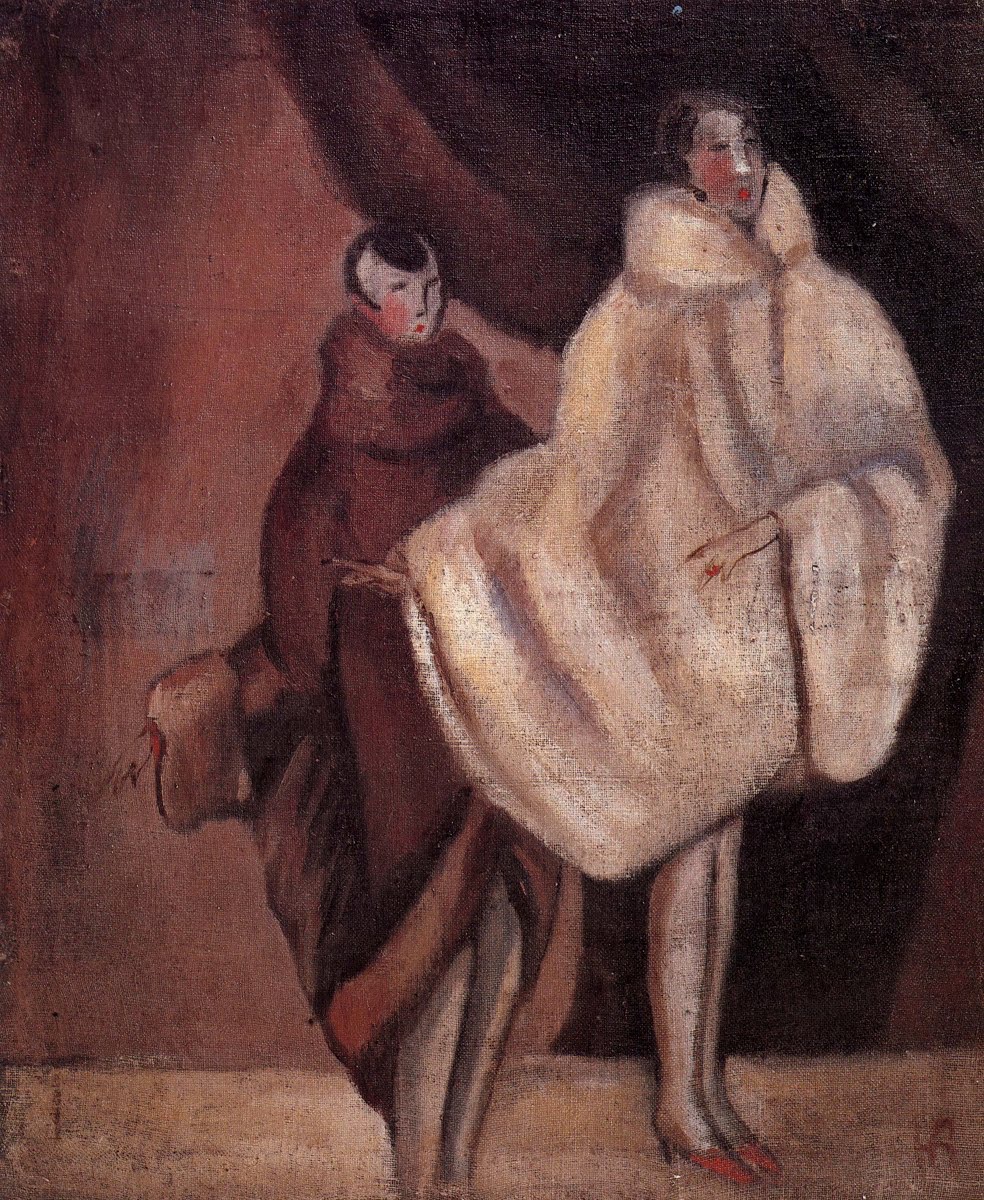
Ding Ling (c.1930, PD) Zanhe | 'Dancers' (1927, CC4.0) Na Hye-seok

The Korean Modern Woman writer and artist Na Hye-seok (나혜석 | 1896-1948) published Sinyoja (New Woman) was Chiyo's Korean counterpart, who wrote on Korean clothing and was writing in similar circumstances. Educated women in both countries combated male ideals of women such as Hyeonmo Yangcheo (현모양처 | wise mother and good wife) or Wise Wife, Good Mother (良妻賢母) were coined from 1875 by East Asian men towards women who operated in East Asia in the 19th and 20th centuries, in their writings and published work from the 1910s on, often risking their marriages, finances and social standing in doing so, much as Uno did on losing her job as a result of her 'lifestyle choices'. These Asian writers often promoted ideals of pursuing ones own desires as a woman, independent of what patriarchal systems told women to do so. However it was not until the 1930s that universal suffrage became a topic in Japanese politics meaning the Modern Women became the Modern Girl as a result of a lack of change in Japanese society towards the feminine, leading to the world Uno began her career in as Moga.[1][4]

Tipsy (1930, PD) Kobayakawa Kiyoshi

Sutairu

In 1936 Uno founded one of Japan's first fashion magazines, these were a rather niche market at the time of women's magazines published in Japan. As one of the first women in Tokyo to live the life of a Naomi (see Chijin no Ai, 1925), Uno lived a heady lifestyle in the circles of Tokyo poets, artists, designers, publishers and their patrons who all moved in each others social circles. The modern women who Uno wrote about, for and with all tread a grey area where dress was an important marker of the time. Stepping too far into Western clothing was considered too much, albeit that their male counterparts had been doing this for decades and were considered masculine. A whole ensemble was too much, but a glove was acceptable.[6] Only wearing purely 'Wa'fuku was considered very conservative and uptight, a strange double standard which denoted ones place in society as a second class subject and the political spectrum. 

Uno's founding her magazine then, can be seen as a rebellion against the traditional and morally acceptable standards of the frugal Shufu archetype popular in the mainstream magazine offerings of the likes of Shufu no Tomo (Housewives Friend). It focused on the needs women had, raising them to the mantle of the independent woman with purchasing power, a scary notion for those upholding systems which said women could not have their own money. Sutairu (スタイル | Style) covered a range of topics, but included both Yofuku and Wafuku and was the first to include fashion trends started or used outside Japan. This was a departure from the expected intentions of marketing to women, as previously you could deprive, degrade and dismiss women as agents with autonomy, but they could be trusted to make their way down to the department store, to be paid less for modelling in Kuchi-E than male counterparts and to be used to make revenue from and marketed towards by male owned companies and magazines but not to be thought of as smart, innovative or worthy of attention.[6]

Sutairu instead aimed itself at young female demographics, teaching them to be thrifty, modern and elegant year round. Sutairu threw off the rules of old and utilized plain and 'exotic' fabrics to bring interesting new combinations and styles to Japanese Kimono, a style Uno referred to as the 'New Kimono'.[12] Uno also encouraged her readers to utilize fabrics from Asia, like Black Velvet and natural fabrics which originated in Japan and India, particularly in fashions like Black Satin Eri which revitilised older Meiji era Kimono in 1937.[12]

Sutairu also promoted from the second issue street photography, which praised the thrift and innovation of Japanese women during rationing as modern cosmopolitan consumers.[12] Whilst at the time to promote local Japan Inc. economies, Meisen for winter was all the rage, Uno instead taught women to use fashionable attire in Summer, and to be thrifty with new materials for their Obi, such as upcycling old fabrics for the winter.[12] Sutairu's style choices harkened back to the Genroku Period (1688-1704), a time in which JKTC was at some of its most garish and vulgar.[13] Silver lame Kimono, Velveteen accessories, Leather Sandals and bold patterns all featured amongst recommended articles Uno published from 1936-1938. Other style pointers included using the lining of the Tombi style overcoat to arken back to the Sumptuary Laws of the Genroku period to include a flashy fabric such as Tartan sparingly.[12][14]

Seeing as these garments were made from Wool, it replaced the need to layer multiple garments over other Kimono as had previously been done and changed the winter silhouette for a time. Japan Wool Textile Co., Ltd was an early introducer of Wool as part of KTC when it began production in 1896.[1] It was in this time when the importation of Wool was particularly high, with most imports coming from England and Germany in 1898.[5] The suppliers of Wool of at this time came mostly from Western Mills, such as the A W Hainsworth Mill (est.1793), which in 1899 recieved an order for 'Black serge' wool to be delivered to Yokohama. This saw the introduction of new types of overcoats and capes such as the Tombi, Nijuumawashi, and Azumakouto.[14]

From 1937 on, Uno discussed how her own Kimono making processes involved the use of fabrics like wool serge to replace other winter fabrics and to recreate the feeling of deep blue Kimono for women, a transgressive act for a woman at the time given that patriarchal values were beginning to set in again with the advent of the Pacfic War with China beginning. Whilst this may be a reflection of the move towards patriotism with plain and militaristic colours like navy blue and green, floral motifs were also popular in Sutairu that year. She also encouraged her readers to begin wearing secondhand Kimono once again.[12] By 1938, Uno encouraged more women to adopt these masculine fabrics and then also to have a Meisen Kimono, but with large and bold patterns with Uno's favourite Black accent accessory with a pinstripe or Kasuri Kimono and hand painted Geta.[12]

After this time Sutairu seems to have encouraged the adoption of Western accessories, foreign origin fabrics, vintage Kimono and Genroku period fashions which may be regarded as a precursor to many of the Dori-Style Kimono worn in the 2010s, and Revival Style fashions of the 1990s which paired together bright colours and styles with the traditional and paired down Kimono often found in the markets their owners purchased their Kimono from.[12] During the 1940s, Uno successfully became a designer and writer, focusing her time on both of these and some film ventures. During this time, her Kimono become very Genroku influenced, with singular bold patterns trailing around Kimono, reflecting the Ma of Genroku Kimono. Her designs were also influenced by more Western paintings and ideas it seems, incorporating more of these fantastical exotic fabrics and masculine ideals of dressing until the end of the war, when afterwards her designs returned to a more Genroku influenced tone with some pared back yukata designs in the mix. 

Sutairu at this time was likely to have undergone censorship from SCAP regulations, and therefore may have focused more so on Japanese domestic affairs or incorporated more Yofuku than it may previously have done so willingly.

Occidentals beginnings in Fashion

Uno brought fashion for the first time to the Occidentals in the 1950s, bringing Wafuku together with Western art theory and graphical design principals in line with Japanese sensibilities towards designing Kimono. In this way, Uno introduced a great many Westerners, Europeans and Americans to how Kimono could be thought of, worn and style rather than simply being a 'traditional costume' from Japan. Rather it grounded the Kimono in a history of art theory and applied workmanship from Japan, with Western design and motifs familiar to them which allowed Kimono to become fashionable aesthetic pieces of art outside of Japan, in a far more respectful manner than the second plundering of Japanese wardrobes which occurred under American occupation in the aftermath of the Pacific and Second World War.

By 1954, Uno seems to have become a successfully regarded Kimono designer, incorporating classical motifs into modern designs which whilst not entirely stale are not totally ground breaking either, but she often used her clout in publishing to guest edit it seems so that her designs and tastes influenced trends well into the 1950s for Kimono, which was really on of the last few decades were Kimono were still produced en masse and bought by a wide audience.[10] In 1957, she flew to North America where she hosted one of the first Kimono Fashion Shows there, one of which seems to have included Piet Mondrian's Landscape paintings series.[1][9] 

Even after Sutairu folded in 1959, Uno still was regarded as a tastemaker in Wafuku related matters and continued to be sought after for her opinion on the matter well into the 1980s and 1990s until her death in 1996.[11] Modern Japanese KTC has been influenced by Uno's Hanami and Sakura designs which became popular during the early 1950s and were used in both Yukata and Furoshiki.[7][8] 

Conclusion

In context therefore, we can see how the international political and modern interpretation of Japanese and British culture lead to an emancipated and forward thinking adoption of Yofuku as a symbol of Japanese Women's struggle to become full persons. Uno introduced and used Kimono to bring herself financial and social independence and gave this to her readers and characters by embodying the trope of the New Woman in the course of her time as a Kimono designer and publisher. Uno used Sutairu to finally meld the Modern Girl with the Modern Woman trope, and she did this by using Modern design principles and Art n her designs and in carefully curating what she presented to her audiences from the 1930's into the 1950s whilst working within the constraints and limitations of her time.

Bibliography

[1] https://en.wikipedia.org/wiki/Chiyo_Uno

[2] https://en.wikipedia.org/wiki/Florence_Farr#Later_life

[3] https://en.wikipedia.org/wiki/New_Woman

[4] https://collections.reading.ac.uk/special-collections/2022/12/16/the-new-woman-five-women-writers-of-the-1890s/

[5] https://en.wikipedia.org/wiki/Ding_Ling

[6] https://www.myjapanesehanga.com/home/articles/bijin-kuchi-e-and-taisho-era-popular-magazines.html

[7] https://kyoto-asahiya.com/products/polyester-furoshiki-chiyo-uno-hanasakizakura

[8] https://www.akariya2.com/kimono2015-5-27.html

[9] https://twitter.com/tsubaki_an/status/772440228942319616

[10] https://www.kosho.or.jp/products/detail.php?product_id=330716252

[11] https://ameblo.jp/yoshiko-artlife/entry-12256427146.html

[12] A Study on “New Kimono” in the Magazine SUTAIRU edited by UNO Chiyo, Matsuo Ryoko, 2023, pp.165-175, Volume 16 Yamaguchi Prefectural University | https://ypir.lib.yamaguchi-u.ac.jp/yp/journals/yp000005/v/16/i/%E5%9B%BD%E9%9A%9B%E6%96%87%E5%8C%96%E5%AD%A6%E9%83%A8%E7%B4%80%E8%A6%81/item/1754

[13] See Essay #8

[14] See Fabric #12

Essay Abstracts 

#1 Renee Vivien (1877 - 1909) --- Born Pauline Tarn, was an English lesbian poet. She wrote in French and perhaps English. She took up the style of the Symbolists and Parnassinism and was well known during the era of the Belle Epoque (the Beautiful Age) for producing Sapphic verse and living as an open quasi butch lesbian poet; her verse derived from the ancient poet Sapphos, also famed for her love of women.

# 2 Birth of the Kimonope --- Here I shall introduce the notion of the Kimonope, that is as a garment attached to the social construct of the 'Geisha' in North America. Kimonopes being Orientalized clothing, or 'negatively affiliated or exoticized ethnic dress' which lead to the perceived notion of the Kimono and Geiko as simultaneously both high and low culture to American culture makers, such as film, television, media, writers and some academics. An example of Kimonope are the tacky Halloween costumes you may find at the Dollar store.

#3 The Legacy of the MacArthur Dynasty on KTC & The Problem with the 'Traditional Garment' Argument --- The problem with arguing that the Kimono is a 'Traditional ethnic Garment' is that that assertion is in itself, arguably  Ethnocentrism, which to clarify is the imposition of, in this case, American values onto Japanese cultural values, belaying the 3 pronged pitchfork of idiocy. 

#4 Divine --- Government name Harris Glenn Milstead (1945-1988) was the infamous North American Queen & Drag artist. Specifically, Divine was known for being a character actor, part of her act is well-known for its eccentricity. My personal exposure to Drag lite was Pantomine Grand Dames as a kid, and later when my friends made me watch RuPaul in art classes, so to me this is nothing new, the over the top, the glitter, the upstaging is all part and parcel.

#5 Dori-Style or 21st century Kimono Fashion --- The Dori-Kimono style. Something which I just made up because in going over notes for the first 20 years of 21st century section of Kimono history, I noticed a lack of a clear catchall term for what was happening in Japan at the time, at least in English descriptions of the time. I use the term Dori as I do not want to coin an unrelated term to the topic, but I also am reticent to claim all of Street style as 'Tori' either, whilst a large number of streets upon which the subculture originates in all use the suffix 'dori' (the bottom of Takeshita-dori for example), thence Dori-style.

#6  The Tea Gown --- This essay will cover the aspects of how 19th century Japanese import textiles to Western countries were used and repurposed, as well what their desirability tells us about how Japanese design was regarded and the image which these people held of Japan through the Western lense and consciousness. This follows the progression of how Kimono can be used in the West from the undress of the 1860s, adapting silk bolts in the 1870s to high fashion western daywear, to the 1880s aesthetic movement and 1890 wholesale adoption in the Victorian age to being used prominently by society hostesses as tea gowns by the Edwardian period, and the subsequent change in Japanese export culture which we see in extant textile collections of Japanese textile in Western dresses of the periods.

#7 Kimono and the Pre-Raphaelite Painters --- This essay will cover the aspects of Kimono in the Portraiture of the Pre-Raphaelites. The Pre-Raphaelites were a group of British artists and writers active during the late Victorian period. Unlike the Royal Academy artists, this circle of painters operated outside of the established comfortable boundaries of the expected white, cisgender middle class audience of the Victorian age. The movement is notable for its inclusion and encouragement of women, and in portraying and engaging non-conventional beauty and beauties as figures from the Classical World alongside Religious, Mythological and Folklore Heroines into Victorian 'Femme Fatales'.

#8 Jokyo/Genroku Kimono Textile Culture and the new role of the Komin ---  This essay will return back to GKTC (Genroku Kimono Textile Culture ; 1688-1704) and JoKTC (Jokyo K.T.C. 1684-1688) and the new role of the Komin (Artist caste) in GKTC. JoKTC is notable for being the lead up to GKTC, JoKTC being characterised by its transitory nature in comparison to GKTC, which was far more bold in its relations to what Kosode could and should be. Komin entered the picture at this juncture, and I shall elaborate a little more here than in other posts about why that was. GKTC is notable for its elaborate, perhaps gaudy and innovative Kosode design features, whilst JoKTC more so for the enabling factors of the time, as a sort of incubatory GKTC.

#9 Tagasode Byobu - This essay will explore the art motif known in Japanese art as Tagasode Byobu ( Whose sleeves Screen) This motif is a recurring art form which was particularly popular during the Azuchi-Momoyama era ( 1568-1600 ) as a representation of the ways in which Buddhist sensibilities met with the fast changing events of the end of the Sengoku Jidai (1467-1615) and as an extension of the habit of wealthy women from military families came to own and store a large number of Kimono. Prior to this, Kin Byobu ( Golden Screens) for the most part depicted nature like Sesshuu Touyou (1420-1506) after Chinese Cha'an painter Muxi ( c.1210-1269 ) or 'flower-and-bird' scenes like those of Kano Eitoku (1543-1590), rather than humans or human paraphernalia as an extension of the Zen painting school of thought about materialism.

#10 Cultural Acculturation --- The topic of our essay is on the nature of Cultural Exchange in KTC which will be an ongoing mini-series throughout 2022. This covers the 1000CE - 1500 period in Japanese History.

#11 Cultural Appropriation --- The topic of our essay is on the nature of Cultural Appropriation which will be an ongoing mini-series throughout 2022. 

#12 Cultural Acculturation --- The topic of our essay is on the nature of Cultural Acculturation which will be an ongoing mini-series throughout 2022. This covers the Asuka (Hakuho), Nara (Tempyo), and Heian periods (500CE-1000CE) in Japanese History.

#13 Asai Ryoi --- This essay will explore the legacy of Asai Ryoi on KTC. Who was Asai Ryoi you may ask? Only one of the most important writers for the Ukiyo genre. Asai Ryoi ( act. 1661-1691 ) was a prolific Ukiyo-zoshi ( Books of the floating world )  or Kana-zoshi  ( Heimin Japanese Books ) writer. His leading 1661 publication, lambasted and satirized Buddhism and Samurai culture of restraint in favour of the Chonin lifestyle of worldy excess.

#14 Edith Craig --- This is a post regarding the early adoption and promulgation of the Kimono and Japanese aesthetics in the life of the wonderful Edith Craig (1869-1947), daughter of the famous actress Ellen Terry (1847-1928) and Edward William Godwin (1833-1886). Edith was also known as 'Edy'.

#15 European Banyans --- This essay will explore the European garment known as a Banyan, which originated as a European reaction to Kimono in the 17th century, popular until the end of the 18th century. The word Banyan originates from Arabic ( Banyaan), Portuguese (Banian), Tamil ( Vaaniyan ) and Gujarati ( Vaaniyo ) loanwords meaning 'Merchant'. Alternative versions saw the item fitted with buttons and ribbons to attach the two front sides together. The Banyan was worn by all genders and was particularly regarded in its first iterations as a gentlemanly or intellectual garment worn with a cap to cover the lack of a periwig, and later adopted by women and greatly influenced how British womens garments were designed with preference for comfort in removal of panniers whilst maintaining luxurious, modest 18th century fashions (see Robe a la Anglaise).

#16 Miss Universe and Kimonope --- This essay will explore how Beauty Pageants, principally Miss Universe, has engaged with KTC. While there may be real Kimono worn by Japanese and Japanese adjacent contestants in the 'National Costume' category, I will be focusing on the Kimonope worn by contestants. The idea of Kimono as a 'national costume' sparks interesting conversations on what 'national costumes' are, their target audiences, and how we form ideas about these things to begin with.

#17 Onna-E --- Womens pictures refers to the Nara, Heian and early Kamakura ( 710-1333CE ) practice of drawing women in elongated Hand scrolls, which today are regarded as feminine gender coded Art. Some of these narratives depict the lives of women, their extra diaries, or the literature they wrote. The Onna-E style derives from how mostly Heian women represented themselves and others as a performed self in these scrolls, drawing from their lives indoors at their and the imperial abodes. Whilst a limited number of women could read Kanji, they also used their knowledge of Chinese culture to create and inspire their own culture; the first truly Wamono aesthetics; and it was with these preconditions that Onna-E became established in the Japanese art scene alongside Yamato-E and Oshi-E.

#18 A Jamaican, a Monster and Portuguese bar in the Orient --- This essay looks at the Kimonope attire adopted by North American Dancehall artists Shenseea (Chinsea Linda Lee | 1996 - present ) for the video to 'ShenYeng Anthem'. Whilst the aesthetic derives mostly from East Asian, principally Chinese aesthetics, the language used is specifically Japanese, referring to Chinsea Linda Lee as 'ShenYeng Boss', a perpetuation of the Dragon Lady stereotype. The essay mostly charts how this ridiculous Kimonope derides from the North American Anti-Chinese movement and how this intersects with contemporary Orientalism.

#19 The Red Kimonope --- The Red Kimono is a terribly named racist US silent film from 1925. The Longingist film includes a key scene which the production gets its name from where the protagonist drops her Kimonope, meant to symbolize that she had turned away from sin and prostitution, or in other words equating a wearer of the Kimono as a sex worker which stemmed from another American 'tradition'. This dreadful melodrama features the previously yellowface-accepter Priscilla Bonner as the lead protagonist. Throughout her trials and tribulations, she faces many ups and downs, like becoming a white version of the Lotus Blossom stereotype, because WASPs. I will explore the origins of the Lotus concept and the 'Jade' in more detail here as to provide the contextual background of the productions symbolism.

#20 Housewife, Business Girl, Office Lady --- I explore the concept of the arrival of the Business Girl, and the Shufu ( Censored | Housewife ) of the 1930-1970's period of the 20th century.[1] This intersects with how we see Wafuku represented, in a shifting dynamic that had not shifted so many barriers since the 1870s, and even until the 1990s with the intrusion of Euro/Americentric beauty standards being foisted upon the world during these centuries, in the wardrobes of the upwardly mobile single business women of from 1955-1965. These groups came into being in the 1950s with the advent of the eclipse of settler colonialism and patriarchal standards over women's lives internationally. KTC thus developed in response to these changing, testing and trying times (between 1930-1970).

#21 Herman's 'Kimono' --- In this essay I look at another Kimonope, specifically another Miss Universe 'national costume' entry. This particular Kimonope represents the legacy of Macarthism's neo-colonial/systemic racism, and subjugation of Japanese soft-power, a follow on of Orientalist late 19th/early 20th century assumptions and stereotypes of Asian culture and peoples which saw their subjugation in American foreign and domestic policy between 1885-1952. In this entry, we see a clear leaning into the 'Cool Japan' aesthetic by the Kimonope's designer, who is not shockingly not Japanese, but Israeli and therefore represents ideas about what Kimono are to this designer than the genuine article would to other participants of KTC, foreigner or otherwise towards 'Kimono'.

#22 Uno Chiyo --- This essay explores the work of Uno Chiyo (1897-1996) as a Kimono Designer. Uno was a prolific 20th century Japanese writer and designer. As such, Uno was familiar and fluently versed in KTC throughout her life. Uno founded the influential Style which was in circulation in Japan from 1936-1959.[1] Uno was heavily influenced by Western and Genroku fashion, and focused her aesthetic on these two whilst encouraging masculine and secondhand consumer habits in her approach to Kimono as a fashionable and modern pursuit. Uno provides a fascinating glimpse into a time before Kimono were stigmatized and were instead merged with Yofuku to inform Japanese identity and femininity in new and stylish publications and normoactivities.

Social Links

One stop Link shop: https://linktr.ee/Kaguyaschest

https://www.etsy.com/uk/shop/KaguyasChest?ref=seller-platform-mcnav 

https://www.instagram.com/kaguyaschest/ 

https://www.youtube.com/channel/UC5APstTPbC9IExwar3ViTZw 

https://www.pinterest.co.uk/LuckyMangaka/hrh-kit-of-the-suke/ 

Sunday, February 13, 2022

文化変容 | Cultural Acculturation | 500CE-1000CE | Essay #12 | CA Miniseries B

The topic of our essay is on the nature of Cultural Acculturation which will be an ongoing mini-series throughout 2022. This covers the Asuka (Hakuho), Nara (Tempyo), and Heian periods in Japanese History.

Warnings:

As it has been explained previously, the first four listed tools in this post are simply the physical or tangible properties needed in order for us to contemplate changes to culture, specifically in our instance the element, here the kimono principally. Please remember therefore that I am talking about Kimono, not Kimonope, and not about Kimonope and the Subaltern. Instead I am examining how cultural change has created the Kimono in KTC and lead in part to the creation of the Kimonope, a seperate social construct used as part of Statesian cultural appropriation of the Kimono which encourages the subaltern native narrative otherwise known as the 'Traditional Garment Argument' pushed by American diplomats and military leaders after WWII in their limited understanding of how to implement dependence theory in a bid to prop up the decimated postwar Japanese economy. This mindset existed in the United States from around 1882-1924 (see Chinese and Asian Exclusion Acts) onwards, and exported into Japan with the  1960s neo-colonial framework today called world systems theory into Japan after the end of the San Francisco Treaty (1952). This 'dependency' of Japan as a 'developing nation' during the SFT which saw the decline of 'Traditional culture' in Japan, by extension the Kimono, into something 'Traditional' and saw its decline in usage.

WHAT I AM NOT TALKING ABOUT: I am not talking about the Kimonope (think geisha halloween costumes). I am not looking at the Kimonope in Statesian land, which is a Statesian social construct used to create the subaltern (people who were colonized and remain so mentally) in the US from 1924 on. I am not talking about the 'Traditional Garment Argument', basically the idea that 'Old Japan' is uncool and needs updating to 'American standards', IE, only jeans and T-shirts can be cool, so Kimono out, Western fashion in, becuase racist postwar leaders thought Japan was incapable of running itself and thus foisted 'superior' American culture instead.  

Reminiscence of the Tempyo Era (1902, PD) Fujishima Takeji

According to Wikipedia:

Acculturation is the process of social, psychological, and cultural change that stems from the balancing of two cultures while adapting to the prevailing culture of the society. 

Therefore to acculturate we need: 

 - A culture/Identity

 - Element of the culture/Identity

 - Dominant Culture

 - Minority Culture

 - Change over time to the Element

These four above things are simply to make sure we know what to measure. Instead I am looking at how over time, other cultures helped to create the Kimono in and outside of Japan, because there is a lack of understanding about what processes cultural change takes placed under. Cultural Appropriation is the most widely known, but often misunderstood of these.

Acculturation

Acculturation thus describes in KTC, the process when Kimono begins to rise from its murky depths and beginnings as Chinese inspired dress, to Wafuku or Wamono, something which if it werent for the Iki rules of the Japanese Empire, it would still do so in as swift a fashion today. Cultural Acculturation as an element of Japanese KTC is for example how Kimono began to be made from silk, via the acquisition of skilled Korean or mainlander craftsman bringing twill weave silk weaving to Japan and by 600CE seeing it become a standardised fabric of choice in Japanese society and certainly upper class culture.

Acculturation is the act of transition. It is how we get from Hanfu, to Kosode, to Kimono. It is how we achieved the silk supremacy myth, it is how we end up with sarasa and denim being made in Japan to an extent, and it is how in the time period I focus on here, we end up with Junihitoe from Tang and proto-Korean clothing styles, silhouettes, aesthetics and skills in Japan. Many important skill trades were taken from Korean immigrants who fled under the Korean collapse (500-800) to Japan. Then with the introduction of Buddhism in 552 from India via China, other important questions arose about how to acculturate Buddhist aesthetics with Shinto aesthetics.

The Japanese Emperor Shotoku in his defiance of the Chinese tributary system as 'Land of Wa' sent a document to the Chinese Emperor entitled: "From the Son of Heaven in the Land of the Rising Sun to the Son of Heaven of the Land of the Setting Sun" which is a saucy way of saying 'Shut up old Man, you are going down, Im going up'. This made the Asuka period a time where imported aesthetical ideas were taken wholesale and rapidly adopted into Japanese high society.

Siddharta delivers a sermon (c698[1930], PD) Anonymous, Amanuma Shunichi

When the next era rolled around in the Nara period (710-794), the capital in imitation of the Chinese system, had moved to Nara and was a consolidation of Yamato clan art, at Fujiwara Kyo in 694.[12][13]  Emperor Shomu and Empress Komyo (701–760) affixed Buddhism in this time as a 'Japanese' religion. Buddhism was encouraged by Empress Kōken (r.749-758, r. 764–770) who also created a great many ritual ceremonies and literary firsts around Buddhism. These included the important Shosoin treasures which depict life from Japan at the time.[14] 

During this time, thw Fujiwara came into power, and the capital was moved mutltiple times, eventually into Heian-Kyo. With this the trade with China ended and the improvement of local industries became paramount to continue life in Japan as it had before. This systematic change however only came after 967 when the capital was rebuilt in a more 'Wamono' style, as the Nara capitals were built on Chinese models of city planning.[15] 

500-1000 in KTC

In the prescribed time period, Asuka culture changed significantly and is noted for being an artistic period which flourished under Buddhist patrons.[11] Prince Shotoku was one of these eminent Buddhist patrons, whose tutors such as Gwalleuk (fl.602) were also Korean, led to him comissioning some of the earliest embroideries and Mandalas, which also show the influence of the Korean dynasty at this point in time on his death in 622 (see the Asuka Bijin).[12] Examples include The Hata Clan who are said to have brought twill silk weaving to Japan during the Asuka period.[4] During 600-659, multiple missions were sent from Japan to China and proto-Korea, primarily Baekje. It was by the end of the 7th century therefore that we can safely say that the early Korean influence on Japanese clothing subsided in favour of the Tang Dynasty silhouette style, with an adoption of Buddhist garments as well.

During the artistic Hakuhou ( 白鳳時代 | 660-690) period, major influences upon the courts where Gupta India, Baekje Korea and Sui and Tang China.[12][13] The Nara court saw an increased use of Buddhist art until Empress Kokens scandalous death in 770, which saw the height of the Tempyo Era (729-749) with clothing becoming more hierarchical with the capital consolidation, Buddhist aesthetics merging with Shinto ones, and an increased use in silks and other fabrics at court, and decoration for the Heimin not doubt as well. The dress of the time was heavily influenced by China, Korea, India, and the Islamic empires of the the Umayyad Caliphate (661–750), and the Abbasid Caliphate (750–1517) which stretched from Morocco to Iran due to the Silk Road trade route.[14] 

Empress Komyo about 750 (1897, PD) Shimomura Kanzan

The early Heian period saw the collapse of the missions to Tang China due to political turmoil in China.[15] This meant that local industries and areas such as Nishijin had to ramp up production of their own textile creating and design in order to meet the new demand. This increase in local supply allowed during the early Heian period for a flowering of Wamono styles and designs. Kasane textile culture, that is the layering of Junihitoe in graduating colour gradients in the sleeves and collars, became high fashionable among court women. Commoners around this time are also thought to have begun wearing fabrics like Hemp cloth, with most being in simple colours available to them like browns and perhaps blues. 

Timeline

Kimono as Culturalisms from 500CE-1000CE

Cultural Appropriation

EX: Erasure of acknowledgement of Tang aesthetics as simply Wamono by the later centuries

Cultural Appreciation: the acknowledged or appropriate adoption of the practices, customs, or aesthetics of one social or ethnic group by members of another community or society

EX: The adoption of Buddhism in Japan in 552

Cultural Assimilation: the process in which a minority group or culture comes to resemble a dominant group or assume the values, behaviors, and beliefs of another group

EX: Kimono takes on the form of the Tang Chinese court dress

Pizza Effect: the phenomenon of elements of a nation's or people's culture being transformed or at least more fully embraced elsewhere, then re-imported to their culture of origin, or the way in which a community's self-understanding is influenced by foreign sources.

EX: Hiogi culture being exported to China and returned to Japan as part of Buddhist aesthetics in turn affecting popular motifs[1]

Transculturation: the phenomenon of merging and converging cultures

EX: Kasane-no-irome (襲の色目|coloured layering) which adhered to the Chinese calendar of 72 seasons became fashionable as indoor wear for women on their Junihitoe[4]

Cultural Heterogeneity: the differences in cultural identity related to class, ethnicity, language, traditions, religion, sense of place etc, that can make it more or less difficult for people to communicate, trust and co-operate with each-other 

EX: An increasing distancing away from China on Japans behalf as they went from being the 'dwarf' nation, to the 'harmony' nation of Wa, which is reflected in the increasing interest in local Japanese folklore and dress is affected by adopting Wamono literature of the Manyoshu (600-759) and Kokin Wakashu (887-920) anthologies being used to make reference to Japanese landscape scenes on textiles rather than the Chinese classics[2]

Cross-cultural competence: a persons ability to understand people from different cultures and engage with them effectively

EX: The competence of Junihitoe wearers could be seen in their ability to understand classical references to Chinese poetry and aesthetics

Cultural Diffusion: the spread of cultural items—such as ideas, styles, religions, technologies, languages—between individuals, whether within a single culture or from one culture to another e.g- the spread of Western business suits in the 20th century

EX: In this time period, technologies for creating new textile goods and decoration would emerge, one of which was embroidery which came from China into Japan by the 6th century.[5] This technique which was first used to decorate Emperors trinkets and Buddhist Mandalas, eventually becoming key to decorating Junihitoe and was spread by Korean embroiderers as well

Cultural pluralism: the practice of various ethnic groups collaborating and entering into a dialogue with one another without having to sacrifice their particular identities

EX: During this time, this became increasingly less interesting to the growing Japanese nobility who had begun to care more about their lands than shiny gifts and trinkets from abroad. An example may be the adoption of Kesa aesthetics and textiles, which became increasingly more lavish and gold as time wore on[6]

Polyculturalism: the ideological approach to the consequences of intercultural engagements within a geographical area which emphasises similarities between, and the enduring interconnectedness of, groups which self-identify as distinct, thus blurring the boundaries which may be perceived by members of those groups. Multiculturalism instead thought to emphasise difference and separateness, being divisive and harmful to social cohesion.

EX: Buddhism aesthetics in the formation of how space and desire played a role in beauty, such as embracing Mujou ( Impermenant Transition | ) qualities such as admiring falling cherry blossom and the appropriate placement of space in a composition or design, which transferred over to KTC by the Heian era[7][8][9]

Multiculturalism: the coexistence of people with many cultural identities in a common state, society, or community, also though in the prescriptive sense to refer to the political theory framework that individual cultures, groups or ethnic peoples be given their own space in the wider society which has led some to criticise policymakers use of multiculturalism as divisive (should only be considered post 1996 world due to the times tightening of immigration, the enforcing of borders and encouragement of national identity rather than encouraging individuals to think of themselves as global citizens)

EX: Korean immigrants in this era having to take on Japanese identities in the Japanese legal framework

Cultural diversity: the quality of diverse or different cultures, as opposed to monoculture, the global monoculture, or a homogenization of cultures, akin to cultural evolution. The term cultural diversity can also refer to having different cultures respect each other's differences.

EX: In contributing to KTC at this time, cultural diversity is represented by the increasing number of works including Buddhist figures from India and China who were represented in the new aesthetics influenced in turn by a mixture of Buddhist and Shinto aesthetics

Monolithic culture: a societal construct or organisation like religion which often has negative connotations in our society. For example, the percived rigidity and homogeneity of a monolithic culture that is not open to new ideas, these is their truest form are the few hunter-gatherer societies or uncontacted societies like those few found in the Amazon rainforest.

EX: Women often in this time had a better understanding of Wamono than some men in high positions, particularly in the art of writing or Onnade ( womens writing | 女手 ). The Nikki ( diary | 日記) of these nobles, for men the Tosa Nikki ( Tosa Diary | 土佐日記 | 935 ) and women authors the Kagerō Nikki ( Mayfly Diary | 蜻蛉日記 | 974) gave rise to the first uniquely Wamono genre as such Nikki Bungaku ( Diary Genre | 日記文学 )[3] This was a catalyst for KTC in the later Heian period, which through Onnade created Wamono and Wafuku points of reference originating in the Monolithic writings of 'Japanese' upper class court noblewomen

Preface to the Kokin Wakashu (c914[2017], PD) Anonymous, ReijiYamashina777

I should be clear, Cultural Acculturation is key to Polycultural societies, one whilst the official line from some Japanese institutions is that it is not, Japan is a polycultural society and has been for a long time. 

Conclusion

In the time period described, we see glimpses of how large amounts of heterogeneous 'Japanese' aesthetic and textile culture was in fact rather more so Korean, Chinese and Asian. Other the time period, we see how Chinese textile culture was adopted and adapted to suit Japanese needs. Korean skills were also made use of to this same end. In KTC, this was seen is in the increased use of Embroidery skills and application, goldthread work[10], Kasane aesthetics and so on.

Due to the politics of the Chinese states and tributary system however, this saw a decline in adopting Chinese aesthetics wholesale, moving Japan in favour towards a more Wamono aesthetic and feeling of proto-nationality, as seen in the favouring of Waka poetry references rather than ones knowledge among the elites of Chinese poetry. Zen Buddhism also heavily afflicts the understanding of material culture and therefore aesthetics by introducing concepts such as Ma (negative space).[7] Whilst therefore a large amount of aesthetic design was heavily taken wholesale at first from China from the Asuka and Nara periods, by the Heian period this had become a set of design guides more uniquely Japanese than in previous centuries, even though their founders often came from places like Korea (for technological advances), India (for Buddhism and some fabrics) and China.

Asuka period clothing heavily drew from Korean styles in the first half, until Tang dynasty styles overtook them by 690. This KTC continued until well into the Nara period under Tenpyo culture. After this, Buddhism played an increasing role in shaping the aesthetic designs worn by courtiers by 750 AD. The clothing thus worn by the early Heian period was a reflection of early Junihitoe, which incorporated clothing worn by high ranking Chinese courtiers, but which often used Japanese functions. Keiko (Junihitoe trousers) were a leftover vestige of this for example. By 967 however, with a decreased trade with the outside, Cultural Acculturation began to acclimatise foreign influences into Junihitoe, in a bid to cement what Emperor Shotoku had started in the 7th century.[11][13][14][15]

Overall contextually, cultural acculturation steadily increases at the juncture when outside influence trickles down to nearly nothing by 850CE, flourishing in uniquely Wamono aesthetics between 850-1000CE. This Acculturation however would be impossible if it were not acknowledged however that Buddhism, itself an import and later acculturated by 750CE, were to have made Japanese high culture rethink its own approach to their own design philosophies. Thus in context, we see that over 500-1000CE, there is a steadily increasing level of cultural Acculturation due to an increasing closed off world to the island nation of Japan and and increased inwards looking society in Japan itself which allowed for the fostering of a Wamono aesthetic based on influences which ranged from Morocco to Korea due to multidisciplinary commercial and artistic approaches, and trade routes such as the Silk Road to have led to the creation of this times KTC.

Bibliography

[1] See Fans in Bijin #10

[2] https://www.kyohaku.go.jp/eng/theme/floor1_4/past/1F-4_20200102.html 

[3] http://webcache.googleusercontent.com/search?q=cache:iJvC1r3EAZYJ:https://medium.com/pomme-de-terre/the-sexist-history-behind-the-development-of-hiragana-e9f5676ab1f9&hl=en&gl=uk&strip=1&vwsrc=0 

[4] See Fabrics #3

[5] https://www.letempsdebroder.com/en/articles-en/japanese-embroidery/

[6] See Patterns #10

[7] Wabi-Sabi, Mono no Aware, and Ma: Tracing Traditional Japanese Aesthetics Through Japanese History, Lauren Prusinsk, March 2012, Vol 2, pp.27-29, Studies on Asia

[8] https://nomurakakejiku.com/lesson_lineup/mujou

[9] https://www.interactiongreen.com/history-japanese-aesthetics/

[10] The Techniques and Origin of Ornamental Gold Silks in Ancient China, Xiaorui Hu, Weidong Yu, 2016, p.1, Donghua University of Shanghai | https://www.researchgate.net/ publication/304340441_The_Techniques_and_Origin_of_Ornamental_Gold_Silks_in_Ancient_China

[11] https://en.wikipedia.org/wiki/Asuka_period

[12] See Essay #11

[13] https://en.wikipedia.org/wiki/Hakuhou_period 

[14] https://en.wikipedia.org/wiki/Nara_period

[15] https://en.wikipedia.org/wiki/Heian_period

Saturday, February 5, 2022

デニム | Denimu | Denim | Fabrics #11

Denim is a modern fabric popularly worn in garments such as jeans, a kind of work trouser which has crossed over into everyday wear and fashionable as a skintight garment by the 2010s. Japanese denim is characteristically known for its darker dyes and using one single white weft thread in the design.[1] This produces a distinctive deep blue bolt with a unique selvedge.[6] Japan became first acquainted with Denim as a form of American agricultural workwear when it began sending Issei ( first generation | 一世 ) labourers to Statesian territories and this may have lead to it being brought back by 1890 to Japan as part of Boro ( Patchwork recycling | ぼろ) Kimono.[10] Denim reached its height of trendiness in the late 20th century as a staple of Zoku youth subcultural fashions, becoming a Japanese made textile by the 21st century.

Boro Shikimono which uses indigo dyes (c1899[2017], PD) Fæ

The design of Japanese denim imitates the best quality North American designs which were left behind in Japan after WWII by western soldiers.[1] Modern Japanese designed denim heavily uses indigo dyes, whereas most denim today is dyed with synthetic indigo dye. As with all Denim fabric dyeing, Japanese Denim is divided into two categories: indigo dyeing and sulfur dyeing. Indigo dyeing producing the classic indigo blue and Sulfur dyeing producing specialty black, red, pink, purple, grey, rust, mustard, and green dyes and designs.[6] Japanese Denim is often not ripped or distressed as it is an expensive work of art, not mass manufactured garbage. When dyed, the yarns are repeatedly undergoing a sequence of dipping and oxidation—the more dips, the stronger the color of the indigo,  a series of rollers that feed continuous yarns in and out of dye vats.[6]

All denim is generally made by spinning cotton fiber (sometimes silk) into yarn, and the warp yarn then dyed by either rope-dyeing or sheet dyeing. In rope dyeing, continuous yarns are gathered together into long ropes or groups of yarns – after these bundles are dyed, they must be re-beamed for weaving. In sheet dyeing, parallel yarns are laid out as a sheet, in the same order in which they will be woven; because of this, uneven circulation of dye in the dye bath can lead to side-to-side color variations in the woven cloth.[6] The weft is left white and the yarns are woven on a shuttle loom or projectile loom. The woven product is then sanforized which is a process which reduces fiber shrinkage by setting it into one shape during the production stages.[6] This gives Jeans their sturdy and yet stretchy feeling. Toyoda shuttle looms of Kojima, a subsidiary textile company of the industrial giant Toyota, are used to make Japanese Denim, which allows for greater craftmanship to show through in the final product.[1] This loom is what gives Japanese denim its higher quality selvedge which is a marker of its time consuming labour and sturdiness.

Denim Selvedge is here done in White (2018, CC4.0) Coldwrld

Historically, Denim began its life in the French city of Nîmes, where it takes its namesake from. In 1690, silk was mixed by Nimes farmers with cotton, a readily available textile in the Cevennes mountains, to create a twill weave blend of indigo yarns and white silk as their workwear.[7] It is thought that this fabric then migrated with other labourers into modern Canada as workwear by the late 1700s, where it was worn as an overall.[8] In 1872, Levi Strauss a wholesale merchant launched his overalls which popularised Denim in Statesian land by spreading the appeal of Denim workwear to other American industries.[7] From 1885 with the emigration of female labourers from Japan to the United States, the Hawaiian Japanese female population became associated with Denim as a workwear fabric which they used to make their Ahina aprons.[10] By the 1920s, Denim began to be found in Japan.[8] In the 1930s to prop up manifest destiny, more Cowboys and Indian films were being made, which Denim become a fashionable item of Americana.[9]

Denim flourished in Japan after 1945, when Japan lost WWII, or the 'Pacific War'.[1] Found in the then thriving secondhand and black markets (I cant think why MacArthur Jr.), Denim would have been a discarded textile garment left behind by American soldiers returning home. By 1955, it was seen as part of the counter-culture to wear denim as a way to piss off Tokyoites conservative parents.[1] RANT: Now I often hear this is because it was 'Muricas Softpower' influence, but archival liberation shows Japanese people often had at the time so little access to these due to the fact that money was worthless that it just was seen as an 'American' import like chocolate (technically so as that comes from Mexico byway of Britain) so it was used to subtly say 'f.u.' to the morals and ethics of a previous generations stuff ups, as the term 'Yankee' coined around 1975 (when young people born in the war came of age), means troublemaker, not cool Statesian.[2] Unfortunately, a large number of young people would have gone without, as in Britain, due to shortages, UNTIL THE LATE 50s, unlike in the States where people had plenty due to their thriving economy. 

Ametra (Ame[rica] Tra[ditional] | アメツラ) as it has since become known, is a Japanese style which first adopted North American styles like the Ivy Prep style in 1964.[3][4] The wealthiest groups first begin wearing Denim this way and were dubbed Taiyōzoku ( Youths | 太陽族 ) by the Japanese press after the 1955 novel Season of the Sun ( Taiyō no Kisetsu | 太陽の季節), similar to the Ivy League look.[1][5] By the end of the 1960s though, production costs took precedence in Statesian land, and the export of good quality products to Japan became scarce. By 1972 in Kojima, Japanese designers began to create their own denim, inspired by the 1960s left behind American fashions which were popular in the previous decade. Kojima remains the Japanese denim hub today. These eventually became large businesses which specialised in Denim production on traditional looms around Osaka by the 1980s.[1] However, Denim still retained a patina of Westerner. Albeit Westerner chic. 

And with this westerner chic, came the emergence of the 1990s on revival of vintage Kimono and upcycling. This in turn, came from the pizza effect Kimono and Denim often had as part of globally adopted textile culture. From 2005 for example, 'An Yoon Jung presented a rhinestone accented denim kimono wrap jacket'.[12] By the 2010s, Denim became a fabric Japanese craftspeople had grown familiar with. Since 2008, Kyoto Denim have created Kimono inspired accessories in Denim and from 2014, created a series of 'Kimono' in Denim.[11] Jotaro Saito exhibited a full denim kimono in 2016.[13] Sheila Cliffe also notes in her 2017 book of a number of designers using Denim, showing the wider acceptance and upheaval Kimono is currently undergoing, probably a similar process to that of Velvet Kimono design in the 1590s.[14] Denim thus has been used in Kimono since the arrival of Issei in Hawaii in the 19th century and by 2008, been accepted as a domesticated imported textile, and as such suitable for domestic Kimono usage and used to draw in wider, contemporary and modern global audiences towards KTC.

Bibliography

[1] https://redcastheritage.com/pages/history-of-japanese-denim

[2] https://languagelog.ldc.upenn.edu/nll/?p=35615#:~:text=In%20any%20case%2C%20the%20association,on%20in%20the%201980s%20nationally.

[3] https://subcultz.com/ivy-league-japan-1964/#:~:text=The%20first%20Japanese%20to%20adopt,means%20subculture%20or%20social%20group)

[4] https://www.esquire.com/style/mens-fashion/a22804481/japan-tokyo-ame-tra-american-traditionalist-style-fashion/

[5] https://en.wikipedia.org/wiki/Zoku#1950s/60s

[6] https://en.wikipedia.org/wiki/Denim

[7] https://theculturetrip.com/europe/france/articles/how-the-history-of-denim-can-be-traced-back-to-nimes/

[8] Personal research.

[9] http://www.historyofjeans.com/jeans-history/history-of-denim/

[10] Japanese Immigrant Clothing in Hawaii 1885-1941, Barbara F. Kawakami, 1995, pp.104-105

[11] Kyoto and Nara: Rough Guides Snapshot Japan, Rough Guides, 2014 | https://books.google.co.uk/books?id=vLOBBAAAQBAJ&pg=PT72&dq=%22denim+kimono%22&hl=en&newbks=1&newbks_redir=0&sa=X&ved=2ahUKEwiL-_-O2eb1AhURhlwKHT0ODAgQuwV6BAgHEAc#v=onepage&q=%22denim%20kimono%22&f=false

[12] International Textiles, Stephen Higginson, 2005, Vol. 843, pp.unknown, Benjamin Dent & Co

[13] https://www.japantimes.co.jp/life/2016/03/26/style/designer-jotaro-saito-seeks-free-kimono-confines-tradition/

[14] The Social Life of Kimono: Japanese Fashion Past and Present, Sheila Cliffe, 2017, pp.134-164

Social Links

One stop Link shop: https://linktr.ee/Kaguyaschest

https://www.etsy.com/uk/shop/KaguyasChest?ref=seller-platform-mcnav or https://www.instagram.com/kaguyaschest/ or https://www.youtube.com/channel/UC5APstTPbC9IExwar3ViTZw https://www.pinterest.co.uk/LuckyMangaka/hrh-kit-of-the-suke/ 


Saturday, January 8, 2022

文化の盗用 | Cultural Appropriation | 500 BCE - 500 CE | Essay #11 | CA Miniseries A

The topic of our essay is on the nature of Cultural Appropriation which will be an ongoing mini-series throughout 2022. 

According to Wikipedia:

Cultural appropriation is the inappropriate or unacknowledged adoption of an element or elements of one culture or identity by members of another culture or identity. This can be controversial when members of a dominant culture appropriate from minority cultures.[1]

To unpack what is needed therefore for any Cappro to take place, we need:

 - A culture/Identity

 - Element of the culture/Identity

 - Dominant Culture

 - Minority Culture

I tend to follow the OED's definition becuase soz, but Noah Webster can go die in the footnotes of history as the guy who didn't want abolition becuase it might upset Statesian slave-owning classes, and misspelt English, the 'unofficial' language of the United States.[3] And Wikipedia has a habit, unintentionally I imagine, of whitewashing quite a lot of unsavoury things. Plus OED is actually factchecked coughthisisadigatstatesiandictionariesandacademialookupHenriettaLacksandJohnHopkins cough.  Oh dear dreadful case of the history bug I seem to have caught there.

According to the OED

Cultural Appropriation: n[oun]. the unacknowledged or inappropriate adoption of the practices, customs, or aesthetics of one social or ethnic group by members of another (typically dominant) community or society.[2]

 To unpack what is needed therefore for any Cappro to take place, we need:

 - A culture

 - Element of the culture (aesthetics/practice/custom)

 - Dominant Group

 - Minority Group

A Giant Rant about Kimono Wednesdays, Wilsonianism, US global foreign policy, The American Subaltern and the 'Color' spelling issue

These four differ from Cultural assimilation, which is where from my understanding of neocolonialist theory, is the formation of the Subaltern (or the colonised mindset of the people subjugated by the dominant group). Whereas, Cultural Appropriation is simply one act or motion which does not give appropriate credit or credence between the dominant and minority culture or groups. I personally do not realise that people nowadays realise that there are many kinds of cultural-isms as seen by Kimono Wednesdays which proved how much this -ism is truly grasped and how applicable it is to the modern idea of Kimono (yes I actually do write about Kimono here sometimes). As such, I shall offer you a similar comparison to prove how ridiculous the arguments made on that fateful Mittvoch were.

We shall need  

 - A culture

 - Element of the culture (aesthetics/practice/custom)

 - Dominant Group

 - Minority Group

Using the 'ou' American English variant let us examine a type of Cultural Appropriation. Noah Webster, a 'right-wing, angry, white man'[4] was educated at Yale, an Educational Institution connected to a deeply entrenched history of slave owners and later white progressives (think Woodrow Wilson). Websters' narrative relies heavily on basing his estimation that only true 'Americans' were the slave-owning red blooded Conneticut patriots like his contemporary the 7th Statesian president John Caldwell Calhoun, a kretyn who owned 80 slaves and whose usage of the 'ou' we therefore judge as part of the dominant culture.

Using our Cappro recipe we have: A culture (Anglo-Saxon culture), Element of the culture (the practice of spelling colour as 'color'), Dominant Group (British at first, then American WASPs) and the Minority Group (WASPs at first, then British). As someone whose identity or cultural element has been subverted by an arguably (by the standards of Kimono Wednesday protestors) racist proponent of language given that Americans now are the 'Dominant' group and thus 'color' (the incorrect variant) is considered standard, that quite frankly as a minority, I would like my language (seeing as we invented it) back thankyou and to see and end to this derisive cultural appropriation of the use of this element of my culture.

I say this, because when Kimono Wednesday protestors protested, the culture (Japanese culture), Element of the culture (Kimono), Dominant Group (Japanese and American) and the Minority Group (Japanese Americans and Japanese culture) claimed to be being culturally appropriated. The argument was that the minority group here had Kimono usurped from them, as they could not wear it in public, or at least had a fear to do so in American society it seems. This narrative however forgets that Japanese culture is part of Global Culture, alongside American culture which together form Global Culture, not one more so than the other. It is saying that Japanese culture is a precious thing which must be preserved and only seen in museums, that the Japanese may bring their culture to America, and people may stare at it in paintings and on walls and behind glass, but that for other groups to interact with it in any way, including apparently when you have the permission of the 'minority culture' (mainland Japanese) is somehow wrong.

By this very logic, I may reclaim and vindicate all usage of the spelling 'color' as it I (the all important nobody) say 'color' has evil racist connotations and should therefore be revoked from my language, ignoring the fact that the vast majority who spell it as 'color' do not engage nor intend to use it this way. As for the 'well I cant possibly be racist' argument, unfortunately colourism still exists so take it up with CRT, a construct only valid in the small confines of

 the regional politics of the United States, a rather rude notion also is to ignore all the history of other groups involved in these things (94% of the Transatlantic trade

 went to South America, but hey thats just history right? Please please look this stuff up its important to understand other peoples POV). Rant over hopefully. I would argue that my interpretation of 'color' as needing a recall, is just as valid as the Kimono Wednesday is C.appro. argument, on the grounds that KimonoMittvoch is not Cultural Appropriation, it is dumbing down the situation to suit the needs of the white progressive agenda and a proponent of Wilsonianism. Quite a typeful that one.

What Kimono Wednesday was, having given it some more thought over these five years since I last laid eyes on the whole debacle is that whilst I sympathise with the POC outrage it created in America; KWP's have also effectively fallen in a trap laid for them. I am not trying to catch people out here by saying this, but Kimono Wednesdays protests are the same as me trying to recall 'color', it is a missguided analysis of the actual facts and state of things. The KWP and the 'color' debacle are something which Satan Wilson came up with in the 1910s-1940s. That is the framing of America as the sole arbitrators of power/prestige in a situation, thus requiring 'America' to bring 'democracy' to To Russia. To Korea. To Vietnam. To Iraq. To Afghanistan. the 'developing nations' to save the day.

By saying that the Kimono, brought by Japanese mainlanders, could not be interacted with in American society, you have confirmed not the renewal and acceptance of the Kimono, or the cultural appreciation of the Kimono in American society, you have rather displayed the mindset which Wilsonianism as a foriegn policy of the modern Statesian policy is bedrocked on, creating a global Subaltern. I mean by this that by acknowledging 'color' as the only correct way to use English, I give up my voice in this argument to use 'colour' as an English term in global culture. By acknowledging the 'Kimono' as only being correctly used in Japan, protestors gave up the right in the eyes of the 2015 'progressive' WASPs, to use Kimono as a Element of global culture. 

That is KWP's rescinded the 'moral' right for Japanese citizens, to engage with their own cultural element in another culture, by imposing the view that becuase of the fear from the enviroment Wilsonianism creates, that the minority culture in this argument may not do with their own cultural element as they wish in trying to reinvigorate a 'dying industry' or 'Kimono can only be a Traditional Garment' Argument, also another narrative pushed under another Wilsonian policy defender Douglas MacArthur.[5] In other words, saying that it is culturally appropriating to wear Kimono, is in the wacky world of Statesian politics, in fact a form of cultural appropriation as you are positing that only Americans have the right to decide what a minority culture (here Japan) can decide to do with their own Cultural Element.

END OF RANT.

What does this have to with Cultural Appropriation you may ask? I shall elaborate. Cultural Appropriation as thus defined above, does not adequately define what Kimono is in the modern global culture. It is infact describing notions of the Kimonope (the penultimate thing KWP's were in fact protesting), that is the Geisha costumes Japanese Americans are often subjected to, the whitewashing of Japanese American contributions to American history, etc. Kimono Wednesdays let us know how far along the crossroads of understanding of modern cultural theory, tolerance and Identity politics stood as recent as 2015 in that free and freedom loving hellscape land.

Cultural Appropriation is the act of taking. What protestors seemingly forgot to factor in was that Japanese culture had engaged in the act as a form of Cultural Appreciation, another kind of Culturalism that was not considered, as it was clearly not arguably understood well enough to take into consideration when Japanese Americans boycotted NHK, the national broadcaster of Japan. KW showed the lack of though which went into allowing the Kimono to be a part of global culture, something it has always been, from its introduction as a garment from Chinese culture[6], incorporation of techniques from the diverse number of countries which made up the Silk Road (a trade route which went spanned Africa and Asia)[7], to European Nise-Kurenai,[6][8] Indonesian inspired Batik[9] or promotion of Indian Sarasa[8] right into the 20th century with the adaptive nature of new and traditional fabrics from North America such as Denim and Ryukyu fabrics such as Bashofu.[10] It might be added it could certainly be considered culturally insensitive to say Bashofu was solely Japanese as well it might added, even though it is.

It is this nuance and lack of tolerance for fluidity which inspired me to try to at least contextualise Kimono as a global textile, which is it is, and to understand KTC through the global perspective as something which does engage all of the Culturalisms, such as Cultural Appropriation, Cultural Appreciation, Cultural Assimilation, Pizza Effect etc which are all present in KTC, and to say otherwise, is not allow for the furthering of interest in and study of Kimono. By typecasting the Kimono as a 'subaltern garment' using the 'Traditional Garment Argument', one shuts down and stifles interest, which in Plain English means that you are declaring Kimono as an archaic garment and something unworthy of continued interest, relegating it to the shelves of bygone history. Which is rather *O*l*d* *J*a*p*a*n* or Wilsonianism at its finest, that is saying Japanese culture is subservient to WASP culture and letting Japanese culture catch dust in the locked cabinet of bygone times.

Asuka Bijin (c.500-600 CE, PD) Unknown
Asuka Bijin were influenced by Korean aesthetics (500-600 CE, PD) Unknown

Kimono as Culturalisms from 500BCE-500CE

Cultural Appropriation (defined above)

EX: Kimono derives silk weaving from Korean weavers of the Hata Clan, a fact usually left out of most Kimono factoids

Cultural Appreciation: the acknowledged or appropriate adoption of the practices, customs, or aesthetics of one social or ethnic group by members of another community or society

EX: Kimono . Just Kimono.

Cultural Assimilation: the process in which a minority group or culture comes to resemble a dominant group or assume the values, behaviors, and beliefs of another group

EX: Kimono takes on the form of the Tang Chinese court dress

Pizza Effect: the phenomenon of elements of a nation's or people's culture being transformed or at least more fully embraced elsewhere, then re-imported to their culture of origin, or the way in which a community's self-understanding is influenced by foreign sources.

EX: Kimono is created by the import and export of new textiles in Empress Suikos time between the diplomatic envoys of China-Okinawa-Honshu trade in textiles, ie the Kimono is transformed when when Japan trades through Okinawa, adopting and adapting to T-shaped garments to differentiate between the Yamato, Naha, Gaya, Han etc ethnic groups for diplomatically fostering an early Wamono spirit

Transculturation: the phenomenon of merging and converging cultures

EX: In the prescribed time period, this was the converging of Tang silhouettes and proto-Korean and South East Asian textiles into Japanese culture and proto-KTC 

Cultural Heterogeneity: the differences in cultural identity related to class, ethnicity, language, traditions, religion, sense of place etc, that can make it more or less difficult for people to communicate, trust and co-operate with each-other 

EX: In this time period, this would be in Japanese society between Korean (wealthy immigrant families) and Japanese (the so called 'Yamato') groups whose identities at this time were flipped as a very good amount of proto-KTC techniques, materials and technologies were brought in by Korean families escaping what I call the Korean collapse of the Three Kingdoms, which gradually shifted to the present day situation by around the Muromachi or Sengoku period (1336-1615) which saw the 1598 invasion by Hideyoshi.

Cross-cultural competence: a persons ability to understand people from different cultures and engage with them effectively

EX: Kimono as cross-cultural competence at this time would be a bygone conclusion for the workers for example between Korean and Japanese workers to further the local textiles industries using skills and aesthetics that Korean and Chinese silk-weavers brought with them from the mainland

Cultural Diffusion: the spread of cultural items—such as ideas, styles, religions, technologies, languages—between individuals, whether within a single culture or from one culture to another e.g- the spread of Western business suits in the 20th century

EX: How the Chinese court heavily influenced the fashions of the Japanese court

Cultural pluralism: the practice of various ethnic groups collaborating and entering into a dialogue with one another without having to sacrifice their particular identities

EX: The adoption of Buddhism by the Japanese from Paekche (now Korea) and China by adapting existing Japanese polytheistic gods from the exisiting early Shinto pantheon, and taking on their forms of dress, as worn by the Prince Shotoku, exemplified by the later Lakshmi turned Shinto deities Portrait of the Goddess Kisshouten ( 麻布著色吉祥天像 | 794 CE) helped to consolidate imperial power.

Polyculturalism: the ideological approach to the consequences of intercultural engagements within a geographical area which emphasises similarities between, and the enduring interconnectedness of, groups which self-identify as distinct, thus blurring the boundaries which may be perceived by members of those groups. Multiculturalism instead thought to emphasise difference and separateness, being divisive and harmful to social cohesion.

EX: Red dyes were popular throughout Korea and China around the time of the Asuka period, a practice which is reflected in Japanese paintings and extant textiles from the period as seen in the Takamatsuzuka Tomb (高松塚古墳) Asuka Bijin to the quick adoption of Benibana a century later as a colour worn by royalty and beauties 

Multiculturalism: the coexistence of people with many cultural identities in a common state, society, or community, also though in the prescriptive sense to refer to the political theory framework that individual cultures, groups or ethnic peoples be given their own space in the wider society which has led some to criticise policymakers use of multiculturalism as divisive (should only be considered post 1996 world due to the times tightening of immigration, the enforcing of borders and encouragement of national identity rather than encouraging individuals to think of themselves as global citizens)

EX: Kimono can be considered as both Japanese and part of wider Western trends as a fashionable item with long sleeves

Cultural diversity: the quality of diverse or different cultures, as opposed to monoculture, the global monoculture, or a homogenization of cultures, akin to cultural evolution. The term cultural diversity can also refer to having different cultures respect each other's differences.

EX: This can refer in KTC to the adoption of new techniques, textiles and aesthetic practices brought by 'immigrant' families from the Asian Mainland and down the Silk Road at this time.

Monolithic culture: a societal construct or organisation like religion which often has negative connotations in our society. For example, the percived rigidity and homogeneity of a monolithic culture that is not open to new ideas, these is their truest form are the few hunter-gatherer societies or uncontacted societies like those few found in the Amazon rainforest. Japan gained this marker during its time as the Empire of Japan under Sakoku, becuase of the percieved close borders the shogunate enforced.

EX: Using only Yamato people culture (doesn't really work does it?, there'd be no silks, no Buddhism, no Tang etc etc)

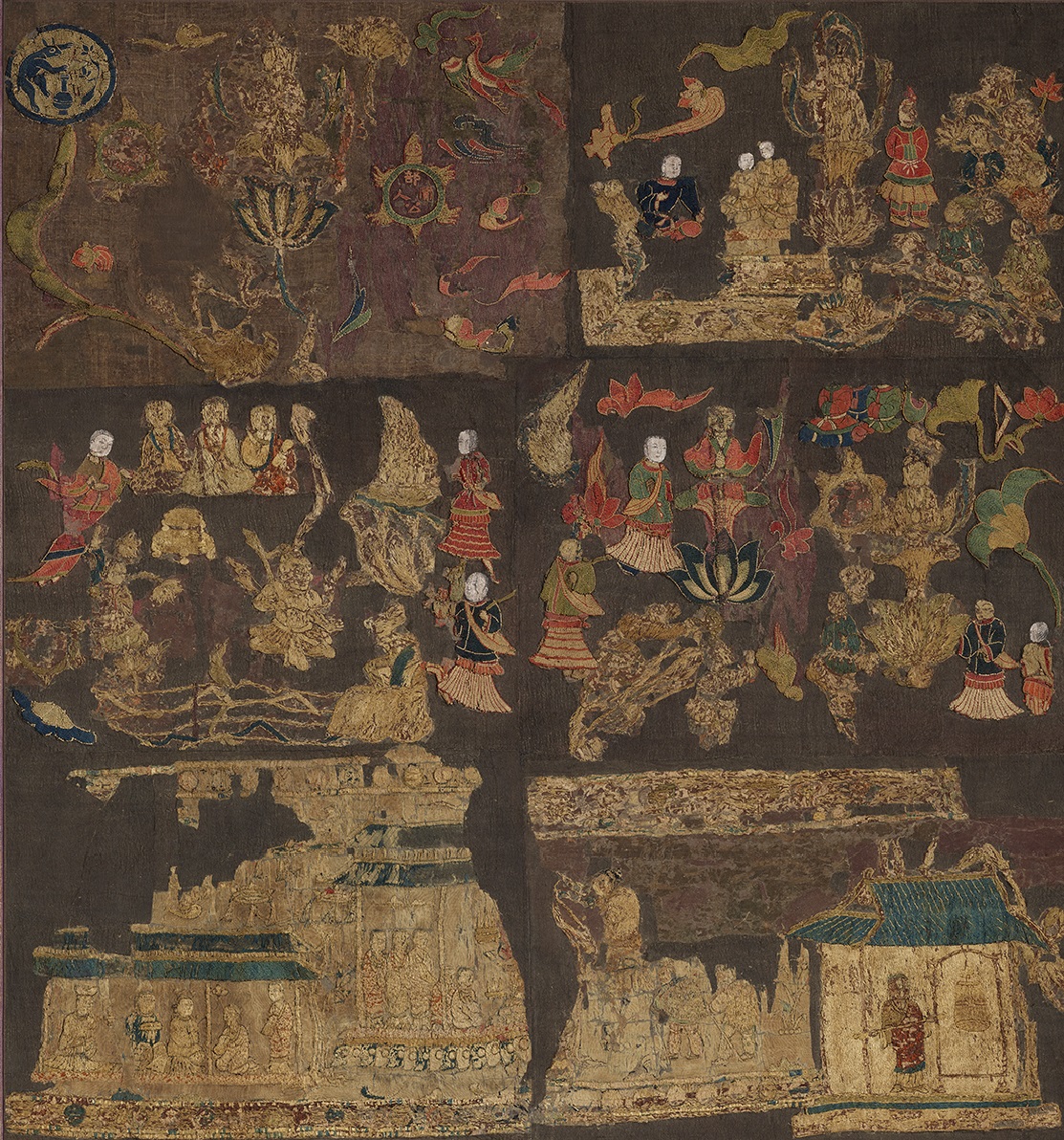
    Tenjukoku Shūchō Mandala celebrating the devout Japanese Buddhist Prince Shotoku (622[1944]CE, PD) Chuguji Temple, Tokyodo

Considering and Refuting the Kimono Wednesday Cultural Appropriation Issues

I am of course speaking on the side of the debate which says that Kimono is a type of clothing which can be worn by anyone, an idea which the broadcaster NHK clearly thought so as well. Japanese Americans, whilst rightfully having the historical claim to the Kimono garment most clearly in the context of Statesian politicking, perhaps did not foresee the global issues that claiming the Kimono as a 'Traditional Garment' may bring to the forefront. 

This Argument being unfortunately a spearhead of the 'culture wars' inspired by Wilsonianism which declares that non-White powers may not be considered or constituted in the worlds of academic, politics and popular culture, as being worthy of being considered global popular culture. Instead that as Wilson himself desired, that 'developing' countries instead be left to 'develop' away from the wealth of the United States, as seen by his 1924 Japanese immigration ban, a sort of FU to the fact that Japan had entered the world stage as a great power, and thus denial of all things Japanese as bad. The heroic United States must instead swoop in, save the country from communism (sound familiar?) and make sure everything went back to its natural order (in Wilson's mind at least). 

Kimono as a visible cultural marker, were by this point definitively recognised by the Japonisme movement at the very least, as global popular culture, and thus the birth of the Traditional Argument (ie that Kimono is simply just a Japanese garment only to prevent pan-Asian interests taking root) and breaking down of US-Japanese relations began (see Fred Korematsu v United States, 1944-2018). In consideration of these things, I can see why Asian Americans felt this was a dirty move by the Boston Musuem of Arts, but it also unwittingly falls into the same trap CTR falls into, that is the very trap Wilsonianism lays for 'developing' nations. It isolates the object in question (here Kimono), rips it asunder from its history, values and context, and flings it to the sorting bins of history where nobody will find it. Kimono Wednesday protests meant well, but in the end, they have sent the wrong messages to the wrong people, and helped to isolate, relegate and simplify Kimono into a relic of the Yamato. 

That is to say deny how the Kimono played a role in and from Asian Empires, to ignore the Kimono as a global presence in Western and other Art Histories, and to penultimately again, isolate, relegate and simplify the Kimono into an exotic national costume, worn by the Japanese. A label I do not wish to ever have to repeat here or anywhere else. By this, I mean they have done Wilsons work for him in promoting the idea of the Kimono as an exotic 'ethnic garment' only to be worn by Japanese people and their descendants, and which denies the wider history of Kimono as a cultural touchstone. 

It is essentially saying that Japanese fashion is less important than American fashion, by relegating Kimono to being a product only worn in the past (highly hypocritical considering the environmental damage the United States causes from textile consumption and waste), isolating Kimono as something exotic or 'Japanese' (a fraught argument supporting homogeneity and ethnocentrism) and simplifying the complex worlds which KTC operates in as somehow unworthy of note to anyone who isnt Japanese. As such, I refute that Kimono making is a dying industry on the grounds that is a blatant lie, it is in fact adapting to the age it is in, as it has always done as a social construct, and that to think that one thing can belong to only one group as rather part of the 20th century Wilsonian anti-Asian dogma.

Conclusion

From this Miniseries, I am hoping to introduce a more nuanced understanding of cultural exchange from the ashes of #KimonoWednesday that under the argument proposed by the protestors, Kimono are a product found only in Japan. 

Until we see how this garment was created under Chinese and Korean influence during the Asuka and Kofun periods, and as part of globalisation, not simply as 'a national costume appropriated by Westerners', but rather as with the rest of KTC, and other garments, simply a social construct. This is seen in the paintings, Mandalas, Embroideries and texts extant from the period when corrobarated with wider Mainland Asia garment history. I relate this to Kimono Mittvoch because it may allow for a wider dialogue on cultural exchange in the hope not everything 'foreign' is labelled exotic, turned into a problem, lost to history or simplified as just being a 'costume' or 'cultural appropriation'.

Kimono therefore does not belong to one group of people specifically, nor to any single institution or organistion. Given that this is a small sample of the history of cultural exchange required to make Kimono a possibility, we can see that contextually speaking, we how messy, blurred, and unpredictable KTC, simply a societal construct surrounding textile production and use by humans, is in reality. 

I hope it is clear that I am approaching the CA argument from a polyculturalism lense, rather than the 'Multicultural' lense which is applicable to Wilsonianism in particular in a sort of Divide and Conquer (cultural edition) way. That is I hope to encourage the 'revival' in the study, interest and buying of new and old KTC to help modern artisans and to see the new fun fashions people make up without problematizing it before it gets out of the gate.

Bibliography

[1] https://en.wikipedia.org/wiki/Cultural_appropriation

[2] See Glossary, or the Oxford English Dictionary (2018) at 

[3] https://www.readex.com/blog/connecticut-webster-slavery-joshua-kendall

[4] https://www.theparisreview.org/blog/2018/03/30/noah-websters-american-english/

[5] See Essay #3 (cant believe I held off that long to rant about Kimono Wednesdays honestly)

[6] See Fabrics #10

[7] See Fabrics #3

[8] See The Genroku Osaka Bijin (1680 - 1700) in Bjin #3

[9] See Fabrics #5

[10] See Fabrics #1

Social Links

One stop Link shop: https://linktr.ee/Kaguyaschest

https://www.etsy.com/uk/shop/KaguyasChest?ref=seller-platform-mcnav or https://www.instagram.com/kaguyaschest/ or https://www.youtube.com/channel/UC5APstTPbC9IExwar3ViTZw https://www.pinterest.co.uk/LuckyMangaka/hrh-kit-of-the-suke/ 

I had exciting topics

 and then I got sick. and then I got heatstroke. and then my home became 35 degrees. and then i was sick again. and then i got mild food poi...