Hitome-sashi/zashi (One Stab Stitch) is a type of Sashiko stitching.[1] Sashiko stitching being the famous white on blue technique of almost embroidery. The stitch makes up a geometric pattern from these white running stitches, sometimes wide sometimes miniscule to decorate or repair fabrics in a grid pattern.[2] As a task, Sashiko is said to be both therapeutic and time-consuming requiring a great deal of patience and concentration. Hitomezashi derives mostly from the practical applications of Sashiko and therefore was historically used for work uniforms, today it is mostly for repairing old clothstuffs. Many older examples come from Noragi ( 野良着 | Workcoats) and Sashiko no Donzu (Fishermens coats) that have survived.[4]
Hitomezashi was originally used by Heimin as a way to mend old farming and fishermens textiles like Hemp or Ramie from the North of Japan, from around the Yamagata to Hokkaido areas.[1][4] Items started out life as Kosode, then became bags, aprons and cleaning rags.[4] Between 1600 - 1850, a majority of the working classes produced their own textiles due to the expense of buying new fabrics. It is thought that decorative stitches such as Hitomezashi originated as an ergonomic way to mend, fill in and layer fabrics for winter, becoming decorative through processes such as Tsukuroi-Sashi ( 繕いー刺し|Darning Sashiko) by using undyed thread and repeatedly Darning older textiles into new ones every year. These skills were taught in school and at home to the children of farmers and fishermen.[4] Hitomezashi also spread around Japan byway of major trade routes like the Tokaido.[2][3]
Hitomezashi (c1850[2017], PD) Mr Bolton
During the Meiji period with the increase of Japan Inc, Japanese culture spread globally. Thus when agricultural workers moved to Hawaii, they took Hitomezashi with them, using it to repair their work clothes there, spreading the textile.[5] It may have also spread to Continental North America and other countries in the British Empire as it was popular during the 70's and 80's to adopt Japanese adjacent techniques among the middle class as an domestic Aestheticism (1868-1899) embroidery technique. In Japan with the promulgation of the industrialization efforts of Meiji Japan, Japan Inc. began to introduce new fabrics by 1870, making cotton available for those in Northern Japan.[3] In 1884, 'Sanitary Dress' was sent by the Japanese Government to display Health in the Workplace at the Health Exhibition. In the Exhibition (likely Hitomezashi), Sashiko was displayed to showcase how Mens uniforms (Hakama) were made in Japan.[6]
By the beginning of the 20th century however, Hitomezashi began to fall out of usage in favour of modern textiles flashy textiles. Meisen became more popular and workwear often became Tsumugi and other wools as Japan Inc expanded in the 1910s and 20s.[7] Whilst Hitomezashi fell out of widespread use by the 1950s due to the import of quilting, older generations still held onto and used the technique. Northern Japanese communities still practice and teach Sashiko classes, a practice around since at least the 1990s. In the modern day, Kogin (another type of Sashiko) developed from Hitomezashi stitch.[4]
Bibliography
[1] Sashiko 365: Stitch a new sashiko embroidery pattern every day of the year, Susan Briscoe, 2022, p.5 | https://books.google.co.uk/books?id=fyqdEAAAQBAJ&pg=PT6&dq=sashiko+farmers&hl=en&newbks=1&newbks_redir=0&sa=X&ved=2ahUKEwjp59Wyhe37AhWPSMAKHdO4BtQQuwV6BAgKEAc#v=onepage&q=sashiko%20farmers&f=false
[3] Sashiko Pattern Book for Beginners: A Japanese Embroidery Art of Stitching, Angela Kemp, 2010, pp.10-11
[4] The Ultimate Sashiko Sourcebook: Patterns, Projects and Inspirations, Susan Briscoe, 2016, pp.8-15
[5] Japanese Immigrant Clothing in Hawaii 1885-1941, Barbara F. Kawakami, 1995
[6] Health Exhibition Literature, Executive Council of the International Health Exhibition, Council for the Society of the Arts, 1884, p.605 | https://books.google.co.uk/books?id=2fYTAAAAIAAJ&pg=PA605&dq=sashiko&hl=en&newbks=1&newbks_redir=0&sa=X&ved=2ahUKEwiTptDkm-37AhUxTEEAHbStBKcQuwV6BAgEEAY#v=onepage&q=sashiko&f=false
[7] See Fabrics #5
Socials:
https://linktr.ee/Kaguyaschest
https://www.etsy.com/uk/shop/KaguyasChest?ref=seller-platform-mcnav or https://www.instagram.com/kaguyaschest/ or https://www.youtube.com/channel/UC5APstTPbC9IExwar3ViTZw, or https://www.pinterest.co.uk/LuckyMangaka/hrh-kit-of-the-suke/
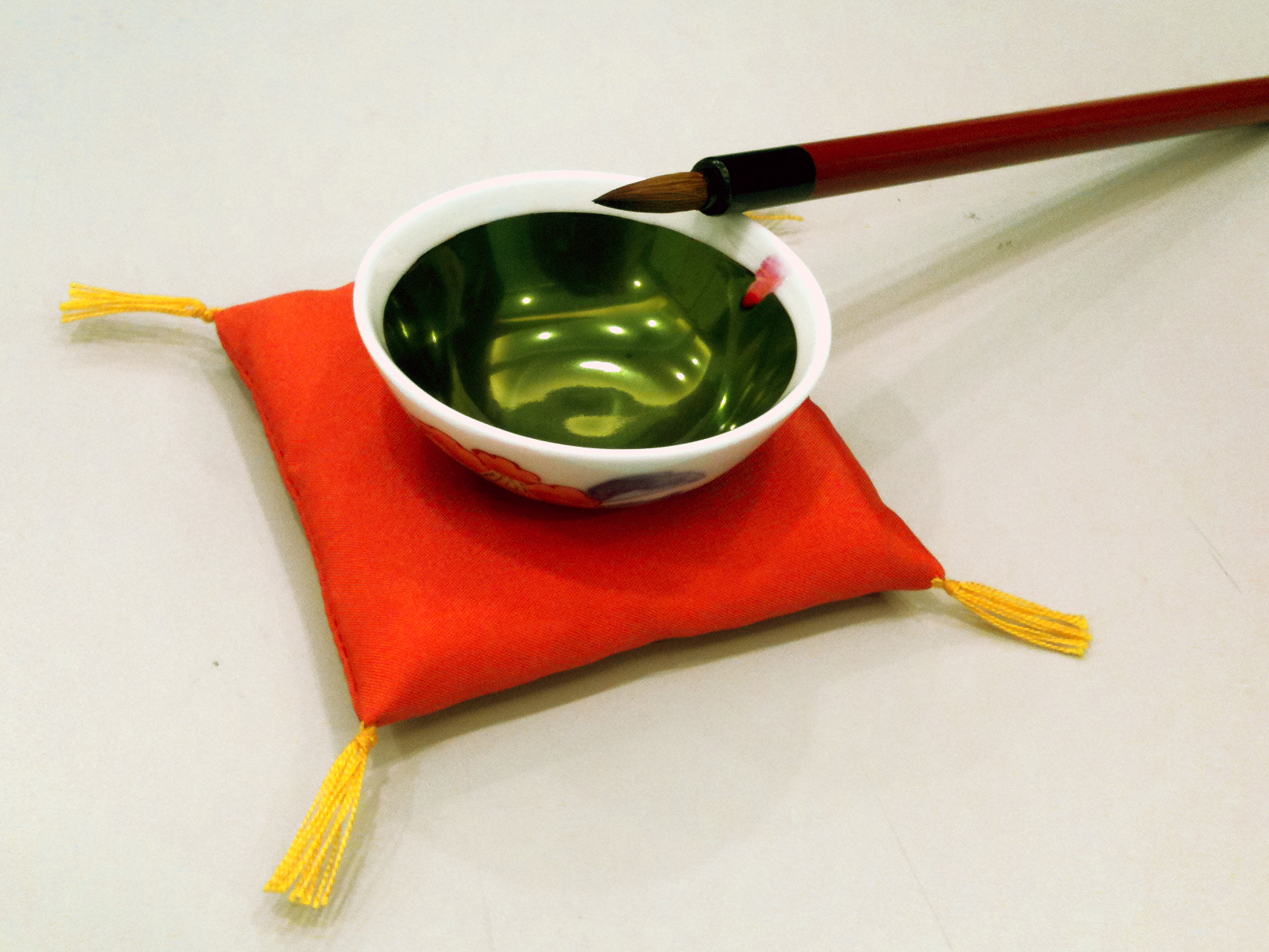
The dye Benibana comes from the Safflower plant, which produces a natural vibrant red, known as Beni ( 紅 ). The dye is usually used as a luxurious one, and the red is often reserved for children and events like the New Year. Also some new vocabulary, Dye is Senryou ( 染料 ) and the pigment Ganryou ( 顔料 ).[3] Benibana is a fascinating dye that whilst coming in many variations of yellow-red, it is mostly known for the red variation in Japanese textiles and KTC particularly denoting China, wealth and luxury in Early Japanese history (500-1500 CE). This vogue came into fashion heavily after the establishment of the Sakoku policies of the Tokugawa, which saw Beni Ganryou become fashionable in the early half of the 18th century and play a pivotal role in the development of Ukiyo-E and Kabuki culture into the Meiji period making Beni dyed and decorated Kimono highly sought after and emulated fabrics and garments as well a cosmetic product into the 21st century.
Orange Safflower (2017, CC1.0) PxHere
Interestingly, the Benibana is actually a relative of the thistle family. The plant itself grows between April and July, but is only picked for one week in July. They are then dried and processed to rid them of any yellow dye in a process known as Hanafuri ( Flower shaking ) in which the Red Beni colour appears. The Hanafuri is then pressed and left to ferment, for 2-3 days and then pounded with a pestle in a large mortar. This fermented Hanafuri is rolled by hand becoming Hana-mochi ( Flower Rice Cakes ). The Hanamochi must be left to sit in a straw-ash lye and cold water concoction, sometimes smoked Ume (Plum) and rice vinegar solution as well to let the red dye take to the mass as a transparent red or light pink dye, or soaked to make a deep red. This solution is then dyed into Floss silk, cotton, yarn and hemp. The leftover solutions of vinegar known as Sedimentation were often used to make Yuzen-zome ( Paste-resist dye technique | 友禅染 ) and Shibori-zome ( Tie-dye technique | 絞染).[1][3]
Safflower originates from Egypt, and was traded on the Silk Road into China via India before 400 CE.[14][15] Benibana is thought to have come into Japan from the Chinese leg of of the Silk Road around 473 CE.[15] Benibana then began being grown in the 7th century in Japan, being grown principally in the Yamagata area and was then known as Kurenai or Suetsumu-Hana.[1][3][15] Textiles extant from this time, such as the shoes of Empress Komyo (701–760 AD) and undergarments were made using Benibana and other weaves inspired by Chinese court weaves of the time also heavily use Benibana.[16][17] These textiles were heavily influenced by Tang China's love of Red as well.
Chinese adoration for red filtered into the Nara and Heian courts which kept this tradition of using Benibana in their textiles as Japan often followed Chinese trends at this time. After the death of Empress Komyo, Benibana was worn by gentile women as a cosmetic in the Heian court. Textiles from this period used Benibana as a lush background dye, or alongside Flower and Bird Motifs which were fashionable imports reflective of Song period Chinese paintings (between 960-1279).[15] During the Muromachi period (1336-1573), the Hanamochi or Benimochi (Red Ball | 紅餅 ) method was invented with the leaves being removed and immediately crushed into the Hanafuri to Benimochi method.[3]
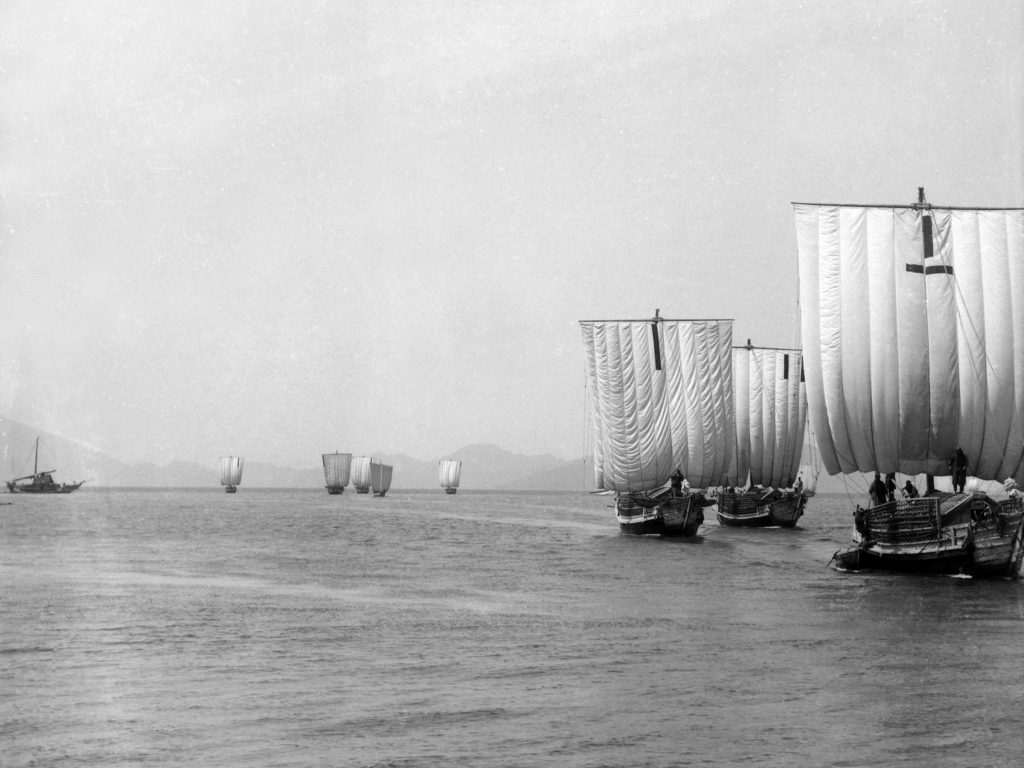
Kitamae-bune (c1926, PD) Iida Yonezou
The next recorded instance of Benibana being used is in the records of the Samurai Gamō Satoyasu (active 1587-1600) in 1595 as being cultivated in the Mogami prefecture.[15] In the Edo period the Fudai warlord Mogami Yoshimitsu (1546-1614?) began cultivating Benibana which was transported as Hana-Mochi along the Mogami river by Kitamae-Bune ( Northern Bound Cargo Ships |北前船 ) to be taken to Kyoto.[1][14] The deep red was deeply coveted in the Edo period, as it was used to get around Muromachi period sumptuary laws which only became laxed by the middle of the 17th century.[2][3]
By 1684, the colour schemes of Kosode worn by the townspeople and Bakufu became darker at the bottom [and] lighter at the top ... as darker Kosode [used] more dye [to display wealth], ... requir[ing] deep pockets ... which became 'Iki' (1680s sexy). Popular dark dyes included Beni reds (amongst samurai) [or] Nise-kurenai ( Fake / 'Dutch' red「|似せ紅 )] for the [Heimin]) ... [with a] pound of [Ganryou] ... said to be [equivalent to] a pound of gold.[4]
Tan-E which uses Orange, not Beni (c.1675-1679, PD) Sugimura Jihei
Single Sheet Tan-E (1698) Torii Kiyonobu I
In the Genroku era (1688-1704) Japanese art saw the rise of the coloured Ukiyo-E print, Tan-E ( Blue-Green and Yellow Prints | 丹絵 ) being the first coloured prints which used yellows, oranges and subdued greens in their colour schemes with washed out pallettes due to unstable pigment mixes from the availability of the dyes of the time. By the 1720's Beni-E ( Red Prints | 紅絵 ) came into Vogue, being Ukiyo-E made by taking a monochrome Sumizuri-E print and affixing the red Benibana colour atop the Sumizuri-E in a red-pink wash.[3][6] This process was created by Izumiya Gonshirou ( 泉屋権四郎 ) between 1716-1719 who would have handpainted in all of his work in this style.[5][6]
Beni-E (c.1720, PD) Torii Kiyonobu I
From 1720 the technique used by the prominent Ukiyo-E Komin Okumura Masanobu ( 奥村政信 | 1686-1764), Nishimura Shigenaga ( 西村重長 | 1693-1756), and Ishikawa Toyonobu ( 石川豊信 | 1711-1785) between 1717-1764, in conjunction with the development of Urushi-E ( Lacquer Prints | 漆絵 ) which was developed between 1725-1744, by using Sumi ( Chinese Ink | 墨) which is applied with a brush using stronger red and yellow pigments than Tan-E, into red, black, yellow, green, and light brown.[5] Urushi-E is distinguishable from Beni-E as Nikawa (Animal Collagen Glue | 膠) is mixed with pigments atop Sumizuri-E to create the gloss effect of Lacquerware over the black lines of the image, usually details such as the Hair or Obi.[11] Many of these prints became part of the E-Goyomi ( Lunar Calendars | 絵 暦 ) genre which became popular at the time to reproduce using early tricolour prints, many in yellows, greens and browns.
Urushi-E (c.1728, PD) Okumura Toshinobu
The prints eventually began to use 2-3, then 3-5 colours as pigments became more reliable for the stability of their colour duration. As the international trade routes became more structural and supply chains more durable and standardised through Globalisation, access to pigments from resource rich countries, Blue for example from Afghanistan,[8] increased access for these pigment ingredients to countries with the money to pay for these products.
Japan not being the most resource rich often had to barter for these goods and thus until the advent of Globalisation; in large part due to the mercantilism of Arabian, 'Indian' and European traders and the Silk Road in Asia; pigment was an expensive good almost akin to a luxury item if bought in bulk and so was used sparingly, or mixed with other products produced in Japan to create a more vibrant colour than the wishy-washy effect raw pigments produced in the early Edo period.
With Beni, products such as Plum vinegar to create colours such as Hikari-Beni ( Shiny Red | 光紅 ) or Komachi-Beni ( Arts district Red | 小町紅 ) which was used to make the red lip cosmetics worn by some practicing Geisha in the Edo period, which produces a deep, glimmering red which almost looks green in nightlights.[9][10][12] After 1744 Beni-E had developed into the Benizuri-E ( Crimson Painted Prints | 紅刷絵) which successfully mixed green and Beni into one print using two seperate plates for each of the two colours.[6][7]
Benizuri-E (c.1744, PD) Ishikawa Toyonobu
By the Horeki era (1750-1765), it had become popular among the Samurai class to own and exchange E-goyomi. These E-goyomi were the forerunner to full colour prints. The prints images which accompanied these images were said to resemble Chinese brocade, and it was pursued further to create the first full colour prints in Ukiyo-E by the Suzuki clan, a family of retainers of the Tokugawa clan. By 1764, this had given way to Nishiki-E ([Bashu] Brocade Prints | 錦絵 ) which adopted Beni as one of its main primary colours. Suzuki Harunobu ( 鈴木 春信 | 1725-1770) was the first to make Nishiki-E using a mechanised polychromatic image. This new development was brought about by the plethora of single use woodblock prints used to layer the image, so one for yellow, one for green and one for the Beni sections of the image.[13]
Nishiki-E (1765-1770, PD) Suzuki Harunobu
This use of Benibana made it a solid primary colour and pigment to use, and it continued its popularity as a pigment in Kimono worn by the wealthy and in Kabuki costumes. By the early 19th century, production reached its height with Benibana used as a dye for cosmetics and the Kyoto weaving industries.[15]
Beni Dyed Kimono (c1850, PD) MET
During the late Meiji period the trade in Benibana infused fabrics decreased due to the increase in cheaper chemical dyes being imported from abroad into Japan which cheapened the image of Benibana textiles which could produce as vibrant a dye as their synthetic counterparts at a similar price-point, leading to the favouring of the chemical dyes and textiles.[15] During the 1950's and 1960's, the crafts process was reinvigorated and Benibana pongee was rediscovered and today Benibana is the prefectural flower of Yamagata.[1][14] This has allowed Benibana to have a new lease on life as a recognised traditional craft and with the use of the Showa-Benibana variant to make commercial dyes.[15]
Bibliography
[1] https://nitta-yonezawa.com/en/benibana
[2] See Sumptuary Laws in Bijin #3
[3] http://www.aisf.or.jp/~jaanus/deta/b/beni.htm
[4] The Genroku Osaka Bijin (1680 - 1700) from Bijin #3
[16] Scientific evidence by fluorescence spectrometry for safflower red on ancient Japanese textiles stored in the Shosoin Treasure House repository, Rikiya Nakamura et al, November 2014, Vol 59, No.6, p.367, Studies in Conservation Journal
One stop Link shop: https://linktr.ee/Kaguyaschest
https://www.etsy.com/uk/shop/KaguyasChest?ref=seller-platform-mcnav or https://www.instagram.com/kaguyaschest/ or https://www.youtube.com/channel/UC5APstTPbC9IExwar3ViTZw https://www.pinterest.co.uk/LuckyMangaka/hrh-kit-of-the-suke/