Her Haughtynesses Decree

Showing posts with label Furisode. Show all posts

Sunday, October 15, 2023

蝶 | チョウ | Butterfly | Patterns #21

Butterflies represent the motif of transformation and renewal. They are most often also representative of spirits passing from one world to the next, sometimes who have taken their lives together to elope into the other world.[1][2][5] They also symbolise the maturity of young girls becoming young women.[3] Other meanings can also include intrigue, and it is said if the butterfly is captured this will dispel this.[5] Tsukure obi ( つくれ帯 | Pre-tied Belt ) are commonly tied in a Butterfly knot (Cho Musubi | 蝶結び ).[4] Even updoes take their cues from Butterflies, in the style of the Yoko-Hyogo (Butterfly Hairstyle).[5]

Presents for a loved one (c.1810, PD/CC1.0) Ryuuryuukyo Shinsai

Historically Butterflies have long carried connotations of the otherworld, and thus appear in a number of family crests. Some of the earliest artistic depictions come from the Heian period, in turn influenced by Chinese philosophy about the fleeting, transitory nature of butterflies in the lives of human as in the story of Zhuang Zhi who dreamt of being a butterfly and then got confused about being a human or a butterfly, because he could.[3][5] Butterflies commonly appeared in many artistic mediums of the early Edo period, including Kimono, woodcuts and Origami designs.[3] This is mostly from the 1660 onwards obsession of Komin to depict Yuujo and stage performers. Even Hokusai involved himself in the depiction of this famous motif.[3] Unfortunately, the Long character/stereotype 'Cho-Cho' (1904) also means butterfly and in this way is also adopted in Occidental Literature to denote fragility, submissiveness and other surface aesthetic notions of Japanese culture. The 1900s-1950s saw a rise in the use of the motif as more families derived on the national surplus from Japan Inc. were able to buy their children fancier wafuku such as Furisode, a popular trend in the 1930's was to have these lined with gold which in the modern day has become just a white outline. 

Bibliography

[1] https://nalatanalata.com/journal/motifs-in-japanese-design/#:~:text=In%20Japanese%20culture%2C%20butterflies%20carry,number%20of%20traditional%20family%20crests.

[2] The first chapter of Bleach. Recommended for the art alone. Story is muy dissapoint.

[3] https://news.artnet.com/art-world/a-history-of-butterflies-in-art-2085638#:~:text=In%20Japan%2C%20the%20butterfly%20has,of%20female%20ritual%20and%20experience.

[4] http://www.japonic.com/obi/obi24.htm

[5] https://arteingiappone.altervista.org/en/butterflies-in-japanese-and-western-art/

Socials:

One stop Link shop: https://linktr.ee/Kaguyaschest
https://www.etsy.com/uk/shop/KaguyasChest?ref=seller-platform-mcnav 
https://www.instagram.com/kaguyaschest/ 
https://www.youtube.com/channel/UC5APstTPbC9IExwar3ViTZw 
https://www.pinterest.co.uk/LuckyMangaka/hrh-kit-of-the-suke/ 

Sunday, January 22, 2023

鹿の子絞り | Kanako Shibori | Shape-resistance Dye | Pattern #17

Kanoko Shibori is the most common type of Shibori. It is made up of thousands of tiny Doughnuts which decorate the surface of the Tanmono, which leave a kind of island and ocean between them of white and the dye. Shibori often refers to the dye design process of wring, squeeze and pressing fabric into a tight wound band design to make the Doughnut imprints and is created when the dye is completed.[5] Designs dictates what type of Shibori a Shibori is with Kanoko being the most easy to finish. It is said in Japan that the finish resembles 'the back of a fawn', and was born during the Heian period as a popular finish for women's textile designs.[1][4] 

Kyo-Kanoko Shibori (2022) Copyright of NHK Broadcasting

Historically, tie-dye or resist textiles are first found in Peru in 500AD, eventually making their way to the Middle East, China in Yunnan Province as Zha-ran and India as Bandhani, Nepal as Nambu Tiget, Indonesia as Plangti/Tritik and West Africa as Adire in conjunction with the beginning of indigo agriculture.[2][3] Shibori or 'shape resist textiles' began in the Asuka period (538-710 CE) when the rise of Indigo farming and continental dyed textiles were imported for the elites.[1][4] An example is found at the Shosoin repository dyed in Blue and now yellowed silk for Emperor Shoumu (701-756).[2] Local Japanese examples often used more early techniques like Kokechi which is box fold like design and Rokechi.[6]

During the Heian period, local artisans most likely working at Za were commissioned to make aristocratic women's clothes.[4] It was during this time that Kanoko Shibori was born.[4] At some point, Indigo began to be used by the Heimin to make Shibori designs for themselves, most likely during interactions between medieval Za and the common folk in the Heian (peaceful) period (794-1185). They may also have drawn inspiration from the Sashiko stitch, but both are my own hypothesis. Murasaki describes Genji surrounded by women dressed in Shibori dyed clothing for example.[6][8]
Certainly though after the Kamakura period (1185-1333), Shibori became incredibly popular as an acknowledgment of taste and wealth, but Heimin Shibori was done on Hemp Kosode and techniques passed down by family only.[2][5] This was most likely done becuase the period saw a lot of wars and infighting as local warlords began to take over greater swathes of land in Japan. This coupled with large populations made starvation and disease quite common at the time, exacerbating existing issues. Therefore whilst art kept calm and carried on, people had less money and patience for being flashy when their neighbours kept killing each other and so Shibori became a coveted skillset to make money to feed hungry mouths with, rathern than purely an aesthetic pursuit of trades guilds in the Muromachi/Warring States lull period (1336-1573).

Tsujigahana sample (c1573, PD) Xem Bolton

In the Momoyama period (1568-1600), Shibori began to be adopted as a fluid way for Machi-Shu Daimyo to involve local artisans again as a way to curry favour with wealthier art families.[7] Countryside Men or Kokujin began to gain power due to their socioeconomic position as the new lords who patronised local artisans networks after 1467 to build their local support bases. Momoyama specifically saw the increase in this Old v New Money (MachiShu v Kokujin) which ultimately resulted in the countryside So artisan networks which competed with Kyoto.[8] Shibori was taken up by Machi-Shu who paid Countryside artists to make Tsujigahana, a posh Shibori design, to create lavish textiles for banners, art and kosode.[9] 

Kyo Kanoko Shibori was most likely an invention of a Kyoto Za workshop around this time. Other individual artists or Machi-Eshi became celebrities of the new Urban centres by 1600 like Edo, today Tokyo in this postwar cultural melting pot of the So Jinja art market and Za commissions made for regional and by the 1580's, upper class Daimyo. A So example is the Kano school, a workshop type of hereditary group, and a Za is the imperial trade guilds of Kyoto or Chaya Shirojiro (1545-1596) model, a workshop for elites, by elites which was dying out in favour of the So model by the Kanei Era (1624-1644) due to Tokugawa Stabilisation policies.[8][10]

During the Edo period, the sumptuary laws prohibited having fun so the Chonin and Heimin could no longer wear some fabrics and designs like Silk.[2] In lieu of listening to the idiots like Iemitsu (1604-1651), people would redesign their old garments by redying them in Shibori, popularising Shibori as a design mechanism for aesthetics once more.[2][4] This replaced Tsujigahana with Kanoko Shibori as a fine arts pattern by the middle of the 17th century in hand made labour intensive Kosode.[9][11] Local Arimatsu shops were patronised during Sankin Kotai (1630-1862), then Narumi expanding it again further.[9] Thus Kanoko Shibori was emulated by the Iki in the 19th century who may seen Shibori as a Wamono 'folk craft' by then which is why you still see thousands of horrible 1980's plastic Shibori design on Furisode to this day. Major hubs today are Arimatsu and Narumi villages in Nagoya Prefecture.[2][4]

Bibliography

[1] https://ja.wikipedia.org/wiki/%E9%B9%BF%E3%81%AE%E5%AD%90%E7%B5%9E%E3%82%8A
[2] https://www.wanderingsilk.org/shibori-history-meaning#:~:text=Supposedly%20having%20been%20introduced%20from,Nara%20in%20the%208th%20century.
[3] https://hali.com/news/around-the-world-in-tie-dye/
[4] https://shiboriorg.wordpress.com/2021/06/08/conversations-with-cloth-shibori-connecting-the-world/
[5] https://kirikomade.com/blogs/our-fabrics/15315047-shibori
[6] https://artquill.blogspot.com/2019/01/shibori-tie-dying-1-art-essay-marie.html
[7] See Sengoku Jidai Art Markets in Bijin#15
[8] See Bijin #15
[9] https://www.metmuseum.org/art/collection/search/64896
[10] See Patterns #12
[11] See Timeline

Socials:

https://linktr.ee/Kaguyaschest

https://www.etsy.com/uk/shop/KaguyasChest?ref=seller-platform-mcnav or https://www.instagram.com/kaguyaschest/ or https://www.youtube.com/channel/UC5APstTPbC9IExwar3ViTZw, or https://www.pinterest.co.uk/LuckyMangaka/hrh-kit-of-the-suke/

Sunday, September 25, 2022

英国王室と着物 | The British Royals and Kimono | c.1615 - 2022

In lieu of the usual post, to respect the passing over of HRH Queen Elizabeth and early departure of Diana, this post will be updated as and when in the future. It covers the known history of the British Monarchies brushes with Kimono and KTC which spans many types of materials and forms.

EIC

Whilst it is not certain, it is believed a series of Japanese Kosode could have been sent to King James I as part of the bid to begin trade with a European country such as Britain by as early as 1615.[1] These were originally exported into the country by the EIC between 1613-1620 when England operated a factory in Japan.

Indian Gownes

Banyan were imported into England by around 1665 and are likely to have been used in the courts of Charles II, brought from Amsterdam by the EIC ( East India Company ). During this time, the fashionable wore their Banyans with the sleeves and collars folded back to expose the luxurious silks used underneath.[2]

 Merry Vests

The Banyan often was companion to the 3 piece suit which was invented at the court of Charles II in 1666. To promote English trade over French fashions worn by the aristocratic classes of England, Charles began a new fashion of wearing vests at his English court.

[Charles II] hath yesterday in Council declared his resolution of setting a fashion for clothes, which he will never alter. It will be a vest, I know not well how, but it is to teach the nobility thrift, and will do good. - Samuel Pepys 8/10/1666

The Banyan as a T-shaped garment made from silk for gentlemens loungewear was made in Britain certainly by the 1670s. It was with the advent of the newly fashionable three piece suit that aristocratic men began styling their wardrobes with lavish accents such as gold trim, silk buttons, satire worthy hats and overcoats to match. One of these fashions by 1675 was the Banyan style House coat or even Kimono in rarer instances in which the fashionable late 17th century man of means lounged around in.[2] 

The Glorious Porcelain Revolution

Arita Porcelain Ware Bijin (c1690-1700) Royal Collection Trust

During the Stuart House (1603-1704) Queen Mary (1662-1694) and her consort William were invited to 'invade' England and become the reigning *protestant* monarchs. The incoming Continental born Queen brought the fashion for Porzellan zimmer (Porcelain rooms) which displayed hundreds to thousands of decorative porcelain pieces in their collectors home. Queen Mary was known for collecting Japanese Arita-ware and Dutch Delftware (imitation Guangzhou export porcelain) at the Water Gallery in Hampton Court, and it is thought that this China-collecting habit carried on as a fashionable court hobby for ladies in particular. So much so that collecting porcelain was considered a 'feminine trait' after 1690.

The Bijin porcelain collected in the period where first the Kakiemon-ware by the 1680s, then Arita-ware in the 1690s and most prominently Imari-ware at its height from 1700-1850. Whilst it can be said that the earlier incarnations of collectors of Kakiemon and Arita bought for the 'Indian effect', later British collectors prized Imari-ware for its own beauty. You can distinguish Kakiemon figures by their subdued Ma Ji-Monnyu and sparse use of motif and colour. Arita Bijin use distinctly black Obi in their designs and a limited blue-red-emerald green colourway and Imari-ware are immediately noticable for their use of intricate red-deep blue-gold colourways and red obi. Some of these features by this time will also have catered to European tastes as export-ware.


Kakiemon Bijin (c.1675) | Arita Bijin (c.1690) | Imari Bijin (c.1700)
RTC, Dresden Palace (PD/CC3.0,4.0)

This (middle) Bijin figure wears a Genroku period (1688-1704) Ji-Monnyu style, and thus may be either from the collection of Queen Mary or Queen Anne (1665-1714). Due to the lack of interest in women collectors though, we can only go off the appearance clues alone in dating the figure, and whilst the Bijin figure is contemporary to Mary, the fashion for Imari, the colours associated in England with this aesthetic were far more popular in the reign of Queen Anne and thus could be from the collections of either of their majesties, reflecting the fascination with 'Indian Nightgownes' of the 1690s. This late Stuart tradition carried on until the Georgian period, when the fashions changed once more to suit contemporary tailoring.

Georgian Forays 

Japanese export Banyan worn by George VI (c.1800) Musuem of Applied Art and Sciences

This recent archival liberation was worn by King George IV by the 19th century and was most likely acquired through the VOC.

Victorian Escapades

Japanese Tableau Scene Postcard (1891, PD) Royal Collection Trust

A tableau vivant scene performed every year at the Royal Residence around Christmas in 1891 was dedicated to performing a Japanese scene with the many Japanese objects collected in the Royal Collection for the enjoyment of Queen Victoria.

Anglo-Japanese Alliance 1902-1923

The Abdicated One or Edward VIII (c1921, PD) Anonymous
Why we call him the Abdicated One. (1937, Fair Use) BBC

Edward was very friendly with his Japanese counterpart, the Crown Prince of Japan during the Anglo-Japanese Alliance. He visited during the 1920s and dressed in Japanese Wafuku during his time there.

The Elizabethan Epoch

The Queen in Japan (1975) Someone

Princess Diana

Princess Diana on official tour duties (1986) Japan School

When Princess Diana visited Japan in 1986, she was gifted this intricate Furisode.

For more related British-Japanese royal interactions, see the Japan; Courts and Culture Exhibition on until February 2023. Has a great selection of how the royal family has kept certain items related to Japan as well as some of the original reciprocal gifts during the Anglo-Japanese Alliance.

Bibliography

[1] Japanese Export Lacquer: 1580-1850, Oliver R. Impey, ‎C. J. A. Jörg, ‎Christiaan Jorg, 2005, p.600?

[2] ヨーロッパのバンヤン | European Banyans | 1639 - 1750 | Essay #14 

External Links

https://www.rct.uk/collection/themes/exhibitions/japan-courts-and-culture/the-queens-gallery-buckingham-palace

Social Links

One stop Link shop: https://linktr.ee/Kaguyaschest

https://www.etsy.com/uk/shop/KaguyasChest?ref=seller-platform-mcnav or https://www.instagram.com/kaguyaschest/ or https://www.youtube.com/channel/UC5APstTPbC9IExwar3ViTZw https://www.pinterest.co.uk/LuckyMangaka/hrh-kit-of-the-suke/ 

Sunday, January 30, 2022

Art Post 3

 I think.

Completely was overwhelmed this week and forgot to schedule time for making the blog. In lieu, art blog saves the day once more!

Courtesan Kakemono (c1695, PD) Hishikawa School 
Portrait of a man in a silk Kimono (1696, PD) Michiel van Musscher
Reclining Courtesan and attendant (c1704, PD) Hasegawa Eishun
Courtesan with looped hair (c1716) Kaigetsudo Doshin
Walking Courtesan Kakemono (c1748, PD) Nishikawa Sukenobu, British Museum
Woman in Florals (c1765, PD) Suzuki Harunobu
Hashira-E (c1772, PD) Toensai Kanshi, British Museum
Courtesans of the Tamaya house panel section (c1785, PD) Utagawa Toyoharu, British Museum


Fresh Model Designs (c1789, PD) Takikawa School, British Museum
Young woman in Boat (1802, PD) Utagawa Toyokuni I
Starfrost Contemporary Manners (1820, PD) Utagawa Kunisada
Wakare ga Iyaso (1859, PD) Utagawa Kunisada
Traditional Padded Oshi-E (c1868-1912) Sekka, Khalili Collection
Hitoe (1876, PD) Jevella, Met
Osono attacks Rokusuke (1881, PD)  Tsukioka Yoshitoshi 
The Green Kimono (c1882, PD) Frans Verhas
Susanoo rescues Kushinada Hime from the dragon (1886) Toyohara Chikanobu
Beautiful Women of the Present Day (1890, PD) Yoshu Chikanobu
Contes Japonaises (1893, PD) Félix Oudart
Tricora Corset Advert (1899, PD) Boston Public Library
Darling of the Gods Theatre Programme (1903, PD) Yoshio Ma[r]kino
Anglo-Japanese Alliance Postcard (1905, CC4.0/PD) 三越百貨店
Ota Hisa or Hanako (1908, PD) Sport & Salon
Spanish Woman in Kimono (c190[8], PD) Gustave Gillman
Woman in a Kimono (1910, PD) Walter Crane
Woman in kimono (1910, PD) Julian Fałat
 Geesje Kwak in Japanse kimono voor kamerscherm (c1913) Leiden Universitat
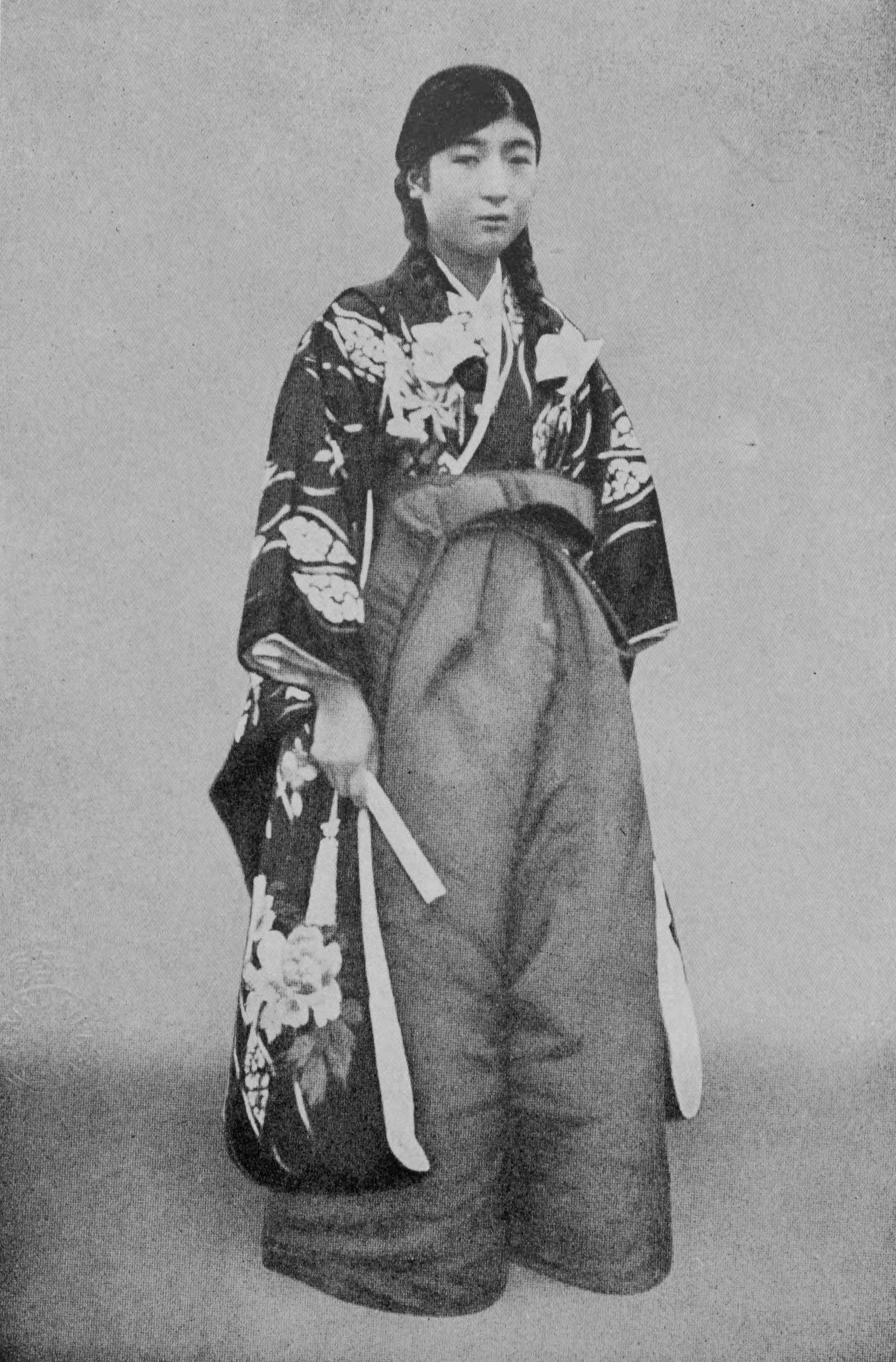
Princess Yasuko of Fushimi (1917, PD) Wikimedia
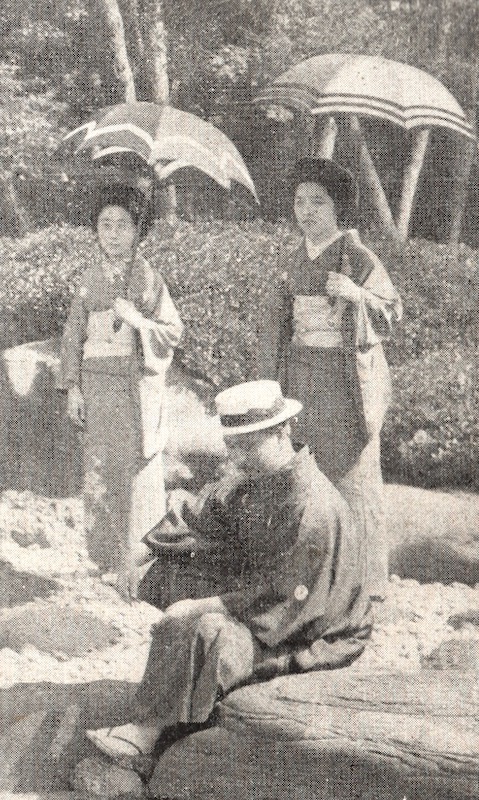
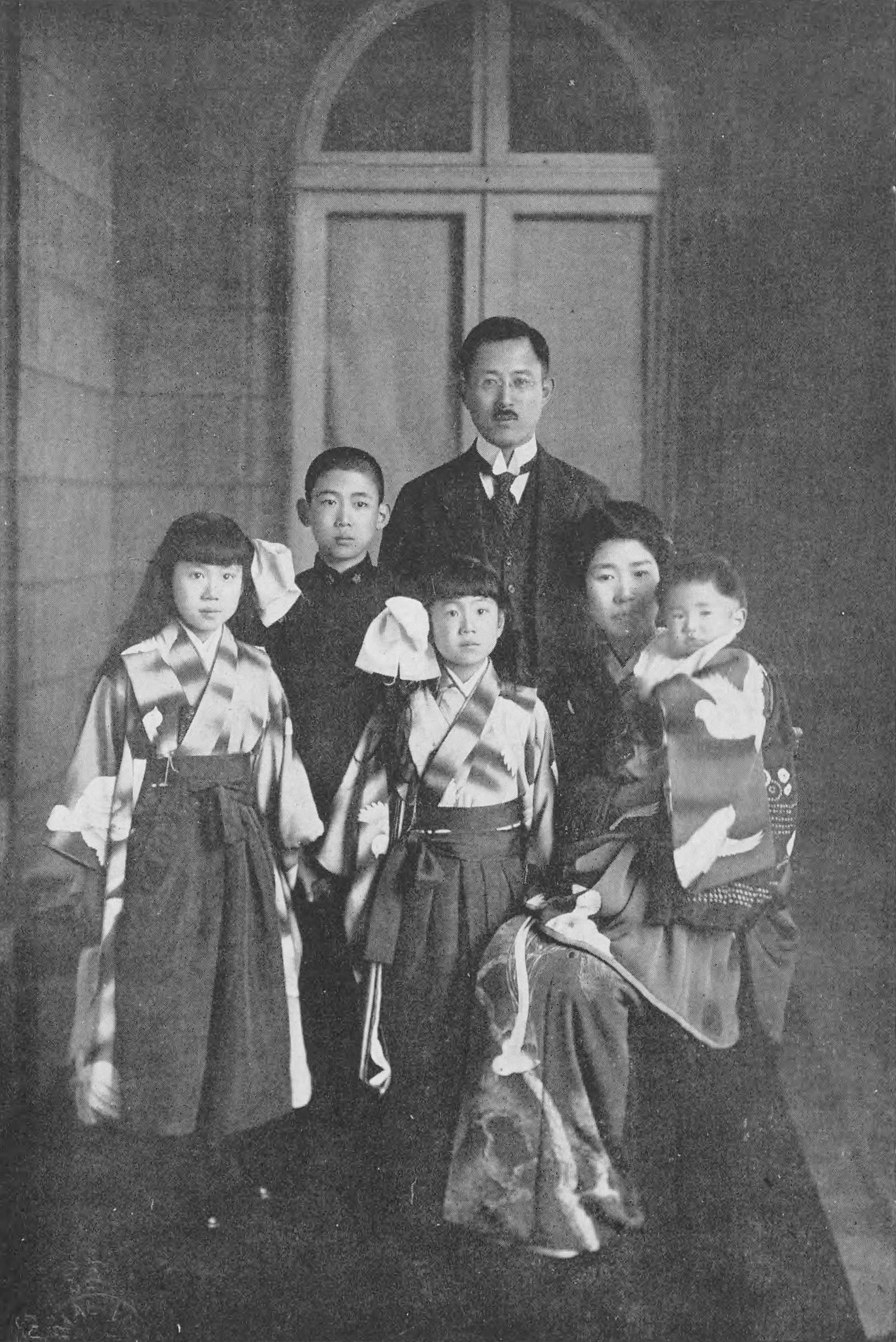
Takahashi Korekiyo with his Family in the Garden (1920, PD) 婦人画報
Prince Kitashirakawa Naruhisa and his Family (1921, PD)
Portrét dámy v dračím kimonu (1922, PD) Egon Josef Kossuth
Kane Tanaka (c1923, CC1.0) Molly887956321

Princess Kuniko of Kuni (c1936, PD) 
What did the lady forget? (1937, PD) Shochiku, Sumiko Kurishima, Mitsuko Yoshikawa, Chōko Iida
Schoolmarm at graduation ceremony (1953, PD) Meomeo15
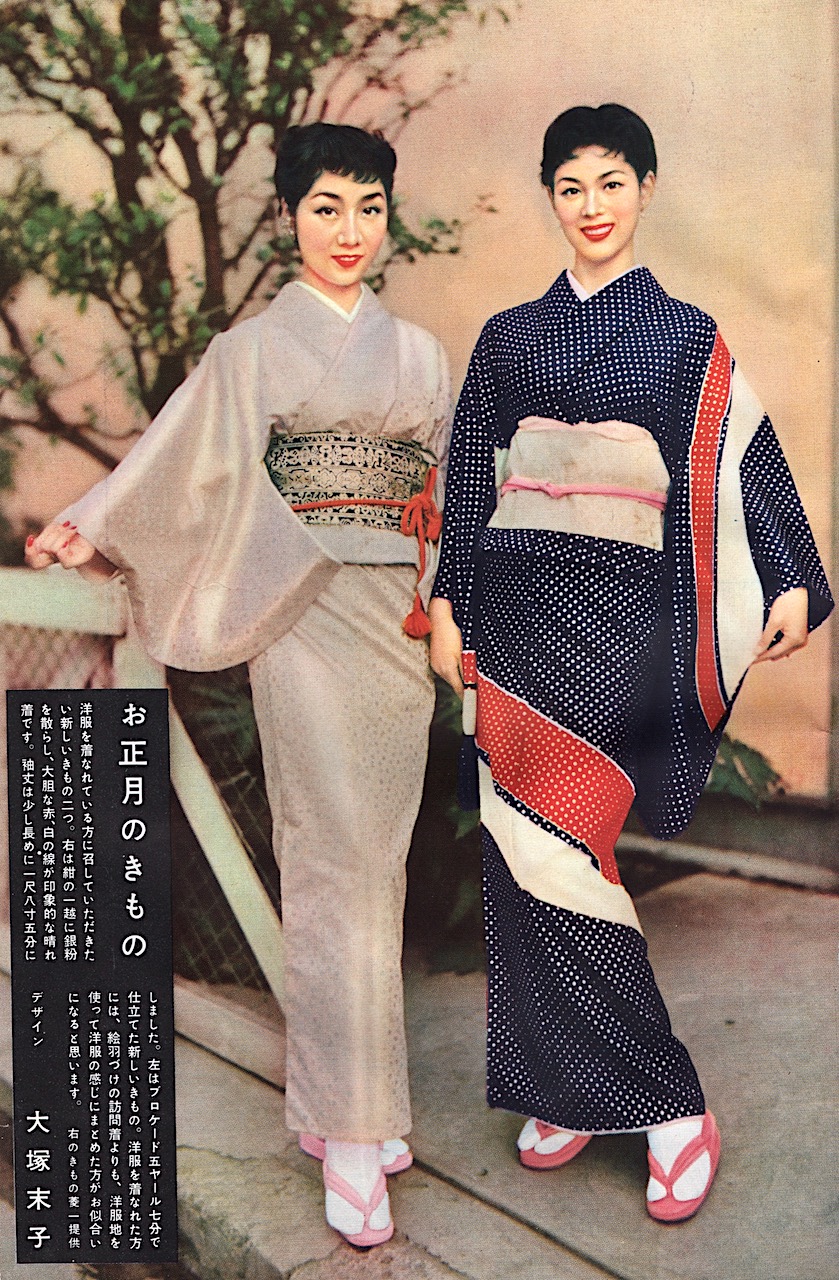
Women in Kimono (1956, PD?) 投稿者によるスキャン
Kimono in 1957 (1957, PD?) 投稿者によるスキャン
Kappou-Gi (1969, CC4.0) Meomeo15
Tokyo Japan (2006, CC2.0) Dennis Keller
Kimono Girls in Kyoto (2008, CC2.0) Rumpleteaser on Flickr
成人式の前撮り@京都 (2020, CC2.0) Norisa1
A varied study of some Kimono, and a reminder of how KTC can be transnational. Musscher's portraits are a friendly reminder of where and when Kimono were worn, Kimono were first worn by foreigners as early Kosode by Korean immigrants in 814 CE to my knowledge, then by Africans by perhaps circa 1570-1582, then by Europeans somewhere between 1570-1620, the English by 1605, and the Dutch by 1609.[1][2][3] The Kimono was first transported to Europe in large quantities by the Dutch in the 17th century after 1641. So much for being a 'Japanese' garment.

Bibliography
[1] https://en.wikipedia.org/wiki/Koreans_in_Japan#Heian_period_(794_to_1185)
[2] https://en.wikipedia.org/wiki/Yasuke or see https://en.wikipedia.org/wiki/Nanban_trade
[3] The Letters of William Adams 1611-1617 from Memorials of the Empire of Japon in the XVI & XVII Centuries, and The L T. Rundell, 1850, pp.17-88, @ http://anthony.sogang.ac.kr/LettersWilliamAdams.html and the Diaries of Richard Cocks from Diary of Richard Cocks, Cape-merchant in the English Factory in Japan, 1615-1622, Richard Cocks, 1882[2014], pp.Preface-349 at https://www.gutenberg.org/files/46803/46803-h/46803-h.htm

Social Links

One stop Link shop: https://linktr.ee/Kaguyaschest

https://www.etsy.com/uk/shop/KaguyasChest?ref=seller-platform-mcnav or https://www.instagram.com/kaguyaschest/ or https://www.youtube.com/channel/UC5APstTPbC9IExwar3ViTZw https://www.pinterest.co.uk/LuckyMangaka/hrh-kit-of-the-suke/ 


I had exciting topics

 and then I got sick. and then I got heatstroke. and then my home became 35 degrees. and then i was sick again. and then i got mild food poi...