Her Haughtynesses Decree

Showing posts with label 19thcentury. Show all posts

Monday, July 8, 2024

SRS BSNSS

 So, I'm away on a business trip atm, so, I'm kinda busy. Which isn't much of an excuse, but some really exciting doors have opened up for me potentially, so we'll see where it all goes. 

Princess Kaiulani in Wafuku (c.1888, PD) Walter Le Montais Giffard
Princess Kaiulani in Yofuku (1897, PD) Anonymous
Lilies (1890, PD) HRH Liluokani

Otherwise, enjoy the images of the Hawaiian princess, Princess Kaiulani. She is one of my favourite royals who deserves more attention to her story.

- A grumpy travelling tomfool.

Sunday, February 4, 2024

仏米シンガー王朝とそのキモノップ | Franco-American Singer Dynasty and their Kimonopes | 1885 - 1951 | Essay #23

Winnaretta Singer (1865-1943) and Daisy Marguerite Séverine Philippine Decazes de Glücksberg Fellowes (1890-1962) were both American-French socialites, who interacted in many ways with the white elites of the American-French fashion industries. They were heavily complicit in the racist structures and depiction of Kimono as for the 'yellow peoples', with Winnaretta implicitly using Kimono to benefit from racist tropes and imperialism in her career as a painter. This is part of a broader tradition of the French Orientalism genre which would give rise to the Madame Chrysanthemum trope a few years after Winnaretta's use of the Kimonope, in 1883. Daisy, her neice would use these tropes in her time at Harpers Bazaar from 1933-1935, displaying the same ideas about people of colour and their cultural traditions throughout the 20th century.

Winnaretta

Winnaretta was a salon hostess with bisexual leanings. Winnaretta was one of the 26 children of her father Isaac Singers (1811-18something). Her mother was another French-American socialite who married Singer when he was 52 and her mother Eugenie was 19, they would later divorce due to Singers flagrantly disgusting dating history. Winaretta was the heir to the Singer fortune however and therefore was the definition of white privilege. The Singer family moved from America to Pari after the 'upstarty' black people demanded human rights American civil war happened. Hmmmm.

Winaretta lived in Paris for most of her life, with her mother's second husband being reportedly abusive to Winnaretta, who fled in 1883. Unlike other Sapphics (Renee Vivien;1877 - 1909) Winarets decided to join the straightz4life gang. Winnaretta is so classically Sapphic that during her matriomonial night of consummation in 1892, she is said to have climbed up a wardrobe and threatened to help the groom reach the next world. In 1893, she entered a lavendar marriage and began her hostess work. We are interested in Kimono however, and it is in the self portrait of Miss Winaretta Singer which are to delve upon.[1]

Self-portrait

Self Portrait (1885, PD) Winnaretta Singer

Winaretta was operating as a Queer white woman in France in the late 19th century. At this time, this meant we encounter the Kimono in these spaces as a part and parcel of the actress wardrobe as part of the aesthetic and bohemian movements. From what we can see, the Kimono is most likely a very expensive export from Japan bought in France. This would be a particularly common way for these types to attain their cultural appropriation fixes. I say this, becuase nowhere elese does it seem that Winny decided to appreciate or try to engage with Japanese culture. 

Her artwork comes from Queer escape certainly, but for some reason she has decided that as an exhibited artist at the French Academy, her memory should be done in what is a flower crown, with whatever book she has in her hand. The messages are not subtle, the flower crown in fact is a reference to the Greeks and Romans, and the Kimono an aesthetical accent. On its own, this would be fine, but this sets a slightly dangerous precedent when we consider what message this sends to both her audience and her contemporaries about the role Kimono hold for Winnaretta. 

What here Winnaretta tells her audience, is a rather sinister message that aestheticism must be beholden to Greek philosphy to be credible. Her arrangement of florals resembling these ideals of 'Old Japan', that is a Western oriental version of Japan dreamt up in the mind of somewhat ignorant elite members of the Western world, is punctuated that the Hellenic literally reigns over this (the laurel crown symbolism). There is very little need for the laurel crown, as the fashion at the time was to wear Greek Anademata ties, which was a well-known hairstyle in those circles. The laurel crown however was something which denoted war, victory and was often worn by Roman emperors to declare their rule as victorious. 

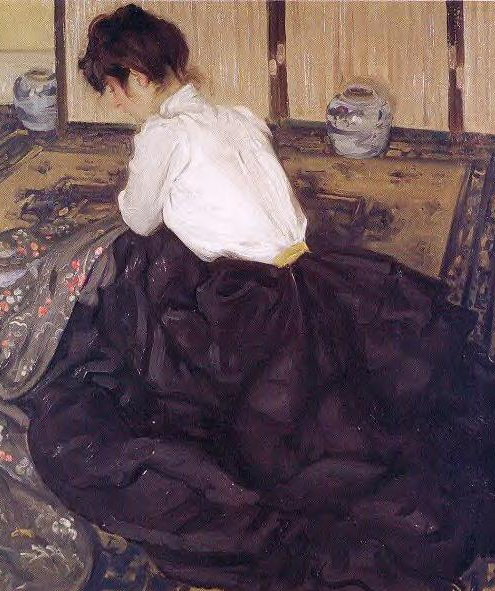
Arrangement (1901, PD) Alfred Henry Maurer
This depicts a common usage of Kimono in a rich sitters/artists models portrait, note the lack of laurels

In this way, as this was a self-portrait, Winnaretta was perhaps sending a message to her wider contemporaries who at this time had popularised Orientalism. A style of painting which by this time was used as French colonial propaganda to uphold the idea that people of colour required the 'guiding hand' of France to become 'civilized', such as was the case with Algeria whose colonisation by the French began in the 1830s only ending in 1962. In using the symbolism of the laurel crown, Singer signifies the imposition of the West over that of Japan, a country of those who her contemopary French painters such as Fernand Cormon (1845-1924) saw as on the lower rungs of scientific racism's rankings of humanity, as depicted in his white supremacist 'Human Races' which depicts Japan below French white people on this racist ranking of the 'races'.[3]

Human Races (1897, PD) Fernand Cormon

When we take this into account, we see that this is an imposition of the West over the East, a victorious triumph of American-French people, over those subjugated peoples who would help their younger sister Old Japan into the New Japan. This was an unfortunately pervasive ideal which only became stronger going into the 20th century and would likely have been passed down to Daisy.

Daisy

Daisy's mother, Isabelle died tragically. Rather like Daisy's trajectory in the shoulder department. Isabelle was Winnaretta's sibling, leading to Daisy being taken in by Winnaretta. Daisy went on to become the Pari Coreespondan for Harpers Bazaar. This was owned at the time by William Randolph Hearst, a blatant and well known racist who kept people of colour out of his magazines, which included Vogue and Harpers Bazaar.[4] These explicitly made Japanese people out to be 'undesirables'.[4] It is in this way that we come to the world in which the 'New Japan' had emerged as a result of Wilsonian foreign policy which in part lead to the depiction of the Japanese Diaspora as having a second class status to that of 'whites'.[2]

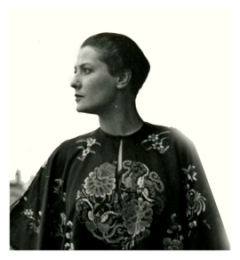
Suzanne's Kimonope (c.1930-1949, CC3.0) Olivier Baroin

Daisy as a white, no doubt encouraged these attitudes given she was rubbing shoulders with Winnaretta and Hearst. Daisy was indeed an inheritor to the Singer fortune and thus also was set for life. To reiterate this point, may we show you the influence of Kimono on her friend Suzanne Belperron (1900–1983) who wears a Kimonope. Ms Belperron's uncle was Paul Poiret the famous designer who made quite a lot of money from taking 'inspiration' from Kimono and creating a few Kimonopes and modern silhouettes. Other firends included the Chanel (a Nazi colloborator) and Schiaparelli (Chanels feted rival). A 'close friend' included Diana Vreeland (1903-1989) who is today known for stating the first known Black supermodel as 'King Kong', and that she was 'nobody's idea of what anybody wants to look like', in reference to a shoot Luna was meant to book in the 1960s.[5] King Kong came out in 1933, in a more racist friendly time and the exact year Daisy began her foray into Harpers Bazaar. A magazine which only included black models 2 years after she left, and which only encouraged the first Asian supermodel Noelie Dasouza Machado (1929-2016) to take the cover in 1959. Even this this comes with the caveat that Machado's home country was under Colonial rule by the Portuguese. This is the mindset these people wrote and followed. Around the end of her time as Pari correspondan, Daisy began a heady diet of Amphetamines, Cocaine and more friendships with Nazi Sympathisers, known as Wallis Simpson by 1936.[8][9]

Another cultural appropriation moment occurred when the colour 'Shocking Pink' was supposedly created for Diasy by Schiaparelli around 1937.[8] Diasy often continued this Oriental fantasy of Asian and 'Other' cultures as beneath her own, as costumes she could try on and profit from but never really give back to. This included ornate costume parties into the 1950s where attendants would stand around in 'exotic' dress from Asian cultures, serving and waiting hand and foot on Daisy, whilst others ran around in blackface.[7] Daisy herself would follow in a bout of cultural flagrance in her 'Hindu' necklace which was worn once to a costume party and then given away as a gift.[6] These items, which most likely included a Kimonope or two in Daisy's armoire, were known as 'Savage jewellery'.[6] Yes it is called the Oriental Ball and yes that is Ms Fellowes walking around in a cheetah print ballgown attended to by an Asian stereotype.[7] Shocking indeed.

Daisy in this way embodied the later trend of Primitivism and it is this way that the money for Singer sewing machines encouraged the adoption of Kimono as a garment for the 'Red Woman' trope, given the way the Singer Heirs spent and adopted or treated Kimono.

Conclusion

In context therefore, the impact of the Singer Dynasty on European KTC can be seen as detrimental, and heavily tied up in Orientalist tropes perpetuated by French and American elites. Winnaretta used Kimonope to embody the ideals of French imperialism and the imposition of Japanese culture as academically beneath that of White Western traditions, and Daisy in the ideals of the Primitivists and Fauvists whom she supported, as well as working amongst some of the most racist Publishers of the day. These usages of Kimono give us an entry into the world of French Orientalism and the Visual Realpolitik of how Kimono were percieved by those in power, particularly in positions of privilege and with a need to uphold whiteness. Kimono are used for the Singer Dynasty as tools of oppression and are directly a product of their racial worldviews and times.

Bibliography

[1] https://en.wikipedia.org/wiki/Winnaretta_Singer

[2] https://en.wikipedia.org/wiki/Daisy_Fellowes

[3] Allegorizing Aryanism: Fernand Cormon's The Human Races, Maria P Gindhart, 2008, Volume 9, Online Edition, The Journal of the History of Art (Aurora), WAPACC Organization

[4] On Media Moguls and Racist Tropes, Vicki Mayer, Alice Pavanello, 2022, pp.70-74, Volume 24, Online, Journalism & Communication Monographs, SAGE Publishing

[5] https://en.wikipedia.org/wiki/Suzanne_Belperron

[6] https://www.prestigeonline.com/th/jewellery/cartier-udyana-necklace/

[7] https://littleaugury.blogspot.com/2014/01/daisy-roars.html

[8] https://graindemusc.blogspot.com/2008/11/schiaparelli-shocking-hot-pink-and.html

[9] http://tweedlandthegentlemansclub.blogspot.com/2015/07/the-most-wicked-daisy-fellowes.html

Essay Abstracts 

#1 Renee Vivien (1877 - 1909) --- Born Pauline Tarn, was an English lesbian poet. She wrote in French and perhaps English. She took up the style of the Symbolists and Parnassinism and was well known during the era of the Belle Epoque (the Beautiful Age) for producing Sapphic verse and living as an open quasi butch lesbian poet; her verse derived from the ancient poet Sapphos, also famed for her love of women.

# 2 Birth of the Kimonope --- Here I shall introduce the notion of the Kimonope, that is as a garment attached to the social construct of the 'Geisha' in North America. Kimonopes being Orientalized clothing, or 'negatively affiliated or exoticized ethnic dress' which lead to the perceived notion of the Kimono and Geiko as simultaneously both high and low culture to American culture makers, such as film, television, media, writers and some academics. An example of Kimonope are the tacky Halloween costumes you may find at the Dollar store.

#3 The Legacy of the MacArthur Dynasty on KTC & The Problem with the 'Traditional Garment' Argument --- The problem with arguing that the Kimono is a 'Traditional ethnic Garment' is that that assertion is in itself, arguably  Ethnocentrism, which to clarify is the imposition of, in this case, American values onto Japanese cultural values, belaying the 3 pronged pitchfork of idiocy. 

#4 Divine --- Government name Harris Glenn Milstead (1945-1988) was the infamous North American Queen & Drag artist. Specifically, Divine was known for being a character actor, part of her act is well-known for its eccentricity. My personal exposure to Drag lite was Pantomine Grand Dames as a kid, and later when my friends made me watch RuPaul in art classes, so to me this is nothing new, the over the top, the glitter, the upstaging is all part and parcel.

#5 Dori-Style or 21st century Kimono Fashion --- The Dori-Kimono style. Something which I just made up because in going over notes for the first 20 years of 21st century section of Kimono history, I noticed a lack of a clear catchall term for what was happening in Japan at the time, at least in English descriptions of the time. I use the term Dori as I do not want to coin an unrelated term to the topic, but I also am reticent to claim all of Street style as 'Tori' either, whilst a large number of streets upon which the subculture originates in all use the suffix 'dori' (the bottom of Takeshita-dori for example), thence Dori-style.

#6  The Tea Gown --- This essay will cover the aspects of how 19th century Japanese import textiles to Western countries were used and repurposed, as well what their desirability tells us about how Japanese design was regarded and the image which these people held of Japan through the Western lense and consciousness. This follows the progression of how Kimono can be used in the West from the undress of the 1860s, adapting silk bolts in the 1870s to high fashion western daywear, to the 1880s aesthetic movement and 1890 wholesale adoption in the Victorian age to being used prominently by society hostesses as tea gowns by the Edwardian period, and the subsequent change in Japanese export culture which we see in extant textile collections of Japanese textile in Western dresses of the periods.

#7 Kimono and the Pre-Raphaelite Painters --- This essay will cover the aspects of Kimono in the Portraiture of the Pre-Raphaelites. The Pre-Raphaelites were a group of British artists and writers active during the late Victorian period. Unlike the Royal Academy artists, this circle of painters operated outside of the established comfortable boundaries of the expected white, cisgender middle class audience of the Victorian age. The movement is notable for its inclusion and encouragement of women, and in portraying and engaging non-conventional beauty and beauties as figures from the Classical World alongside Religious, Mythological and Folklore Heroines into Victorian 'Femme Fatales'.

#8 Jokyo/Genroku Kimono Textile Culture and the new role of the Komin ---  This essay will return back to GKTC (Genroku Kimono Textile Culture ; 1688-1704) and JoKTC (Jokyo K.T.C. 1684-1688) and the new role of the Komin (Artist caste) in GKTC. JoKTC is notable for being the lead up to GKTC, JoKTC being characterised by its transitory nature in comparison to GKTC, which was far more bold in its relations to what Kosode could and should be. Komin entered the picture at this juncture, and I shall elaborate a little more here than in other posts about why that was. GKTC is notable for its elaborate, perhaps gaudy and innovative Kosode design features, whilst JoKTC more so for the enabling factors of the time, as a sort of incubatory GKTC.

#9 Tagasode Byobu - This essay will explore the art motif known in Japanese art as Tagasode Byobu ( Whose sleeves Screen) This motif is a recurring art form which was particularly popular during the Azuchi-Momoyama era ( 1568-1600 ) as a representation of the ways in which Buddhist sensibilities met with the fast changing events of the end of the Sengoku Jidai (1467-1615) and as an extension of the habit of wealthy women from military families came to own and store a large number of Kimono. Prior to this, Kin Byobu ( Golden Screens) for the most part depicted nature like Sesshuu Touyou (1420-1506) after Chinese Cha'an painter Muxi ( c.1210-1269 ) or 'flower-and-bird' scenes like those of Kano Eitoku (1543-1590), rather than humans or human paraphernalia as an extension of the Zen painting school of thought about materialism.

#10 Cultural Acculturation --- The topic of our essay is on the nature of Cultural Exchange in KTC which will be an ongoing mini-series throughout 2022. This covers the 1000CE - 1500 period in Japanese History.

#11 Cultural Appropriation --- The topic of our essay is on the nature of Cultural Appropriation which will be an ongoing mini-series throughout 2022. 

#12 Cultural Acculturation --- The topic of our essay is on the nature of Cultural Acculturation which will be an ongoing mini-series throughout 2022. This covers the Asuka (Hakuho), Nara (Tempyo), and Heian periods (500CE-1000CE) in Japanese History.

#13 Asai Ryoi --- This essay will explore the legacy of Asai Ryoi on KTC. Who was Asai Ryoi you may ask? Only one of the most important writers for the Ukiyo genre. Asai Ryoi ( act. 1661-1691 ) was a prolific Ukiyo-zoshi ( Books of the floating world )  or Kana-zoshi  ( Heimin Japanese Books ) writer. His leading 1661 publication, lambasted and satirized Buddhism and Samurai culture of restraint in favour of the Chonin lifestyle of worldy excess.

#14 Edith Craig --- This is a post regarding the early adoption and promulgation of the Kimono and Japanese aesthetics in the life of the wonderful Edith Craig (1869-1947), daughter of the famous actress Ellen Terry (1847-1928) and Edward William Godwin (1833-1886). Edith was also known as 'Edy'.

#15 European Banyans --- This essay will explore the European garment known as a Banyan, which originated as a European reaction to Kimono in the 17th century, popular until the end of the 18th century. The word Banyan originates from Arabic ( Banyaan), Portuguese (Banian), Tamil ( Vaaniyan ) and Gujarati ( Vaaniyo ) loanwords meaning 'Merchant'. Alternative versions saw the item fitted with buttons and ribbons to attach the two front sides together. The Banyan was worn by all genders and was particularly regarded in its first iterations as a gentlemanly or intellectual garment worn with a cap to cover the lack of a periwig, and later adopted by women and greatly influenced how British womens garments were designed with preference for comfort in removal of panniers whilst maintaining luxurious, modest 18th century fashions (see Robe a la Anglaise).

#16 Miss Universe and Kimonope --- This essay will explore how Beauty Pageants, principally Miss Universe, has engaged with KTC. While there may be real Kimono worn by Japanese and Japanese adjacent contestants in the 'National Costume' category, I will be focusing on the Kimonope worn by contestants. The idea of Kimono as a 'national costume' sparks interesting conversations on what 'national costumes' are, their target audiences, and how we form ideas about these things to begin with.

#17 Onna-E --- Womens pictures refers to the Nara, Heian and early Kamakura ( 710-1333CE ) practice of drawing women in elongated Hand scrolls, which today are regarded as feminine gender coded Art. Some of these narratives depict the lives of women, their extra diaries, or the literature they wrote. The Onna-E style derives from how mostly Heian women represented themselves and others as a performed self in these scrolls, drawing from their lives indoors at their and the imperial abodes. Whilst a limited number of women could read Kanji, they also used their knowledge of Chinese culture to create and inspire their own culture; the first truly Wamono aesthetics; and it was with these preconditions that Onna-E became established in the Japanese art scene alongside Yamato-E and Oshi-E.

#18 A Jamaican, a Monster and Portuguese bar in the Orient --- This essay looks at the Kimonope attire adopted by North American Dancehall artists Shenseea (Chinsea Linda Lee | 1996 - present ) for the video to 'ShenYeng Anthem'. Whilst the aesthetic derives mostly from East Asian, principally Chinese aesthetics, the language used is specifically Japanese, referring to Chinsea Linda Lee as 'ShenYeng Boss', a perpetuation of the Dragon Lady stereotype. The essay mostly charts how this ridiculous Kimonope derides from the North American Anti-Chinese movement and how this intersects with contemporary Orientalism.

#19 The Red Kimonope --- The Red Kimono is a terribly named racist US silent film from 1925. The Longingist film includes a key scene which the production gets its name from where the protagonist drops her Kimonope, meant to symbolize that she had turned away from sin and prostitution, or in other words equating a wearer of the Kimono as a sex worker which stemmed from another American 'tradition'. This dreadful melodrama features the previously yellowface-accepter Priscilla Bonner as the lead protagonist. Throughout her trials and tribulations, she faces many ups and downs, like becoming a white version of the Lotus Blossom stereotype, because WASPs. I will explore the origins of the Lotus concept and the 'Jade' in more detail here as to provide the contextual background of the productions symbolism.

#20 Housewife, Business Girl, Office Lady --- I explore the concept of the arrival of the Business Girl, and the Shufu ( Censored | Housewife ) of the 1930-1970's period of the 20th century.[1] This intersects with how we see Wafuku represented, in a shifting dynamic that had not shifted so many barriers since the 1870s, and even until the 1990s with the intrusion of Euro/Americentric beauty standards being foisted upon the world during these centuries, in the wardrobes of the upwardly mobile single business women of from 1955-1965. These groups came into being in the 1950s with the advent of the eclipse of settler colonialism and patriarchal standards over women's lives internationally. KTC thus developed in response to these changing, testing and trying times (between 1930-1970).

#21 Herman's 'Kimono' --- In this essay I look at another Kimonope, specifically another Miss Universe 'national costume' entry. This particular Kimonope represents the legacy of Macarthism's neo-colonial/systemic racism, and subjugation of Japanese soft-power, a follow on of Orientalist late 19th/early 20th century assumptions and stereotypes of Asian culture and peoples which saw their subjugation in American foreign and domestic policy between 1885-1952. In this entry, we see a clear leaning into the 'Cool Japan' aesthetic by the Kimonope's designer, who is not shockingly not Japanese, but Israeli and therefore represents ideas about what Kimono are to this designer than the genuine article would to other participants of KTC, foreigner or otherwise towards 'Kimono'.

#22 Uno Chiyo --- This essay explores the work of Uno Chiyo (1897-1996) as a Kimono Designer. Uno was a prolific 20th century Japanese writer and designer. As such, Uno was familiar and fluently versed in KTC throughout her life. Uno founded the influential Style which was in circulation in Japan from 1936-1959.[1] Uno was heavily influenced by Western and Genroku fashion, and focused her aesthetic on these two whilst encouraging masculine and secondhand consumer habits in her approach to Kimono as a fashionable and modern pursuit. Uno provides a fascinating glimpse into a time before Kimono were stigmatized and were instead merged with Yofuku to inform Japanese identity and femininity in new and stylish publications and normoactivities.

#23 Franco-American Singer Dynasty and their Kimonopes - Winnaretta Singer (1865-1943) and Daisy Marguerite Séverine Philippine Decazes de Glücksberg Fellowes (1890-1962) were both American-French socialites, who interacted in many ways with the white elites of the American-French fashion industries. They were heavily complicit in the racist structures and depiction of Kimono as for the 'yellow peoples', with Winnaretta implicitly using Kimono to benefit from racist tropes and imperialism in her career as a painter. This is part of a broader tradition of the French Orientalism genre which would give rise to the Madame Chrysanthemum trope a few years after Winnaretta's use of the Kimonope, in 1883. Daisy, her neice would use these tropes in her time at Harpers Bazaar from 1933-1935, displaying the same ideas about people of colour and their cultural traditions throughout the 20th century as found in her social peers.

Social Links

One stop Link shop: https://linktr.ee/Kaguyaschest

https://www.etsy.com/uk/shop/KaguyasChest?ref=seller-platform-mcnav 

https://www.instagram.com/kaguyaschest/ 

https://www.youtube.com/channel/UC5APstTPbC9IExwar3ViTZw 

https://www.pinterest.co.uk/LuckyMangaka/hrh-kit-of-the-suke/ 

Sunday, August 6, 2023

羽二重 | Habutai | Plain weave silk | Fabric #20

Habutai ( feather-soft silk | 羽二重 ) is a basic plain weave silk. Habutai is commonly used to make the inner lining of some Kimono, most often summer Kimono. The thickness is measured in Mommes with 4 being sheer, 8 being lightweight, and 16 or more being rather heavy.[1][4] Also known by some as Pongee, this is the most common sort of silk you will see in Japanese silk types and is known for defining the silky feeling of Kimono. Habutai is made using unweighted raw silk yarn, leaving a handmade feel to the fabric.[3]

Vantines double page advertisement selling Habutai (1914, PD) archive.org
Yes the 1560 fashion comment made me laugh too

Historically, Habutai was woven in Japan on handlooms to be used in Kimono and was included as part of the Sumptuary laws banned fabrics for lower classes during the time of Tokugawa Ienari (1773-1841 | 徳川 家斉 ), an edict enforced by the likes of Mizuno Tadakuni ( 1794-1851 | 水野忠邦 ) onto Kabuki actors for example.[1][2][9] Habutai was originally woven on handlooms in smaller operations and workshops and was first exported from Japan in 1877 by Naohiro Koriki (active 1877-1887).[6][7] Habutai is a very taken for granted silk, serving as a functional, if luxurious place in the history of KTC, as the Meiji Emperor (1852-1912) for example gifted two rolls of Habutai on an 'imperial' tour around Yamanishi Prefecture to his accomadation hosts in 1880 as thanks.[5] The industrial scale at which products like Meisen were produced at by the 1890s when Habutai began to be widely exported to Europe and the US, beget an industrial enterprise by 1905 with output declining in production and export after 1920.[6][7] Exports increased again in 1937 and 1940 due to regulations and rationing in the Pacific War period for Japan, increasing after 1955.[8] Due to costs, today Habutai is mostly woven in other Asian economies as a blend of rayon and silk warp threads for things like scarves, parachutes and summer clothing.[1]

Bibliography

[1] https://en.wikipedia.org/wiki/Habutai

[2] https://www.arket.com/en_gbp/about/knowledge/habotai.html#:~:text=Knowledge%20Habotai%20(or%20habutai)%20means,in%20Japan%2C%20Korea%20and%20China.
[3] https://cameo.mfa.org/wiki/Habutai

[4] https://blog.patra.com/2017/06/28/the-different-types-of-silk/

[5] https://sake-shichiken.com/300_years_of_history

[6] The Rise and Fall of Industrialization and Changing Labor Intensity: The Case of Export-Oriented Silk Weaving District in Modern Japan, Tomoko Hashino, Keijiro Otsuka, 2015, pp.1-6 | Available online at https://www.econ.kobe-u.ac.jp/wp/wp-content/uploads/2023/06/1501.pdf 

[7] History of the Fukui Silk Textile Association of Japan, Buntaro Matsui, 1921, pp.7-21

[8] The Economic History of Japan 1600-1990; Economic history of Japan 1914-1955, Takafusa Nakamura, Akira Hayami, Kōnosuke Odaka, 1999, p.42, Volume 3

[9] The Economic Aspects of the History of the Civilization of Japan, Yosaburō Takekoshi, 1930, p.230, Volume 3

Socials:

One stop Link shop: https://linktr.ee/Kaguyaschest
https://www.etsy.com/uk/shop/KaguyasChest?ref=seller-platform-mcnav 
https://www.instagram.com/kaguyaschest/ 
https://www.youtube.com/channel/UC5APstTPbC9IExwar3ViTZw 
https://www.pinterest.co.uk/LuckyMangaka/hrh-kit-of-the-suke/ 

Sunday, May 7, 2023

赤着物プ | The Red Kimonope | 1925|Essay #19

The Red Kimono is a terribly named racist US silent film from 1925. The Longingist film includes a key scene which the production gets its name from where the protagonist drops her Kimonope, meant to symbolize that she had turned away from sin and prostitution, or in other words equating a wearer of the Kimono as a sex worker which stemmed from another American 'tradition'.[1] This dreadful melodrama features the previously yellowface-accepter Priscilla Bonner as the lead protagonist.[8] Throughout her trials and tribulations, she faces many ups and downs, like becoming a white version of the Lotus Blossom stereotype, because WASPs. I will explore the origins of the Lotus concept and the 'Jade' in more detail here as to provide the contextual background of the productions symbolism.

Red Kimono Poster (1925, PD) Otis Lithograph Company of Cleveland

Yellowface

Yellowface is a recurring theme built on the minstrel show traditions of the 1830's onwards, which depicted mainly 'Ethiopian', 'Oriental' or Chinese and then eventually Japanese stereotypes (for yellowface, this is from 1853 onwards). Blackface was the blueprint for yellowface being a mockery of other cultures deemed 'inferior' to White traditions (American and perceived heritage European traditions), which first began in the US with performers impersonating 'black characters' like 'Jim Crow' in 1828 (Thomas Dartmouth Rice, 1808-1860) and 'Zip Coon' in 1829 (by George Washington Dixon, 1801-1861). These 'characters' built on earlier 'black types' of mockeries of black people commonly lumped together as 'Ethiopians', which in US theatre often placed black people in demeaning positions such as house slaves, butlers, maids, and the 'plantation black'.[1]

Zip Coon (1834, PD) R Toll | Jim Crow (1836, PD) NYPL
Yellowfaces predecessor

These 'types' were in turn taken from Oriental blackface performances by whites which portrayed Turkish and Muslim ('Moor' performances) of the 18th century which derided all brown people as invaders, which came from European traditions of the crusades and African-European colonisation. Blackface derided African-American culture of having any inherent value of its own throughout the 19th/20th century, and it was from this theatrical 'tradition' of discriminatory stereotypes that yellowface was born. Yellowface was born when its progenitor the french diplomat Evariste Regis Huc (1813-1860) greased himself into it in China (between 1839-1846) to develop his understanding of Mandarin, the language. On his journey around China, he was privy to traditional Chinese culture such as Chinese operas, which he described as the 'chants of savages'. He brought this ... attitude back with him to Paris in 1850, spreading his racist views of Chinese performance art and people, peppering his account with other writers accounts of thievery and non-Christian ways.[2][3]

This account seems to highly flavoured perceptions of Chinese people, as many early stereotypical accounts of Chinese people depict them as thieves, laundry business-owners and exotic. Before the 1850s, these depictions solely relied on commercial goods (porcelain) popular through the Chinoiserie fad, but these kitsch Scottish-Chinese Suona-Bagpipe operas soon gave way to Huc's vision.[2] Heightened Sinophobia against Chinese migrant labourers who sought to work through the California Gold Rush, a  time which saw the California Mining Tax (1850-1852) which targeted Chinese miners by enforcing a head-tax.

The Yellowface Jim Crow

In 1854, the first American 'minstrel pioneer, Charley Backus (1831-1883) performed in yellowface as 'John Chinaman' in his San Francisco Minstrel Troupe.[2] John Chinaman ran a laundry, stole gold from his white neighbors, spoke in Chinese-English pidgin, wore a 'shabee' (Hispanic pun) Shan-Ku uniform full of holes and sported a Queue hairstyle. His dinner consisted of dogmeat, rat, cat and mice and was wholly unassimilable and therefore un-American. He later found a home in the 'folksongs' of minstrel performer John A Stone (active 1854-1864), and between Stone and Backus, the John Chinaman stereotype spread internationally, primarily finding its home in New York theatre.[2][4] Whilst a niche in minstrelsy, Sinophobia was deep-rooted in this 'tradition', as in Josh, John (Get Out, John):

Your tail is severed clean off John; 

Your pig tail is clean cut off; [...]

You have lost your nankin shirt of blue, [...]


You have come, as it were alone;

And you lead an unhappy kind of life,

Coming without a cheerful wife,

A cheerful wife of your own, John;

An almond-eyed wife of your own.


You've left your national god, John, 

You've left your god and your land

You've left the dress of the land of flowers

And in leaving these, haven't taken ours;

And you've friends upon neither hand, John, 

You have friends upon neither hand.[5]

Whilst 'almond-eyed' Chinese women were nowhere remotely as populous as their male counterparts, some Chinese women did find their way to America.[2][5] Before 1850, these few women reflected popular stereotypes found in Euro-American operas which were based on Chinese artefacts, mostly for women the pottery beauties depicted mostly in gardens on the sides of pottery. Afong Moy (c.1815-c.1850) was brought to the US for this very reason, displaying her 'exotic' bound feet to sell pottery for the Carnes brothers from the 1830s-1840's.[2][7] After 1850, yellowface songs referred to Chinese women in passing as 'Jades', or prostitutes because many Chinese-American women were sex trafficked into North America to get there, often into California and the West, with much of their time seemingly spent in laundries in competition with Irish laundry business owners if we believe the minstrels shows. Stereotypical yellowface Jade marriages often broke down, usually with the sudden death of the Chinese husband in these 'plays', or the white husband leaving mysteriously.[2] Other insults included 'monkey', 'dusky, 'drumstick eaters', 'mongol', 'Asiatic', 'Coolie', 'Baboon', 'leper' and opium related stereotypes.[2]

Irish Yellowface

By the 1860s, not one to miss out, the Irish, German and Italian immigrants began cashing in on the John Chinaman act such as the classic 1860s minstrel character 'Ching Chong'. Ching Chong was a warning to Asian men not to attempt to marry whites, who like Ching Chong's debauched lover, would run away, as the Chinese did from California on the Transcontinental Railroad in 1869, much as the Great Migration from the South did. By 1870 though, Sinophobia became overwhelming amongst Statesian WASPs, as Chinese people tried to survive living in a genocidal hellhole. This migratory tension was seen in American vaudeville yellowface 'Chinese' acts, which portrayed 'Heathen Chinese' stereotypes, saw the rise of the Gong to signal 'Asian-ness' and set the proverbial Sinophobia dry grass pile alight, seeing the Chinese Exclusion Act (1882) come to pass, the first American legislation to ban POC from entering North America.[2]
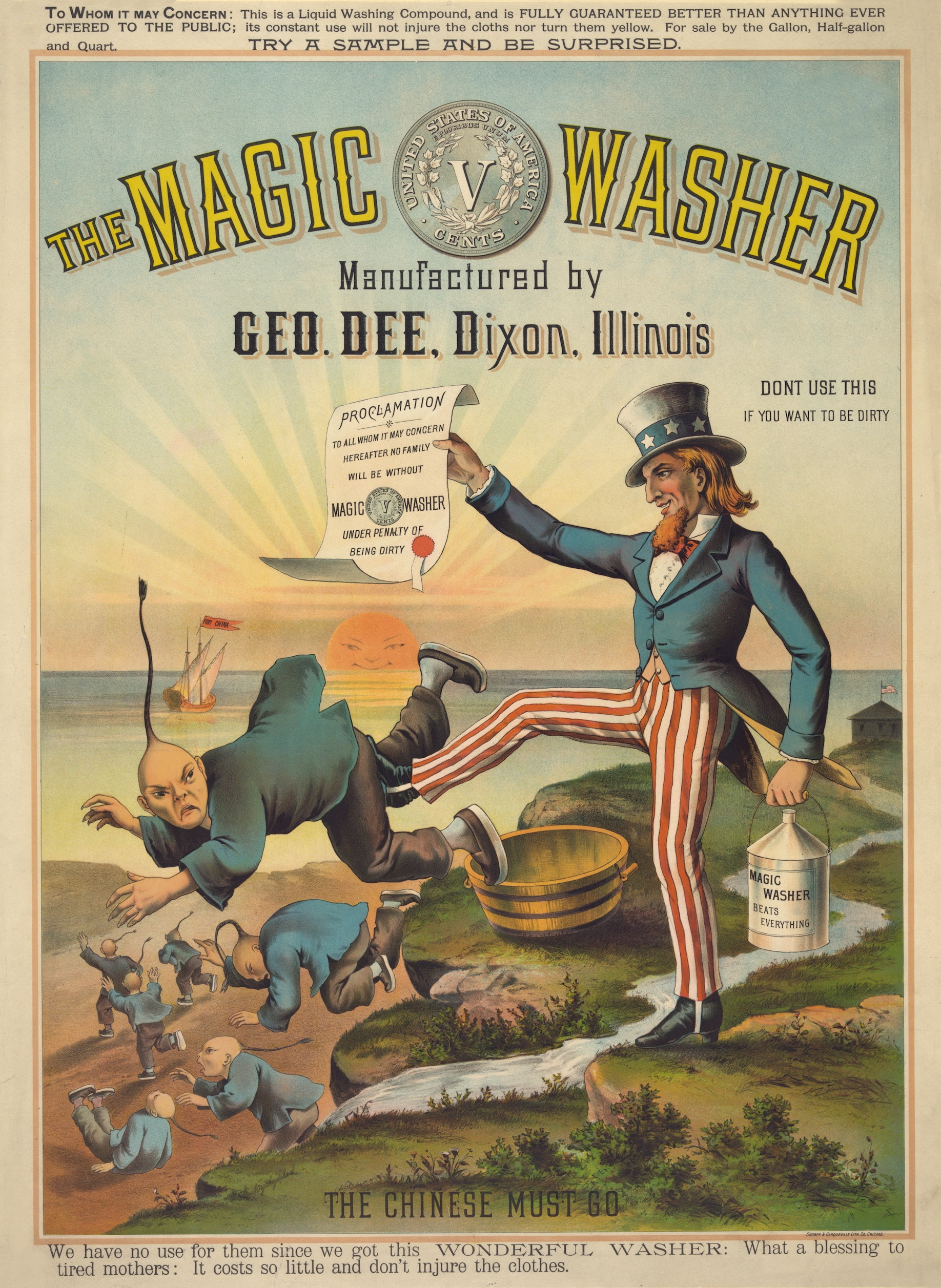
Chinese Must Go Advert (1886, PD) George Dee Magic Washing Machine Company

Yellow Peril

After the Exclusion Act and drawing up of laws like the Racial Covenant Clauses later on, Chinese-Americans began to form China Towns, which had Chinese Theatres. These were established by the 1890s, a time when Statesian imperialism, Jingoism and Sinophobia flourished with the acquistion of the Philippines, Hawaii, Guam and many other territorial acquisitions and protected territiories.[2] This saw a rise in hatred of all Asians, and saw a diversification to the hatred of all Asians, in an equal opportunity discrimination age were Indians, Chinese, Japanese, Filipino etc were now all 'Asiatics' who needed Americans guiding hand towards the light of civilisation, especially Tagalog. The Japanese however were particularly 'barbaric savages' and feared through what became known as the Yellow Peril, because of their victories in 1895 in the Sino-Japanese war. Yellow Peril belied a mysterious Oriental plot to overthrow white supremacy in the US and Europe, with MiSCEgEnAtIoN (or a 'pollution of the caucasian race').[2] These numbers grow and dipped by the 20th century, as more Gentlemans Agreements (1907) and 'Immigration Acts' (1917, 1924) were passed, limiting specifically East Asian emigrants to the US. This lead to the American concentration camps of WWII, redlining, etc and gasp, Sessue Hayakawa (1886-1973) who was an early cinema international heartthrob.[6] 

The realities of the 1890s colonisation of Eastern Asia (c.1899, PD) Stewart
A Chinese political map, the bear is Russia, the dog is Britain, the frog France and the Eagle the US
Japan sits poking Korea I think

Export Kimono

Kimono came into this messy picture by the 1870s globally. Whilst European families were accustomed to 'Nightgownes' since the early 17th century, these only reached Statesian shores as Export Gowns with the growth of Japan Inc. in the late 19th century, and were increasingly bought by those wild enough to travel to Japan who bought many Kimono back with them as bric-a-brac souvenirs. Worn at first by the Rothschilds in the 1870s and 1880's, later the Vanderbilts in following the fashions of the French stage actresses. Kimono after Loti's seminal Madame Chrysantheme (1887) represented a prostitutes attire born from the classic Lotus Blossom trope, and were often longinguistically associated with 'Geisha' from the operatic classic of Puccinis opera after Long's 1898 original, and the news of diva actresses like Sarah Bernhardt who would be found swaraying around backstage and through the Hollywood gossip columns. These Longingly became staples of middle class Boudoir attire by the early 20th century in imitation of the 'European fashions' becoming fashionable lingerie attire for white Americans, and shameful unmodern attire for Japanese-Americans.

Madame Butterfly (1907, PD) University of Washington, Francis MacLennan, Elza Szamosy

Appropriation for America

Yellowface is not specifically seen in the Red Kimono as far as I can tell; I don't deal in this everyday; however it was certainly a widely accepted idea that the Japanese and Chinese were to be considered an 'other' type of people than 'Americans'. Performers like William 'Chung Ling Soo' Robinson (1861-1918) normalised these expectations on the stage to make fun of their East Asian counterparts (see the talented Ching Ling Foo | 1854-1922 ) by stealing their identities, cultural items, jobs and even performances to do so.[7] Picking up another cultural item and associating it with 'sin', the Red Kimono as produced by women (Dorothy Davenport | 1895-1977), as was common in the early days of American cinema clearly sat well with all involved at the time with the production. The protagonist of the film is played by Priscilla Bonner (1899-1996), who symbolized white American women who had 'fallen into prostitution'. Wealthier white women would in turn lift them from their circumstances, a popular trope of late Victorian/Early Edwardian period literature and film in a bid to 'alleviate the suffering of the' poors. 

Bonner had previously been cast and agreed to work in Shadows, a another silent yellowface production, three years before (in 1922) Red Kimono was shot, which was a continuation of white fears born from the subjugation of the 'yellow races' of Eastern Asia by the United States beginning in 1898 when the USA bought the Phillipines from Spain. 'American interests' in the area had allowed the colonisation of Korea, subjugation of China and colonisation of certain Pacific Islands between 1880-1920, which gave whites a false sense of superiority over the 'Mongol' species as American pseudo-race-science and Eugenics then claimed Asian peoples were descended from something other what white people were descended from. 

Lon Chaney in Yellowface on set (1922, PD) Orange County Archives

WASPs were also, as against African-Americans, terrified that Asian peoples would do the same thing to themselves as the WASPS had done to POC groups, leading to cultural appropriation of objects like the Kimono as a self-serving way to show racial superiority of whites over the 'Asiatics'. This culminated in the Kimonope, a clothing version of yellowface, to make white women feel safer in their place at the top of the racial hierarchy they and white men had created for themselves. These roles using yellowface against East Asian women were mostly established by the 1890s, when the Yellow Peril and Chinese Exclusion Act brought the issues into mainstream Statesian society. It was this and the hit classical opera Madame Butterfly (published 1898, in theatres by 1904) which established the Lotus Blossom stereotype, predating the need for the 1934 Dragon Lady stereotype.[7]

The Red Kimona

The Red Kimono in fact refers to the scarlet woman (sex worker/prostitute) trope, and appears in the film after the film's 'protagonist' sees her mirror image shift into a Red 'Kimono', indicating a change in future status. The protagonist indeed becomes a 'histrionic' Jane as netizens put it, who serves her pimp after this.[8] The protagonist upon finding her cheating husband and being brushed off; her taste is that good apparently; shoots him in the shop where he is buying the next 'wife's' ring from protagonists stolen money and promptly gets a straight to jail card with plenty of histrionics.[8]

During the trial of her shooting her pimp, the Kimono is dropped on the floor indicating that she is leaving her 'prostitution' days behind her. In this way, the Kimono in this film is depicted as an Orientalist-adjacent object (see Said 2003), which perpetuates pre-existing stereotypes that people who wear this particular garment are the archetypical 'geisha', 'prostitutes' or 'scarlet women'. The Kimono in the American canon though is most often a Kimonope in disguise as legitimate Wafuku, in this case being a form of boudoir lingerie, transformed as such by the fact that a white woman has worn this garment which the audience or 'Us' is meant to understand as a non-racialist body. Worn on any other POC woman, particularly in Silent Hollywood, this would more likely make her a 'Jade', sex worker or 'Geisha' stereotype. 

Conclusion

In context therefore we see how from the 1830s-1920s, East Asian women were created into the exotic other, in order to push racist white supremacist narratives of 'racial and civil superiority'. Beginning with Afong Moy, East Asian culture was denigrated as worthy of only being an exotic good to be sold by white men. This progressed into the first American theatre tradition, minstrelsy, which on the basis of blakface created by the 1850s internationally known yellowface impressions. This progressed to the 1890s into the Yellow Peril, Lotus Blossom stereotype and the denigration of Chinese/Japanese/Korean-Americans. The Kimono originally an artistic export item worn by the wealthy, eventually with the appearance of the Madame Butterfly opera was adopted into the American theatrical Kimonope and combined with the anti-Asian milieu to create acceptable cultural paradigms in which productions like The Red Kimono were born. Therefore, the Kimonope in American cinema, certainly of the early 20th century is a racist construction of Japanese women as the 'Asiatic' other.

Bibliography

[1] https://en.wikipedia.org/wiki/Blackface

[2] Yellowface: Creating the Chinese in American Popular Music and Performance, Krystyn R. Moon, 2005, pp.6-74

[3] Travels in Tartary, Thibet and China, Evariste Regis Huc, 1854[1928], pp.xxx-xxxi | Available at https://archive.org/details/b3135953x_0001

[4] Empire of Culture: US Entertainers and the Making of the Pacific Circuit; 1850-1890, Matthew Wittman, 2010, pp.62-69

[5] Put's Original California Songster, John A Stone, 1868, p.62 | Available at https://archive.org/details/putsoriginalcali00ston/page/n63/mode/1up

[6] See Essay #4

[7] See Essay #18

[8] https://www.imdb.com/title/tt0016276/reviews?ref_=tt_urv

The production in full: https://www.youtube.com/watch?v=_2dBX2S3_LU

Essay Abstracts 

#1 Renee Vivien (1877 - 1909) --- Born Pauline Tarn, was an English lesbian poet. She wrote in French and perhaps English. She took up the style of the Symbolists and Parnassinism and was well known during the era of the Belle Epoque (the Beautiful Age) for producing Sapphic verse and living as an open quasi butch lesbian poet; her verse derived from the ancient poet Sapphos, also famed for her love of women.

# 2 Birth of the Kimonope --- Here I shall introduce the notion of the Kimonope, that is as a garment attached to the social construct of the 'Geisha' in North America. Kimonopes being Orientalized clothing, or 'negatively affiliated or exoticized ethnic dress' which lead to the perceived notion of the Kimono and Geiko as simultaneously both high and low culture to American culture makers, such as film, television, media, writers and some academics. An example of Kimonope are the tacky Halloween costumes you may find at the Dollar store.

#3 The Legacy of the MacArthur Dynasty on KTC & The Problem with the 'Traditional Garment' Argument --- The problem with arguing that the Kimono is a 'Traditional ethnic Garment' is that that assertion is in itself, arguably  Ethnocentrism, which to clarify is the imposition of, in this case, American values onto Japanese cultural values, belaying the 3 pronged pitchfork of idiocy. 

#4 Divine --- Government name Harris Glenn Milstead (1945-1988) was the infamous North American Queen & Drag artist. Specifically, Divine was known for being a character actor, part of her act is well-known for its eccentricity. My personal exposure to Drag lite was Pantomine Grand Dames as a kid, and later when my friends made me watch RuPaul in art classes, so to me this is nothing new, the over the top, the glitter, the upstaging is all part and parcel.

#5 Dori-Style or 21st century Kimono Fashion --- The Dori-Kimono style. Something which I just made up because in going over notes for the first 20 years of 21st century section of Kimono history, I noticed a lack of a clear catchall term for what was happening in Japan at the time, at least in English descriptions of the time. I use the term Dori as I do not want to coin an unrelated term to the topic, but I also am reticent to claim all of Street style as 'Tori' either, whilst a large number of streets upon which the subculture originates in all use the suffix 'dori' (the bottom of Takeshita-dori for example), thence Dori-style.

#6  The Tea Gown --- This essay will cover the aspects of how 19th century Japanese import textiles to Western countries were used and repurposed, as well what their desirability tells us about how Japanese design was regarded and the image which these people held of Japan through the Western lense and consciousness. This follows the progression of how Kimono can be used in the West from the undress of the 1860s, adapting silk bolts in the 1870s to high fashion western daywear, to the 1880s aesthetic movement and 1890 wholesale adoption in the Victorian age to being used prominently by society hostesses as tea gowns by the Edwardian period, and the subsequent change in Japanese export culture which we see in extant textile collections of Japanese textile in Western dresses of the periods.

#7 Kimono and the Pre-Raphaelite Painters --- This essay will cover the aspects of Kimono in the Portraiture of the Pre-Raphaelites. The Pre-Raphaelites were a group of British artists and writers active during the late Victorian period. Unlike the Royal Academy artists, this circle of painters operated outside of the established comfortable boundaries of the expected white, cisgender middle class audience of the Victorian age. The movement is notable for its inclusion and encouragement of women, and in portraying and engaging non-conventional beauty and beauties as figures from the Classical World alongside Religious, Mythological and Folklore Heroines into Victorian 'Femme Fatales'.

#8 Jokyo/Genroku Kimono Textile Culture and the new role of the Komin ---  This essay will return back to GKTC (Genroku Kimono Textile Culture ; 1688-1704) and JoKTC (Jokyo K.T.C. 1684-1688) and the new role of the Komin (Artist caste) in GKTC. JoKTC is notable for being the lead up to GKTC, JoKTC being characterised by its transitory nature in comparison to GKTC, which was far more bold in its relations to what Kosode could and should be. Komin entered the picture at this juncture, and I shall elaborate a little more here than in other posts about why that was. GKTC is notable for its elaborate, perhaps gaudy and innovative Kosode design features, whilst JoKTC more so for the enabling factors of the time, as a sort of incubatory GKTC.

#9 Tagasode Byobu - This essay will explore the art motif known in Japanese art as Tagasode Byobu ( Whose sleeves Screen) This motif is a recurring art form which was particularly popular during the Azuchi-Momoyama era ( 1568-1600 ) as a representation of the ways in which Buddhist sensibilities met with the fast changing events of the end of the Sengoku Jidai (1467-1615) and as an extension of the habit of wealthy women from military families came to own and store a large number of Kimono. Prior to this, Kin Byobu ( Golden Screens) for the most part depicted nature like Sesshuu Touyou (1420-1506) after Chinese Cha'an painter Muxi ( c.1210-1269 ) or 'flower-and-bird' scenes like those of Kano Eitoku (1543-1590), rather than humans or human paraphernalia as an extension of the Zen painting school of thought about materialism.

#10 Cultural Acculturation --- The topic of our essay is on the nature of Cultural Exchange in KTC which will be an ongoing mini-series throughout 2022. This covers the 1000CE - 1500 period in Japanese History.

#11 Cultural Appropriation --- The topic of our essay is on the nature of Cultural Appropriation which will be an ongoing mini-series throughout 2022. 

#12 Cultural Acculturation --- The topic of our essay is on the nature of Cultural Acculturation which will be an ongoing mini-series throughout 2022. This covers the Asuka (Hakuho), Nara (Tempyo), and Heian periods (500CE-1000CE) in Japanese History.

#13 Asai Ryoi --- This essay will explore the legacy of Asai Ryoi on KTC. Who was Asai Ryoi you may ask? Only one of the most important writers for the Ukiyo genre. Asai Ryoi ( act. 1661-1691 ) was a prolific Ukiyo-zoshi ( Books of the floating world )  or Kana-zoshi  ( Heimin Japanese Books ) writer. His leading 1661 publication, lambasted and satirized Buddhism and Samurai culture of restraint in favour of the Chonin lifestyle of worldy excess.

#14 Edith Craig --- This is a post regarding the early adoption and promulgation of the Kimono and Japanese aesthetics in the life of the wonderful Edith Craig (1869-1947), daughter of the famous actress Ellen Terry (1847-1928) and Edward William Godwin (1833-1886). Edith was also known as 'Edy'.

#15 European Banyans --- This essay will explore the European garment known as a Banyan, which originated as a European reaction to Kimono in the 17th century, popular until the end of the 18th century. The word Banyan originates from Arabic ( Banyaan), Portuguese (Banian), Tamil ( Vaaniyan ) and Gujarati ( Vaaniyo ) loanwords meaning 'Merchant'. Alternative versions saw the item fitted with buttons and ribbons to attach the two front sides together. The Banyan was worn by all genders and was particularly regarded in its first iterations as a gentlemanly or intellectual garment worn with a cap to cover the lack of a periwig, and later adopted by women and greatly influenced how British womens garments were designed with preference for comfort in removal of panniers whilst maintaining luxurious, modest 18th century fashions (see Robe a la Anglaise).

#16 Miss Universe and Kimonope --- This essay will explore how Beauty Pageants, principally Miss Universe, has engaged with KTC. While there may be real Kimono worn by Japanese and Japanese adjacent contestants in the 'National Costume' category, I will be focusing on the Kimonope worn by contestants. The idea of Kimono as a 'national costume' sparks interesting conversations on what 'national costumes' are, their target audiences, and how we form ideas about these things to begin with.

#17 Onna-E --- Womens pictures refers to the Nara, Heian and early Kamakura ( 710-1333CE ) practice of drawing women in elongated Hand scrolls, which today are regarded as feminine gender coded Art. Some of these narratives depict the lives of women, their extra diaries, or the literature they wrote. The Onna-E style derives from how mostly Heian women represented themselves and others as a performed self in these scrolls, drawing from their lives indoors at their and the imperial abodes. Whilst a limited number of women could read Kanji, they also used their knowledge of Chinese culture to create and inspire their own culture; the first truly Wamono aesthetics; and it was with these preconditions that Onna-E became established in the Japanese art scene alongside Yamato-E and Oshi-E.

#18 A Jamaican, a Monster and Portuguese bar in the Orient --- This essay looks at the Kimonope attire adopted by North American Dancehall artists Shenseea (Chinsea Linda Lee | 1996 - present ) for the video to 'ShenYeng Anthem'. Whilst the aesthetic derives mostly from East Asian, principally Chinese aesthetics, the language used is specifically Japanese, referring to Chinsea Linda Lee as 'ShenYeng Boss', a perpetuation of the Dragon Lady stereotype. The essay mostly charts how this ridiculous Kimonope derides from the North American Anti-Chinese movement and how this intersects with contemporary Orientalism.

#19 The Red Kimonope --- The Red Kimono is a terribly named racist US silent film from 1925. The Longingist film includes a key scene which the production gets its name from where the protagonist drops her Kimonope, meant to symbolize that she had turned away from sin and prostitution, or in other words equating a wearer of the Kimono as a sex worker which stemmed from another American 'tradition'. This dreadful melodrama features the previously yellowface-accepter Priscilla Bonner as the lead protagonist. Throughout her trials and tribulations, she faces many ups and downs, like becoming a white version of the Lotus Blossom stereotype, because WASPs. I will explore the origins of the Lotus concept and the 'Jade' in more detail here as to provide the contextual background of the productions symbolism.

Social Links

One stop Link shop: https://linktr.ee/Kaguyaschest

https://www.etsy.com/uk/shop/KaguyasChest?ref=seller-platform-mcnav 

https://www.instagram.com/kaguyaschest/ 

https://www.youtube.com/channel/UC5APstTPbC9IExwar3ViTZw 

https://www.pinterest.co.uk/LuckyMangaka/hrh-kit-of-the-suke/ 

Saturday, April 1, 2023

刺し子 | Sashiko | Little Stab Stitch | Pattern #18

Sashiko ( 刺し子 | Little Stab ) is a simple continuous running stitch design atop a surface. The stitch is slightly longer atop than on the underneath.[1] Often many Sashiko designs are done in an interlocking, repetitive or overlapping manner, often using indigo cloth and white thread.[3] The nature of Boro and Sashiko traps heat, making it more likely to be found in the North of Japan where it is colder, also helping enable the cloth to last longer. Many of the motifs common to traditional Sashiko designs are from plants, animals or nature like clouds and steam.[3] Many Sashiko techniques and styles derive from local folklore and rural communities and were made for practical everyday wear.[4][5]

Fireman's Sashiko Jacket (c.1865, PD) LACMA

Sashiko began as a practical design element for the Heimin wives of farms/fisheries to show off their Embroidery skills in making kimono, like repairing Boro Kosode.[3] Due to the influence of the sumptuary laws, most Boro and Hemp Kimono were made creative by dying them in indigo, a readily available local dye for Heimin and some Chonin who travelled around for Sankin Kotai.[4][7] Japanese firemen until the 19th century used to have their uniform made from Sashiko stitch with padding, which was drenched in water to act a shield from fire during rescue attempts.[2] By the late 17th century however, these designs began to become part and parcel of a wider revolutionary aesthetic reform of Kosode surfaces which made the Chonin look more powerful than the Samurai, which was a no-no for the Fudai and Kuge Daimyo. In a bid to curb these powerful aesthetic markers of status, the Heimin were given designated fabrics and dyes which saw a rise in the popularity of Indigo Sashiko.[4]

Hokusai's New Patterns (1824, PD/CC4.0) British Musuem, Katsushika Hokusai

By the 18th century, fashionable Sashiko Kosode used local folklore to distinguish local meanings specific to their maker and communities, like the Hoshi-ami (干し網|Fish Net) design used by fishermen's wives when making Donzu/Noragi Coats, or for some Chonin the common characteristics of their daily lives from the city.[3][5] Particularly in the merchant town of Osaka, Sashiko would have a popular infusion of mother's frugal stitchwork, and being part of the new fashionable elite emerging there. By the 19th century, these designs were incredibly intricate and were no longer done in the Boro spirit, but to show off how skilled their creator artisan/embroiderer was.[5] For example the designs of  Hokusai-Moyo ( 北斎模様 | Hokusai-patterns/designs) which were particularly popular after Hokusai published his 'New Patterns' ( 新形小紋帳 | 1824).[8]

Decorative Harakata Sashiko (2019, CC4.0) 漱石の猫

Ms Endo teaches Harakata Sashiko (2018, FU; Education) Copyright Yamagata Newspaper Broadcasting 

 With the introduction of new chemical dyes and machine made textiles, Kimono were increasingly less labour intensive by the early 20th century seeing a decline in the popularity of Sashiko designs from 1950-1980.[6] As part of the 1990s Web Kimono boom however, teachers like Kiyoko Endo (dates unknown) began teaching laymen artisans and craftspeople how Sashiko is used as a folk art (Endo teaches Harakata Sashiko, a Yonezawa style) and has become popular today in the West amongst embroiderers.

Bibliography

[1] https://www.athreadedneedle.com/blogs/with-a-threaded-needle/sashiko-kogin-hitomezashi-boro-what-are-we-stitching 

[2] https://collections.vam.ac.uk/item/O18904/firemans-hood-unknown/

[3] https://indigoniche.com/2018/06/26/sashiko-origins-and-designs/#:~:text=Sashiko%20is%20a%20Japanese%20folk,in%20repeating%20or%20interlocking%20patterns.

[4] See Sumptuary Laws (1604-1685) in Bijin #3

[5] See The Genroku Osaka Bijin (1680 - 1700) in Bijin #3

[6] https://www.inspirationsstudios.com/the-history-of-sashiko/

[7] See Patterns #17

[8] https://mag.japaaan.com/archives/113368

Social Links:

Linktree (One click to all and extended Links): https://linktr.ee/Kaguyaschest

https://www.etsy.com/uk/shop/KaguyasChest?ref=seller-platform-mcnav or https://www.instagram.com/kaguyaschest/ or https://www.youtube.com/channel/UC5APstTPbC9IExwar3ViTZw

Saturday, March 18, 2023

紗 | Sha | Plainweave Hitoe Gauze | Fabric #18

Sha (紗) is the older hand woven predecessor to Ro fabric. Sha fabrics often made up the summer kimono, kosode and yukata of the Heian period down to today, and which are normally adopted globally most popularly in the Haori which employ their innovative fabric potentials for summerwear. Woven using the staple Karamiori weave, the weave allows the wearer to reveal the underneath fabric with subtle hinting and shading from the transparency of the weave and width of the eyes that Sha has over Ro. Twists in the warp threads allow larger eyes than Ro eyes, creating emerging patterns in Sha designs.[1]

Heian Sha Example (1922, PD) Tsutomu Ema

Momiji Monsha (2023, CC4.0) TykeLass

Sha began to be made in the Heian period by hand, for the elites of Japanese society to wear as formalwear in the sweltering heatwaves of July and August which Sei Shonagan believed to be unbecoming of feminine propriety.[1] Unfortunately, it was difficult to dye the natural fibers used to make handmade Sha, so Ro was created in the Edo period to do so.[1] By the Meiji period, this was made redundant as Sha fibers could be made using machines and the nature of these light designs made it easy to make fashionable pictures of ladies in revealing hitoe. In the modern day, Sha is made by machine, creating Monsha ( 紋紗 | Pattern Sha) which is made using a mix of Leno and Plain weaves, but most often regular Sha is worn daily by monks.[1]

Bibliography

[1] https://rosha.jp/faq/02_about_ro-sha/ro_sha_chigai/

Socials:

https://linktr.ee/Kaguyaschest

https://www.etsy.com/uk/shop/KaguyasChest?ref=seller-platform-mcnav or https://www.instagram.com/kaguyaschest/ or https://www.youtube.com/channel/UC5APstTPbC9IExwar3ViTZw, or https://www.pinterest.co.uk/LuckyMangaka/hrh-kit-of-the-suke/

Sunday, February 19, 2023

--- | A Jamaican, a Monster and Portuguese bar in the Orient | 1220-2018 | Essay #18

This essay looks at the Kimonope attire adopted by North American Dancehall artists Shenseea (Chinsea Linda Lee hereafter | 1996 - present ) for the video to 'ShenYeng Anthem'. Whilst the aesthetic derives mostly from East Asian, principally Chinese aesthetics, the language used is specifically Japanese, referring to Chinsea Linda Lee as 'ShenYeng Boss', a perpetuation of the Dragon Lady stereotype to boot.[11] The essay mostly charts how this ridiculous Kimonope derides from the North American Anti-Chinese movement and how this intersects with contemporary Orientalism.

Shenseea

Lee is from Jamaica, as were her parents. Her father from whom she is estranged however, was based in Korea where he worked when Lee grew up. The father of her child is from the mainland of North America, the US. Lee's video portrays the Dragon Lady trope, a stereotype used to delegitimize the agency of East Asian women in so called 'white' spaces which is curious given her family background.

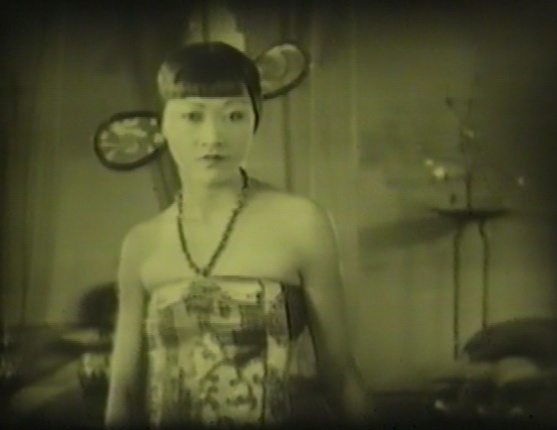
Wong in Thief of Baghdad Still (1924, PD) Arthur Edeson

Anti-Asian and Race Origins

Anti-Asian hate began in Europe when groups like the Huns began to invade and live amongst the Eastern Europeans in the 5th century CE creating the Turkic diaspora, pushing previously Iranian and Germanic groups into the Roman Empires realms.[1] After this, jealousy over wealth disputes continued with the silk trade until the arrival of the Mongols under Genghis Khan (1162-1227) between 1220-1240 CE who pushed for Mongol expansionism as far as Meissen Germany.[1] After this, greater awareness of the 'Orient' a mostly Iberian term returned to describe 'Oriental Moores/Saracens' homelands during the Reconquista to 'reconquer' the Al-Andalus (Muslim Medieval Iberia) from (718)1100-1492 CE, introduced Orientalism into European medieval literature. The Orient just being a word meaning 'East', derived from Roman sources (c.300CE, see Glossary).

Combined, these stories of outsider 'Hordes' (Mediterranean and Asian) invading Europe began to get European Christian scholars knickers in a twist. In their desperation to combat the 'Hordes' (other/perceived threat) and win the Crusades against the 'Saracens', scholars like Otto von Freising (1114-1158CE) began to make up myths about Christian kings who lived far far away in the East~, who would come to save them and together, Asia, or India, or Africa or ??? would come to save the poor European Christians. A prime example being Freising's Prester John (c.1145CE) who wanted to come from a country East of the Tigris to avenge the Crusaders, but unfortunately was a bit busy at the time so instead he decided he would just stay East instead.[3]

Prester John as a Mongol (c.1499, PD) Escargot Land

In 1177, Pope Alexander III (1105-1181) sent word, requesting Prester John's assistance from one of his now 72 kingdoms.[3] Prester John it seems was based on Otto's missattribution of Prester John with the Christian Buddhist dynasty of  Yelü Dashi in 1141 (1087-1143CE) defeating Iranian warlords.[4] With the changeover to the Yuan Dynasty these changes became more appealing to Italian and Viennese merchants when China for the first time was ruled by a non-Han ethnic group. At the court of the Berke, eventually came the Polo family whose son Marco (1254-1324) travelled extensively for as a merchant. Eventually returning home, Marco spread the tale of the 'Far East' and extensive silver deposits.

Later, the Iberian trade routes which were sent to find India, Goa specifically were cited by people like Christopher Columbus as #inspogoals for finding these countries where maybe Prester John existed in his Nestorian Christianity haven. Either way, by the time Vasco de Gama landed in Calicut India in 1498, this started the beginnings of Portuguese and Spanish colonial interests in Asia, supposedly to bring Jesus to the Pagans, but mostly to bring back silver and wealth via monopolized trade routes. During the next century when these Portuguese Jesuits landed in Japan by 1543, they had begun undermining local authorities, denying Kirishitan converts access to higher positions and generally followed the rule of 'Divide and conquer' to gain their ends.

Henry the Slave Trader (1470, PD) Vincent Panels

This had been done successfully since Henry the Navigator had landed in West Africa (1415) to find new trade routes, the most lucrative of which being the pre-existing trade network of slaves which stretched from Morocco to India at that time. Portuguese merchants promoted the idea of race based domination after Gomez de Eanes Zurara (in 1453) defended the Iberian slave trade by asserting that Africans or POC were inferior to their captors, therefore they were 'natural slaves'. Thus Zurara created the first distinct racial/racialist hierarchies or 'scientific racism'.[5] 

Dum Pope (c.1616, PD) Ruben

In order to have capital grow in the budgets of the Iberian kingdoms, foreign assets (slaves) were bought and kept in bondage, and this eventually was expanded to entire cities, cultures, counties, kingdoms and later countries whose borders were redrawn to suit European and often in early ventures Iberian needs (for example Puerto Rico). It was said 'racism is the consequence of slavery'.[6] Thus, Portugal became rich by subjugating other groups, pitting people against one another and eventually bringing an areas resources under its control to profit from these. Or as Francisco de Olandia explained during the San Felipe Incident (1596), 'Spain gained its empire by first converting native populations to Christianity with missionaries and then sending in conquistadors to join the newly converted in an invasion of conquest.'[7] After the Catholic Church encouraged this subjugation of fellow man under the Discovery Doctrine (see Dum Diversas 1453), this set in motion the wheels of race based hierarchies by the 16th century, which lead to the initiation of European global colonialism.

Anti-Chinese

Anti-Chinese sentiment had been around since the days of the 18th century when European powers began to trade with China under Chinese stipulations, Anti-Chinese because the 'free markets' were not 'free' enough for the European monopolies multinationals. When the Opium Wars and other European colonial wars kicked off in the 19th century, these brought instability to China and caused massive migrations from an impoverished Chinese mainland which later became known as the Century of Humiliation. This marked rise in emigration saw increased numbers of emigrants to Global North countries like Murica, Canada, Australia and Europe (not a country). 

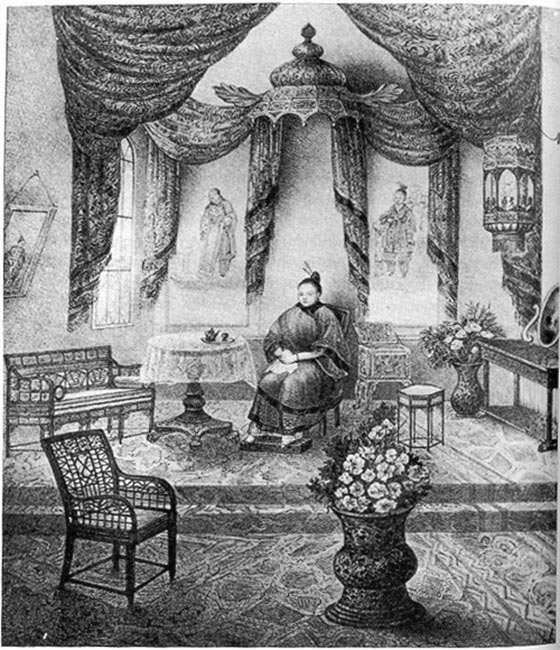
One of those who was trafficked or travelled to America was the young lady Afong Moy (c.1815-c.1850) who in 1834 was brought to be displayed in an early example of something akin to a Human Zoo, where she was put on display with other 'Chinese' objects in a bid to sell 'Chinese wares' for the American business brothers the Carnes. By 1848, she had ended up in the poor house when the brothers refused to send her home. Whilst Moy had some agency in dispelling othering rumours, she is also thought to have engendered early stereotypes about the Chinese being a 'backwards race' and was penultimately used a showpiece for selling furniture. Moy may have been the first instance of the China Doll trope, that is an East Asian women who performed for mostly White Men in a submissive manner, almost object like stillness. Bostonians referred to Moy as having 'her feet cut off and stuck into a couple of turnips' as 'well worth looking at' for their 'native nakedness' for example, that is a highly othered exotic image of womanhood to be gawked at, humiliating and depriving Moy of her dignity.[10] This morphed by 1850 into the highly subservient sex worker China Doll stereotype, sex workers making up a good majority of the 'frontiersmen' who wear at the beck and call of white men.

Afong Moy in situ (c.1839, PD) Carne Chinese Curiosities Catalogue Permission

As usual, Murica was one step ahead of all of the other ones and started to deprive Chinese American communities of their rights and dignity early on. In 1852 with the arrival of increasing numbers of gold miners to California, fresh off the genocide of Native Americans, Chinese emigrants were charged a head tax because they were Chinese.[8][9] The Chinese Exclusion Act of 1885 effectively banned all 'coolies' from entering Murica, a legal trend carried on into Canada between 1923-1947, Australia between 1901-1973 and in New Zealand the head tax continued from 1881-1944. Continuing this, Murica's seperate but equal assertions saw PlessyvFerguson (1896) until the fight for civil rights won its first major victory in 1965, saw the Chinese community segregated into 'China Towns', both to appease white majority opinion and to protect Chinese-Americans from white violence.

Yellow Peril

Put together, these stereotypes are part of the 'Yellow Peril' racist ideology which is specifically Anti-Asian or against 'yellow' people. The term 'Yellow Peril' began life as the German propaganda phrase of Die Gelbe Gefahr stemming from the Orientalist 'scholar' Max von Brandt in a time where Germany was courting the favour of European states like Tsarist Russia from 1871-1895. This marked favouritism towards White nation has been a consistent theme of German-Japanese Relations, intitally frosty at their start in 1861, and only thawed by the WWII. I say thawed as Japan was on the Allied side in WWI, defeating the Germans at Tsingtao and only actively courted German interests in the 1930s as it was worried about the attempted takeover of GEACPS resources in South East Asia.[9]

The Perilously Bad Racist Propaganda of the Kaiser (c.1895, PD) Wilhelm

Wilhelm II (1859-1941) was a staunchly white supremacist, overseeing the German genocide in Namibia (then German South West Africa) later on and implementing the rigid 'Gelbe Gefahr' stance against Japan when it became an active Imperial nation in 1895. In reaction to Japan winning against China, he sent the infamous 'Peoples of Europe, guard your most sacred goods' painting depicting the looming 'Other' threat on the horizon as anthropomorphically opposite 'Us' stood ready to defeat this 'Gelbe Gefahr'.[9]


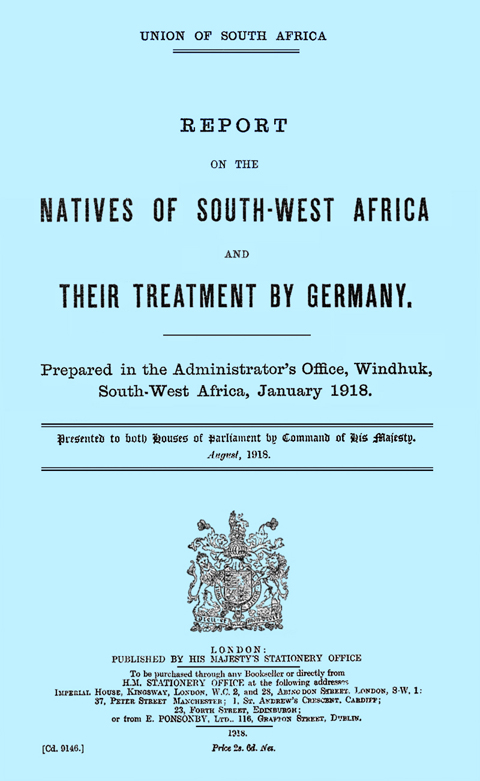
Long live the Glory Days of Britannia, Deutschland (c.1918, PD) HMSO


Dragon Lady

Begun with Wong Liu Tsong's stereotypically cast roles, the Dragon Lady trope began with the Character 'The Dragon Lady' in Terry and the Pirates (1934), a caricature of Wong's femme fatale roles from films like Daughter of the Dragon (1931). The Dragon Lady trope can be thought of as the feminine counterpart to Fu Manchu who first appeared in Sax Rohmers Zayat Kiss (1912), in turn based on the yellowface performer William Ellsworth Robinson (stage name Chung Ling Soo; 1861-1918) stage act arguably begun becuase Robinson was a sore loser who could not beat his Chinese counterpart Ching Ling Foo ( 金陵福 | 1854-1922) at illusion as a theatrical performer or even personality, going so far as to steal his identity, ethnicity, job and then went on to impersonate Chung Soo to spite Chung and humiliate Chung based on his work ethic (to his peers) and ethnic identity (or 'race').

The Dragon Lady Trope is a subversion of acceptable white proximity, that is how much a POC can pass for white. The Lotus Blossom stereotype predates the Dragon Lady precisely because the Blossom/Geisha trope placed Asian women as submissive, docile and subservient to white men in the stories of Loti, Long and Golden. By being dominating and assertive, Wong at least used her agency as a powerful star to pursue representation much in the manner of Hattie McDaniels. When McDaniels for instance was asked why she had played the Mamie stereotype in Gone with the Wind, it was in the acceptable Norms of the times and spaces McDaniels could move in, much as with Josephine Baker who had to wear a string of Bananas to be palatable to French Audiences to fit in the 'primitive' mold of colonial 'native' populations.

For all that Black and Asian beauties were on screen, this is unfortunately where these liberties ended. It is in being palatable, non-threatening and percieved as 'inferior' that some white people only feels safe with approaching POC, Queers and Indigenous topics and people. It is in this vein that when a celebrated Musician 80 years on perpetuates tired internalized racism/colourism tantamount to yellowface, that this emboldens the diseased types to carry on with their assertions of soft-power subjugation. 

Unless I am missing the point, this setup plays very well into the lascivious Geisha stereotype of sexually available objectified bodies, stemming from the Page Act 1875 which stereotyped Chinese and Asian women sex workers and going into the 1910's tropes catalogues, Orientalist stereotypes of the Lotus Blossom and 'Chinese Doll' types. It only appears to transform the trope at all by playing on the cues of the Dragon Lady trope as placing the feminine as superior to the male, even then ridiculing East Asian accents (perhaps Chinese, or Japanese?) and culture out of context and for money no less.

Kimonope

The Kimonope involved is not particularly familiar with anything other than the likes of Fools performative yellowface, stemming from a Wilsonian reworking of history. The trim is more reminiscient of Hanfu styles, the maquillaje irreverently evoking Tang-fastics. The thing resembles a red Furisode that had a lovechild with a golden bathrobe embroidered with dragons.

Overall, a very classic Kimonope, playing more into bizarre Orientalist tropes than trying to use KTC as a transformative way to develop new ways of affirming or normalizing POC agency in the Global North. 

Conclusion

Overall I think it is important to understand these are internalized notions of race popularized by the North American framework of it through the work of American Minstrel shows, Robinson the Fool, China Doll and Dragon Lady stereotypes and political narratives which pushed the Yellow Peril agenda. By wearing this Kimonope alone, it could be transformative in discussing how groups like African-Americans and Chinese-Americans subvert these stereotypes (think Bakers adoption of the primitive aesthetic, Wong's understanding of the times she lived in and her role as representative), however in playing dress up in another groups cultural adjacent garments Longinguistically, it is hoped Lee understands she is playing into the hands of groups who have purposefully subjugated, demeaned and profited from cultural appropriation in close proximity to racist supremacist ideals.

Bibliography

[1] https://en.wikipedia.org/wiki/History_of_the_Huns#Historical_impact

[2] https://en.wikipedia.org/wiki/Mongol_invasion_of_Europe

[3] http://www.mirandakaufmann.com/prester-john.html#:~:text=Prester%20John%20was%20a%20mythical,onwards%20increasingly%20associated%20with%20Ethiopia.

[4] https://en.wikipedia.org/wiki/Prester_John

[5] https://www.washingtonpost.com/local/a-brief-history-of-the-enduring-phony-science-that-perpetuates-white-supremacy/2019/04/29/20e6aef0-5aeb-11e9-a00e-050dc7b82693_story.html

[6] https://www.jstor.org/stable/2953315

[7] https://en.wikipedia.org/wiki/San_Felipe_incident_(1596)

[8] https://en.wikipedia.org/wiki/New_Zealand_head_tax

[9] Japanese-German Relations 1895-1945: War; Diplomacy and Public Opinion, The Yellow Peril and its influence on Japanese-German Relations, Iikura Akira, 2006, pp.80-81

[10] https://www.nyhistory.org/blogs/afong-moy-the-chinese-lady

[11] https://www.youtube.com/watch?v=l94vCs0vtbE

Essay Abstracts 

#1 Renee Vivien (1877 - 1909) --- Born Pauline Tarn, was an English lesbian poet. She wrote in French and perhaps English. She took up the style of the Symbolists and Parnassinism and was well known during the era of the Belle Epoque (the Beautiful Age) for producing Sapphic verse and living as an open quasi butch lesbian poet; her verse derived from the ancient poet Sapphos, also famed for her love of women.

# 2 Birth of the Kimonope --- Here I shall introduce the notion of the Kimonope, that is as a garment attached to the social construct of the 'Geisha' in North America. Kimonopes being Orientalized clothing, or 'negatively affiliated or exoticized ethnic dress' which lead to the perceived notion of the Kimono and Geiko as simultaneously both high and low culture to American culture makers, such as film, television, media, writers and some academics. An example of Kimonope are the tacky Halloween costumes you may find at the Dollar store.

#3 The Legacy of the MacArthur Dynasty on KTC & The Problem with the 'Traditional Garment' Argument --- The problem with arguing that the Kimono is a 'Traditional ethnic Garment' is that that assertion is in itself, arguably  Ethnocentrism, which to clarify is the imposition of, in this case, American values onto Japanese cultural values, belaying the 3 pronged pitchfork of idiocy. 

#4 Divine --- Government name Harris Glenn Milstead (1945-1988) was the infamous North American Queen & Drag artist. Specifically, Divine was known for being a character actor, part of her act is well-known for its eccentricity. My personal exposure to Drag lite was Pantomine Grand Dames as a kid, and later when my friends made me watch RuPaul in art classes, so to me this is nothing new, the over the top, the glitter, the upstaging is all part and parcel.

#5 Dori-Style or 21st century Kimono Fashion --- The Dori-Kimono style. Something which I just made up because in going over notes for the first 20 years of 21st century section of Kimono history, I noticed a lack of a clear catchall term for what was happening in Japan at the time, at least in English descriptions of the time. I use the term Dori as I do not want to coin an unrelated term to the topic, but I also am reticent to claim all of Street style as 'Tori' either, whilst a large number of streets upon which the subculture originates in all use the suffix 'dori' (the bottom of Takeshita-dori for example), thence Dori-style.

#6  The Tea Gown --- This essay will cover the aspects of how 19th century Japanese import textiles to Western countries were used and repurposed, as well what their desirability tells us about how Japanese design was regarded and the image which these people held of Japan through the Western lense and consciousness. This follows the progression of how Kimono can be used in the West from the undress of the 1860s, adapting silk bolts in the 1870s to high fashion western daywear, to the 1880s aesthetic movement and 1890 wholesale adoption in the Victorian age to being used prominently by society hostesses as tea gowns by the Edwardian period, and the subsequent change in Japanese export culture which we see in extant textile collections of Japanese textile in Western dresses of the periods.

#7 Kimono and the Pre-Raphaelite Painters --- This essay will cover the aspects of Kimono in the Portraiture of the Pre-Raphaelites. The Pre-Raphaelites were a group of British artists and writers active during the late Victorian period. Unlike the Royal Academy artists, this circle of painters operated outside of the established comfortable boundaries of the expected white, cisgender middle class audience of the Victorian age. The movement is notable for its inclusion and encouragement of women, and in portraying and engaging non-conventional beauty and beauties as figures from the Classical World alongside Religious, Mythological and Folklore Heroines into Victorian 'Femme Fatales'.

#8 Jokyo/Genroku Kimono Textile Culture and the new role of the Komin ---  This essay will return back to GKTC (Genroku Kimono Textile Culture ; 1688-1704) and JoKTC (Jokyo K.T.C. 1684-1688) and the new role of the Komin (Artist caste) in GKTC. JoKTC is notable for being the lead up to GKTC, JoKTC being characterised by its transitory nature in comparison to GKTC, which was far more bold in its relations to what Kosode could and should be. Komin entered the picture at this juncture, and I shall elaborate a little more here than in other posts about why that was. GKTC is notable for its elaborate, perhaps gaudy and innovative Kosode design features, whilst JoKTC more so for the enabling factors of the time, as a sort of incubatory GKTC.

#9 Tagasode Byobu - This essay will explore the art motif known in Japanese art as Tagasode Byobu ( Whose sleeves Screen) This motif is a recurring art form which was particularly popular during the Azuchi-Momoyama era ( 1568-1600 ) as a representation of the ways in which Buddhist sensibilities met with the fast changing events of the end of the Sengoku Jidai (1467-1615) and as an extension of the habit of wealthy women from military families came to own and store a large number of Kimono. Prior to this, Kin Byobu ( Golden Screens) for the most part depicted nature like Sesshuu Touyou (1420-1506) after Chinese Cha'an painter Muxi ( c.1210-1269 ) or 'flower-and-bird' scenes like those of Kano Eitoku (1543-1590), rather than humans or human paraphernalia as an extension of the Zen painting school of thought about materialism.

#10 Cultural Acculturation --- The topic of our essay is on the nature of Cultural Exchange in KTC which will be an ongoing mini-series throughout 2022. This covers the 1000CE - 1500 period in Japanese History.

#11 Cultural Appropriation --- The topic of our essay is on the nature of Cultural Appropriation which will be an ongoing mini-series throughout 2022. 

#12 Cultural Acculturation --- The topic of our essay is on the nature of Cultural Acculturation which will be an ongoing mini-series throughout 2022. This covers the Asuka (Hakuho), Nara (Tempyo), and Heian periods (500CE-1000CE) in Japanese History.

#13 Asai Ryoi --- This essay will explore the legacy of Asai Ryoi on KTC. Who was Asai Ryoi you may ask? Only one of the most important writers for the Ukiyo genre. Asai Ryoi ( act. 1661-1691 ) was a prolific Ukiyo-zoshi ( Books of the floating world )  or Kana-zoshi  ( Heimin Japanese Books ) writer. His leading 1661 publication, lambasted and satirized Buddhism and Samurai culture of restraint in favour of the Chonin lifestyle of worldy excess.

#14 Edith Craig --- This is a post regarding the early adoption and promulgation of the Kimono and Japanese aesthetics in the life of the wonderful Edith Craig (1869-1947), daughter of the famous actress Ellen Terry (1847-1928) and Edward William Godwin (1833-1886). Edith was also known as 'Edy'.

#15 European Banyans --- This essay will explore the European garment known as a Banyan, which originated as a European reaction to Kimono in the 17th century, popular until the end of the 18th century. The word Banyan originates from Arabic ( Banyaan), Portuguese (Banian), Tamil ( Vaaniyan ) and Gujarati ( Vaaniyo ) loanwords meaning 'Merchant'. Alternative versions saw the item fitted with buttons and ribbons to attach the two front sides together. The Banyan was worn by all genders and was particularly regarded in its first iterations as a gentlemanly or intellectual garment worn with a cap to cover the lack of a periwig, and later adopted by women and greatly influenced how British womens garments were designed with preference for comfort in removal of panniers whilst maintaining luxurious, modest 18th century fashions (see Robe a la Anglaise).

#16 Miss Universe and Kimonope --- This essay will explore how Beauty Pageants, principally Miss Universe, has engaged with KTC. While there may be real Kimono worn by Japanese and Japanese adjacent contestants in the 'National Costume' category, I will be focusing on the Kimonope worn by contestants. The idea of Kimono as a 'national costume' sparks interesting conversations on what 'national costumes' are, their target audiences, and how we form ideas about these things to begin with.

#17 Onna-E --- Womens pictures refers to the Nara, Heian and early Kamakura ( 710-1333CE ) practice of drawing women in elongated Hand scrolls, which today are regarded as feminine gender coded Art. Some of these narratives depict the lives of women, their extra diaries, or the literature they wrote. The Onna-E style derives from how mostly Heian women represented themselves and others as a performed self in these scrolls, drawing from their lives indoors at their and the imperial abodes. Whilst a limited number of women could read Kanji, they also used their knowledge of Chinese culture to create and inspire their own culture; the first truly Wamono aesthetics; and it was with these preconditions that Onna-E became established in the Japanese art scene alongside Yamato-E and Oshi-E.

#18 A Jamaican, a Monster and Portuguese bar in the Orient --- This essay looks at the Kimonope attire adopted by North American Dancehall artists Shenseea (Chinsea Linda Lee | 1996 - present ) for the video to 'ShenYeng Anthem'. Whilst the aesthetic derives mostly from East Asian, principally Chinese aesthetics, the language used is specifically Japanese, referring to Chinsea Linda Lee as 'ShenYeng Boss', a perpetuation of the Dragon Lady stereotype. The essay mostly charts how this ridiculous Kimonope derides from the North American Anti-Chinese movement and how this intersects with contemporary Orientalism.

I had exciting topics

 and then I got sick. and then I got heatstroke. and then my home became 35 degrees. and then i was sick again. and then i got mild food poi...