Aelbert Cuyp ( 1620-1691 | Aelbert Jacobszoon Cuyp/Cuijp ) was a Dutch 17th century painter.
He was born in Dordrecht.
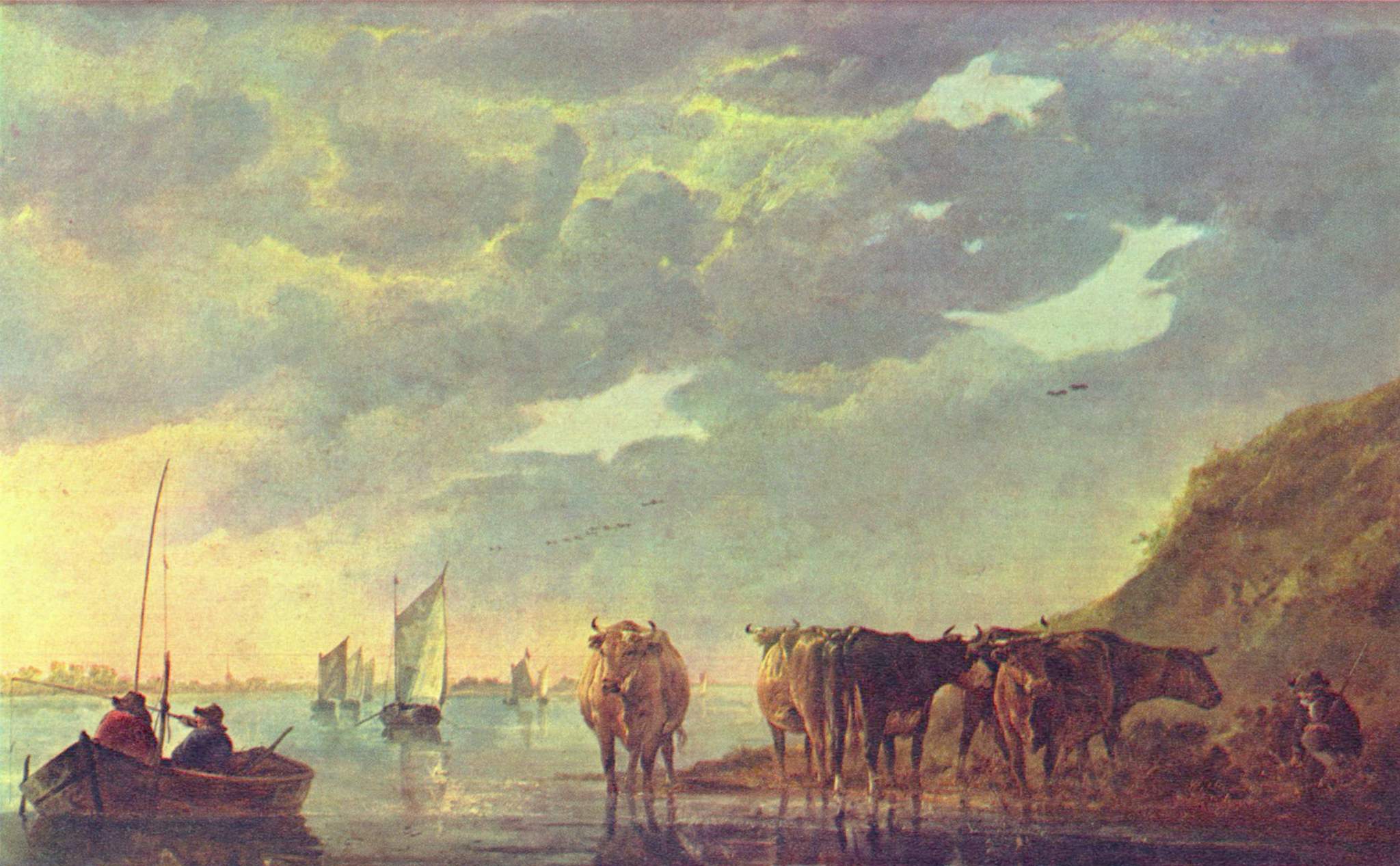
His family were all artists, with his uncle Benjamin and grandfather Gerrit being stained glass cartoon designers. He painted landscapes and he inherited a considerable fortune. Cuyp's father was his first teacher and they collaborated on many paintings throughout his lifetime. The most famous of a family of painters, the pupil of his father, Jacob Gerritszoon Cuyp (1594–1651/52 | Portraitist ), he is especially known for his large views of Dutch riverside scenes in a golden early morning or late afternoon light.
 ttththththt
View of Utrecht (c.1635, PD)
His period of activity as a painter is about 1635 and 1660.


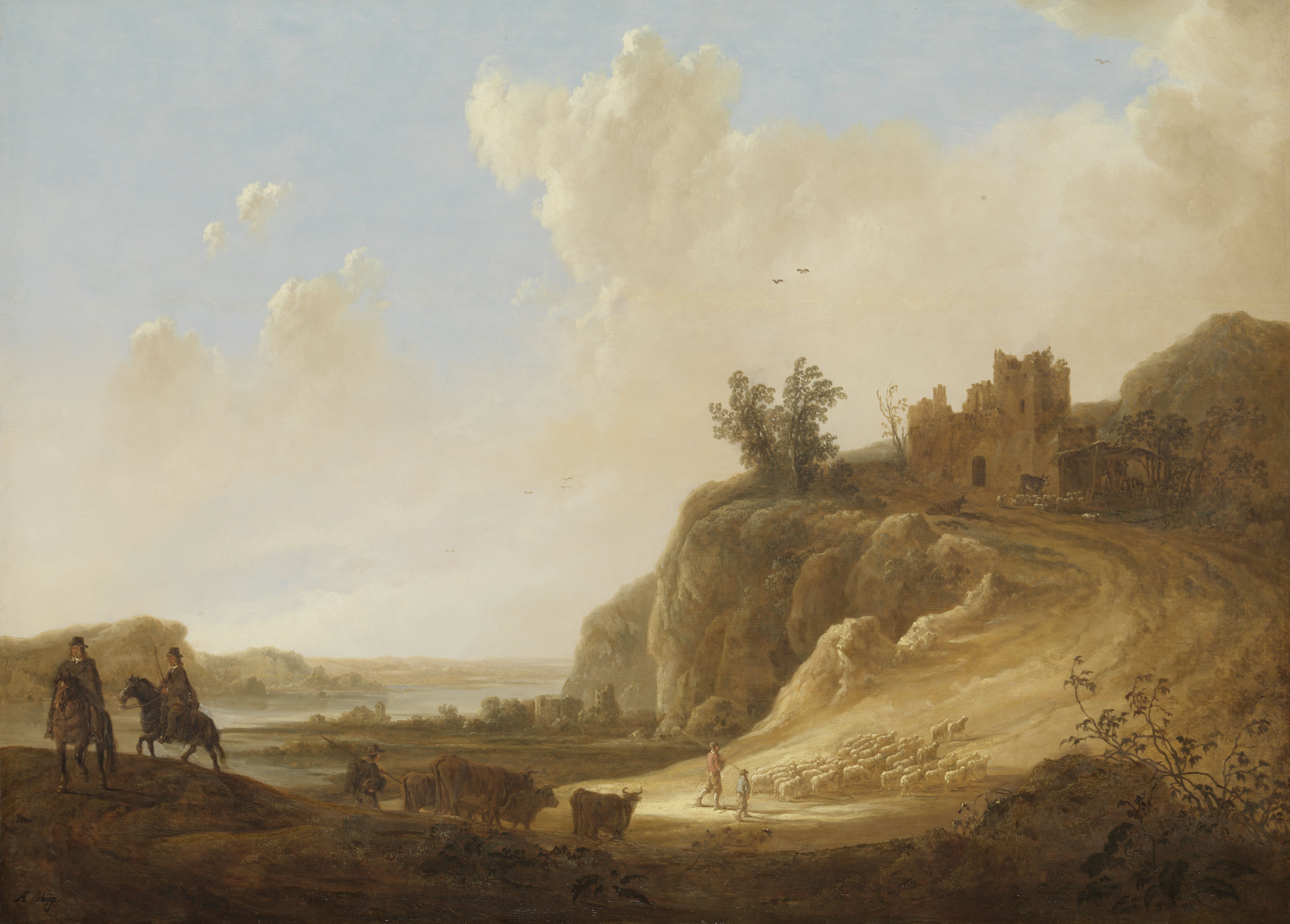
Cuyp learned tone from the exceptionally prolific Jan van Goyen, light from Jan Both and form from his father, Jacob Gerritsz Cuyp.
He is known to have been married to Cornelia Bosman in 1658, a date coinciding so directly with the end of his productivity as a painter that it has been accepted that his marriage played a role in the end of his artistic career.
Cuyp's "van Goyen phase" can be placed approximately in the early 1640s. Cuyp probably first encountered a painting by van Goyen in 1640 when van Goyen was, as Stephen Reiss points, out "at the height of [his] powers", noticeable in the comparison between two of Cuyp's landscape paintings inscribed 1639 where no properly formed style is apparent and the landscape backgrounds he painted two years later for two of his father's group portraits that are distinctly van Goyenesque. Cuyp took from van Goyen the straw yellow and light brown tones that are so apparent in his Dunes (1629) and the broken brush technique also very noticeable in that same work. This technique, a precursor to impressionism, is noted for the short brush strokes where the colors are not necessarily blended smoothly, e.g.Cuyp's River Scene, Two Men Conversing (1641).

The next phase is due to the influence of Jan Both. Sometime round 1645, Both, a native and resident of Utrecht, had just returned to his hometown from a trip to Rome. In Rome, Both had developed a new style of composition due, at least in part, to his interaction with Claude Lorrain. This new style was focused on changing the direction of light in the painting. Instead of the light being placed at right angles in relation to the line of vision, Both started moving it to a diagonal position from the back of the picture. In this new form of lighting, the artist (and viewer of the painting) faced the sun more or less contre-jour [backlighting]. Both, and subsequently Cuyp, used the advantages of this new lighting style to alter the sense of depth and luminosity possible in a painting. To make notice of these new capabilities, much use was made of elongated shadows. Cuyp was one of the first Dutch painters to appreciate this (limited to the mid-1640s) he did, more than any other contemporary Dutch artist, maximize the full chromatic scale for sunsets and sunrises.
Cuyp's third stylistic phase (which occurred throughout his career) is based on the influence of his father. The evidence for Aelbert's evolution to foreground figure painter is in the production of some paintings from 1645 to 1650 featuring foreground animals that do not fit with Jacob's style. While it is assumed that the younger Cuyp did work with his father initially to develop rudimentary talents, Aelbert became more focused on landscape paintings while Jacob was a portrait painter by profession. What is meant by stating that Aelbert learned from his father is that his eventual transition from a specifically landscape painter to the involvement of foreground figures is attributed to his interaction with his father Jacob. Cuyp's landscapes were based on reality and on his own invention of what an enchanting landscape should be.


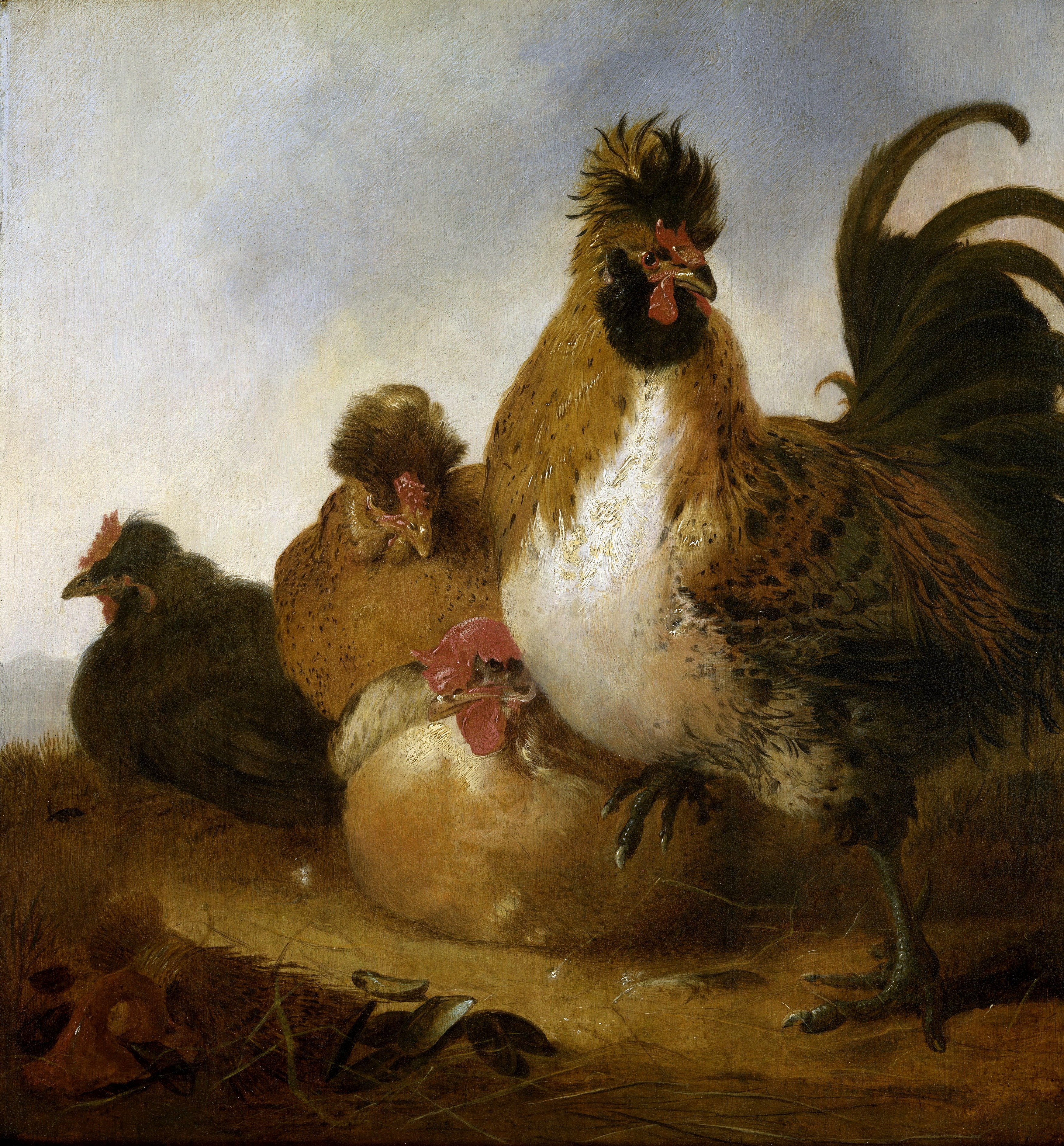


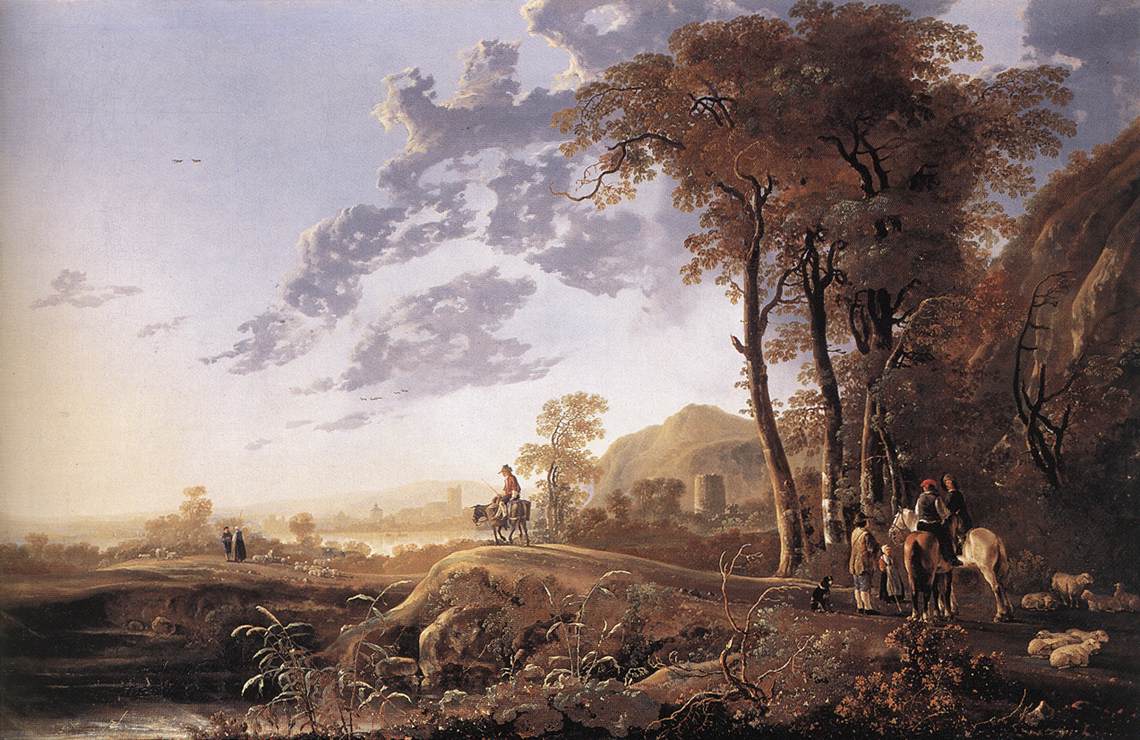
A Cuyp drawing may look like he intended it to be a finished work of art, but it was most likely taken back to the studio and used as a reference for his paintings. Often the same section of a sketch can be found in several different pictures. Conversely, paintings which came out of his workshop that were not necessarily physically worked on by Cuyp but merely overseen by him technically, were marked with A.C. to show that it was his instruction which saw the paintings' completion. Cuyp's pupils and assistants often worked on paintings in his studio, and so most of the work of a painting could be done without Cuyp ever touching the canvas, but merely approving its finality.
After he married Cornelia Boschman in 1658, the number of works produced by him declined almost to nothing. This may have been because his wife was a very religious woman and a not very big patron of the arts. It could also be that he became more active in the church under his wife's guidance. In 1659, after his marriage, Cuyp became the deacon of the reformed church.
Cuyp was a devout Calvinist and when he died, there were no paintings of other artists found in his home in 1691.
His highly influenced style which incorporated 'Italianate lighting' from Jan Both, broken brush technique and atonality from Jan van Goyen, and his ever-developing style from his father Jacob Gerritsz Cuyp was studied acutely by his most prominent follower, Abraham van Calraet. Calraet mimicked Cuyp's style, incorporating the same aspects, and produced similar landscapes to that of the latter.


No comments:
Post a Comment