See previous post, still updating.

Woman writing a letter (2020, CC4.0) Marta Stankevica
Enjoy your weekend.
See previous post, still updating.
Giving an extraordinarily loose definition of art here:_, some artists I like:
1
1014uuu
A
Absolutely Abby Keen
Abel Gower
Abel Tilahun
Abdur Rahman Chughtai
Adachi Ginko
Adolfo Hohenstein
Adriaen Coorte
Aert van der Neer
Aelbert Cuyp
Emperor Ai
Ai Yamaguchi
Agnes Miller Parker
Akazome Emon
Akira Toriyama
Akira Uno (Aquirax)
Alan Booth
Alan Watts
Albert Joseph Moore
Albrecht Altdorfer
Alexander Bening
Alexander Cozens
Alexander Nasmyth
Alfred, Duke of Saxe-Coburg and Gotha
Alfred East
Alfred Garth Jones
Alice Hart & Ernest
Algernon Bertram Freeman-Mitford
Ambrose Heal
Amelia Opie and John
Andrew Tuer
Andy Zito
Angelica Kaufmann
Angus McBean
Anna Brassey
Anna Cattish
Anna Gurney
Anne, Countess of Exeter, wife of the 5th Earl
Anne Harriet Fish
Anne Killigrew
Anna Mary Howitt
Annie French
Annie Swynnerton
Anthony Frederick Augustus Sandys
Anton Mirou
Antonio Gramsci [9]
Antonio Lopez
Alan Aldridge
Allan Ramsay
Allen Seaby
Alphonse Mucha
Arabella Louisa Rankin
Archibald Bertram Webb
Archie Dickens
Arkhip Kuindzhi
Arthur Hart-Synnot & Masa Suzuki
Arthur Hughes
Arthur Lasenby Liberty
Arthur Mackmurdo
Arthur Rackham
Arthur Rigden Read
Arthur Silver
Arthur Waley
Artus Scheiner
Asai Ryoi
Atkinson Grimshaw
Aubrey Beardsley
Augustus Leopold Egg
Aya Takano
B
Banri Sendo and Shibuko Ebara
Barbara Hepworth
Barbara Hulanicki
Bartholomeus Breenbergh
Basil Hall Chamberlain
Beatrix Potter
Benjamin Robert Haydon
Benjamin West
Bernard Leach
Bertha Lum
Bess of Hardwick
Billie Holiday
Bob Masse
Bridget Louise Riley
Byam Shaw
Lord Byron
C
Canaletto in London
Catherine Sabine Mann
Carmen Blacker
Cargill Gilston Knott
Lady Caroline Lamb
Caroline Smith
Carton Moore Park
Carstian Luyckx
Cecil Beaton
Celihime
Charles Altamont Doyle
Charles Bartlett
Charles Conder
Charles Edwin Fripp
Charles Ginner
Charles Holmes
Charles Maries
Charles Rennie Mackintosh
Charles Robert Cockerell
Charles Robinson
Charles William Bartlett
Charles William Mansel Lewis
Charles Woolnough
Charlotte Mecklenburg-Strelitz
Chen Chun/Baofu
Chen Hongshou
Chiho Aoshima
Chris Price of Biba
Christopher Dresser
Christopher Williams of Wales
Christopher Richard Wynne Nevinson
Cicely Mary Barker
Claes Janszoon Visscher
Claude Allin Shepperson
Clementina Hawarden
Coby Whitcomb
Coles Philips
Collingwood Ingram
Cornelis Massys
Crisalys
D
Daniel Cottier
Daniel McClise
Dante Gabriel Rossetti
David Blackwood
David Roberts
Detmold Twins
Dirck van Delen
Donyale Luna
Dora Carrington
Dorothea Banks, Lady Banks
Doris Clare Zinkeisen
Dorothy M Wheeler
Dorothy Wilding
Douglas Sladen
E
Eadweard Muybridge
Edith Craig
Edith Garrud
Edith Martineau
Edmund Dulac
Edmund Morel
Edward Atkinson Hornel
Edward Burne-Jones
Edward Calvert
Edward Clifford
Edward Fairbrother Strange
Edward J Poynter
Edward Lear
Edward Louis Lawrenson
Edward Okun
Edward Robert Hughes
Edward Theodore Compton
Edward Thomas Daniell
Edwin Lester Linden Arnold
Edward Wadsworth
Edward William Godwin
Edwin Landseer
Eiichi Yamamoto
Eileen Agar
Eileen Gray
Einar Nerman
Eisaku Kubunouchi
Egon Schiele
Eleanor Fortescue-Brickdale
Eleanor S March
Ellen Terry
Elisabeth Sonrel
Elizabeth Berube
Elizabeth de Bohun, Countess of Northampton
Elizabeth Ellen Houghton
Lady Elizabeth Germain
Elizabeth Gould
Princess Elizabeth Hesse-Homburg Gravine of the United Kingdom
Elizabeth Inchbald
Elizabeth Keith
Elizabeth Maitland
Elizabeth Seymour
Elizabeth Siddall
Elizabeth Soyer
Elizabeth Tudor
Emma Florence Harrison
Emma Hamilton
Emma Thompson Butler
Emanuel de Witte
Endre Penovac
Emily Stannard
Emily Warren
Eric Kincaid
Ernest Gimson
Ernest Henry Wilson
Ernest Mason Satow
Ernest Thomas Bethell
Ernesto Garcia Cabral
Esther Inglis
Ethel Jackson Morris
Ethel Larcombe
Eugenie Groh
Evelyn de Morgan
Evelyn Paul
E W Haslehurst
Eyvind Earle
F
Fabius Lorenzo
Fan Kuan/Zhongzheng
Felice Beato
F Kaorism
Florence Mary Anderson
Florence Susan Harrison
Ford Madox Brown
Frances Annabella Rowden
Frances Anne Kemble
Frances M Macnair
Francis Bacon
Francis Donkin Bedford
Francis Oliver Finch
Francis Swaine
Francis William Bourdillion
Frank Brangwyn
Frank Cadogan Cowper
Frank Morley Fletcher
Frank Toovey Lake [18]
Frederic Walker
Frederick Elkington
Frederick George Cotman (the Primrose Girl)
Frederick Leighton
Frederick Ringer
Frederick Sandys
Frederick Williams who died at St.Fillans
Frederick William Sutton
Frida Hansen
Fujishima Takeji
Fukai Kuni
Fujio Yoshida
G
Gabriel Metsu
George Bailey Sansom
George de Feure
George Clausen
George Frederick Watts
George Goring, Court of Wards for Elizabeth I
George Henry of Scotland
George Henry Broughton
George Lambert of England and the United Kingdom
George Morland
George Phillips of London (Curvilinear Ornament)
George Price Boyce
George Richmond
George Romney
George Sheringham
Georgiana Cavendish, Duchess of Devonshire
Gerda Wegener
Gerard ter Borch
Gerard van Honthorst
Gerard Soest
Gerrit Berckheyde
Gerrit Dou
Gladys Peto
Gluck
Gnyuki Torimaru
Gonnoske Komai
Gordon Ambrose de Lisle Lee
Grace James
Grayson Perry
Gunji Koizumi
Gustav Dore
Gustav Klimt
Gustave Adolphe Mossa
Guy Billout
Gyo Fujikawa
H
Hans Holbein the Younger
Hamada Shoji
Harriet Leveson-Gower, Countess Granville
Harry Clarke
Harry Smith Parkes
Hasegawa Kyuzo
Hasegawa Sakon
Hasegawa Sotaku
Hasegawa Soya
Hasegawa Togaku
Hasegawa Tohaku
Hasegawa Yōshin
Hayashi Gonsuke
Helen Caddick
Helen Dryden
Helen Huth
Helen G Stevenson
Helen Jacobs
Helen Stratton
Helen Waddell
Hendrick Danckerts
Hendrick Goltzius
Henriette Stern Majeska
Henrietta Clive, Countess of Powis
Henrietta Rae
Henry Bright
Henry Clarence Whaite
Henry Clive
Henry Dyer
Henry Faulds
Henry Fuseli
Henry Justice Ford
Henry Matthew Brock
Henry Mayo Bateman
Henry Napper
Henry Peach Robinson
Henri Privat-Livemont
Henry Ryland
Henry Scott Tuke
Henry Slater
Henry Spencer Palmer
Henry William Batley
Herbert Granville Fell
Herbert Hughes Stanton
Hercules Seghers
Herri met de Bles
Hills and
Honor Charlotte Appleton
Horace Walpole
Hubert von Herkomer
I
Ian Cheyne
Ichijou Narumi
Ichiro Tsuruta
Ida Rentoul Outhwaite
Ikehara Shigeto
Irene Clyde
Ito Jakuchu
Isabella Bird
Isaac Fuller
Ise no Miyasudokoro
Ishibashi Kazunori
Iso Mutsu & Mutsu Hirokichi
Ivan Aivazovsky
Ivan Morris
Ivy Anne Ellis
Iwasa Matabei
J
Jacob Ochtervelt
James Bulwer
James Giles
James Murdoch
James Lamb
James Nairn
James Northcote
James Sillett
James Thornhill
James Ward
James Watterston Herald
Jamie Lee Reardin
Jan van Eyck
Jan van Goyen
Jan van de Velde 2
Jan van Toorop
Jan Saenredam
Jan Sanders van Hemessen
Jan Wellens de Cock
Janis Goodman
Jang Bogo
Jean Giraud
Jean Shrimpton
Jennie Harbour
Jenny Kaori
Jessica Hallyar
Jessica Louisa Garrow
Jessie Marion King
Jia Nanfeng
Jisoo Kim
J. G. Ballard
Joachim Patinir
Joachim Wtewael
Joan Carlile
Joan Kiddell Martin
Johannes Mytens
Johannes Vermeer
John Archibald Austen
John Atkinson Grimshaw
John Batchelor [15]
John Bauer
John Black Reddie
John Brett
John Byam Liston Shaw
John Carter the early neo-Gothic Architect
John Crome
John Dickson Batten
John Duncan
John Edgar Platt
John Everett Millais
John F Lowder
John Frederick Herring, Sr.
John Harington Gubbins
John Hall Thorpe
John Hassell
John Hayls
John Ilingworth Kay
John Frederick William Herschel, 1st Baronet
John Linnell
John Locke
John Martin
John Micheal Wright
John Middleton
John Milne & Tone Horikawa Milne
John Newberry
John Egerton Christmas Piper
John Riley
John Robert Cozens
John Singer Sargeant
John Souch
John Thomas Serres
John Watkiss
John William Inchbold
John William North
John William Robertson Scott
John William Waterhouse
John Whitcomb
John White Abbott
Joos de Momper
Joseph Crawhall III
Joseph Mallord William Turner
Joseph Obadiah Westwood
Joseph Stannard
Joseph Wright of Derby
Josetsu
Josiah Conder
Josiah Wood Whymper
Julia Tatham of the Ancients
Juno Calypso
Jules Cheret
K
Kaburagi Kiyokata
Kamisaka Sekka
Kano Hogai
Karel de Neree tot Babberich
Kate Baylay
Kate Greenaway
Kate Hallyar
Kate Perugini
Katie Blackmore
Katherine Cameron
Katherine Jowett
Katou Rei
Katsuhiro Otomo
Katsushika Hokusai
Kawai Kanjiro
Kay Nielson
Kazimierz Stabrowski
Kazuo Kamimura
Ken'ichi Yoshida
Kenneth Paul Block
Kitano Tsunetomi
Kishichiro Okura
Kobayashi Eitaku
Kobayashi Kiyochika
Empress Koken
Kokki Miyake
Empress Komyo
Konrad Witz
KotteriiArt
Kouji Fukiya
Kouji Kumeta
Kowada Shoryo
Kubo Shunman
Kumasaku Tomita
Kunisawa Shinkuro
Kumashiro Yuhi
Kurihara Chuuji
L
Lallie Charles
Laura Mulvey
Laura Therese Alma-Tadema
Lawrence Alma-Tadema
Li Bai
Liang Kai
Lichfield Gospels
Lilian Boldron
Limbourg brothers
Lina Iris Viktor
Lindsay Phillip Butterfield
Lisa Brice
Lisbeth Zwerger
Liu Kuo-Sung
Leonora Carrington
Lewis Baumer
Lewis Day
Louisa Jopling
Louise Rayner
L S Lowry
Lucas Gassel
Lucy Christiana, Lady Duff-Gordon
Lui Shou-Kwan
M
Mabel Dearmer
Mabel Lucie Attwell
Mabel Royd
Malcolm Drummond
Maria van Oosterwijck
Margaret Bentinck
Margaret Cavendish, the Duchess of Newcastle-upon-Tyne
Margaret Clark
Margaret Holsewyther
Margaret Lemon
Margaret MacDonald Mackintosh
Margaret Sarah Carpenter
Margaret Stokes
Makita Haruka
Makoto Takahashi
Masaaki Sasamoto
Marcus Stone
Maria Verelst
Marianne North
Marijke Kroger Dunham
Marion Adnams
Marjorie Miller
Maruti Bitamin
Maruyama Okyo
Mary Anne Barker
Mary Beale
Mary Delaney
Mary Elizabeth Groom
Mary Impey
Mary Francis Ames
Mary Margaret Busk
Mary Lemon Waller
Mary Linwood
Mary Somerville
Mary Stuart II
Mary Wollstonecraft Shelley
Masaaki Sakamoto/Masaaki Sasamoto
Masabumi Hosono
Masao Ebina
Masataka Taketsuru and Rita Taketsuru
Masayasu Uchida
Mati Klarwein
Matsumoto Reiji
Matsuuro Shiori
Matilda Chaplin Ayrton
Maurice McGonigall
Maxwell Ashby Armfield
Meredith Frampton
Michael Buckworth Bailey
Michel del Campo
Mikiyo Tsuda
Miho Hirano
Millicent Sowerby
Minoru Genda
Miroslav Sasek
Mixi Zia
Monionium
Morris Scott Dollens
Mortimer Menpes
MS. Ashmole 1504
MS Bodley 264
MS Bodley 426
MS. Digby 36
Murasaki Shikibu
Muqi Fachang
Myles Birket Foster
N
Nakamura Asumiko
Nakamura Hochu
Nakamura Yusuke
Nao Tsukiji
Natsume Soseki
Neil Gordon Munro
Neil Pittaway
Nicolas Hely Hutchinson
Nicolas Sprimont
Nicholas Crisp
Nicholas Hilliard
Nicolaes van Verendael
Nigel Coates
Nina Hamnett
Norah Neilson Gray
Noel Coward
Notmusa
O
Ogata Gekko
Ogata Korin
Olaf Gulbransson
Omocat
Ooya Chiki
Orrm
Ormesby Psalter
Osamu Tezuka
Oscar Rejlander
Otto Schmidt
Otome Sakamoto
Owen Gent
P
Patten Wilson
Paul Sandby
Penelope Carwardine
Percy James Billinghurst
Peter De Wint
Peter Lely
Philip Laszlo
Peter Monamy
Peter Rand
Phil May
Phoebe Anna Traquair
Pierre Schmidt
Pieter Aertsen
Pieter Breughel the Elder
Pieter Claesz
Pieter de Hooch
Psalter of Mary de Bohun
Psalter with the Gloss by Rogerio
R
Rachel Agatha Keen
Ralph or Randolph Caldecott
Ranald Macdonald
Reginald Horace Blyth
Reginald Farrer
Reiko Kaneko
Rene Gruau
Renée Vivien
Richard II
Richard Allen of London
Richard Cocks
Richard Dadd
Richard Doyle
Richard Ernest Eurich
Richard Gray
Richard Parks Bonington
Richard Wilson of Wales
Richard Wright of London and Glasgow
Riyoko Ikeda
Robert Anning Bell
Robert Bevan
Robert Cleveley
Robert Peake the Elder
Robert Wynn of Plas Mawr
Robert Orgill Leman
Robert Lyminge
Robert Smythson
Roger Shimomura
Rolf Armstrong
Ronald Egerton Balfour
Ronald Victor Courtenay Bodley, MC
Rutherford Alcock
Ryuson Chuzo Matsuyama
S
Sadayakko Kawakami
Sakamoto Ryoma
Samayama Jiro
Samuel Cocking
Samuel Palmer
Samuel Prout
Samuel Taylor Coleridge
Sam(uel) Youn
Sarah Capel-Coningsby, Countess of Essex
Sarah Sophia Banks
Sarah Sherwood Clarke
Sei Shonagon
Seiichi Hayashi
Sidney Sime
Sergius Hruby
Sesson Shukei
Sessue Hayakawa
Simeon Solomon
Simon Bening
Simon Harlow
Shangguan Waner
Sherard Osborn
Shigeru Mizuki
Shingo Tamagawa
Shinji Ikegawa
Shirazeh Houshiary
Shima Seien
Shimamura Kanzan
Shimomura Kanzan
Sophie Gengembre Anderson
Sophie Knight RWS
Stanislaus Soutten Langley
Stanley Spencer
Stella Mead
Prince Shotoku
Suematsu Kencho
Su/suo Shi
Susan Beatrice Pearse
Susan Isabel Dacre
Susan Penelope Rosse
Susannah Hornebolt
Suzuki Kason
Sydney, Lady Morgan
Sydney Lee of the Society of Wood Engravers
Sylvan G Boxsius
T
Princess Taiping
Takabatake Kasho
Takashi Murakami
Takuya Kishi ( きし夛句弥 )
Talwyn Morris
Tani Buncho
Tama Kurokawa
Tatsuno Kingo
Tite Kubo
Thomas Bake Glover
Thomas Baxter of Rainthorpe
Thomas Chippendale
Thomas Cole
Thomas Cooper Gotch
Thomas Crane
Thomas Creswick
Thomas Gainsborough
Thomas Girtin
Thomas Heath Robinson
Thomas Hobbes
Thomas James Waters
Thomas Jeckyll
Thomas Jones
Thomas Malton
Thomas Millie Dow
Thomas More the Lord Chancellor
Sir Thomas Myddelton
Thomas Owen of Condover
Thomas Shotter Boys
Thomas William Cutler
Thomas Wilkes Webb
Thomas Wright Blakiston [16]
Thores Shibamoto
Timon Screech
Tobias Verhaecht
Tomimoto Kenkichi
Tori Busshi
Toshiaki Kato
Tracy Liang
Tsuda Umeko
Tsuru Aoki
U
Ukida Ikkei
Uemura Shoen
Uetsuji Shotaro
Uriemon Eaton
Utako Shimoda
Utagawa Wakana
Utomaru
V
Victor Ngai
Victoria Susanna Colkett
Viktor Paul Mohn
W
Walter Crane
Walter Greaves
Walter Kerr
Walter Joseph Phillips
Wang Wei
Warwick Goble
Watanabe Shiko
Watson Fothergill
Welby Sherman
Wendy Buttrose
Wey Ling Nanzi
Wilfrid Weatherall
William Anderson
William Arnold (master mason)
William Beckford
William Beechey
William Bell Scott
William Blake
William Bradley
William Brown McDougall
William Burges
William Capon
William Cecil of Burghley
William Collin of the Royal Academy of Britain
William Collingwood Smith
William Curtis Green
William Daniell
William Eden Nesfield
William Edward Ayrton
William Empson
William Eyre Arthur
William Giles
William George Aston
William Heath Robinson
William Holman Hunt
William Jackson Hooker
William Joy
William Kinnimond Burton
William Morris
William Pogany
William Powell Frith
William Robert Broughton
William Robinson
William Segar
William Shakespeare
William Stephen Coleman
William Williams
William Wyndham of Felbrigg Hall
Wolf Huber
Wu Zetian
Wucius Wong
X
X [6]
Xi Shi
Xiwangmu (西王母)
Xu Baozhuan
Xu Gu
Xu Wei
Y
Yakumo Koizumi
Yamazaki Joryu
Yamaguchi Akira
Yan Liben
Yanagi Soetsu
Yang Guifei
Yasodhara
Yei Theodora Ozaki
Yoshida Shoin
Yoshimi Ohtani
Yoshio Markino
Yoshitako Amano
Yoshitomo Nara
Yuefu writers
Yuki Kawatsu
Yuzuru Hiraga [7][8]
Z
Empress Zhang
Zhang Yanyuan
Zhou Fang
Zhou Chen
Zipcy
Bibliography
[1] https://tokyoartnavi.jp/en/column/40466/
[2] https://arboretum.harvard.edu/expeditions/expedition-to-japan/
[3] https://books.google.co.jp/books?id=BZ1BAQAAMAAJ&pg=PA228&dq=Gonnoske+Komai&hl=en&newbks=1&newbks_redir=0&sa=X&ved=2ahUKEwi6maKnleSNAxXNs1YBHYQkDvEQuwV6BAgEEAc#v=onepage&q=Gonnoske%20Komai&f=false
[4] https://cetapsrepository.letras.up.pt/items/52de4b32-6c36-490a-9fe8-e3bb206c773e
[5] https://en.wikipedia.org/wiki/Sen_Yan%27s_Devotion
[6] https://mainichi.jp/english/articles/20201230/p2a/00m/0na/016000c
[7] https://warshipprojects.com/2018/04/24/the-yamato-class-genesis/#:~:text=The%20Imperial%20Japanese%20Navy's%20Yamato%20class'%20design%20history.&text=These%20British%20companies%20offered%20many%20designs%20up%20until%20at%20least%201920
[8] https://www.avalanchepress.com/Yamato.php
[9] https://en.wikipedia.org/wiki/Subaltern_(postcolonialism)
[10] 文化変容 | Cultural Acculturation | 500CE-1000CE | Essay #12 | CA Miniseries B
[10] Extract
Cultural Appropriation
EX: Erasure of acknowledgement of Tang aesthetics as simply Wamono by the later centuries
Cultural Appreciation: the acknowledged or appropriate adoption of the practices, customs, or aesthetics of one social or ethnic group by members of another community or society
EX: The adoption of Buddhism in Japan in 552
Cultural Assimilation: the process in which a minority group or culture comes to resemble a dominant group or assume the values, behaviors, and beliefs of another group
EX: Kimono takes on the form of the Tang Chinese court dress
Pizza Effect: the phenomenon of elements of a nation's or people's culture being transformed or at least more fully embraced elsewhere, then re-imported to their culture of origin, or the way in which a community's self-understanding is influenced by foreign sources.
EX: Hiogi culture being exported to China and returned to Japan as part of Buddhist aesthetics in turn affecting popular motifs[1]
Transculturation: the phenomenon of merging and converging cultures
EX: Kasane-no-irome (襲の色目|coloured layering) which adhered to the Chinese calendar of 72 seasons became fashionable as indoor wear for women on their Junihitoe[4]
Cultural Heterogeneity: the differences in cultural identity related to class, ethnicity, language, traditions, religion, sense of place etc, that can make it more or less difficult for people to communicate, trust and co-operate with each-other
EX: An increasing distancing away from China on Japans behalf as they went from being the 'dwarf' nation, to the 'harmony' nation of Wa, which is reflected in the increasing interest in local Japanese folklore and dress is affected by adopting Wamono literature of the Manyoshu (600-759) and Kokin Wakashu (887-920) anthologies being used to make reference to Japanese landscape scenes on textiles rather than the Chinese classics[2]
Cross-cultural competence: a persons ability to understand people from different cultures and engage with them effectively
EX: The competence of Junihitoe wearers could be seen in their ability to understand classical references to Chinese poetry and aesthetics
Cultural Diffusion: the spread of cultural items—such as ideas, styles, religions, technologies, languages—between individuals, whether within a single culture or from one culture to another e.g- the spread of Western business suits in the 20th century
EX: In this time period, technologies for creating new textile goods and decoration would emerge, one of which was embroidery which came from China into Japan by the 6th century.[5] This technique which was first used to decorate Emperors trinkets and Buddhist Mandalas, eventually becoming key to decorating Junihitoe and was spread by Korean embroiderers as well
Cultural pluralism: the practice of various ethnic groups collaborating and entering into a dialogue with one another without having to sacrifice their particular identities
EX: During this time, this became increasingly less interesting to the growing Japanese nobility who had begun to care more about their lands than shiny gifts and trinkets from abroad. An example may be the adoption of Kesa aesthetics and textiles, which became increasingly more lavish and gold as time wore on[6]
Polyculturalism: the ideological approach to the consequences of intercultural engagements within a geographical area which emphasises similarities between, and the enduring interconnectedness of, groups which self-identify as distinct, thus blurring the boundaries which may be perceived by members of those groups. Multiculturalism instead thought to emphasise difference and separateness, being divisive and harmful to social cohesion.
EX: Buddhism aesthetics in the formation of how space and desire played a role in beauty, such as embracing Mujou ( Impermenant Transition | ) qualities such as admiring falling cherry blossom and the appropriate placement of space in a composition or design, which transferred over to KTC by the Heian era[7][8][9]
Multiculturalism: the coexistence of people with many cultural identities in a common state, society, or community, also though in the prescriptive sense to refer to the political theory framework that individual cultures, groups or ethnic peoples be given their own space in the wider society which has led some to criticise policymakers use of multiculturalism as divisive (should only be considered post 1996 world due to the times tightening of immigration, the enforcing of borders and encouragement of national identity rather than encouraging individuals to think of themselves as global citizens)
EX: Korean immigrants in this era having to take on Japanese identities in the Japanese legal framework
Cultural diversity: the quality of diverse or different cultures, as opposed to monoculture, the global monoculture, or a homogenization of cultures, akin to cultural evolution. The term cultural diversity can also refer to having different cultures respect each other's differences.
EX: In contributing to KTC at this time, cultural diversity is represented by the increasing number of works including Buddhist figures from India and China who were represented in the new aesthetics influenced in turn by a mixture of Buddhist and Shinto aesthetics
Monolithic culture: a societal construct or organisation like religion which often has negative connotations in our society. For example, the percived rigidity and homogeneity of a monolithic culture that is not open to new ideas, these is their truest form are the few hunter-gatherer societies or uncontacted societies like those few found in the Amazon rainforest.
EX: Women often in this time had a better understanding of Wamono than some men in high positions, particularly in the art of writing or Onnade ( womens writing | 女手 ). The Nikki ( diary | 日記) of these nobles, for men the Tosa Nikki ( Tosa Diary | 土佐日記 | 935 ) and women authors the Kagerō Nikki ( Mayfly Diary | 蜻蛉日記 | 974) gave rise to the first uniquely Wamono genre as such Nikki Bungaku ( Diary Genre | 日記文学 )[3] This was a catalyst for KTC in the later Heian period, which through Onnade created Wamono and Wafuku points of reference originating in the Monolithic writings of 'Japanese' upper class court noblewomen
[11] Onna-E ( 女絵 | Womens pictures ) refers to the Nara, Heian and early Kamakura ( 710-1333CE ) practice of drawing women in elongated Hand scrolls, which today are regarded as feminine gender coded Art. Some of these narratives depict the lives of women, their extra diaries, or the literature they wrote. The Onna-E style derives from how mostly Heian women represented themselves and others as a performed self in these scrolls, drawing from their lives indoors at their and the imperial abodes. Whilst a limited number of women could read Kanji, they also used their knowledge of Chinese culture to create and inspire their own culture; the first truly Wamono aesthetics; and it was with these preconditions that Onna-E became established in the Japanese art scene alongside Yamato-E and Oshi-E.
11 Isometric Projection Fukinuki Yatai
[11] https://www.khanacademy.org/humanities/art-asia/art-japan/nara-period/a/the-shsin-repository-and-its-treasure
[12] https://rmda.kulib.kyoto-u.ac.jp/en/item/rb00013523/explanation/otogi_08
[13] https://en.wikipedia.org/wiki/Traditional_colors_of_Japan
[14] Hikime and Kagihana
[15] https://www2s.biglobe.ne.jp/~matu-emk/bachel.html
[16] https://www.ulethbridge.ca/lib/digitized_collections/ourheritage/index_page_stuff/Following_Trails/Blakiston/Blakiston_Japan1.html
[17] https://grahamthomasauthor.wordpress.com/2022/02/17/lake-solving-the-mystery/
[18] https://japan-forward.com/the-british-in-bakumatsu-japan-the-tozenji-incident/
To look over
https://en.wikipedia.org/wiki/Royal_Watercolour_Society
https://en.wikipedia.org/wiki/Art_of_the_United_Kingdom
https://en.wikipedia.org/wiki/List_of_English_women_artists
There was an interesting genre in the late Victorian age and British painting known as 'problem pictures'. These were paintings which took a specific matter which used the artefact of painting to paint a riddle the audience had to decipher based on clues in the painting and the tone of the signs (semiotic signs) in the image.
I wrote about this for some of my undergrad, so it remains one of those rabbit holes I never seem to have time to fully complete. They are nowadays known as visual narratives and can be seen as one of the major recipients of the New Woman archetype in their subject matter, quite often.
This was most likely an offshoot of the Pre-Raphelite Brotherhood, whose whole thing was being obssessed with caputuring the idea of the medieval period in art before Raphael (1483-1520) made it poopy. This tracks, as the Tudor family used these kind of riddles and hidden messages in their works to give across the idea of promulgating Tudor mythology to the masses, rather like the role AI plays in social media for influencers today. Many knew it was fake, many knew not. The Tudors saw this gaudy display of wealth and power as a more valid form of portraiture which would solidify the throne of the kingdom of England, as the whole point of commissioning these paintings was to embody the mythos and appropriate station.[1]


So a riddle or two to bolster the lore was par for the course in the minds of Tudor progeny, think for example the Memento Mori skull, or the Eyes and Ears on Elizabeth I's rainbow dress. Yes these were just paintings, but they were also much more than paintings. They were images that were artefacts and therefore signs for the people involved in their creation, commission and construction. It was tavern philosophy masquerading as highbrow art in which the messages implicit and explicit became as important in the appropriate reading and comprehension of the visual narrative before the person viewing it. The weird skull is both a reminder of 'funny squinty person, yes you too have an expiration date' and a reflection of the need for painting to exist as a part of statecraft. Hans Holbein after all was an established artist for the royal courts of England, which had their own problems at hand like wars with France and building empires.[2][3] For Elizabeth I have better researched this in my musing post on the earlier blog posts.
For the Pre-Raphaelite Brotherhood, image creation was not just painting pretty pictures and beuatiful dead women, it was the idea that painting was a form of higher human endeavour, and that image creation in this way was an almost spiritual form of engaging from one human to another, via the artefact of the visual and image base, through the symbolic, philosophical, allusional and allegoric as the Tudors had done before them. This ran counter to the need for greater accuracy found in most Italian masters work and other Continental artists they may have admired or known, following the British school of thought that art was not meant to be an exact slavish copy of reality, but a window into another reality and projection of symbolism, sign, signifier (the image, e.g. the skull) and signified (the idea, e.g. momento mori).[4] A proposal issued by the likes of medieval philosophers such as Francis Bacon and Ockham of Surrey.[4]
Thus you can end up with ears on dresses, which meant something quite different as a signifed meaning to one person than another for Elizabeth. Elizabeth in this way controlled her visual and state narratives using the power of drama and gossip in the image she crafted to others in her signifiers (The Rainbow portrait for example).
Victorian problem pictures
In this vein, the Problem picture was borne once again as a genre, something inherently known to seasoned artists. Revivals of this began anew in 1850, reaching their height in 1895 and 1914. Modern versions have also appeared in the great algorithms of today.
They stoked new debates about things many people had written to death, aided by the beating of the same poor horse to the mediocre, uninitiated and uneducated elites and mass social media technologies. For the PRB they went by the idea that
to have genuine ideas to express
to study nature attentively, so as to know how to express them
to sympathise with what is direct and serious and heartfelt in previous art, to the exclusion of what is conventional and self-parodying and learned by rote
most indispensable of all, to produce thoroughly good pictures and statues.[1]
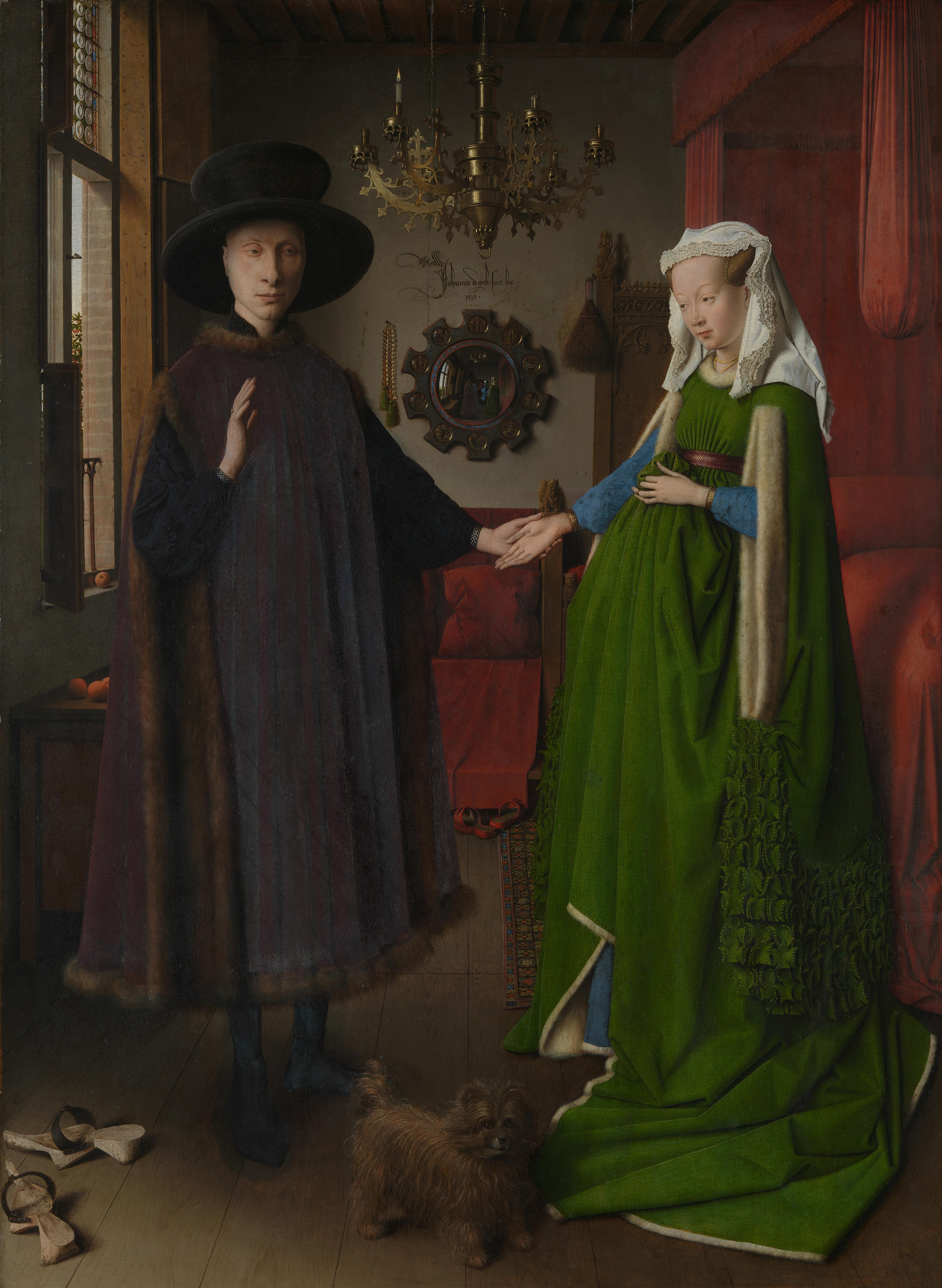

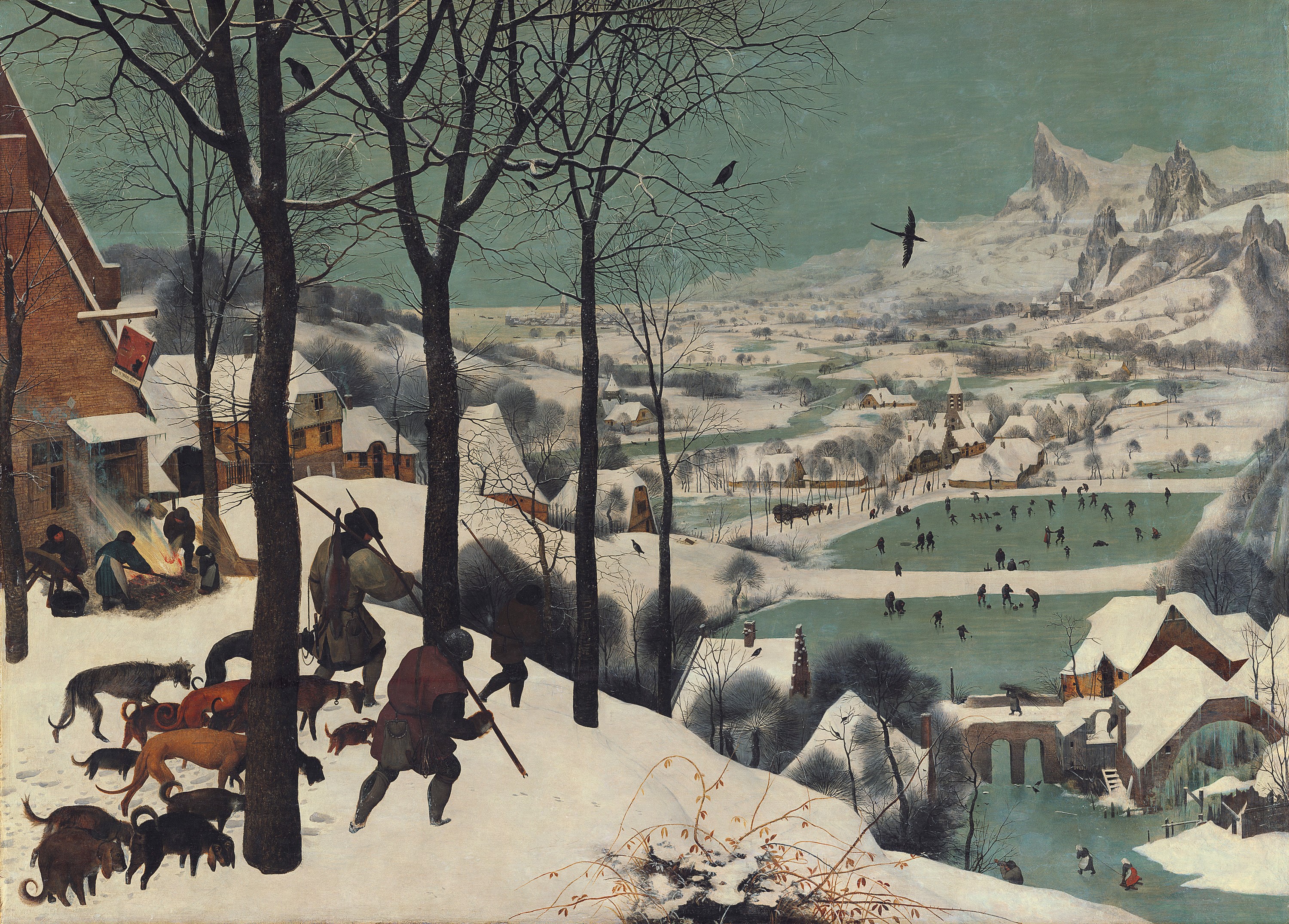

They rejected the slavish copying of reality of Raphael and Michelangelos, and instead took up the mantle of the Northern Mannerists and Low Countries artists like The Arnolfini Portrait. These can be seen in the details of Early Netherlandish painting, which was influenced by the taste changes in the patrons of art patrons, who trips to Italy dictated their taste in what was 'highbrow and lowbrow' art. Jan paints based on previous harmonious and human centered figures with human themes and signified themes. Italian renaissance at was instead a study of every mortuary corpse in the morgue. The lowlanders took up this attention to detail by making all of their paintings extremely detailed and full of large sweeping landscapes later taken up by people like Claude Lorraine. [1]
The problem painters wanted people to not be consumer but enjoyers of their work. They were treating their audience as important thinkers in good faith rather than mortals soul vessels only worthy of indulgences as Lorraine thought.
Women in Picture problems
Women in this way became more interesting subjects of their own stories and decision making processes. Something which consuming art historians would do well to understand. Images such as The Prodigal Daughter 1903 [1] sparked debates over the success of the fallen woman, ie women who do sex work and are successful in their endeavours and who use their favours to assist their families and loved ones. The press at the time of course it as a degrading lower class peasant girl trying to gain social clout. The questions though were the wrong ones to ask with the wrong people pointing the wrong fingers in mislead directions.
By 1910, these pictures were mainstays at the British royal academy.[1] Not too sure where I was going with this other than sticking together signifieds and pre-raphaelites, maybe an incursion into the disrupted medieval art tradition of signifiers and referents, but other than that lol. Dunno.
This has been a musing.
Bibliography
[1] https://eclecticlight.co/2016/02/19/the-story-in-paintings-problem-pictures/
[2] https://thehistorypress.co.uk/article/memento-mori-reminding-the-tudors-of-their-mortality/
[3] https://en.wikipedia.org/wiki/Portraiture_of_Elizabeth_I
[4] https://en.wikipedia.org/wiki/Signified_and_signifier
[5]
I came across a thing on the internet.
http://profoundism.com/attributes.html
Also chroma (saturation in photography).
Which is not hue. All of these are the same colour, but with different brightness levels of Chroma. So same 'hue', different 'chroma'.
 This is saturated (chroma/tic) hue
Interesting art things that have occurred of late.
Copyleft and Copyright is the common umbrella term to refer to whether a user or interacting user owns a piece of (usually) media/abstract concept. In the spirit of Copyleft, all of this is CC accredited material apart from this text.

Public Domain
"The public domain is a range of creative works whose copyright has expired or was never established, as well as ideas and facts[note 1] which are ineligible for copyright. A public domain work is a work whose author has either relinquished to the public or no longer can claim control over, the distribution and usage of the work. As such, any person may manipulate, distribute, or otherwise use the work, without legal ramifications. A work in the public domain or released under a permissive license may be referred to as "copycenter"."
https://en.wikipedia.org/wiki/Free_content
"In the early decades of computing, particularly from the 1950s through the 1970s, software development was largely collaborative. Programs were commonly shared in source code form among academics, researchers, and corporate developers. Most companies at the time made their revenue from hardware sales, and software—including source code—was distributed freely alongside it, often as public-domain software. By the late 1960s and 1970s, a distinct software industry began to emerge. Companies started selling software as a separate product, leading to the use of restrictive licenses and technical measures—such as distributing only binary executables—to limit user access and control. This shift was driven by growing competition and the U.S. government's antitrust scrutiny of bundled software, exemplified by the 1969 antitrust case United States v. IBM. A key turning point came in 1980 when U.S. copyright law was formally extended to cover computer software. This enabled companies like IBM to further enforce closed-source distribution models. In 1983, IBM introduced its "object code only" policy, ceasing the distribution of source code for its system software. [...] The historical precursor to FOSS was the hobbyist and academic public domain software ecosystem of the 1960s to 1980s. Free and open-source operating systems such as Linux distributions and descendants of BSD are widely used, powering millions of servers, desktops, smartphones, and other devices. Free-software licenses and open-source licenses have been adopted by many software packages. Reasons for using FOSS include decreased software costs, increased security against malware, stability, privacy, opportunities for educational usage, and giving users more control over their own hardware. [...These were socially droven projects like] the GNU Project in 1983 [... where the] goal was to develop a complete Free software operating system and restore user freedom. The Free Software Foundation (FSF) was established in 1985 to support this mission. Stallman's GNU Manifesto and the Four Essential Freedoms outlined the movement's ethical stance, emphasizing user control over software. The release of the Linux kernel by Linus Torvalds in 1991, and its relicense under the GNU General Public License (GPL) in 1992, marked a major step toward a fully Free operating system. Other Free software projects like FreeBSD, NetBSD, and OpenBSD also gained traction following the resolution of the USL v. BSDi lawsuit in 1993. In 1997, Eric Raymond’s essay *The Cathedral and the Bazaar* explored the development model of Free software, influencing Netscape’s decision in 1998 to release the source code for its browser suite. This code base became Mozilla Firefox and Thunderbird. To broaden business adoption, a group of developers including Raymond, Bruce Perens, Tim O’Reilly, and Linus Torvalds rebranded the Free software movement as “Open Source.” The Open Source Initiative (OSI) was founded in 1998 to promote this new term and emphasize collaborative development benefits over ideology. Despite initial resistance—such as Microsoft's 2001 claim that "Open-source is an intellectual property destroyer"—FOSS eventually gained widespread acceptance in the corporate world. Companies like Red Hat proved that commercial success and Free software principles could coexist. [...] The free software movement and the open-source software movement are online social movements behind widespread production, adoption and promotion of FOSS, with the former preferring to use the equivalent term free/libre and open-source software (FLOSS). FOSS is supported by a loosely associated movement of multiple organizations, foundations, communities and individuals who share basic philosophical perspectives and collaborate practically, but may diverge in detail questions. [...] By defying ownership regulations in the construction and use of information—a key area of contemporary growth—the Free/Open Source Software (FOSS) movement counters neoliberalism and privatization in general. By realizing the historical potential of an "economy of abundance" for the new digital world, FOSS may lay down a plan for political resistance or show the way towards a potential transformation of capitalism. According to Yochai Benkler, Jack N. and Lillian R. Berkman Professor for Entrepreneurial Legal Studies at Harvard Law School, free software is the most visible part of a new economy of commons-based peer production of information, knowledge, and culture. As examples, he cites a variety of FOSS projects, including both free software and open-source."
https://en.wikipedia.org/wiki/Free_and_open-source_software
Copyleft
"Copyleft is the legal technique of granting certain freedoms over copies of copyrighted works with the requirement that the same rights be preserved in derivative works. In this sense, freedoms refers to the use of the work for any purpose, and the ability to modify, copy, share, and redistribute the work, with or without a fee. Licenses which implement copyleft can be used to maintain copyright conditions for works ranging from computer software, to documents, art, and scientific discoveries, and similar approaches have even been applied to certain patents.
The origin of the term comes from "Li-Chen Wang's Palo Alto Tiny BASIC for the Intel 8080 [first] appeared in Dr. Dobb's Journal in May 1976. The listing begins with the title, author's name, and date, but also has "@COPYLEFT ALL WRONGS RESERVED"."
https://en.wikipedia.org/wiki/Copyleft
"There have been several attempts to define open source and free software. Amongst the earliest was Free Software Foundation's Free Software Definition, which then defined as the three freedoms of Free Software (Freedom Zero was added later). Published versions of FSF's Free Software Definition existed as early as 1986, having been published in the first edition of the (now defunct) GNU's Bulletin. [...] The Debian Free Software Guidelines (DFSG) was [then] first published together with the first version of the Debian Social Contract in July 1997."
https://en.wikipedia.org/wiki/The_Open_Source_Definition
"Debian GNU/Linux (/ˈdɛbiən/),[7][8] or simply Debian, is a free and open source[b] Linux distribution, developed by the Debian Project, which was established by Ian Murdock in August 1993. Debian is one of the oldest operating systems based on the Linux kernel, and is the basis of many other Linux distributions. As of September 2023, Debian is the second-oldest Linux distribution still in active development: only Slackware is older."
https://en.wikipedia.org/wiki/Debian
"The concept of applying free software licenses to content was introduced by Michael Stutz, who in 1997 wrote the paper "Applying Copyleft to Non-Software Information" for the GNU Project. The term "open content" was coined by David A. Wiley in 1998 and evangelized via the Open Content Project, describing works licensed under the Open Content License (a non-free share-alike license, see 'Free content' below) and other works licensed under similar terms. The website of the Open Content Project once defined open content as 'freely available for modification, use and redistribution under a license similar to those used by the open-source / free software community'. However, such a definition would exclude the Open Content License because that license forbids charging for content; a right required by free and open-source software licenses. [...] Unlike free content and content under open-source licenses, there is no clear threshold that a work must reach to qualify as 'open content'. The 5Rs are put forward on the Open Content Project website as a framework for assessing the extent to which content is open:
Retain – the right to make, own, and control copies of the content (e.g., download, duplicate, store, and manage)
Reuse – the right to use the content in a wide range of ways (e.g., in a class, in a study group, on a website, in a video)
Revise – the right to adapt, adjust, modify, or alter the content itself (e.g., translate the content into another language)
Remix – the right to combine the original or revised content with other open content to create something new (e.g., incorporate the content into a mashup)
Redistribute – the right to share copies of the original content, your revisions, or your remixes with others (e.g., give a copy of the content to a friend).
This broader definition distinguishes open content from open-source software, since the latter must be available for commercial use by the public. However, it is similar to several definitions for open educational resources, which include resources under noncommercial and verbatim licenses. [...] In 2006, a Creative Commons' successor project, the Definition of Free Cultural Works, was introduced for free content. It was put forth by Erik Möller, Richard Stallman, Lawrence Lessig, Benjamin Mako Hill, Angela Beesley, and others. The Definition of Free Cultural Works is used by the Wikimedia Foundation. In 2009, the Attribution and Attribution-ShareAlike Creative Commons licenses were marked as Approved for Free Cultural Works."
So in theory, copyleft operates under the assumption that offering open content freely and publicly as a social community resource will lead to an economy of abundance in a postscarcity economic model of the means of production. (seize the means! lmao)
https://en.wikipedia.org/wiki/Post-scarcity
"Technology has reduced the cost of publication and reduced the entry barrier sufficiently to allow for the production of widely disseminated materials by individuals or small groups. Projects to provide free literature and multimedia content have become increasingly prominent owing to the ease of dissemination of materials that are associated with the development of computer technology. [...] Free and open-source software, which is often referred to as open source software and free software, is a maturing technology with companies using them to provide services and technology to both end-users and technical consumers. The ease of dissemination increases modularity, which allows for smaller groups to contribute to projects as well as simplifying collaboration. Some claim that open source development models offer similar peer-recognition and collaborative benefit incentive as in more classical fields such as scientific research, with the social structures that result leading to decreased production costs. Given sufficient interest in a software component, by using peer-to-peer distribution methods, distribution costs may be reduced, easing the burden of infrastructure maintenance on developers. As distribution is simultaneously provided by consumers, these software distribution models are scalable; that is, the method is feasible regardless of the number of consumers. In some cases, free software vendors may use peer-to-peer technology as a method of dissemination. Project hosting and code distribution is not a problem for most free projects as a number of providers offer these source-code-hosting provider provider free of charge."
For instance, the Open Knowledge Foundation's Open Definition describes "open" as synonymous with the definition of free in the "Definition of Free Cultural Works" (as also in the Open Source Definition and Free Software Definition).[5] For such free/open content both movements recommend the same three Creative Commons licenses, the CC BY, CC BY-SA, and CC0. [...] Any country has its own law and legal system, sustained by its legislation, which consists of documents. In a democratic country, laws are published as open content, in principle free content; but in general, there are no explicit licenses attributed for the text of each law, so the license must be assumed as an implied license. Only a few countries have explicit licenses in their law-documents, as the UK's Open Government Licence (a CC BY compatible license). In the other countries, the implied license comes from its proper rules (general laws and rules about copyright in government works). The automatic protection provided by the Berne Convention does not apply to the texts of laws: Article 2.4 excludes the official texts from the automatic protection. It is also possible to "inherit" the license from context. The set of country's law-documents is made available through national repositories. Examples of law-document open repositories: LexML Brazil, Legislation.gov.uk, and N-Lex. In general, a law-document is offered in more than one (open) official version, but the main one is that published by a government gazette. So, law-documents can eventually inherit license expressed by the repository or by the gazette that contains it."
"In academic work, the majority of works are not free, although the percentage of works that are open access is growing. Open access refers to online research outputs that are free of all restrictions to access and free of many restrictions on use (e.g. certain copyright and license restrictions).[24] Authors may see open access publishing as a way of expanding the audience that is able to access their work to allow for greater impact, or support it for ideological reasons.[25][26] Open access publishers such as PLOS and BioMed Central provide capacity for review and publishing of free works; such publications are currently more common in science than humanities. Various funding institutions and governing research bodies have mandated that academics must produce their works to be open-access, in order to qualify for funding, such as the US National Institutes of Health, Research Councils UK (effective 2016) and the European Union (effective 2020). [...[ For teaching purposes, some universities, including MIT, provide freely available course content, such as lecture notes, video resources and tutorials. This content is distributed via Internet to the general public. [...] Open content publication has been seen as a method of reducing costs associated with information retrieval in research, as universities typically pay to subscribe for access to content that is published through traditional means.[9][34] Subscriptions for non-free content journals may be expensive for universities to purchase, though the articles are written and peer-reviewed by academics themselves at no cost to the publisher. [...] Free and open content has been used to develop alternative routes towards higher education. Open content is a free way of obtaining higher education that is focused on collective knowledge and the sharing and reuse of learning and scholarly content. There are multiple projects and organizations that promote learning through open content, including OpenCourseWare and Khan Academy. Some universities, like MIT, Yale, and Tufts are making their courses freely available on the internet. There are also a number of organizations promoting the creation of openly licensed textbooks such as the University of Minnesota's Open Textbook Library, Connexions, OpenStax College, the Saylor Academy, Open Textbook Challenge, and Wikibooks."
https://en.wikipedia.org/wiki/Free_content
Copyright
"In most countries, the Berne Convention grants copyright holders control over their creations by default. Therefore, copyrighted content must be explicitly declared free by the authors, which is usually accomplished by referencing or including licensing statements from within the work. The right to reuse such a work is granted by the authors in a license known as a free license, a free distribution license, or an open license, depending on the rights assigned. These freedoms given to users in the reuse of works (that is, the right to freely use, study, modify or distribute these works, possibly also for commercial purposes) are often associated with obligations (to cite the original author, to maintain the original license of the reused content) or restrictions (excluding commercial use, banning certain media) chosen by the author. [...] Copyright is a legal concept, which gives the author or creator of a work legal control over the duplication and public performance of their work. In many jurisdictions, this is limited by a time period after which the works then enter the public domain. Copyright laws are a balance between the rights of creators of intellectual and artistic works and the rights of others to build upon those works. During the time period of copyright the author's work may only be copied, modified, or publicly performed with the consent of the author, unless the use is a fair use. Traditional copyright control limits the use of the work of the author to those who either pay royalties to the author for usage of the author's content or limit their use to fair use. Secondly, it limits the use of content whose author cannot be found.[10] Finally, it creates a perceived barrier between authors by limiting derivative works, such as mashups and collaborative content."
https://en.wikipedia.org/wiki/Free_content
"The concept of copyright developed after the printing press came into use in Europe in the 15th and 16th centuries. It was associated with a common law and rooted in the civil law system. The printing press made it much cheaper to produce works, but as there was initially no copyright law, anyone could buy or rent a press and print any text. Popular new works were immediately re-set and re-published by competitors, so printers needed a constant stream of new material. Fees paid to authors for new works were high and significantly supplemented the incomes of many academics. Printing brought profound social changes. The rise in literacy across Europe led to a dramatic increase in the demand for reading matter. Prices of reprints were low, so publications could be bought by poorer people, creating a mass audience. In German-language markets before the advent of copyright, technical materials, like popular fiction, were inexpensive and widely available; it has been suggested this contributed to Germany's industrial and economic success.
The concept of copyright first developed in England. In reaction to the printing of "scandalous books and pamphlets", the English Parliament passed the Licensing of the Press Act 1662, which required all intended publications to be registered with the government-approved Stationers' Company, giving the Stationers the right to regulate what material could be printed. The Statute of Anne, enacted in 1710 in England and Scotland, provided the first legislation to protect [publisher] copyrights [rights to copy the text] (but not authors' rights). The Copyright Act 1814 extended more rights for authors but did not protect British publications from being reprinted in the US. The Berne International Copyright Convention of 1886 finally provided protection for authors among the countries who signed the agreement, although the US did not join the Berne Convention until 1989. [...] Copyright laws allow products of creative human activities, such as literary and artistic production, to be preferentially exploited and thus incentivized. Different cultural attitudes, social organizations, economic models and legal frameworks are seen to account for why copyright emerged in Europe and not, for example, in Asia. In the Middle Ages in Europe, there was generally a lack of any concept of literary property due to the general relations of production, the specific organization of literary production and the role of culture in society. The latter refers to the tendency of oral societies, such as that of Europe in the medieval period, to view knowledge as the product and expression of the collective, rather than to see it as individual property. However, with copyright laws, intellectual production comes to be seen as a product of an individual, with attendant rights. The most significant point is that patent and copyright laws support the expansion of the range of creative human activities that can be commodified. This parallels the ways in which capitalism led to the commodification of many aspects of social life that earlier had no monetary or economic value per se. Copyright has developed into a concept that has a significant effect on nearly every modern industry, including not just literary work, but also forms of creative work such as sound recordings, films, photographs, software, and architecture."
https://en.wikipedia.org/wiki/Copyright
GNU template definition https://www.gnu.org/licenses/gpl-3.0.en.html
https://en.wikipedia.org/wiki/Free_and_open-source_software FOSS
A quote from Karl Marx in 1848:
The country, however, which transforms whole nations into proletarians; which with its gigantic arms encompasses the whole globe; which has already once defrayed the cost of the European counter-revolution; and in which class antagonism has reached a high degree of development – England appears to be the rock on which the revolutionary waves split and disperse and which starves the coming society even in the womb. England dominates the world markets. A revolution of the economic conditions of any country of the European Continent or even of the whole Continent, is but a storm in a glass of water, unless England actively participates in it. The condition of trade and commerce of any nation depends upon its intercourse with other nations, depends upon its relations with the world markets. England controls the world markets, and the bourgeoisie controls England.
The [political] emancipation of Europe, either in the form of raising the oppressed nationalities to independence or of the final overthrow of feudal absolutism, is conditioned upon the victorious rising of the French working class. But any social revolutionary upheaval in Europe must necessarily miscarry, unless the English bourgeoisie or the industrial and commercial supremacy of Great Britain is shaken. Any aspiration for a lasting, though partial social transformation in France or any other part of the European Continent must remain an empty, pious wish. And old England will only be overthrown in a world war, which alone would give the Chartist Party, the organised English Labour Party, the possibility of a successful rising against its stupendous oppressor. The Chartists at the head of the English Government – only from this moment would the social revolution emerge from the realm of Utopia and enter the sphere of reality
This quote, from 1848, talks of a bygone empire and world power, but not a bygone global soft power. 'The country, however, which transforms whole nations into proletarians' is very much speaking on today neo-colonial structures and England's place amongst those frameworks is poignant. It is not one of France in Africa with it's imposition of the CFA Franc for example, or of AID agreements disguising the draining of African resources for example, but instead one of an ex-colonial overlord who exists in the Commonwealth soft power vacuum of ill begotten leftover prestige, industry and woe-inducing sacrifices to obtain some semblance of leftover pride and inclusion in diversity and freedoms still unknown for many today.
'which has already once defrayed the cost of the European counter-revolution' being the idea that the industrial revolution had replaced the European luddites as it were, bringing an end to European cottage industries and guild workshops.
'England appears to be the rock on which the revolutionary waves split and disperse and which starves the coming society even in the womb.' The revolution of the European proletariat perhaps here, had indeed dullened the capacity for old industries to operate as they once did. The coming society indeed being the proletariat it seems in this phrasing, as the Bourgeoisie are considered separate, and may talk of the global proletariat and Bourgeoisie.
There are multiple contenders at this time for the title of superpower, but it seems most reminiscent of 1500's Europe, when most of those contenders won their gains from proletariat labour.
'A revolution of the economic conditions of any country of the European Continent or even of the whole Continent, is but a storm in a glass of water, unless England actively participates in it.' This sentence has a whiff of truth to it yet. When Brexit occurred, every German newspaper and critic seemed to have something to say, yet after 2020, the same stagnation inherent in the destruction tendencies those in charge held were what had sent the British economy into its downwards and upwards spirals. Yet the chnage this time was that there was no industrial revolution. Germany contributed well to the global export market, yet not in other expectable areas of comparison, and indeed the British economy can be said to have found other avenues due it's almost hegemonic soft power status and sacrifices. The key theme here being that unless England 'actively participates', new F-35's are only built for the competing superpower, not superpowers, and the incumbent defense spending goes on British-Japanese-Italian endeavours. This is the case given that 'England controls the world markets, and the bourgeoisie controls England' is nowadays the USA, or China. Yet the UK still holds sway over many unexpected outcomes, whilst instead now being a mostly impoverished proletariat nation.
Indeed, 'the final overthrow of feudal absolutism' came with the advent of the middle management roles the industrial revolution created by the 1950s, and went away with the outsourcing of today's superpowers if anything, who only saw fit to create the sweatshop creations of our modern bargain bins. As for the 'the victorious rising of the French working class' see the CFA Franc.
And with the 'English bourgeoisie or the industrial and commercial supremacy of Great Britain' thoroughly shaken, this seems a ripe occurrence, given France's protest have left us with but a river of excrement in the wake of the Olympics.
Another one 'old England will only be overthrown in a world war', was dubitably what saw this shaking take place, as the colonial structures had arguably begun to fray by the 1890s anyway with the beginning of Asian, African and other indigenous calls for Independence anyway. Ironically begun in the very education systems of 'old England' and even proletariat England, as a salty rock Tyke that is, which it is must be said is an important place Mr.Marx forsake when he renamed centuries old proletariat sentiments in favour of his own personality cult if we are to be closer to the reality.
Poignant though when I think about Japan's involvement in both of the world wars, as a spectator from the backend of social liberalist theory and Chartist Liberal realpolitick postindustrial and WWII lived experience as to the role 'England' still plays on the world stage as a soft power, a role it also took up in similar fashion under Elizabeth I as a supposedly weak and yet somehow mighty? country worthy of a moniker such as Perfidious Albion by the very same storm in a glass of water which birthed Marx's own world, yet ignored the world outside the glass of water to lead to the state of affairs the post 1900's Britain which had left splendid isolation found itself in.


