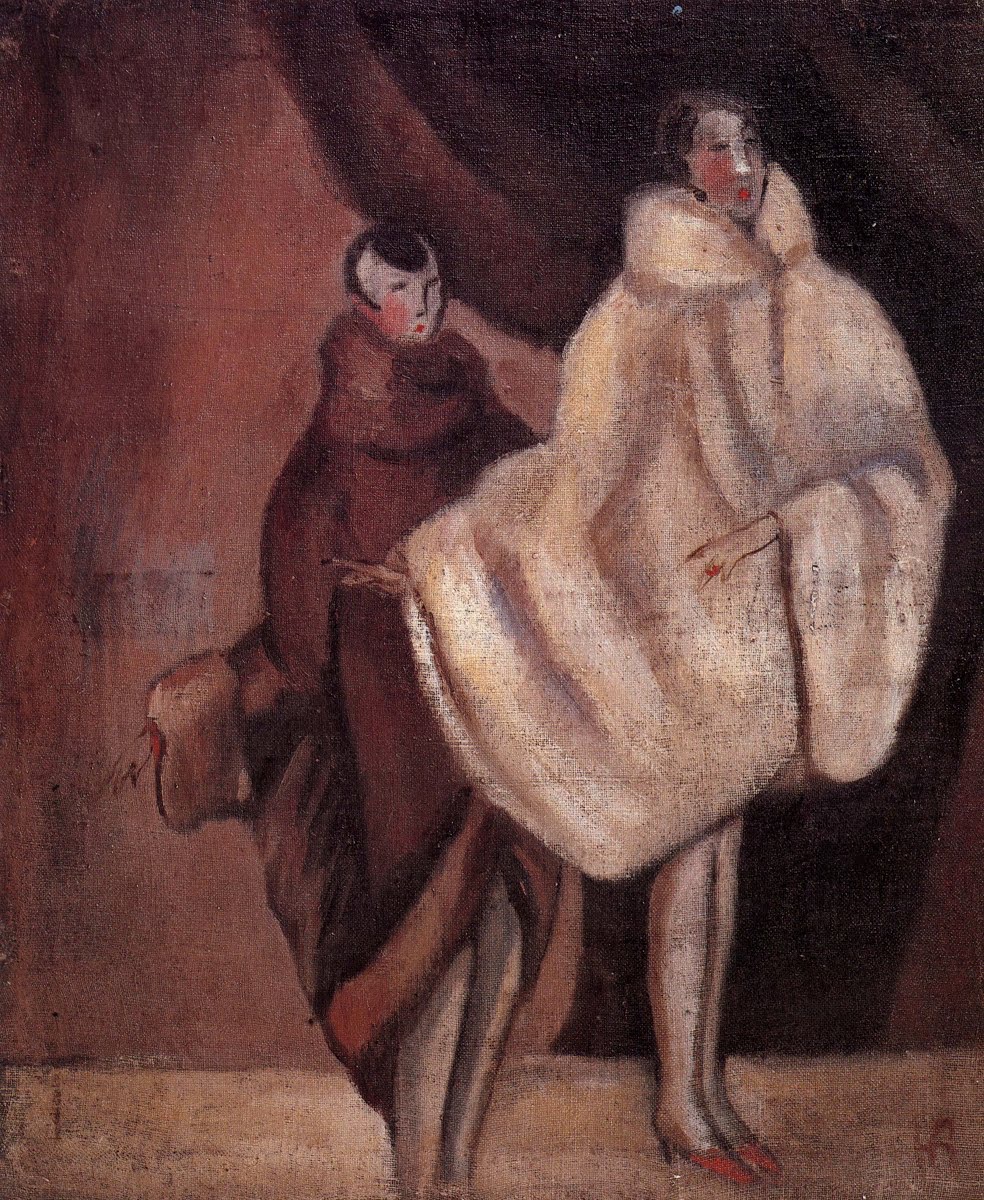
Her Haughtynesses Decree

Sunday, November 12, 2023

宇野 千代 | Uno Chiyo | 1936 - 1960 | Essay #22

This essay explores the work of Uno Chiyo (1897-1996) as a Kimono Designer. Uno was a prolific 20th century Japanese writer and designer. As such, Uno was familiar and fluently versed in KTC throughout her life. Uno founded the influential Style which was in circulation in Japan from 1936-1959.[1] Uno was heavily influenced by Western and Genroku fashion, and focused her aesthetic on these two whilst encouraging masculine and secondhand consumer habits in her approach to Kimono as a fashionable and modern pursuit. Uno provides a fascinating glimpse into a time before Kimono were stigmatized and were instead merged with Yofuku to inform Japanese identity and femininity in new and stylish publications and normoactivities.
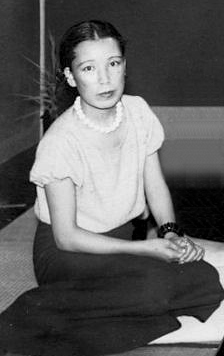
Uno Chiyo (1935, PD) 白拍子花子

Uno led a fabulous devious life in her early years, losing her first job due to the stodgy old men of the time who fired her upon discovering her affair with a male colleague in 1915. She became a writer by 1920 and it was hereafter she began to attain literary success in Japan. In 1921, she won a prize for her 1921 short story しふんのかお ( Shifun no Kao | Painted Face)、where afterwards she moved to Tokyo. This drove her into the 1920's urban cultural scenes of Art, Fashion and publishing. It was during this time that she developed her specific outlook and relationships to the major influences and artistic avenues which she pursued in her life as Japanese woman living in the 20th century.

Atarashii Onna

Uno was influenced by the times she lived in, and was repletely surrounded by the influence of Western design and fashion. In 1927 for example, she joined the fashion for Moga, and bobbed her hair and entered into the cultural era of the 'New Woman' which had become emblematic of what some called the 'Jazz Age' and the 'Liberated Woman'. The New Woman, which itself was a trope which came from the writing of British writer Sarah Grand (1854–1943) in 1894 which called for the liberation and emancipation of contemporary Victorian women in their bid for independence from patriarchal systems and oppression.[4]

This was taken up in English society and expanded upon by Maria L R Ouida (1839-1908) used the term in a response article entitled 'The New Woman'. The English writer and editor Ella Hepworth Dixon (1857–1932) also reproduced this in her is novel 'The Story of a Modern Woman'.[3] All of these writings expanded on the idea of women encouraging a human sisterhood common to all in the face of the strife faced in the Victorian and Edwardian age, be it financial, emotional, physical etcetera. They encouraged those women with enough money to uplift those without it, to live their lives independently and to foster a modern sensibility of female agency and embodiment of those ideals. This became a wave of popular modern conscious though in Britain by 1913 with issues like the Cat and Mouse Act, which called for universal suffrage to women over 25 with property soon earning the right to vote in Britain.

Women of course have always done these things, but have had to work within the limits of their day and age and thus are not always given the respect they deserved as human beings and so are not as well represented, recorded or even remembered as they could be, and thus this was their pushing against these systems and structures which denied them their creativity, their work, their social lives and their autonomy. This modern image of womanhood was taken forwards across the Empire, infamously across the Atlantic Ocean into North America. British writers such as Indian-born Annie Sophie Cory (1868–1952) The Woman Who Didn't (1895) deeply held and spread these ideals and celebrated women such as Bengali writer Toru Dutt (তরু দত্ত | 1856-1877), English Amy Judith Levy (1861-1889) South African Olive Schreiner (1855-1920), Australian Mary Chavelita Dunne Bright (1859-1945), Indian Kodagina Gowramma (1912-1939) who already lived these experiences around the British Empire. As one British child of Empire wrote:

'We must kill the force in us that says we cannot become all we desire, for that force is our evil star that turns all opportunity into grotesque failure....So let us each recognise the truth that our first business is to change ourselves, and then we shall know how to change our circumstances.' 

- Florence Beatrice Emery (1860-1917; Our Evil Stars, New Age October 1907)[2]

In Japan, the modern woman was spread both directly as a result of British Women, and via women who lived in and outside of Britains Empirical Domains. The Japanese Magazine Seito (Bluestocking) drew on this British legacy, gaining its namesake from the British society of the same name which operated in the 18th century, which first published in Japan in 1911.

Bad Wife, Dumb Mother, Usurping Student

By the 1900s, this well versed and influential feminine archetype had spread internationally. However this spread more slowly in conservative and patriarchal societies and cultures. Across East Asia, this generally meant that the New Woman genre only became popular by later decades, for example in the case of the writings of Ling Ding (丁玲 | 1904-1986) who was persecuted in China for her writings, and was imprisoned in 1933.[5] Korean chauvinists eagerly followed on with, dismissing the learned feminine as simply a caricature of Western capitalism. They urged women instead to be their Gibson girl ideal, a male caricature ideal of a woman who not career driven, but instead was busy chasing after her children in the domestic sphere and perhaps staring at an aesthetic copy of the Confucian and Chinese classics, all of which our male writers kindly informed us all placed women in the proverbial kitchen, making not sandwiches who supposedly were responsible for all of Japan Inc's all seeing grip on the Korean economy.[3] 


Ding Ling (c.1930, PD) Zanhe | 'Dancers' (1927, CC4.0) Na Hye-seok

The Korean Modern Woman writer and artist Na Hye-seok (나혜석 | 1896-1948) published Sinyoja (New Woman) was Chiyo's Korean counterpart, who wrote on Korean clothing and was writing in similar circumstances. Educated women in both countries combated male ideals of women such as Hyeonmo Yangcheo (현모양처 | wise mother and good wife) or Wise Wife, Good Mother (良妻賢母) were coined from 1875 by East Asian men towards women who operated in East Asia in the 19th and 20th centuries, in their writings and published work from the 1910s on, often risking their marriages, finances and social standing in doing so, much as Uno did on losing her job as a result of her 'lifestyle choices'. These Asian writers often promoted ideals of pursuing ones own desires as a woman, independent of what patriarchal systems told women to do so. However it was not until the 1930s that universal suffrage became a topic in Japanese politics meaning the Modern Women became the Modern Girl as a result of a lack of change in Japanese society towards the feminine, leading to the world Uno began her career in as Moga.[1][4]

Tipsy (1930, PD) Kobayakawa Kiyoshi

Sutairu

In 1936 Uno founded one of Japan's first fashion magazines, these were a rather niche market at the time of women's magazines published in Japan. As one of the first women in Tokyo to live the life of a Naomi (see Chijin no Ai, 1925), Uno lived a heady lifestyle in the circles of Tokyo poets, artists, designers, publishers and their patrons who all moved in each others social circles. The modern women who Uno wrote about, for and with all tread a grey area where dress was an important marker of the time. Stepping too far into Western clothing was considered too much, albeit that their male counterparts had been doing this for decades and were considered masculine. A whole ensemble was too much, but a glove was acceptable.[6] Only wearing purely 'Wa'fuku was considered very conservative and uptight, a strange double standard which denoted ones place in society as a second class subject and the political spectrum. 

Uno's founding her magazine then, can be seen as a rebellion against the traditional and morally acceptable standards of the frugal Shufu archetype popular in the mainstream magazine offerings of the likes of Shufu no Tomo (Housewives Friend). It focused on the needs women had, raising them to the mantle of the independent woman with purchasing power, a scary notion for those upholding systems which said women could not have their own money. Sutairu (スタイル | Style) covered a range of topics, but included both Yofuku and Wafuku and was the first to include fashion trends started or used outside Japan. This was a departure from the expected intentions of marketing to women, as previously you could deprive, degrade and dismiss women as agents with autonomy, but they could be trusted to make their way down to the department store, to be paid less for modelling in Kuchi-E than male counterparts and to be used to make revenue from and marketed towards by male owned companies and magazines but not to be thought of as smart, innovative or worthy of attention.[6]

Sutairu instead aimed itself at young female demographics, teaching them to be thrifty, modern and elegant year round. Sutairu threw off the rules of old and utilized plain and 'exotic' fabrics to bring interesting new combinations and styles to Japanese Kimono, a style Uno referred to as the 'New Kimono'.[12] Uno also encouraged her readers to utilize fabrics from Asia, like Black Velvet and natural fabrics which originated in Japan and India, particularly in fashions like Black Satin Eri which revitilised older Meiji era Kimono in 1937.[12]

Sutairu also promoted from the second issue street photography, which praised the thrift and innovation of Japanese women during rationing as modern cosmopolitan consumers.[12] Whilst at the time to promote local Japan Inc. economies, Meisen for winter was all the rage, Uno instead taught women to use fashionable attire in Summer, and to be thrifty with new materials for their Obi, such as upcycling old fabrics for the winter.[12] Sutairu's style choices harkened back to the Genroku Period (1688-1704), a time in which JKTC was at some of its most garish and vulgar.[13] Silver lame Kimono, Velveteen accessories, Leather Sandals and bold patterns all featured amongst recommended articles Uno published from 1936-1938. Other style pointers included using the lining of the Tombi style overcoat to arken back to the Sumptuary Laws of the Genroku period to include a flashy fabric such as Tartan sparingly.[12][14]

Seeing as these garments were made from Wool, it replaced the need to layer multiple garments over other Kimono as had previously been done and changed the winter silhouette for a time. Japan Wool Textile Co., Ltd was an early introducer of Wool as part of KTC when it began production in 1896.[1] It was in this time when the importation of Wool was particularly high, with most imports coming from England and Germany in 1898.[5] The suppliers of Wool of at this time came mostly from Western Mills, such as the A W Hainsworth Mill (est.1793), which in 1899 recieved an order for 'Black serge' wool to be delivered to Yokohama. This saw the introduction of new types of overcoats and capes such as the Tombi, Nijuumawashi, and Azumakouto.[14]

From 1937 on, Uno discussed how her own Kimono making processes involved the use of fabrics like wool serge to replace other winter fabrics and to recreate the feeling of deep blue Kimono for women, a transgressive act for a woman at the time given that patriarchal values were beginning to set in again with the advent of the Pacfic War with China beginning. Whilst this may be a reflection of the move towards patriotism with plain and militaristic colours like navy blue and green, floral motifs were also popular in Sutairu that year. She also encouraged her readers to begin wearing secondhand Kimono once again.[12] By 1938, Uno encouraged more women to adopt these masculine fabrics and then also to have a Meisen Kimono, but with large and bold patterns with Uno's favourite Black accent accessory with a pinstripe or Kasuri Kimono and hand painted Geta.[12]

After this time Sutairu seems to have encouraged the adoption of Western accessories, foreign origin fabrics, vintage Kimono and Genroku period fashions which may be regarded as a precursor to many of the Dori-Style Kimono worn in the 2010s, and Revival Style fashions of the 1990s which paired together bright colours and styles with the traditional and paired down Kimono often found in the markets their owners purchased their Kimono from.[12] During the 1940s, Uno successfully became a designer and writer, focusing her time on both of these and some film ventures. During this time, her Kimono become very Genroku influenced, with singular bold patterns trailing around Kimono, reflecting the Ma of Genroku Kimono. Her designs were also influenced by more Western paintings and ideas it seems, incorporating more of these fantastical exotic fabrics and masculine ideals of dressing until the end of the war, when afterwards her designs returned to a more Genroku influenced tone with some pared back yukata designs in the mix. 

Sutairu at this time was likely to have undergone censorship from SCAP regulations, and therefore may have focused more so on Japanese domestic affairs or incorporated more Yofuku than it may previously have done so willingly.

Occidentals beginnings in Fashion

Uno brought fashion for the first time to the Occidentals in the 1950s, bringing Wafuku together with Western art theory and graphical design principals in line with Japanese sensibilities towards designing Kimono. In this way, Uno introduced a great many Westerners, Europeans and Americans to how Kimono could be thought of, worn and style rather than simply being a 'traditional costume' from Japan. Rather it grounded the Kimono in a history of art theory and applied workmanship from Japan, with Western design and motifs familiar to them which allowed Kimono to become fashionable aesthetic pieces of art outside of Japan, in a far more respectful manner than the second plundering of Japanese wardrobes which occurred under American occupation in the aftermath of the Pacific and Second World War.

By 1954, Uno seems to have become a successfully regarded Kimono designer, incorporating classical motifs into modern designs which whilst not entirely stale are not totally ground breaking either, but she often used her clout in publishing to guest edit it seems so that her designs and tastes influenced trends well into the 1950s for Kimono, which was really on of the last few decades were Kimono were still produced en masse and bought by a wide audience.[10] In 1957, she flew to North America where she hosted one of the first Kimono Fashion Shows there, one of which seems to have included Piet Mondrian's Landscape paintings series.[1][9] 

Even after Sutairu folded in 1959, Uno still was regarded as a tastemaker in Wafuku related matters and continued to be sought after for her opinion on the matter well into the 1980s and 1990s until her death in 1996.[11] Modern Japanese KTC has been influenced by Uno's Hanami and Sakura designs which became popular during the early 1950s and were used in both Yukata and Furoshiki.[7][8] 

Conclusion

In context therefore, we can see how the international political and modern interpretation of Japanese and British culture lead to an emancipated and forward thinking adoption of Yofuku as a symbol of Japanese Women's struggle to become full persons. Uno introduced and used Kimono to bring herself financial and social independence and gave this to her readers and characters by embodying the trope of the New Woman in the course of her time as a Kimono designer and publisher. Uno used Sutairu to finally meld the Modern Girl with the Modern Woman trope, and she did this by using Modern design principles and Art n her designs and in carefully curating what she presented to her audiences from the 1930's into the 1950s whilst working within the constraints and limitations of her time.

Bibliography

[1] https://en.wikipedia.org/wiki/Chiyo_Uno

[2] https://en.wikipedia.org/wiki/Florence_Farr#Later_life

[3] https://en.wikipedia.org/wiki/New_Woman

[4] https://collections.reading.ac.uk/special-collections/2022/12/16/the-new-woman-five-women-writers-of-the-1890s/

[5] https://en.wikipedia.org/wiki/Ding_Ling

[6] https://www.myjapanesehanga.com/home/articles/bijin-kuchi-e-and-taisho-era-popular-magazines.html

[7] https://kyoto-asahiya.com/products/polyester-furoshiki-chiyo-uno-hanasakizakura

[8] https://www.akariya2.com/kimono2015-5-27.html

[9] https://twitter.com/tsubaki_an/status/772440228942319616

[10] https://www.kosho.or.jp/products/detail.php?product_id=330716252

[11] https://ameblo.jp/yoshiko-artlife/entry-12256427146.html

[12] A Study on “New Kimono” in the Magazine SUTAIRU edited by UNO Chiyo, Matsuo Ryoko, 2023, pp.165-175, Volume 16 Yamaguchi Prefectural University | https://ypir.lib.yamaguchi-u.ac.jp/yp/journals/yp000005/v/16/i/%E5%9B%BD%E9%9A%9B%E6%96%87%E5%8C%96%E5%AD%A6%E9%83%A8%E7%B4%80%E8%A6%81/item/1754

[13] See Essay #8

[14] See Fabric #12

Essay Abstracts 

#1 Renee Vivien (1877 - 1909) --- Born Pauline Tarn, was an English lesbian poet. She wrote in French and perhaps English. She took up the style of the Symbolists and Parnassinism and was well known during the era of the Belle Epoque (the Beautiful Age) for producing Sapphic verse and living as an open quasi butch lesbian poet; her verse derived from the ancient poet Sapphos, also famed for her love of women.

# 2 Birth of the Kimonope --- Here I shall introduce the notion of the Kimonope, that is as a garment attached to the social construct of the 'Geisha' in North America. Kimonopes being Orientalized clothing, or 'negatively affiliated or exoticized ethnic dress' which lead to the perceived notion of the Kimono and Geiko as simultaneously both high and low culture to American culture makers, such as film, television, media, writers and some academics. An example of Kimonope are the tacky Halloween costumes you may find at the Dollar store.

#3 The Legacy of the MacArthur Dynasty on KTC & The Problem with the 'Traditional Garment' Argument --- The problem with arguing that the Kimono is a 'Traditional ethnic Garment' is that that assertion is in itself, arguably  Ethnocentrism, which to clarify is the imposition of, in this case, American values onto Japanese cultural values, belaying the 3 pronged pitchfork of idiocy. 

#4 Divine --- Government name Harris Glenn Milstead (1945-1988) was the infamous North American Queen & Drag artist. Specifically, Divine was known for being a character actor, part of her act is well-known for its eccentricity. My personal exposure to Drag lite was Pantomine Grand Dames as a kid, and later when my friends made me watch RuPaul in art classes, so to me this is nothing new, the over the top, the glitter, the upstaging is all part and parcel.

#5 Dori-Style or 21st century Kimono Fashion --- The Dori-Kimono style. Something which I just made up because in going over notes for the first 20 years of 21st century section of Kimono history, I noticed a lack of a clear catchall term for what was happening in Japan at the time, at least in English descriptions of the time. I use the term Dori as I do not want to coin an unrelated term to the topic, but I also am reticent to claim all of Street style as 'Tori' either, whilst a large number of streets upon which the subculture originates in all use the suffix 'dori' (the bottom of Takeshita-dori for example), thence Dori-style.

#6  The Tea Gown --- This essay will cover the aspects of how 19th century Japanese import textiles to Western countries were used and repurposed, as well what their desirability tells us about how Japanese design was regarded and the image which these people held of Japan through the Western lense and consciousness. This follows the progression of how Kimono can be used in the West from the undress of the 1860s, adapting silk bolts in the 1870s to high fashion western daywear, to the 1880s aesthetic movement and 1890 wholesale adoption in the Victorian age to being used prominently by society hostesses as tea gowns by the Edwardian period, and the subsequent change in Japanese export culture which we see in extant textile collections of Japanese textile in Western dresses of the periods.

#7 Kimono and the Pre-Raphaelite Painters --- This essay will cover the aspects of Kimono in the Portraiture of the Pre-Raphaelites. The Pre-Raphaelites were a group of British artists and writers active during the late Victorian period. Unlike the Royal Academy artists, this circle of painters operated outside of the established comfortable boundaries of the expected white, cisgender middle class audience of the Victorian age. The movement is notable for its inclusion and encouragement of women, and in portraying and engaging non-conventional beauty and beauties as figures from the Classical World alongside Religious, Mythological and Folklore Heroines into Victorian 'Femme Fatales'.

#8 Jokyo/Genroku Kimono Textile Culture and the new role of the Komin ---  This essay will return back to GKTC (Genroku Kimono Textile Culture ; 1688-1704) and JoKTC (Jokyo K.T.C. 1684-1688) and the new role of the Komin (Artist caste) in GKTC. JoKTC is notable for being the lead up to GKTC, JoKTC being characterised by its transitory nature in comparison to GKTC, which was far more bold in its relations to what Kosode could and should be. Komin entered the picture at this juncture, and I shall elaborate a little more here than in other posts about why that was. GKTC is notable for its elaborate, perhaps gaudy and innovative Kosode design features, whilst JoKTC more so for the enabling factors of the time, as a sort of incubatory GKTC.

#9 Tagasode Byobu - This essay will explore the art motif known in Japanese art as Tagasode Byobu ( Whose sleeves Screen) This motif is a recurring art form which was particularly popular during the Azuchi-Momoyama era ( 1568-1600 ) as a representation of the ways in which Buddhist sensibilities met with the fast changing events of the end of the Sengoku Jidai (1467-1615) and as an extension of the habit of wealthy women from military families came to own and store a large number of Kimono. Prior to this, Kin Byobu ( Golden Screens) for the most part depicted nature like Sesshuu Touyou (1420-1506) after Chinese Cha'an painter Muxi ( c.1210-1269 ) or 'flower-and-bird' scenes like those of Kano Eitoku (1543-1590), rather than humans or human paraphernalia as an extension of the Zen painting school of thought about materialism.

#10 Cultural Acculturation --- The topic of our essay is on the nature of Cultural Exchange in KTC which will be an ongoing mini-series throughout 2022. This covers the 1000CE - 1500 period in Japanese History.

#11 Cultural Appropriation --- The topic of our essay is on the nature of Cultural Appropriation which will be an ongoing mini-series throughout 2022. 

#12 Cultural Acculturation --- The topic of our essay is on the nature of Cultural Acculturation which will be an ongoing mini-series throughout 2022. This covers the Asuka (Hakuho), Nara (Tempyo), and Heian periods (500CE-1000CE) in Japanese History.

#13 Asai Ryoi --- This essay will explore the legacy of Asai Ryoi on KTC. Who was Asai Ryoi you may ask? Only one of the most important writers for the Ukiyo genre. Asai Ryoi ( act. 1661-1691 ) was a prolific Ukiyo-zoshi ( Books of the floating world )  or Kana-zoshi  ( Heimin Japanese Books ) writer. His leading 1661 publication, lambasted and satirized Buddhism and Samurai culture of restraint in favour of the Chonin lifestyle of worldy excess.

#14 Edith Craig --- This is a post regarding the early adoption and promulgation of the Kimono and Japanese aesthetics in the life of the wonderful Edith Craig (1869-1947), daughter of the famous actress Ellen Terry (1847-1928) and Edward William Godwin (1833-1886). Edith was also known as 'Edy'.

#15 European Banyans --- This essay will explore the European garment known as a Banyan, which originated as a European reaction to Kimono in the 17th century, popular until the end of the 18th century. The word Banyan originates from Arabic ( Banyaan), Portuguese (Banian), Tamil ( Vaaniyan ) and Gujarati ( Vaaniyo ) loanwords meaning 'Merchant'. Alternative versions saw the item fitted with buttons and ribbons to attach the two front sides together. The Banyan was worn by all genders and was particularly regarded in its first iterations as a gentlemanly or intellectual garment worn with a cap to cover the lack of a periwig, and later adopted by women and greatly influenced how British womens garments were designed with preference for comfort in removal of panniers whilst maintaining luxurious, modest 18th century fashions (see Robe a la Anglaise).

#16 Miss Universe and Kimonope --- This essay will explore how Beauty Pageants, principally Miss Universe, has engaged with KTC. While there may be real Kimono worn by Japanese and Japanese adjacent contestants in the 'National Costume' category, I will be focusing on the Kimonope worn by contestants. The idea of Kimono as a 'national costume' sparks interesting conversations on what 'national costumes' are, their target audiences, and how we form ideas about these things to begin with.

#17 Onna-E --- Womens pictures refers to the Nara, Heian and early Kamakura ( 710-1333CE ) practice of drawing women in elongated Hand scrolls, which today are regarded as feminine gender coded Art. Some of these narratives depict the lives of women, their extra diaries, or the literature they wrote. The Onna-E style derives from how mostly Heian women represented themselves and others as a performed self in these scrolls, drawing from their lives indoors at their and the imperial abodes. Whilst a limited number of women could read Kanji, they also used their knowledge of Chinese culture to create and inspire their own culture; the first truly Wamono aesthetics; and it was with these preconditions that Onna-E became established in the Japanese art scene alongside Yamato-E and Oshi-E.

#18 A Jamaican, a Monster and Portuguese bar in the Orient --- This essay looks at the Kimonope attire adopted by North American Dancehall artists Shenseea (Chinsea Linda Lee | 1996 - present ) for the video to 'ShenYeng Anthem'. Whilst the aesthetic derives mostly from East Asian, principally Chinese aesthetics, the language used is specifically Japanese, referring to Chinsea Linda Lee as 'ShenYeng Boss', a perpetuation of the Dragon Lady stereotype. The essay mostly charts how this ridiculous Kimonope derides from the North American Anti-Chinese movement and how this intersects with contemporary Orientalism.

#19 The Red Kimonope --- The Red Kimono is a terribly named racist US silent film from 1925. The Longingist film includes a key scene which the production gets its name from where the protagonist drops her Kimonope, meant to symbolize that she had turned away from sin and prostitution, or in other words equating a wearer of the Kimono as a sex worker which stemmed from another American 'tradition'. This dreadful melodrama features the previously yellowface-accepter Priscilla Bonner as the lead protagonist. Throughout her trials and tribulations, she faces many ups and downs, like becoming a white version of the Lotus Blossom stereotype, because WASPs. I will explore the origins of the Lotus concept and the 'Jade' in more detail here as to provide the contextual background of the productions symbolism.

#20 Housewife, Business Girl, Office Lady --- I explore the concept of the arrival of the Business Girl, and the Shufu ( Censored | Housewife ) of the 1930-1970's period of the 20th century.[1] This intersects with how we see Wafuku represented, in a shifting dynamic that had not shifted so many barriers since the 1870s, and even until the 1990s with the intrusion of Euro/Americentric beauty standards being foisted upon the world during these centuries, in the wardrobes of the upwardly mobile single business women of from 1955-1965. These groups came into being in the 1950s with the advent of the eclipse of settler colonialism and patriarchal standards over women's lives internationally. KTC thus developed in response to these changing, testing and trying times (between 1930-1970).

#21 Herman's 'Kimono' --- In this essay I look at another Kimonope, specifically another Miss Universe 'national costume' entry. This particular Kimonope represents the legacy of Macarthism's neo-colonial/systemic racism, and subjugation of Japanese soft-power, a follow on of Orientalist late 19th/early 20th century assumptions and stereotypes of Asian culture and peoples which saw their subjugation in American foreign and domestic policy between 1885-1952. In this entry, we see a clear leaning into the 'Cool Japan' aesthetic by the Kimonope's designer, who is not shockingly not Japanese, but Israeli and therefore represents ideas about what Kimono are to this designer than the genuine article would to other participants of KTC, foreigner or otherwise towards 'Kimono'.

#22 Uno Chiyo --- This essay explores the work of Uno Chiyo (1897-1996) as a Kimono Designer. Uno was a prolific 20th century Japanese writer and designer. As such, Uno was familiar and fluently versed in KTC throughout her life. Uno founded the influential Style which was in circulation in Japan from 1936-1959.[1] Uno was heavily influenced by Western and Genroku fashion, and focused her aesthetic on these two whilst encouraging masculine and secondhand consumer habits in her approach to Kimono as a fashionable and modern pursuit. Uno provides a fascinating glimpse into a time before Kimono were stigmatized and were instead merged with Yofuku to inform Japanese identity and femininity in new and stylish publications and normoactivities.

Social Links

One stop Link shop: https://linktr.ee/Kaguyaschest

https://www.etsy.com/uk/shop/KaguyasChest?ref=seller-platform-mcnav 

https://www.instagram.com/kaguyaschest/ 

https://www.youtube.com/channel/UC5APstTPbC9IExwar3ViTZw 

https://www.pinterest.co.uk/LuckyMangaka/hrh-kit-of-the-suke/ 

Sunday, October 29, 2023

貂蟬 | Diaochan | 192 - 199 CE | Bijin #22

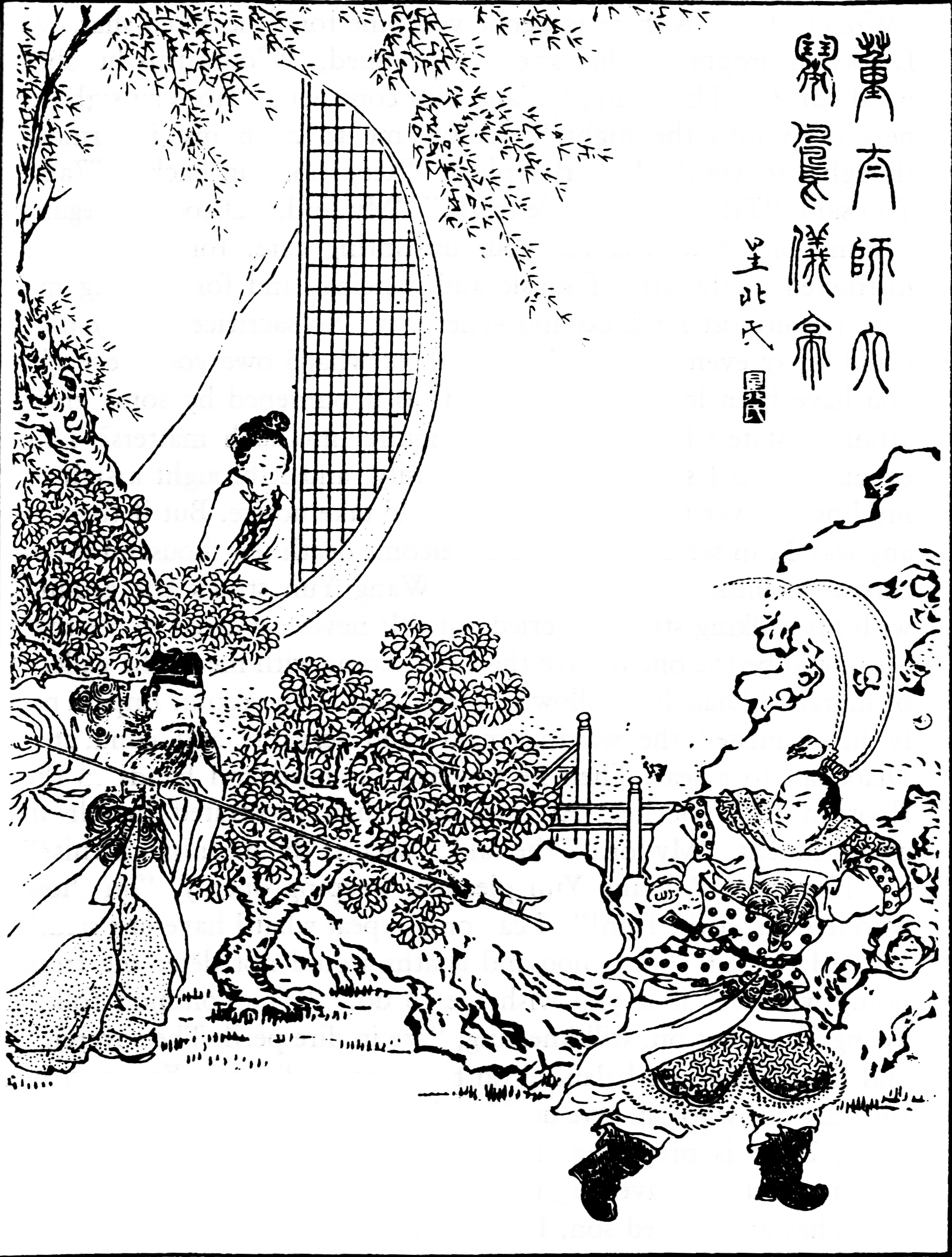
Diaochan (active 192-199 CE) was a member of the Four Meiren of China. Diaochan would later gain a Man Eater character who used her unparalled beauty to attain peace in Ancient China, even with all of the boy drama going on. See below how she sits watching on whilst one man nearly kill another for example. Diaochan is a fictional representation of the aspirations of contemporary Ancient women, who used beauty standards to exert their agency in realms which were mostly controlled and decided by the whims of the male gender, from that of Xi Shi's Damei Mei, to that of a new Outer Beauty.

Diaochan watching boytoy #2 annoy boytoy #1 (c.1644, PD) Anonymous

The Tale of Diaochan

Diaochan first appeared as the maid of the tyrant, Dong Zhuo. She became interested in the fighter Lu Bu. Fearing that the match would be found out in political machinations, Diaochan convinced her boytoy to do away with the tyrants head in 192 CE.

Interestingly, she did this by turning the two against each other using her beauty making each of them jealous of the other. One day, while sitting around in Zhuo's bed, after Bu appeared to hanky panky, Diaochan feigned unaliving, only to have boytoy #1 return to throw a spear at boytoy #2 and in boytoy machinations, to allow her to return to boytoy #2. Diaochan replies that this was only mere rape, and reattempts to unalive again. Thus boytoy #1 is once again a man whilst Diaochan is sat in a corner sipping tea.

In a fit of boytoy rage, boytoy #2 decapitates boytoy #1. After this Diaochan is freed from her teatime, and she flees off to Chang'an to drink more tea. After this, she is last mentioned at a warzone, where is presumably drinking tea as she watches her boytoys fight over her.

Developing Diaochan

Diaochan is an amalgamation of fiction. Even the name derives from the ornaments on officials hats worn in the Eastern Han dynasty. It refers to the soft 'sable cicada'.[1] Interestingly though, Diaochan was given more character over time, than her counterpart Zhaojun had been.[2] Diaochan went from the anonymous wife of a beheading man, to an active participant in the tyrants death and subsequent splintering of Ancient China by later writers. Albeit some Chinese operas did have her beheaded herself in their centuries later dramatics. Such as new boy wars means she falls into the hands of a prospective boytoy, who scared of the draw and power of her beauty to end his kingdom has her truly unalived. However, more folk tales often tell of her harem of boytoys available to her, even if this bring death her way in many of these tales, some by her own hand with mystical daggers, others in the throes of war.[1]

Moral of Diaochan

If anything, Diaochan is a tale about the failings of men than women's beauty, and the power women have over men in using their 'feminine wiles' to get others to do something. Men are the rats in Diaochans trap, she plays with them and then lays back to watch the scene unveil itself in matters of state and war. Diaochan is at the end of the day, what 'feminism' may say is a representation of the male power fantasy that objectifies woman as passive objects in the worlds and actions of men, however this is to remove all the nuance from the matter to me. What really Diaochan represents is that of the women in conservative, 'traditional' and patriarchal worlds who use their beauty to restore their own tranquility, whilst still operating in those realms and power structures. They are more honest with themselves about the resources on offer to them and their exchange power in that process. The Diaochan's of the world, are perhaps the female writers wishes of later operas, the power fantasies of bisexuals, the desires of mothers to have control, the feminine in control that is in these realms all these inhabit.

As a construct of Beauty, Diaochan is a mechanism the feminine has conjured against the patriarchal. She is a beautiful woman who uses sex to get what she wants, using her beauty to lure these men in a situation where they presume they are in control due to the politics of treating women with 'pretty privilege' to use the modern vernacular, as stupid. Diaochan in fact, in the one with a brain and turns the tables to present the moral of her tale, that whilst beauty is an ephemeral tool, it still holds great power and sway in the lives of all humans, men or women.

Outer Mei

In context therefore, Diaochan is a fictional embodiment of later reiterations of feminine beauty, power and limited agency in a patriarchal world. Her beauty is a means to an end, used for her own gain and in this way is a complete departure from the Heavenly Nymph archetypal Chinese Classical Beauty.[2] Diaochan if anything is a step towards the realisation that Outer Beauty was a valuable asset in human society, a shift from the male Damei Meiren whose beauty was Inner.[3] This leads us to the realisation of the worlds Tang, Asuka, Balhae and Silla women's beauty ideals, aspirations and pursual of beauty in displays of their power, agency and transformative creation of contemporary culture of beauty standards as Diaochan did in the realm of patriarchal Confucianism in Ancient China.

Bibliography

[1] https://en.wikipedia.org/wiki/Diaochan

[2] See Bijin #17 

[3] See Bijin #21

Bijin Series Timeline

11th century BCE

- The Ruqun becomes a formal garment in China (1045 BCE); Ruqun Mei

8th century BCE

- Chinese clothing becomes highly hierarchical (770 BCE)

3rd century BCE

Xi Shi (flourished c201-900CE); The (Drunken) Lotus Bijin

2cnd century BCE

        - The Han Dynasty

1st century BCE

Wang Zhaojun (active 38 - 31 BCE) Intermediary Bijin

0000 Current Era

1st century

        - Han Tomb portraiture begins as an extension of Confucian Ancestor Worship; first Han aesthetic                                scholars dictate how East Asian composition and art ethics begin

                       - Isometric becomes the standard for East Asian Composition (c.100); Dahuting Tomb Murals

                       - Ban Zhao introduces Imperial Court to her Lessons for Women (c106);                                                                    - Women play major roles in the powerplay of running of China consistently until 1000 CE, influencing                          Beauty standards

                       - Buddhism is introduced to China (150 CE)

                       - Qiyun Shengdong begins to make figures more plump and Bijin-like (c.150) but still pious

Diao Chan (192CE); The Outer Bijin

2cnd century

             - Yuefu folk ballads inspire desirable beauty standards of pining women [Coming Soon]

4th century

Gu Kaizhi (active 364-406); Metaphorical Beauty

        - Buddhism is introduced to Korea (c.372)

        - Chinese Artists begin to make aesthetic beauties in ethereal religious roles of heavenly Nymphs

                       - Luo River Nymph Tale Scroll (c.400)

          - Womens clothing emphasized the waist as the Guiyi (Swallow-Tail Flying Ribbons) style (c.400)

                       - Wise and Benevolent Women (c.400)

5th century

          - Chinese Art becomes decadent; Imperial Culture begins to see more expression in religious statues (c450)

                       - Longmen Grotto Boddhisattvas (471)

6th century

Xu Ling; (active 537-583); Terrace Meiren

7th century

            - Tang Dynasty Art (618-908)

           - Rouged Bijin (600-699 CE) https://commons.wikimedia.org/wiki/Category:Paintings_of_the_Tang_Dynasty

Yan Liben (active 642-673); Bodhisattva Bijin [Coming Soon] https://commons.wikimedia.org/wiki/File:%E0%B8%81%E0%B8%A7%E0%B8%99%E0%B8%AD%E0%B8%B4%E0%B8%A1.jpg Guan Yin  | https://archive.org/details/viewsfromjadeter00weid/page/22/mode/1up?view=theater

Wu Zetian (active 665-705); The Great Tang Art Patron [Coming Soon]

Asuka Bijin (c.699); The Wa Bijin

8th century

            - Princess Yongtai's Veneration Murals (701) [Coming Soon]

- Introduction of Chinese Tang Dynasty clothing (710)

- Sumizuri-e (710)

Yang Yuhuan Guifei (719-756); [Coming Soon] East Asian Supermodel Bijin https://core.ac.uk/download/pdf/275768522.pdf https://factsanddetails.com/china/cat2/4sub9/entry-5437.html#chapter-5

            - Astana Cemetery (c.700-750) [Coming Soon]

Zhang Xuan (active 720-755); [Coming Soon]

- What is now Classical Chinese Art forms

                    - An Lushun Rebellion (757) 

 Zhou Fang (active 766-805) ; Qiyun Bijin

- Emakimono Golden Age (799-1400)

9th century

                       - Buddhist Bijin [Coming Soon] https://commons.wikimedia.org/wiki/Category:Paintings_of_the_Tang_Dynasty#/media/File:Noble_Ladies_Worshiping_Buddha.jpg + https://en.wikipedia.org/wiki/Mogao_Caves#/media/File:Anonymous-Bodhisattva_Leading_the_Way.jpg

                    - Gongti Revival https://www.jstor.org/stable/495525?seq=2#metadata_info_tab_contents

10th century

                       -End of Tang Art (907)

13th century

                     - Heimin painters; 1200-1850; Town Beauty

15th century 

- Fuzokuga Painting schools; Kano (1450-1868) and Tosa (1330-1690) 

Tang Yin (active 1490-1524); Chinese Beauties [Coming Soon] https://www.comuseum.com/painting/masters/tang-yin/ 

16 century 

- Nanbanjin Art (1550-1630) 

- Wamono style begins under Chanoyu teachings (c1550-1580)

- Byobu Screens (1580-1670)

 - End of Sengoku Jidai brings Stabilisation policy (1590-1615)  

17th century  

- Land to Currency based Economy Shift (1601-1655)

- Early Kabuki Culture (1603-1673) ; Yakusha-e or Actor Prints

- Machi-Eshi Art ( 1610 - 1710) ; The Town Beauty

- Sumptuary legislation in reaction to the wealth of the merchant classes (1604-1685) 

- Regulation of export and imports of foreign trade in silk and cotton (1615-1685)  

Iwasa Matabei (active 1617-1650) ; Yamato-e Bijin  

The Hikone Screen (c.1624-1644) [Coming Soon]

- Sankin-Kotai (1635-1642) creates mass Urbanisation  

- Popular culture and print media production moves from Kyoto to Edo (1635-1650); Kiyohara Yukinobu (1650-1682) ; Manji Classical Beauty

- Shikomi-e (1650-1670) and Kakemono-e which promote Androgynous Beauties;

 Iwasa Katsushige (active 1650-1673) ; Kojin Bijin

- Mass Urbanisation instigates the rise of Chonin Cottage Industry Printing (1660-1690) ; rise of the Kabunakama Guilds and decline of the Samurai

- Kanazoshi Books (1660-1700); Koshokubon Genre (1659?-1661)

- Shunga (1660-1722); Abuna-e

Kanbun Master/School (active during 1661-1673) ; Maiko Bijin 

- Hinagata Bon (1666 - 1850) 

- Ukiyo Monogatari is published by Asai Ryoi (1666) 

Yoshida Hanbei (active 1664-1689) ; Toned-Down Bijin

- Asobi/Suijin Dress Manuals (1660-1700)

- Ukiyo-e Art (1670-1900)

Hishikawa Moronobu (active 1672-1694) ; Wakashu Bijin

- Early Bijin-ga begin to appear as Kakemono (c.1672)  

- Rise of the Komin-Chonin Relationship (1675-1725)

- The transit point from Kosode to modern Kimono (1680); Furisode, Wider Obi 

- The Genroku Osaka Bijin (1680 - 1700) ; Yuezen Hiinakata

Fu Derong (active c.1675-1722) ; [Coming Soon] https://archive.org/details/viewsfromjadeter00weid/page/111/mode/1up?view=theater

Sugimura Jihei (active 1681-1703) ; Technicolour Bijin 

- The Amorous Tales are published by Ihara Saikaku (1682-1687)

Hishikawa Morofusa (active 1684-1704) [Coming Soon]

- The Beginning of the Genroku Era (1688-1704)

- The rise of the Komin and Yuujo as mainstream popular culture (1688-1880) 

- The consolidation of the Bijinga genre as mainstream pop culture 

- The rise of the Torii school (1688-1799) 

- Tan-E (1688-1710)   

Miyazaki Yuzen (active 1688-1736) ; Genroku Komin and Wamono Bijin 

Torii Kiyonobu (active 1688 - 1729) : Commercial Bijin

Furuyama Moromasa (active 1695-1748)

18th century

Nishikawa Sukenobu (active 1700-1750) [Coming Soon]

Kaigetsudo Ando (active 1700-1736) ; Broadstroke Bijin

Okumura Masanobu (active 1701-1764)

Kaigetsudo Doshin (active 1704-1716) [Coming Soon]

Baioken Eishun (active 1710-1755) [Coming Soon]

Kaigetsudo Anchi (active 1714-1716) [Coming Soon]

Yamazaki Joryu (active 1716-1744) [Coming Soon] | https://www.jstor.org/stable/25790976?seq=5

1717 Kyoho Reforms

Miyagawa Choshun (active 1718-1753) [Coming Soon]

Miyagawa Issho (active 1718-1780) [Coming Soon]

Nishimura Shigenaga (active 1719-1756) [Coming Soon]

Matsuno Chikanobu (active 1720-1729) [Coming Soon]

- Beni-E (1720-1743)

Torii Kiyonobu II (active 1725-1760) [Coming Soon]

- Uki-E (1735-1760)

Kawamata Tsuneyuki (active 1736-1744) [Coming Soon]

Kitao Shigemasa (1739-1820)

Miyagawa Shunsui (active from 1740-1769) [Coming Soon]

Benizuri-E (1744-1760)

Ishikawa Toyonobu (active 1745-1785) [Coming Soon]

Tsukioka Settei (active 1753-1787) [Coming Soon]

Torii Kiyonaga (active 1756-1787) [Coming Soon]

Shunsho Katsukawa (active 1760-1793) [Coming Soon]

Utagawa Toyoharu (active 1763-1814) [Coming Soon]

Suzuki Harunobu (active 1764-1770) [Coming Soon]

- Nishiki-E (1765-1850)

Torii Kiyonaga (active 1765-1815) [Coming Soon]

Kitao Shigemasa (active 1765-1820) [Coming Soon]

Maruyama Okyo (active 1766-1795) [Coming Soon]

Kitagawa Utamaro (active 1770-1806) [Coming Soon]

Kubo Shunman (active 1774-1820) [Coming Soon]

Tsutaya Juzaburo (active 1774-1797) [Coming Soon]

Utagawa Kunimasa (active from 1780-1810) [Coming Soon]

Tanehiko Takitei (active 1783-1842) [Coming Soon]

Katsukawa Shuncho (active 1783-1795) [Coming Soon]

Choubunsai Eishi (active 1784-1829) [Coming Soon]

Eishosai Choki (active 1786-1808) [Coming Soon]

Rekisentei Eiri (active 1789-1801) [Coming Soon] [https://commons.wikimedia.org/wiki/Category:Ukiyo-e_paintings#/media/File:Rekisentei_Eiri_-_'800),_Beauty_in_a_White_Kimono',_c._1800.jpg]

Sakurai Seppo (active 1790-1824) [Coming Soon]

Chokosai Eisho (active 1792-1799) [Coming Soon]

Kunimaru Utagawa (active 1794-1829) [Coming Soon]

Utagawa Toyokuni II (active 1794 - 1835) [Coming Soon]

Ryūryūkyo Shinsai (active 1799-1823) [Coming Soon]

19th century

Teisai Hokuba (active 1800-1844) [Coming Soon]

Totoya Hokkei (active 1800-1850) [Coming Soon]

Utagawa Kunisada Toyokuni III (active 1800-1865) [Coming Soon]

Urakusai Nagahide (active from 1804) [Coming Soon]

Kitagawa Tsukimaro (active 1804 - 1836)

Kikukawa Eizan (active 1806-1867) [Coming Soon]

Keisai Eisen (active 1808-1848) [Coming Soon]

Utagawa Kuniyoshi (active 1810-1861) [Coming Soon]

Utagawa Hiroshige (active 1811-1858) [Coming Soon]

Yanagawa Shigenobu (active 1818-1832) [Coming Soon]

Katsushika Oi (active 1824-1866) [Coming Soon]

Hirai Renzan (active 1838ー?) [Coming Soon]

Utagawa Kunisada II (active 1844-1880) [Coming Soon]

Yamada Otokawa (active 1845) [Coming Soon] | 山田音羽子 https://www.jstor.org/stable/25790976?seq=10

Toyohara Kunichika (active 1847-1900) [Coming Soon]

Kano Hogai (active 1848-1888) [Coming Soon]

Tsukioka Yoshitoshi (active 1850-1892) [Coming Soon]

Noguchi Shohin (active c1860-1917) [Coming Soon]

Toyohara Chikanobu (active 1875-1912) [Coming Soon]

Uemura Shoen (active 1887-1949) [Coming Soon]

Kiyokata Kaburaki (active 1891-1972) [Coming Soon]

Goyo Hashiguchi (active 1899-1921) [Coming Soon]

20th century

Yumeji Takehisa (active 1905-1934) [Coming Soon]

Torii Kotondo (active 1915-1976) [Coming Soon]

Hisako Kajiwara (active 1918-1988) [Coming Soon] https://www.roningallery.com/artists/kajiwara-hisako | https://www.jstor.org/stable/25790976

Yamakawa Shūhō (active 1927-1944) [Coming Soon]


Social Links

One stop Link shop: https://linktr.ee/Kaguyaschest

https://www.etsy.com/uk/shop/KaguyasChest?ref=seller-platform-mcnav 

https://www.instagram.com/kaguyaschest/ 

https://www.youtube.com/channel/UC5APstTPbC9IExwar3ViTZw 

https://www.pinterest.co.uk/LuckyMangaka/hrh-kit-of-the-suke/
Sunday, October 15, 2023

蝶 | チョウ | Butterfly | Patterns #21

Butterflies represent the motif of transformation and renewal. They are most often also representative of spirits passing from one world to the next, sometimes who have taken their lives together to elope into the other world.[1][2][5] They also symbolise the maturity of young girls becoming young women.[3] Other meanings can also include intrigue, and it is said if the butterfly is captured this will dispel this.[5] Tsukure obi ( つくれ帯 | Pre-tied Belt ) are commonly tied in a Butterfly knot (Cho Musubi | 蝶結び ).[4] Even updoes take their cues from Butterflies, in the style of the Yoko-Hyogo (Butterfly Hairstyle).[5]

Presents for a loved one (c.1810, PD/CC1.0) Ryuuryuukyo Shinsai

Historically Butterflies have long carried connotations of the otherworld, and thus appear in a number of family crests. Some of the earliest artistic depictions come from the Heian period, in turn influenced by Chinese philosophy about the fleeting, transitory nature of butterflies in the lives of human as in the story of Zhuang Zhi who dreamt of being a butterfly and then got confused about being a human or a butterfly, because he could.[3][5] Butterflies commonly appeared in many artistic mediums of the early Edo period, including Kimono, woodcuts and Origami designs.[3] This is mostly from the 1660 onwards obsession of Komin to depict Yuujo and stage performers. Even Hokusai involved himself in the depiction of this famous motif.[3] Unfortunately, the Long character/stereotype 'Cho-Cho' (1904) also means butterfly and in this way is also adopted in Occidental Literature to denote fragility, submissiveness and other surface aesthetic notions of Japanese culture. The 1900s-1950s saw a rise in the use of the motif as more families derived on the national surplus from Japan Inc. were able to buy their children fancier wafuku such as Furisode, a popular trend in the 1930's was to have these lined with gold which in the modern day has become just a white outline. 

Bibliography

[1] https://nalatanalata.com/journal/motifs-in-japanese-design/#:~:text=In%20Japanese%20culture%2C%20butterflies%20carry,number%20of%20traditional%20family%20crests.

[2] The first chapter of Bleach. Recommended for the art alone. Story is muy dissapoint.

[3] https://news.artnet.com/art-world/a-history-of-butterflies-in-art-2085638#:~:text=In%20Japan%2C%20the%20butterfly%20has,of%20female%20ritual%20and%20experience.

[4] http://www.japonic.com/obi/obi24.htm

[5] https://arteingiappone.altervista.org/en/butterflies-in-japanese-and-western-art/

Socials:

One stop Link shop: https://linktr.ee/Kaguyaschest
https://www.etsy.com/uk/shop/KaguyasChest?ref=seller-platform-mcnav 
https://www.instagram.com/kaguyaschest/ 
https://www.youtube.com/channel/UC5APstTPbC9IExwar3ViTZw 
https://www.pinterest.co.uk/LuckyMangaka/hrh-kit-of-the-suke/ 

Sunday, October 1, 2023

コーデュロイ | Corduroy | Pile Plain-Twill Weave | Fabrics #21

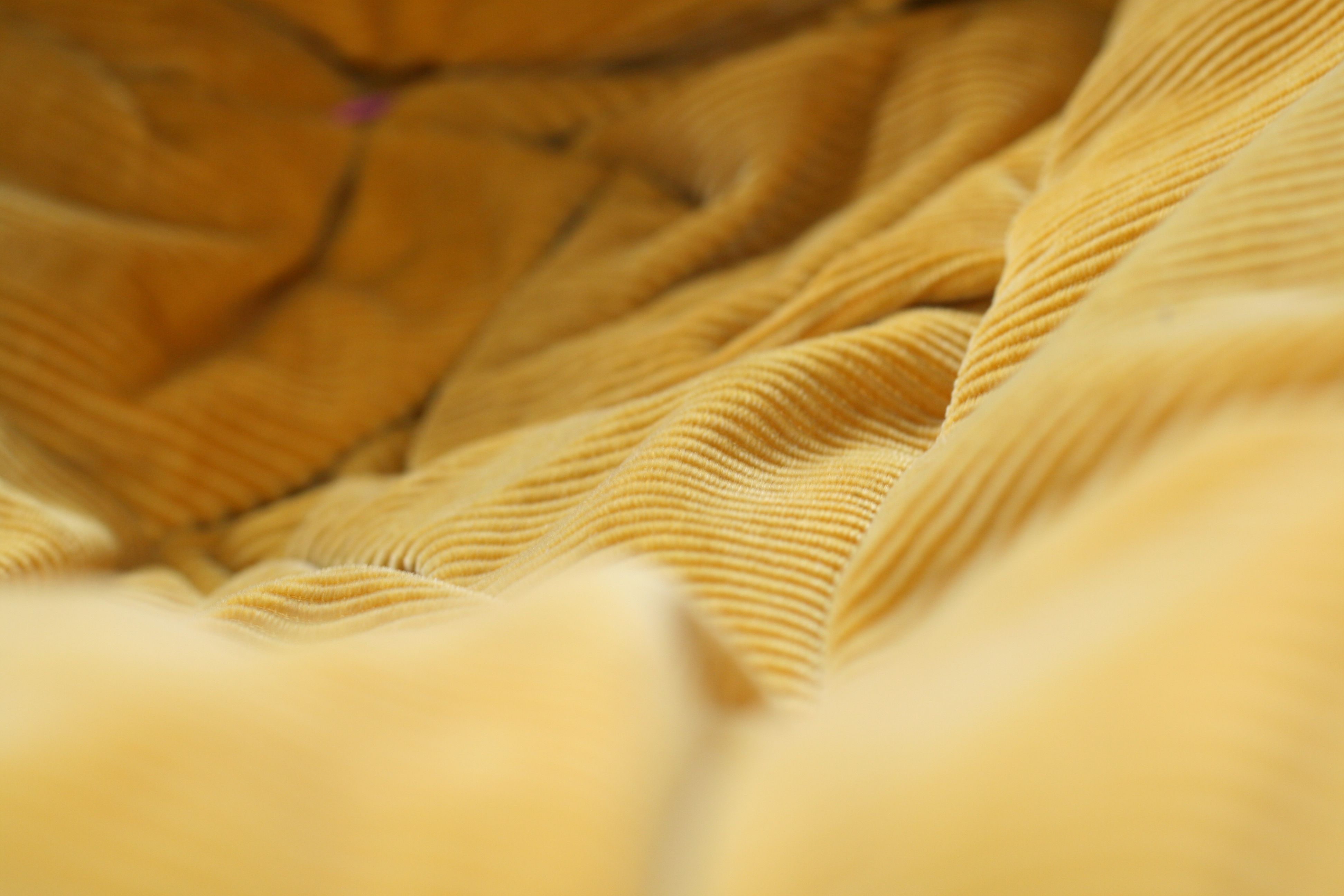
So I am quite busy this week due to relaunching the shop in the coming weeks. This time, we have what started as something of a mix of time restraint, dodging my over organized responsibilities and curiosity. Thus we have this weeks blogpost 2 days before its deadline and a very brief recounting of my googling about novel fabric wafuku. Corduroy as a fabric originates from and English duroy cloth, made of conjoined cords/wales from pile yarn. The back can be a plain/twill weave and is woven using one warp and two weft threads which create the pile effect of corduroy I think.

Yellow Corduroy (2008, CC3.0) Emerzh


Corduroy! Oh great Corduroy, you have revealed your mysteries to us! You actually apparently exist![1] Whilst it seems that this may purely have been a fad of the 1970s love of corduroy perhaps?[2] Either way a very interesting fabric choice, becuase you can obviously make such wonderful graduating shades with the pile in the fabric. Something to consider if I ever find the time to make another Kimono. There also seems to be some workmen's Hanten made from corduroy, which makes sense becuase of how durable a fabric it is, but I cannot find much evidence nor know of anymore examples than 2 found online so a theoretical one for now. But corduroy Kimono exist! Huzzah!

Bibliography

[1] https://www.etsy.com/uk/listing/1465725214/vintage-chrysanthemum-pattern-corduroy?ga_order=most_relevant&ga_search_type=all&ga_view_type=gallery&ga_search_query=corduroy+kimono&ref=sr_gallery-1-3&sts=1&organic_search_click=1

[2] https://www.gloverall.com/blogs/journal/history-of-corduroy#:~:text=Corduroy%20reached%20peak%20popularity%20in,Pablo%20Picasso%20and%20Wes%20Anderson.

Socials:

One stop Link shop: https://linktr.ee/Kaguyaschest
https://www.etsy.com/uk/shop/KaguyasChest?ref=seller-platform-mcnav 
https://www.instagram.com/kaguyaschest/ 
https://www.youtube.com/channel/UC5APstTPbC9IExwar3ViTZw 
https://www.pinterest.co.uk/LuckyMangaka/hrh-kit-of-the-suke/ 

Sunday, September 17, 2023

ヘルマンの'着物' | Herman's 'Kimono' | 2021 | Essay 21

In this essay I look at another Kimonope, specifically another Miss Universe 'national costume' entry.[1] This particular Kimonope represents the legacy of Macarthism's neo-colonial/systemic racism, and subjugation of Japanese soft-power, a follow on of Orientalist late 19th/early 20th century assumptions and stereotypes of Asian culture and peoples which saw their subjugation in American foreign and domestic policy between 1885-1952.[3][4][5][6] In this entry, we see a clear leaning into the 'Cool Japan' aesthetic by the Kimonope's designer, who is not shockingly not Japanese, but Israeli and therefore represents ideas about what Kimono are to this designer than the genuine article would to other participants of KTC, foreigner or otherwise towards 'Kimono'.[1][5]

An example of what should have been (2018, CC4.0) Nesnad

The Individuals Responsible

The great designer himself was the notable Aviad Arik Herman (b.1984), an Israeli costume and fashion designer who seems to work exclusively in pageant costumes.[1] An Israeli designer was chosen to represent the symbolic weight of the 70 year celebration of diplomatic relations between Japan and Israel.[1] Herman was supposedly inspired by 'Harajuku fashion culture' which sounds more something my highschool textiles design teacher came out with than a high level designer on a global stage, but here we are.[1]

Ms Juri Watanabe (b.1995) is arguably American-Asian having grown up in a diverse family, home and school environment, going into the pageant world in 2016.[1][2] 

The Event

The 2021 Miss Universe pageant occurred in Israel at Eilat and the Kimonope worn by the Japanese-Korean representative, Juri Watanabe for the 'National Costume' section.[1] Kimono Wednesdays could never. Yes Im still salty.

I will point you to my previous thoughts on Kimono as 'national costumes':

Kimono after the 1950s fell away from its mores from 1900-1940 of being an exotic, expensive textile, to being a garment worn by a defeated nation when Japan became occupied by the USA from 1946-1952. During this time, elements of society which pushed Longingism, which gained traction from 1885-1920s America with the rise of Asian labour movements and immigration into the USA, created the Kimonope, which associated the Kimono as an 'Oriental' garment.[3]

[For me,] Kimono is a type of clothing which can be worn by anyone, an idea which the broadcaster NHK clearly thought so as well. Japanese Americans, whilst rightfully having the historical claim to the Kimono [...], perhaps did not foresee the global issues that claiming the Kimono as a 'Traditional Garment' may bring [...]. This [Traditional Garment/National Costume] Argument being unfortunately a spearhead of the 'culture wars' inspired by Wilsonianism which declares that non-White powers may not be considered or constituted in the worlds of academic, politics and popular culture [... in] being considered global popular culture. Instead that [...] that 'developing' countries instead be left to 'develop' away from the wealth of the United States, [...] a sort of FU to the fact that Japan had entered the world stage as a great power, and thus denial of all things Japanese as bad. [Instead the benevolent USA must prevent Communism and return ...] everything [...] back to its natural [Wilsonian] order [...]. Kimono as a visible [Asian/Japanese] cultural marker, were by this point definitively recognised by the Japonisme movement at the very least, as global popular culture [in the early 20th century], and thus the birth of the Traditional Argument (ie that Kimono is simply just a Japanese garment only to prevent pan-Asian interests taking root) and breaking down of US-Japanese relations began (seFred Korematsu v United States, 1944-2018). [...This argument is] the very trap Wilsonianism lays for 'developing' nations. It isolates the object in question (here Kimono), rips it asunder from its history, values and context, and flings it to the sorting bins of history where nobody will find it. Kimono Wednesday protests meant well, but in the end, they have sent the wrong messages to the wrong people, and helped to isolate, relegate and simplify Kimono into a relic of the Yamato. That is to say deny how the Kimono played a role in and from Asian Empires, to ignore the Kimono as a global presence in Western and other Art Histories, and to penultimately again, isolate, relegate and simplify the Kimono into an exotic national costume, worn by the Japanese. A label I do not wish to ever have to repeat here or anywhere else [unless quoting]. By this, I mean [Asian-Americans like Ms.Watanabe] have done Wilsons work for him in promoting the idea of the Kimono as an exotic 'ethnic garment' only to be worn by Japanese people and their descendants, and which denies the wider history of Kimono as a cultural touchstone [instead promoting oriental-adjacent Kimonopes ...] essentially saying that Japanese fashion is less important than American fashion, by relegating Kimono to being a product only worn in the past [...] isolating Kimono as something exotic or 'Japanese' (a fraught argument supporting homogeneity and ethnocentrism) and simplifying the complex worlds which KTC operates in as somehow unworthy of note to anyone who isnt Japanese. As such, I refute that Kimono making is a dying industry on the grounds that is a blatant lie, it is in fact adapting to the age it is in, as it has always done as a social construct, and that to think that one thing can belong to only one group as rather part of the 20th century Wilsonian anti-Asian dogma. [...] Until [considering] how ['Kimono'] was created under Chinese and Korean influence during the Asuka and Kofun periods, and as part of globalisation, not simply as 'a national costume appropriated by Westerners', but rather as with the rest of KTC, and other garments, simply a social construct [as with Western garments, e.g. T-shirts]. This is seen in the paintings, Mandalas, Embroideries and texts extant from the period when corrobarated with wider Mainland Asia garment history. I relate this to Kimono [Wednesdays] because it may allow for a wider dialogue on cultural exchange in the hope not everything 'foreign' is labelled exotic, turned into a problem, lost to history or simplified as just being a 'costume' or 'cultural appropriation' [as if graphic T-shirts for example can only be worn by certain groups of Americans as it is a traditional garment or iconic national American costume].[4]

National Costumes, [...] in English [describe ...] the historically European tradition of giving 'National Costumes' to certain groups [begun] in the 18th century [...] to define what a country was and took off in the 19th in the advent of European Colonization [of] pseudo-classif[ications in ...]  series of illustrated books drawn by many European and later American and Asian artists depicting the 'National Dresses' of certain groups [in ...] 'rational' 'native' outfits which continues as National Costume Colouring books today. [...] an example being the controversial Han-fu for China, [... rather than the Qipao]. Nationality like money and gender, is a social construct; one that at times gatekeeps other ethnic identities from exerting any kind of power and suppresses more diverse national stories. In Britain for example, there is no such definitive thing as a Kimono to call a National Costume. Instead we are often represented by tacky costumes only fit for Halloween which riff on the idea of what it means to be 'British', which axiomatically is a million and one things. [... Consecutively, as a] Beefeater (Yeomans Warder) [since] 1962. [...] Other editions [include ...] the latest by Jeaneatte Akua in a bid to the Pearley Kings and Queens of working class London culture. [...] 'National Costumes' [have] carved out a space for themselves, as a need to make space in a dominant cultural identity which threatened to wipe their own out[, e.g. Tartan ...] I in particular do not refer to Kimono as a National Costume or Dress, as it a patriarchal paternalistic notion of hegemonic cultural/White supremacy that Kimono are distinctly outdated womens attire, only fit for the 'lesser race' (in the words of Leonce Benedite) [or the Dying Kimono trope of...] Macarthism. [... which pushes] the idea that traditional Japanese culture is inferior to the superior Western culture. [...] Akiko Kojima [..., another older Miss Universe, wore] Kimono as everyday or at least casual wear, not as a traditional 'Oriental costume'. [... In Kojima's time,] generally civilian Japanese had not got the message yet about Americas superiority complex. [Changing by ...] the 1960s when Japan, as [in 1860 'Westernized' ...] to reclaim its own [... soft power agency]. This internalized Macarthism is reflected in the way Ms. Akiko was represented in American society [... by] Harpers Bazaar, a magazine that refused previously to run models of 'color' in its pages [and was strikingly] presented in Western dress, not Kimono [... telling] us of the fact that Kimono was not considered fashionable enough to be considered as fashion in its own right, instead Akiko wore *acceptable* white brands such as Sarff-Zumpano Inc. [... at a time when Honshu Japanese dealt] with the caveat of internalized inferiority dealt with the idea that 'Japan lost the [Pacific] war'. This attitude in Japan commonly refers to the postwar generation of Japanese Teeners [...] who felt the burden of growing up in the shadow of Macarthism, in a world which saw the subjugation of Japanese culture as 'feudal', saw Japanese people as 'savages' for fighting on the wrong side of WWII and the unlawful incarceration of Nissei Americans (1942-1947). When 'Sukiyaki' was released to Western audiences it gave notions of Beef dinner, to a Japanese Teener, Ue o Muite Arukō (I look up as I walk) was reminiscient of the frustration of dealing with American occupation in the Anpo protests (1959-1970) and the Sunagawa Struggle (1955-1956). Its culmination being the murder of Chinese-American Vincent Chin in 1982 at the hands of Statesian men who thought he was Japanese. [Ergo ...] casual wear of the Kimono becomes a thing of your mothers generation by 1975, and your grandmothers by 1995. [...] When the next winner of Miss Universe wore Kimono, it was as a 'National Costume' in 2007 by Riyo Mori who wore an altered Kimono. Ever since[then] it has been commonly accepted that Japanese pageant goers wear Kimono to the National Costume section of the event. [... Also] 'Cool Japan', a sort of right wing Japanese politicians wet dream of global Japanese hegemony [...] has attempted to adopt the Kimono as a National Costume as well which is a strand of Japanese paternalism [...] about the 'correct way' to wear Kimono [...] mixed with a dash of inferiority complex, [...] is certainly a proponent of the issue of bringing KTC into the global world as global fashion under Macarthism's influence. [Which ...] fosters a disturbingly ethnocentric idea of Kimono, which is also another thorn in the side of KTC. [... Moves towards] national costumes like the Seifuku is particularly reassuring as it is the Death of the 'Dying Kimono' trope, in saying that Kimono is current and alive, and that culturally Japan has more to its 'national' culture than just reasserting 'Wafuku'. Wamono in this sense has shifted to a more inclusive contemporary understanding of the national, away from the stereotypical Longingism of 'coolies' and 'Geisha-girls'. [Overall, ...] many national costumes depends on how we define national culture. Kimono and other 'traditional' garments are often seen as 'national dress' due to the decline of their wear after the introduction of Western power structures, colonization and efforts to 'modernize' under globalisation. After 1955, this evolves from Macarthistic policy, which becomes internalized in Japanese culture by 1970 becoming the 'Dying Kimono' trope, which precipitates that old 'feudal' Japanese culture has been shed off becoming 'modern' Japan. After 1990 though, KTC was revived domestically and has since re-emerged as casual clothing once more both in Japan and globally with the rise of the digital age. [However ...] when we explore how we get to the notion of certain modes of dress being 'Costumes' we can see how this can be a negative reinforcement of existing power structures through lenses such as Macarthism. The Kimonopes which exist in these spaces are often attempts at cultural appreciation, but more often are regarded as objects of cultural appropriation by many. Thankfully, we can also see post 2005, a resurgence in the pageant and fashion worlds of KTC as influential global fashion (for example the 2016 Furisode for Miss Mexico at Miss Latina USA designed by Sueko Oshimoto). This sees the Kimono as a modern incarnation of fashion, part of its revival in the contemporary world we live in and allows Kimono to be seen as desirable in the current beauty standards we ourselves hold, unravelling the work of hwight supremacists. Thus seeing the reemergence of KTC as living, contemporary fashion, as seen in high fashion, beauty pageants and street fashion.[5]
Girl in Harajuku on her phone (2008, CC2.0) Charlotte Marillet

The Result

Watanabe's Highlight Reel (2021, Educational) Youtube

Ms Watanabe finished in 16th place.[2] Thus she did dig her own grave, so perhaps it was quite a spot on Kimonope of a cocktail dress.

As you can see, this resulted in the ... creation before us. This pink-yellow mockery of a cultural besmirching wad of gum underfoot was paraded around by Watanabe in all its stereotypical glory. May we observe the maneki-neko, very Harajuku of course. Or fact this particular design has the Eri folded over incorrectly, such that its wearer may be read as going to her funeral. Muy Harajuku. Perhaps it may be the giant letter scrawled across her bare chest, another set of cultural faux pas in revealing the cleavage or potentially imitating tattoos, a cultural trait seen as inherently negative in its connotations Japan. Sehr Harajuku. We may also observe the perhaps stuck on Chrysanthemum belt or the flags attached to the sleeves. Very, very Harajuku fashion culture.[1] The boots were great though, the 'cocktail dress'[5] not so much. 

Conclusion

In context we can see how two POC people did not quite equal cultural appreciation, but rather an example of cultural appropriation in the promulgation of Kimonope. Rather unnecessarily as well, as members of the definitely not weirdly assimilating free thinking POC block of free-thinkers. Indeed they fell prey to Orientalist, internalized racist tropes which since the 1880s has dictated the terms Kimono's are received to international audiences, that is as objects consumed by white people, for white people. Ignoring the vibrant role of KTC in global history, popular culture and Japanese soft power on the international stage with the advent of Macarthism in the 1940s and the decline of Japanese hard-power during the occupation of Japan by SCAP forces.[3][4][5] This reinforcement of Longingism and Macarthism follows a tradition of seeing Asian-American and Asian workers as 'coolies' and 'Johnny Chinamen' whose labour and culture (the Kimono) was subservient and disposable to that of white North Americans, as seen during the time of Wilsonian and Roosevelt's policy-making, both foreign and domestic.[3][6] 

This inadvertant support of ethnocentrism neo-colonialism makes as much sense as gatekeeping African children from wearing graphic T-shirts Statesian dump on them; (as they are 'products of American culture'/'traditional American dress' and is to only be worn by the 'Statesian race'/that the Pedi Tribe cannot wear Tartan) thrown in the face of Asian-American grandparents who fought to normalize Kimono and other adjacent garments like Qipao, Sari and Việt phục as normal attire against the backdrop of 20th century race relations in neo-colonial systemic structures, which turn the Kimono into an Orientalist costume rather than as contemporary fashion, particularly evident in how people living in Japan reacted to this Kimonope.[1] Kaguyas Verdict: Clear-cut Cultural Appropriation.

Bibliography

[1] https://japantoday.com/category/national/miss-universe-2021-japan-entry-slammed-for-wearing-%27dead-person%E2%80%99s-kimono%27-1

[2] https://conandaily.com/2023/06/01/juri-watanabe-biography-13-things-about-miss-universe-japan-2021/

[3] See Essay #4

[4] See Essay #11

[5] See Essay #16

[6] See Essay #19

Essay Abstracts 

#1 Renee Vivien (1877 - 1909) --- Born Pauline Tarn, was an English lesbian poet. She wrote in French and perhaps English. She took up the style of the Symbolists and Parnassinism and was well known during the era of the Belle Epoque (the Beautiful Age) for producing Sapphic verse and living as an open quasi butch lesbian poet; her verse derived from the ancient poet Sapphos, also famed for her love of women.

# 2 Birth of the Kimonope --- Here I shall introduce the notion of the Kimonope, that is as a garment attached to the social construct of the 'Geisha' in North America. Kimonopes being Orientalized clothing, or 'negatively affiliated or exoticized ethnic dress' which lead to the perceived notion of the Kimono and Geiko as simultaneously both high and low culture to American culture makers, such as film, television, media, writers and some academics. An example of Kimonope are the tacky Halloween costumes you may find at the Dollar store.

#3 The Legacy of the MacArthur Dynasty on KTC & The Problem with the 'Traditional Garment' Argument --- The problem with arguing that the Kimono is a 'Traditional ethnic Garment' is that that assertion is in itself, arguably  Ethnocentrism, which to clarify is the imposition of, in this case, American values onto Japanese cultural values, belaying the 3 pronged pitchfork of idiocy. 

#4 Divine --- Government name Harris Glenn Milstead (1945-1988) was the infamous North American Queen & Drag artist. Specifically, Divine was known for being a character actor, part of her act is well-known for its eccentricity. My personal exposure to Drag lite was Pantomine Grand Dames as a kid, and later when my friends made me watch RuPaul in art classes, so to me this is nothing new, the over the top, the glitter, the upstaging is all part and parcel.

#5 Dori-Style or 21st century Kimono Fashion --- The Dori-Kimono style. Something which I just made up because in going over notes for the first 20 years of 21st century section of Kimono history, I noticed a lack of a clear catchall term for what was happening in Japan at the time, at least in English descriptions of the time. I use the term Dori as I do not want to coin an unrelated term to the topic, but I also am reticent to claim all of Street style as 'Tori' either, whilst a large number of streets upon which the subculture originates in all use the suffix 'dori' (the bottom of Takeshita-dori for example), thence Dori-style.

#6  The Tea Gown --- This essay will cover the aspects of how 19th century Japanese import textiles to Western countries were used and repurposed, as well what their desirability tells us about how Japanese design was regarded and the image which these people held of Japan through the Western lense and consciousness. This follows the progression of how Kimono can be used in the West from the undress of the 1860s, adapting silk bolts in the 1870s to high fashion western daywear, to the 1880s aesthetic movement and 1890 wholesale adoption in the Victorian age to being used prominently by society hostesses as tea gowns by the Edwardian period, and the subsequent change in Japanese export culture which we see in extant textile collections of Japanese textile in Western dresses of the periods.

#7 Kimono and the Pre-Raphaelite Painters --- This essay will cover the aspects of Kimono in the Portraiture of the Pre-Raphaelites. The Pre-Raphaelites were a group of British artists and writers active during the late Victorian period. Unlike the Royal Academy artists, this circle of painters operated outside of the established comfortable boundaries of the expected white, cisgender middle class audience of the Victorian age. The movement is notable for its inclusion and encouragement of women, and in portraying and engaging non-conventional beauty and beauties as figures from the Classical World alongside Religious, Mythological and Folklore Heroines into Victorian 'Femme Fatales'.

#8 Jokyo/Genroku Kimono Textile Culture and the new role of the Komin ---  This essay will return back to GKTC (Genroku Kimono Textile Culture ; 1688-1704) and JoKTC (Jokyo K.T.C. 1684-1688) and the new role of the Komin (Artist caste) in GKTC. JoKTC is notable for being the lead up to GKTC, JoKTC being characterised by its transitory nature in comparison to GKTC, which was far more bold in its relations to what Kosode could and should be. Komin entered the picture at this juncture, and I shall elaborate a little more here than in other posts about why that was. GKTC is notable for its elaborate, perhaps gaudy and innovative Kosode design features, whilst JoKTC more so for the enabling factors of the time, as a sort of incubatory GKTC.

#9 Tagasode Byobu - This essay will explore the art motif known in Japanese art as Tagasode Byobu ( Whose sleeves Screen) This motif is a recurring art form which was particularly popular during the Azuchi-Momoyama era ( 1568-1600 ) as a representation of the ways in which Buddhist sensibilities met with the fast changing events of the end of the Sengoku Jidai (1467-1615) and as an extension of the habit of wealthy women from military families came to own and store a large number of Kimono. Prior to this, Kin Byobu ( Golden Screens) for the most part depicted nature like Sesshuu Touyou (1420-1506) after Chinese Cha'an painter Muxi ( c.1210-1269 ) or 'flower-and-bird' scenes like those of Kano Eitoku (1543-1590), rather than humans or human paraphernalia as an extension of the Zen painting school of thought about materialism.

#10 Cultural Acculturation --- The topic of our essay is on the nature of Cultural Exchange in KTC which will be an ongoing mini-series throughout 2022. This covers the 1000CE - 1500 period in Japanese History.

#11 Cultural Appropriation --- The topic of our essay is on the nature of Cultural Appropriation which will be an ongoing mini-series throughout 2022. 

#12 Cultural Acculturation --- The topic of our essay is on the nature of Cultural Acculturation which will be an ongoing mini-series throughout 2022. This covers the Asuka (Hakuho), Nara (Tempyo), and Heian periods (500CE-1000CE) in Japanese History.

#13 Asai Ryoi --- This essay will explore the legacy of Asai Ryoi on KTC. Who was Asai Ryoi you may ask? Only one of the most important writers for the Ukiyo genre. Asai Ryoi ( act. 1661-1691 ) was a prolific Ukiyo-zoshi ( Books of the floating world )  or Kana-zoshi  ( Heimin Japanese Books ) writer. His leading 1661 publication, lambasted and satirized Buddhism and Samurai culture of restraint in favour of the Chonin lifestyle of worldy excess.

#14 Edith Craig --- This is a post regarding the early adoption and promulgation of the Kimono and Japanese aesthetics in the life of the wonderful Edith Craig (1869-1947), daughter of the famous actress Ellen Terry (1847-1928) and Edward William Godwin (1833-1886). Edith was also known as 'Edy'.

#15 European Banyans --- This essay will explore the European garment known as a Banyan, which originated as a European reaction to Kimono in the 17th century, popular until the end of the 18th century. The word Banyan originates from Arabic ( Banyaan), Portuguese (Banian), Tamil ( Vaaniyan ) and Gujarati ( Vaaniyo ) loanwords meaning 'Merchant'. Alternative versions saw the item fitted with buttons and ribbons to attach the two front sides together. The Banyan was worn by all genders and was particularly regarded in its first iterations as a gentlemanly or intellectual garment worn with a cap to cover the lack of a periwig, and later adopted by women and greatly influenced how British womens garments were designed with preference for comfort in removal of panniers whilst maintaining luxurious, modest 18th century fashions (see Robe a la Anglaise).

#16 Miss Universe and Kimonope --- This essay will explore how Beauty Pageants, principally Miss Universe, has engaged with KTC. While there may be real Kimono worn by Japanese and Japanese adjacent contestants in the 'National Costume' category, I will be focusing on the Kimonope worn by contestants. The idea of Kimono as a 'national costume' sparks interesting conversations on what 'national costumes' are, their target audiences, and how we form ideas about these things to begin with.

#17 Onna-E --- Womens pictures refers to the Nara, Heian and early Kamakura ( 710-1333CE ) practice of drawing women in elongated Hand scrolls, which today are regarded as feminine gender coded Art. Some of these narratives depict the lives of women, their extra diaries, or the literature they wrote. The Onna-E style derives from how mostly Heian women represented themselves and others as a performed self in these scrolls, drawing from their lives indoors at their and the imperial abodes. Whilst a limited number of women could read Kanji, they also used their knowledge of Chinese culture to create and inspire their own culture; the first truly Wamono aesthetics; and it was with these preconditions that Onna-E became established in the Japanese art scene alongside Yamato-E and Oshi-E.

#18 A Jamaican, a Monster and Portuguese bar in the Orient --- This essay looks at the Kimonope attire adopted by North American Dancehall artists Shenseea (Chinsea Linda Lee | 1996 - present ) for the video to 'ShenYeng Anthem'. Whilst the aesthetic derives mostly from East Asian, principally Chinese aesthetics, the language used is specifically Japanese, referring to Chinsea Linda Lee as 'ShenYeng Boss', a perpetuation of the Dragon Lady stereotype. The essay mostly charts how this ridiculous Kimonope derides from the North American Anti-Chinese movement and how this intersects with contemporary Orientalism.

#19 The Red Kimonope --- The Red Kimono is a terribly named racist US silent film from 1925. The Longingist film includes a key scene which the production gets its name from where the protagonist drops her Kimonope, meant to symbolize that she had turned away from sin and prostitution, or in other words equating a wearer of the Kimono as a sex worker which stemmed from another American 'tradition'. This dreadful melodrama features the previously yellowface-accepter Priscilla Bonner as the lead protagonist. Throughout her trials and tribulations, she faces many ups and downs, like becoming a white version of the Lotus Blossom stereotype, because WASPs. I will explore the origins of the Lotus concept and the 'Jade' in more detail here as to provide the contextual background of the productions symbolism.

#20 Housewife, Business Girl, Office Lady --- I explore the concept of the arrival of the Business Girl, and the Shufu ( Censored | Housewife ) of the 1930-1970's period of the 20th century.[1] This intersects with how we see Wafuku represented, in a shifting dynamic that had not shifted so many barriers since the 1870s, and even until the 1990s with the intrusion of Euro/Americentric beauty standards being foisted upon the world during these centuries, in the wardrobes of the upwardly mobile single business women of from 1955-1965. These groups came into being in the 1950s with the advent of the eclipse of settler colonialism and patriarchal standards over women's lives internationally. KTC thus developed in response to these changing, testing and trying times (between 1930-1970).

#21 Herman's 'Kimono' --- In this essay I look at another Kimonope, specifically another Miss Universe 'national costume' entry. This particular Kimonope represents the legacy of Macarthism's neo-colonial/systemic racism, and subjugation of Japanese soft-power, a follow on of Orientalist late 19th/early 20th century assumptions and stereotypes of Asian culture and peoples which saw their subjugation in American foreign and domestic policy between 1885-1952. In this entry, we see a clear leaning into the 'Cool Japan' aesthetic by the Kimonope's designer, who is not shockingly not Japanese, but Israeli and therefore represents ideas about what Kimono are to this designer than the genuine article would to other participants of KTC, foreigner or otherwise towards 'Kimono'.

Social Links

One stop Link shop: https://linktr.ee/Kaguyaschest

https://www.etsy.com/uk/shop/KaguyasChest?ref=seller-platform-mcnav 

https://www.instagram.com/kaguyaschest/ 

https://www.youtube.com/channel/UC5APstTPbC9IExwar3ViTZw 

https://www.pinterest.co.uk/LuckyMangaka/hrh-kit-of-the-suke/ 

Akira Toriyama | Artyfarty

Akira Toriyama (  鳥山明 | 1955 - 2024  ) was a Japanese manga artist and character designer. Akira Toriyama was born in the town of Kiyosu, Ai...